

Plaza de toros Ronda
Spain has over 400 bullrings. I have stood inside a handful of them, and each one hit me differently than I expected. The first time I walked into the Real Maestranza in Seville, I was not there for a bullfight. I was there because the building itself felt like a cathedral to something older than me, something woven into Spanish culture in a way I wanted to understand.

Michael Madsen shares his bullring tips with you
Visiting a historic bullring is not about watching a fight. It is about walking through a space that has shaped Spanish identity for centuries. You can tour these arenas, stand in the empty ring, and feel the weight of the place without ever buying a ticket to a “corrida” – a bullfight. That is the approach I take, and it is the approach this article will help you plan.
I have gotten it wrong several times along the way. I once showed up at Las Ventas in Madrid on a Monday afternoon assuming I could just wander in. Wrong.
The audio tour had specific hours, and I spent forty minutes staring at a locked gate before a kind security guard pointed me to the ticket office around the corner. Lesson learned: these are working venues, not open-air museums.
You plan around their schedule, not yours.
What you get in return is worth that small effort. The oldest bullring in the world is said to be in Ronda, and standing on its sand floor feels like stepping into a history book. The neo-Moorish arches of Las Ventas, the neoclassical symmetry of Valencia’s 48-sided polygon, the intimate chapel in Seville where bullfighters pray before stepping out – these details stay with you.
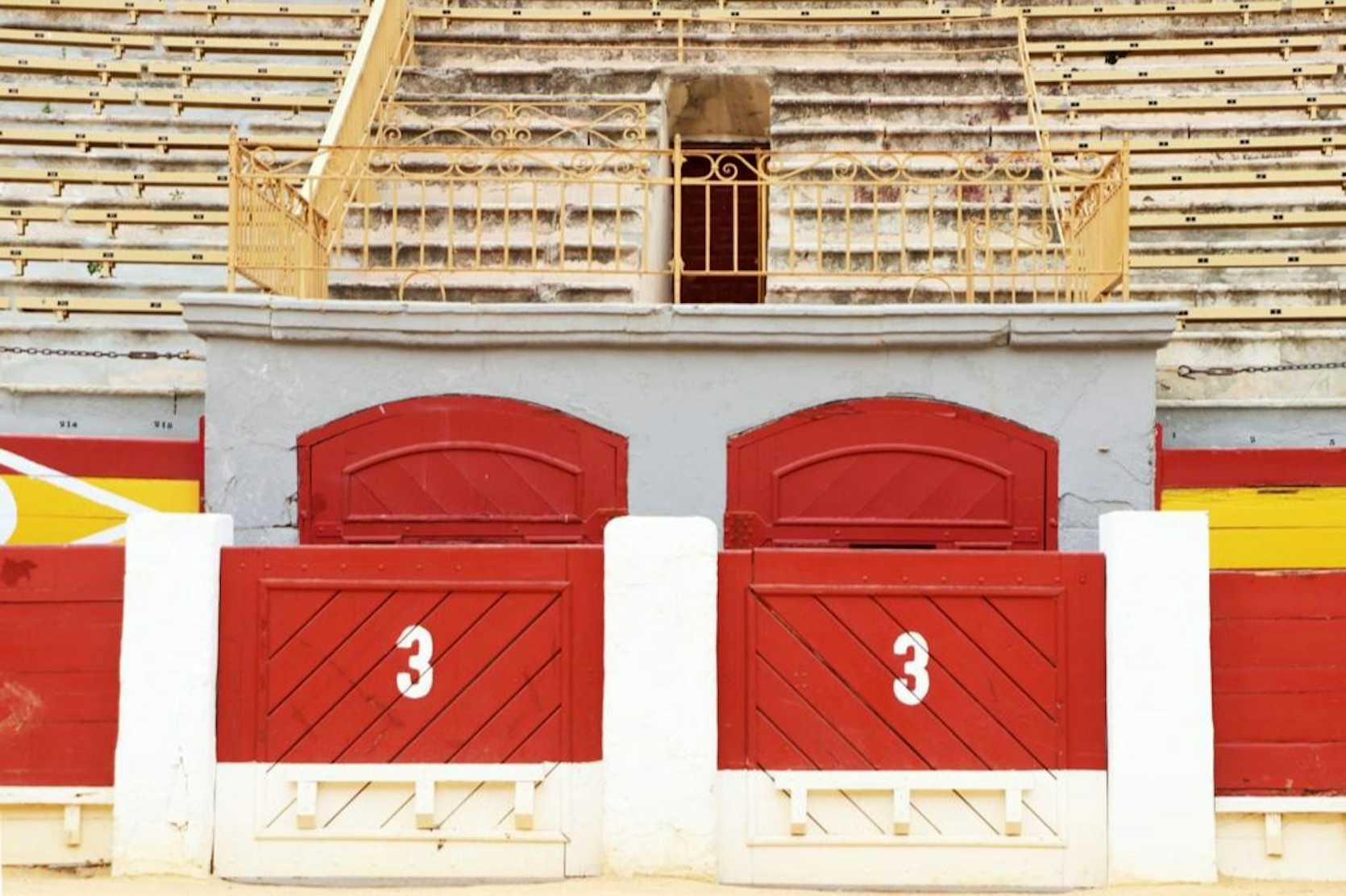
Plaza de toros Alicante
Here is what I will share with you in this article:
- Why bullrings matter as cultural sites, even if you never attend a bullfight
- How to visit the Real Maestranza in Seville and Las Ventas in Madrid
- What to expect at La Malagueta in Malaga, Alicante, Ronda, Valencia, and Granada
- Practical tips for tours, tickets, and timing
I will not talk about animal welfare or the ethics of bullfighting. That debate has plenty of attention elsewhere, and it is not what this article is about. What I want to show you is the architectural and cultural side of these buildings – the side that made me stop, look up, and realize I was standing somewhere important.
Many of these bullrings are open for tours even outside of bullfighting season. That means you can visit in the quiet months, when the stands are empty and the light hits the sand differently. I have done this in Andalusia and in Madrid, and the experience is almost meditative. You hear your own footsteps echo off the stone.
By the end of my article, you will know exactly how to plan a visit to a Spanish bullring. You will know which ones are worth your time, what a tour actually includes, and how to avoid the silly mistakes I made. More than that, you will understand why these buildings are not just sports venues. They are monuments to a tradition that has defined Spanish culture for generations.
Bullfighting is woven into the fabric of Spanish identity in a way that goes far beyond the spectacle of the ring itself. I have felt this most keenly standing inside the historic bullrings, where the architecture alone tells the story of regional pride and centuries of tradition. The Real Maestranza in Seville, for example, is not just an arena but a living monument, complete with the chapel where bullfighters pray before stepping out to face the bull.
Understanding this cultural weight transforms a simple visit into a genuine encounter with Spain’s soul.
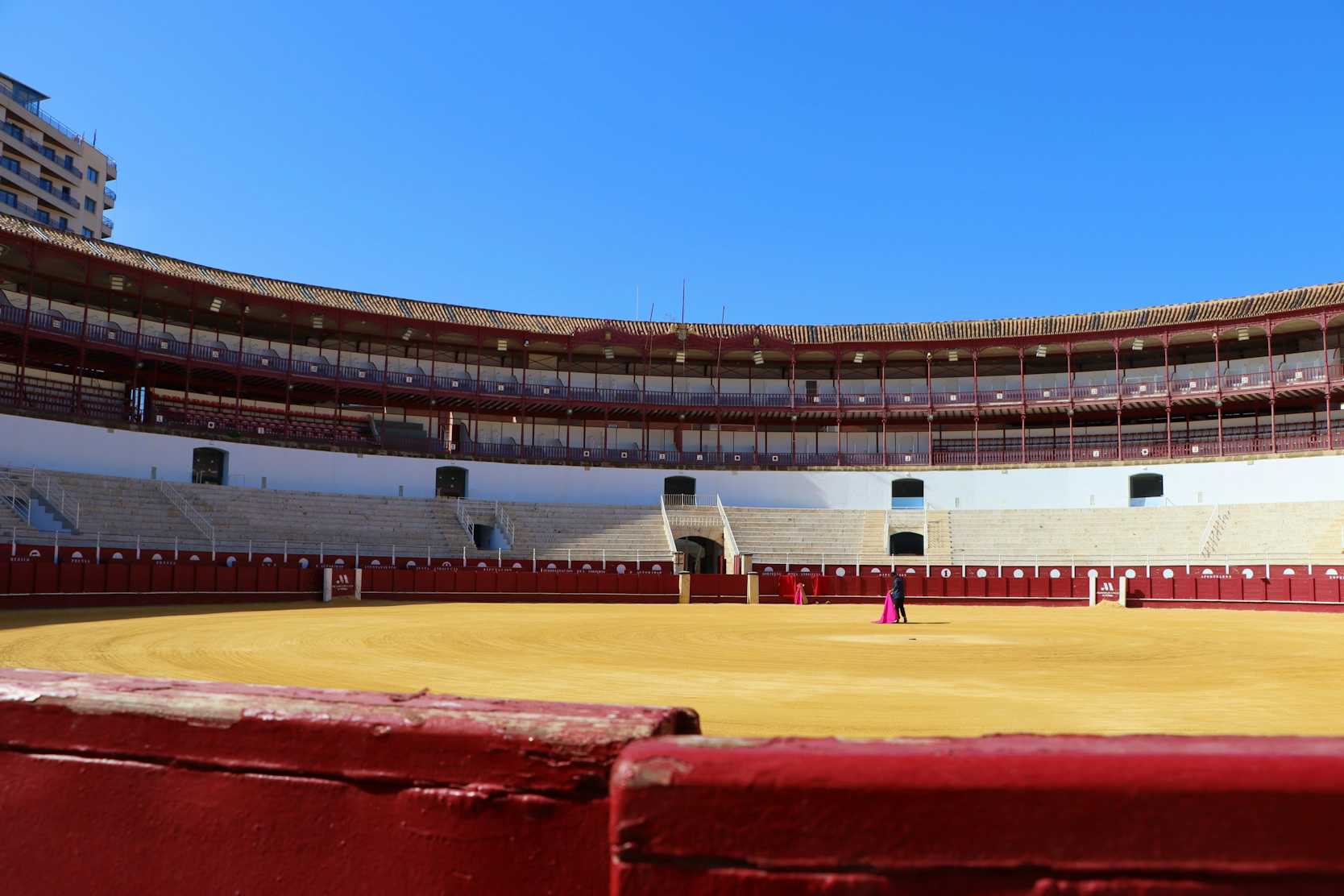
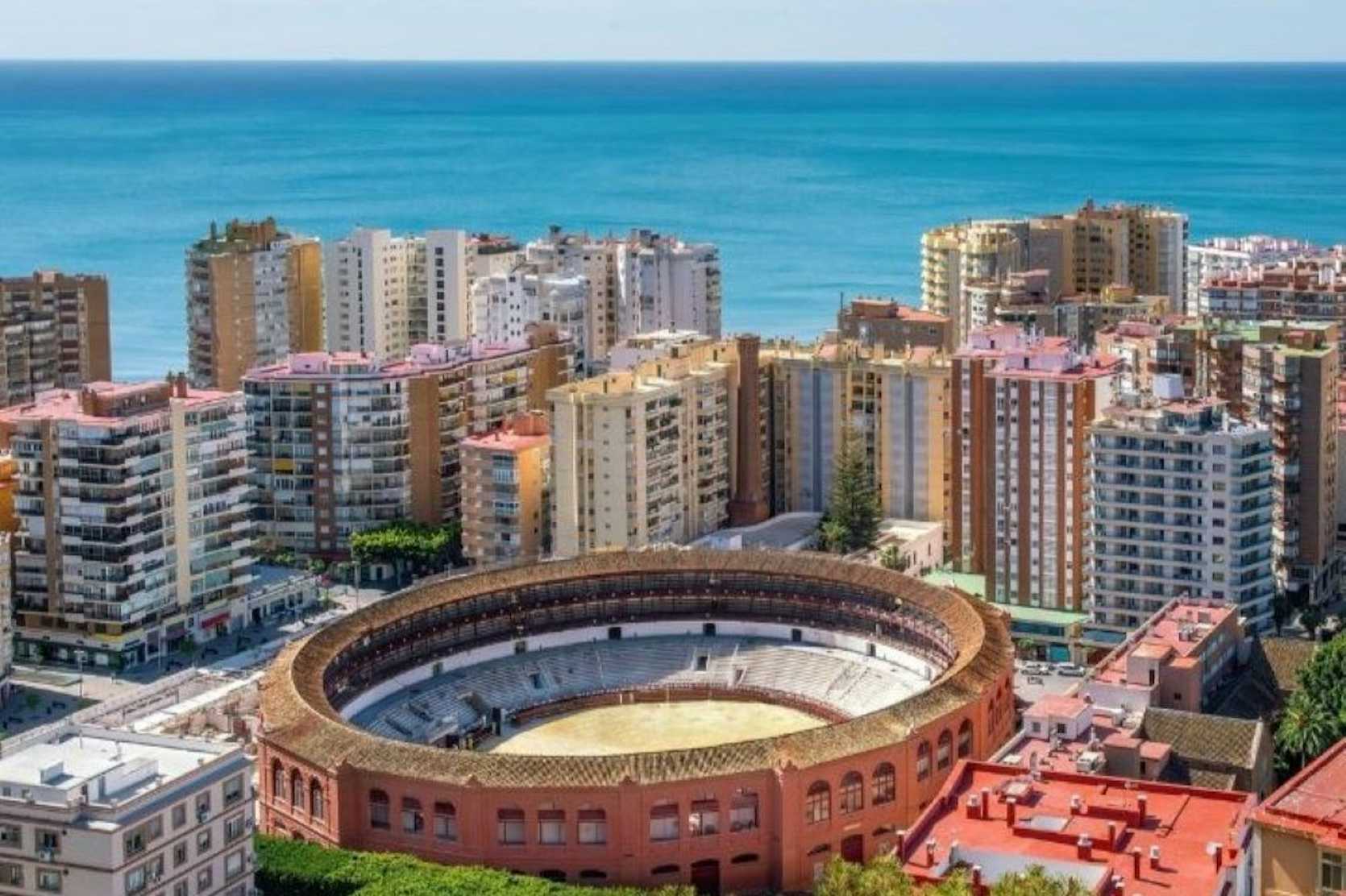
La Malagueta plaza de toros Malaga
What this article is not about
When a reader emails me asking whether I support bullfighting, I know the article has failed its basic promise. That question belongs somewhere else entirely. This article is not a debate platform, not an ethics seminar, and not a place to litigate animal welfare. It is a practical, architectural, and historical tour of Spain’s bullrings as buildings worth visiting.
In this article I won´t tell you how to feel about the corrida. I will not weigh the arguments for or against the practice. Those conversations are abundant elsewhere, and they deserve their own space with their own experts. What I can offer is something narrower and, I think, more useful for a traveler: how to appreciate the bullrings without ever buying a ticket to a fight.
Think of it like visiting an ancient temple. You can stand in awe of the carved stone, the engineering, the centuries of human labor, without endorsing every ritual that once happened inside. The building holds meaning independent of its original function. That is the lens I bring to every bullring I visit.
Instead of debating the practice, I will describe the intricate carvings on a bullring’s facade. I will point out the horseshoe arches, the ironwork, the way afternoon light hits the sand. These details matter. They tell you something about the people who built these places and the culture that raised them.
Some readers arrive expecting a pro-con analysis. They want me to take a side. In this article I won´t.
My job here is simpler: show you where to stand, what to look for, and why the structure itself deserves your attention. The ethics question is a different article for a different day.
I have walked through bullrings in Seville, Madrid, Malaga, and Granada. In none of them did I attend a bullfight. Not once did I feel the experience was incomplete. The architecture, the history, the quiet emptiness of an arena on a Tuesday morning – that was enough.
This boundary is deliberate. It keeps the focus on the tangible, the visible, the walkable. You can touch the stone.
You can climb the stands. You can stand in the chapel where matadors once prayed.
Those are the experiences I want to help you find.
Animal welfare discussions are not ignored because they lack importance. They are omitted because they would swallow the article whole. The moment I start weighing moral arguments, the architecture disappears.
The history fades. The practical tips get buried under a debate that has no clean ending.
So here is my editorial stance, stated plainly: skip the ethics debate for this trip. If you are uncomfortable with bullfighting, that is a valid position. It does not disqualify you from appreciating a 200-year-old building and the entire Spanish culture. The two things can coexist in your mind without contradiction.
I have made this mistake before. Early in my travel writing, I tried to cover everything – the history, the controversy, the architecture, the local opinions. The result was a muddled mess that satisfied no one.
Now I draw a hard line. This article explores bullrings as cultural landmarks and tradition as building blocks of the culture.
Nothing more.
That is where the real fun begins.
The Majestic Bullrings
In 1929, Las Ventas opened its gates in Madrid, and the sheer scale of it changed how I thought about public architecture. The direct answer is this: Spain’s bullrings are not just arenas for bullfighting-they are architectural masterpieces that reflect centuries of regional pride, shifting design movements, and urban identity. A bullring is a civic monument first, a venue second.
I have walked through enough of them now to see the pattern. Each one tells a different architectural story. Some lean neoclassical, borrowing columns and symmetry from ancient Rome.
Others embrace Neo-Mudéjar brickwork, all horseshoe arches and intricate geometric patterns that echo Moorish palaces. That range is the point.
No two regions built the same way, and the bullrings prove it.
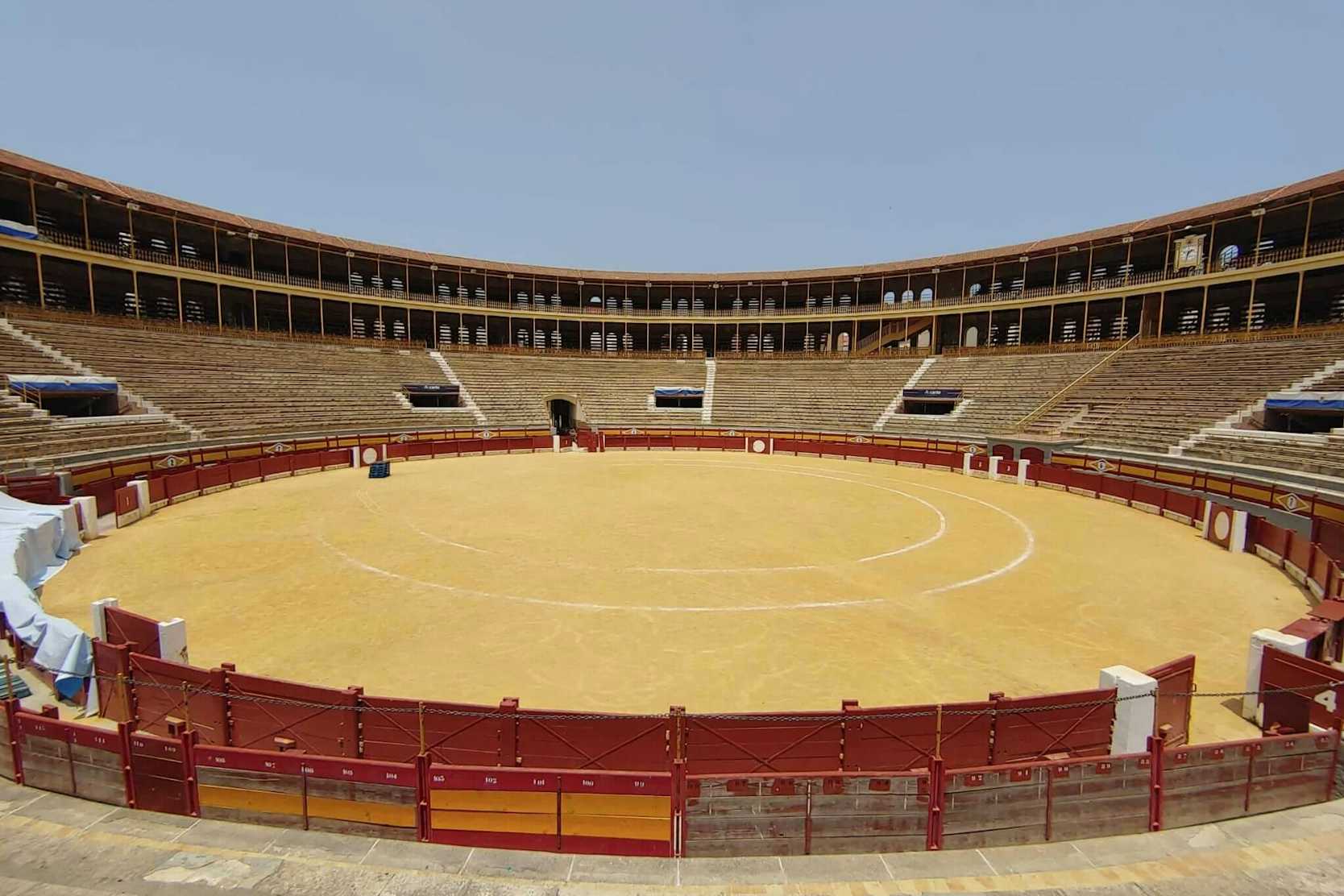
Plaza de toros Alicante
The intricate brickwork of Las Ventas, reminiscent of a grand Moorish palace, stands as a testament to its design, far beyond its use for bullfights. I stood in the tendidos once, looking up at the Royal Box, and forgot entirely that this was a cultural venue. It felt like a cathedral without a roof.
Why the Architecture Matters More Than the Event
Many bullrings are centuries old. That age shows in the stone, the worn steps, the patina on the iron gates. But what fascinates me is how these buildings anchor their cities.
In Seville, the bullring sits near the river, part of the urban fabric. In Granada, the Monumental de Frascuelo rises as a historicist emblem from the late 1920s.
These are not hidden stadiums on the outskirts. They occupy prime real estate in the heart of Spanish life.
Architectural styles range from neoclassical to Neo-Mudéjar, and the origins matter. Valencia’s bullring, built between 1850 and 1859, drew direct inspiration from the Colosseum in Rome and the Arena of Nîmes. That is a bold lineage.
The architect, Sebastián Monleón Estellés, designed a 48-sided polygon with 384 external arches. I have counted a few of those arches myself.
It takes a while.
Then there is the scale. A bullring is not a modest building. The arena floor alone can swallow a small plaza.
The stands rise in tiers, the outer walls stretch for blocks. When I first approached La Malagueta in Málaga, I expected something compact.
I was wrong. The structure dominates its corner of the city, and the permanent exhibition inside only adds to the sense that this is a cultural complex, not a single-purpose venue.
They often serve as venues for other public events. Concerts, festivals, political rallies-bullrings have hosted them all. That flexibility is part of their majesty.
A building that can hold 20,000 people for a corrida can just as easily hold a summer music festival. The architecture does not care what happens inside.
It simply provides the frame.
What strikes me most is the regional pride embedded in the design. Andalusia’s bullrings feel different from those in Valencia or Madrid. The materials change.
The proportions shift. The decorative language adapts to local history.
A bullring in Ronda, said to be the oldest in the world, feels ancient and intimate. Las Ventas feels imperial. Both are unmistakably Spanish, yet neither could be mistaken for the other.
That diversity is what I want travelers to notice before they ever step inside. The building itself is the first exhibit. The brick, the arches, the symmetry-these are choices made by architects who understood that a bullring was a stage for public life, not just a ring for bulls.
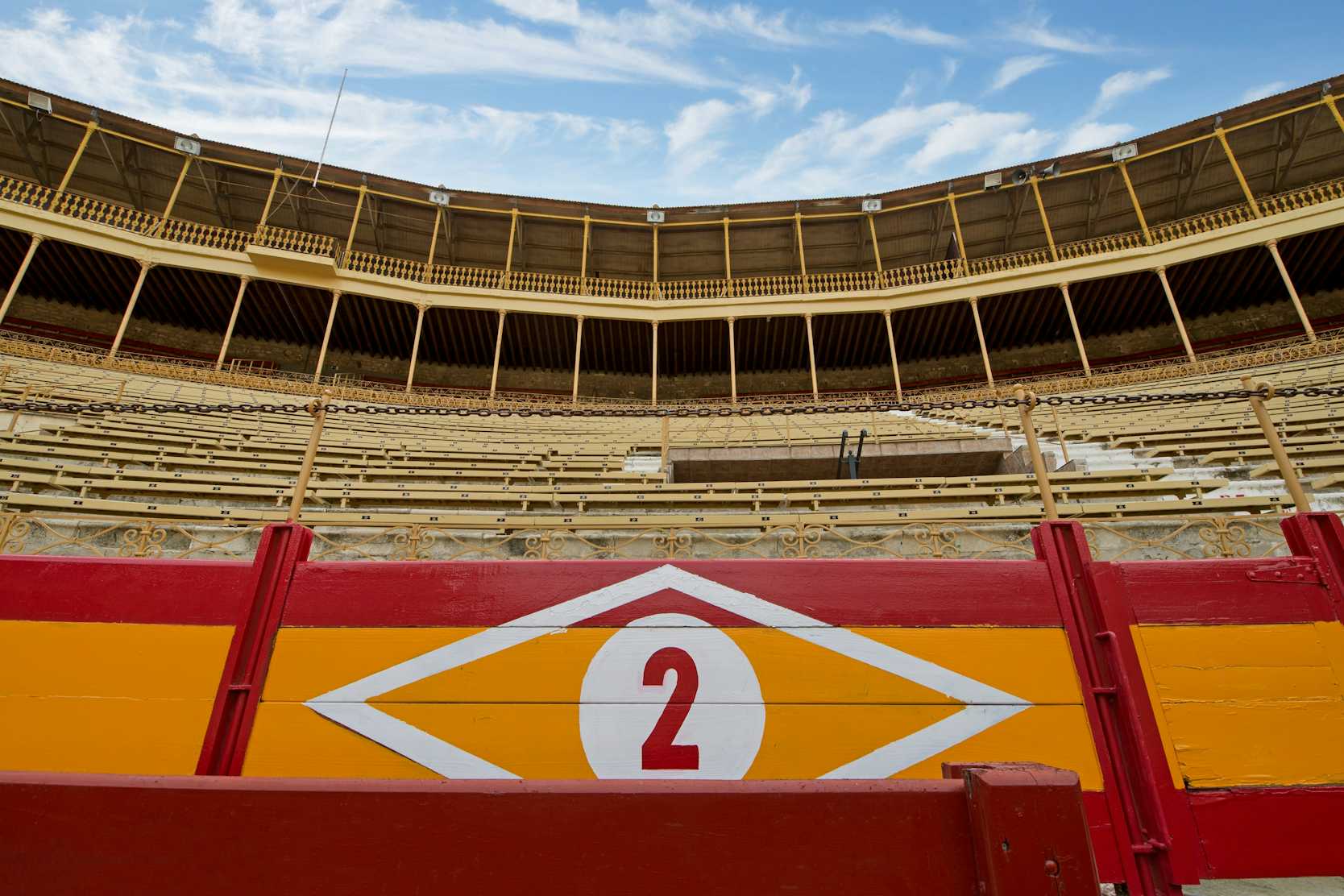
Plaza de toros Alicante
Here is a short list of what to look for when you approach any historic bullring:
- Facade material: brick, stone, or stucco-each signals a different era and region.
- Arch shape: horseshoe arches point to Moorish influence; rounded arches suggest Roman revival.
- Symmetry and rhythm: repeated arches or columns create a visual beat around the perimeter.
- Urban placement: is the bullring central or peripheral? That tells you how the city grew around it.
- Secondary entrances: gates like Seville’s Puerta del Príncipe carry ceremonial weight beyond mere function.
I once spent twenty minutes just circling the outside of a bullring in Alicante, ignoring the tour time on my ticket. The grand entrance, the layered brickwork, the way the light hit the upper galleries-it was worth being late. The guide forgave me. She said it happens all the time.
The majesty of these buildings is not an abstraction. It is measurable in arches, in centuries, in the sheer number of people they have held. And it is visible from the street, before you buy a ticket, before you decide whether to go inside at all. That is the first lesson of visiting a historic bullring: look up, look around, and let the architecture speak first.
My best advice for visiting a historic bullring is to book a guided or audio tour rather than just wandering in off the street. I learned this the hard way at Las Ventas in Madrid, where I spent twenty minutes staring at an empty ring before realizing I had no idea what I was actually looking at. The audio guide changed everything, walking me through the tendidos, the Royal Box, and the President’s Balcony while explaining why shaded seats command a premium on a hot afternoon.
In Seville, the skip-the-line entry to the Real Maestranza gets you into the chapel where bullfighters pray and out through the Puerta del Príncipe, the gate that only opens for exceptional performances.
La Malagueta plaza de toros Malaga
Real Maestranza Bullring in Seville
The Real Maestranza in Seville offers the most immersive historical bullring visit in Spain, with skip-the-line entry, an included headset commentary, and access to spaces like the horse courtyard, the chapel, and the Puerta del Príncipe gate. I have walked through a handful of Spain’s bullrings, and this one still stops me cold every time.
What sets the Real Maestranza apart is not just its age or its oval shape. It is the way the building pulls you into a specific, tangible past. You are not looking at a monument from a distance. You are inside the rooms where the ritual actually happened.
Walking through the horse courtyard, I could almost hear the echoes of horses preparing, feeling transported back to a different era of Spanish tradition. The stone walls hold that sound. The wooden stalls still smell faintly of hay and leather, even on a quiet Tuesday morning.
Then you reach the chapel. This is the room that stays with me longest. Bullfighters pray here before stepping out into the arena.
The space is small, dim, and intensely personal. You do not need to know anything about bullfighting to understand what that doorway means.
A person stands there, alone, before walking into a ring where everything is at stake.
The headset commentary fills in the gaps without overwhelming you. It explains the history and evolution of bullfighting in Spain as you move through the spaces. I appreciated that the audio did not lecture. It let the building speak first, then added context.
Skip-the-line entry matters more here than at most bullrings. Seville is hot, crowded, and full of travelers who underestimated the queue. I watched a group wait forty minutes in direct sun while I walked straight to the entrance. That alone justified the ticket price.
Inside the arena, the stands rise around you in a gentle oval. The bullpens sit below, dark and cool. And then there is the gate: the Puerta del Príncipe.
This is the most important gate of the plaza. A matador who has performed exceptionally is carried out through it on the shoulders of the crowd.
It is not just an exit. It is a threshold between anonymity and legend.
Here is what I would tell a first-time visitor:
- Book the skip-the-line option in advance, especially between April and October.
- Wear comfortable shoes. The stone floors are uneven in places.
- Bring water. The arena bowl traps heat even on mild days.
- Give yourself at least ninety minutes. The chapel and horse courtyard deserve slow attention.
- Do not skip the bullpens. They are the most atmospheric part of the tour.
I have visited bullrings in Madrid, Málaga, and Granada. Each has its own character. But the Real Maestranza feels different.
It is not the biggest, and it is not the oldest. It is the one where the layers of tradition feel most alive.
That is the point of visiting a historic bullring. You are not there for the fight. You are there for the architecture, the silence, the weight of what happened in these rooms. The Real Maestranza delivers that better than almost anywhere else in Spain.
The Puerta del Príncipe is the last thing you see on the tour. I stood in front of it for a long time. It is just a gate. But it is also the answer to why these buildings still matter.
See also our article about Seville here.
Las Ventas Bullring in Madrid
Most visitors assume Madrid’s bullring is just a bigger version of Seville’s. That assumption collapses the moment you step inside. Las Ventas is the national home of toreo, and its self-paced audio tour is the single best way to grasp the ceremonial weight of Spanish bullfighting without watching a fight. You explore the arena on your own schedule, headphones on, absorbing the rituals and pageantry that have held a nation’s attention for generations.
The audio tour does something no guidebook can. It explains the sway bullfighting has held over the Spanish public – not as a sport, but as a cultural ritual with its own language, hierarchy, and emotional grammar. I’ve done the tour twice. The second time I noticed details I’d completely missed the first round.
Plaques and tributes line the corridors. They honor past glories, matadors who became national icons, men whose names still carry weight in Madrid’s cafés and barbershops. The tour tells you who they were and why they mattered. It also reveals what inspired matadors from Spain and beyond to risk everything in this ring.
Then you reach the tendidos – the stands where the adoring public witnesses the action. Standing there, I could visualize the crowds, the excitement, and the tension that once filled the air, truly understanding the arena’s enduring legacy. The scale hits you hard. Las Ventas holds over 23,000 people, and from the tendidos you feel every one of those seats pressing toward the sand below.
The neo-Moorish arena wraps around you in brick and tile. It’s not subtle. Arched galleries, intricate ceramic work, and a geometry that pulls your eye toward the center.
The Royal Box and the President’s Balcony sit above it all, reserved for the figures who once controlled the ritual from on high. The President’s Balcony is where the fight’s authority resides – one handkerchief from there can change the entire afternoon.
On a hot day, you’ll understand why the shaded parts go for a premium. Madrid’s summer sun is brutal. The sombra seats cost significantly more than the sol seats, and after ten minutes standing in the uncovered tendidos, you’ll know exactly why.
I made that mistake in July. Never again.
After the stands, you walk down to where bull and fighter meet in the ring itself. The sand is raked smooth. The silence is strange. You’re standing in the exact spot where the ritual reaches its climax, and the audio tour lets you sit with that for a moment.
You won’t see any bullfights during the audio tour. That’s the point. The visit appeals to those who enjoy getting to the heart of Spanish culture and customs, not spectacle. The building does the talking.
What surprised me most was how much the tour focuses on pageantry – the costumes, the processions, the music, the formal gestures. Bullfighting in Madrid is theater as much as anything else. The audio tour treats it that way, and the arena becomes a stage you can walk across.
Skip the guided group if you can. The self-paced format means you linger where you want and fast-forward through what bores you. I spent twenty minutes in front of a single plaque about a matador I’d never heard of. The audio made him real.
Las Ventas doesn’t try to convince you to love bullfighting. It simply shows you the architecture of a tradition. Each bullring in Spain has its own distinct architectural and historical flavor, and Madrid’s is the most formal, the most national, the most ceremonial of them all.
The arena opened in 1929, and it still feels like a monument to something larger than sport. That’s the legacy you’re standing inside.
La Malagueta in Malaga is the bullring I recommend to anyone who thinks a historic arena is just an empty circle of sand. Its permanent exhibition spreads across six rooms, packed with large audiovisual displays, period art, and a striking collection of bullfighting costumes and accessories. The real standout for me was the interactive 360º experience, which simulates the roar of the crowd so convincingly I felt the hair stand up on my arms.
An audio guide in six languages keeps the whole visit moving at your own pace, making this the most multimedia-rich bullring museum I have found in Spain.
Alicante Bullring
The VIP guided tour at Alicante Bullring is the only way to access its behind-the-scenes areas, including the bullpens, chapel, and grand entrance, with a private guide sharing stories in Spanish, English, Polish, or Russian.
I have toured enough Spanish bullrings to know that most visits keep you in the stands and the museum. Alicante flips that script. The moment my guide unlocked a door marked for staff only, I understood the difference between a standard ticket and a real exploration.
What you get on the VIP tour that you cannot get anywhere else:
- Direct access to the bullpens where bulls waited before entering the ring
- Entry to the chapel, a small room most visitors never see
- Time in the grand entrance and the ring itself without crowds
- A private guide who adapts the stories to your questions
- The museum’s bullfighting art collection: paintings, sculptures, and vintage posters
- Interactive games and virtual videos that make the history stick
Stepping into the bullpens gave me a visceral sense of the arena’s original function. The thick walls, the worn stone, the narrow chutes – they tell you more about what happened here than any plaque ever could. Few visitors get that perspective.
The private guide matters more than I expected. In a group of forty, you hear the script. Alone with a guide, you hear the stories behind the script – the rivalries, the accidents, the local legends that never make it into the official brochure.
That is the real value. Not the access itself, but the conversation.
The museum’s art collection surprised me. Vintage posters from the early twentieth century hang beside contemporary sculptures. The paintings capture moments that photographs cannot – the tension before a pass, the stillness of the ring at dawn. I spent longer there than I planned.
The interactive elements are not gimmicks. The virtual videos show you what the arena looks like during a full corrida, which helps if you are visiting on an empty Tuesday morning. The games are simple, but they force you to engage with the terminology and the ritual in a way passive viewing does not.
Skip the standard entry if you are serious about understanding the place. The VIP tour costs more, but the difference is the entire point of coming. You are not here to glance at an empty ring and leave.
One thing to know: the tour runs in four languages, but the guide’s schedule varies. Book ahead and confirm your language when you reserve. I made that mistake once and ended up on a Spanish tour with my high-school vocabulary.
I survived. You can do better.
The Alicante bullring does not have the fame of Seville or Madrid. That works in your favor. Smaller crowds, more time, and a guide who is genuinely happy to have a curious visitor. The architectural grandeur of the next bullrings on my list is undeniable, but intimacy has its own power.
Royal Cavalry Bullring in Ronda
Ronda’s bullring doesn’t need a fight to justify the trip. The Plaza de Toros is said to be the oldest bullring in the world, and the building itself is the attraction. You walk in expecting an arena and get something closer to a stone monument.
I’ve stood in a lot of Spanish bullrings, and none of them feel like this one. The elegant, almost regal facade, contrasted against the dramatic backdrop of the El Tajo gorge, makes it feel more like a castle than an arena. That’s not hyperbole.
The proportions are different here. The arches sit lower, the sand ring feels more intimate, and the whole structure carries a weight that newer plazas simply don’t have.
What surprised me most was how little the experience depends on bullfighting. There is rarely a bullfight here. The calendar stays quiet for long stretches.
And honestly, that’s the point. You’re not visiting an event venue.
You’re visiting a piece of Andalusian history that happens to be shaped like a bullring.
The building tells its own story. The stonework, the wooden barriers, the narrow passageways where horses once moved through – all of it predates the modern bullfighting spectacle. This was a Royal Cavalry training ground before it became a public arena.
That military origin shows in the discipline of the design. Nothing about it feels decorative for its own sake.
I spent an hour just walking the perimeter. The museum inside holds old photographs, matador costumes, and a few artifacts that feel genuinely worn rather than curated for display. But the real exhibit is the structure itself. The two-tiered arcade, the sand, the way the light falls across the ring in the late afternoon.
Skip the audio guide here. I tried it, and it over-explains what your eyes already understand. This is a place for slow looking.
One thing I’d do differently next time: arrive before noon. The morning light hits the facade head-on, and the gorge behind it glows. By mid-afternoon, the sun sits behind the building and flattens the contrast. Small detail, but it changes the photographs completely.
Ronda’s bullring also does something no other plaza manages. It makes you forget the controversy entirely. You’re not thinking about the ethics of the corrida.
You’re thinking about two hundred years of stone, horses, and men walking the same path. That’s a rare kind of cultural connection.
Each bullring in Spain has its own architectural story. Ronda’s is the oldest chapter. The next one, in Valencia, is a different beast entirely – a 48-sided polygon with 384 external arches. But that’s another story.
The Royal Cavalry Bullring doesn’t need a bullfight to matter. It just needs you to stand inside it.
Valencia’s bullring is the one I always tell architecture lovers to see even if they never plan to watch a fight. Built between 1850 and 1859, it borrows its grandeur from the Colosseum in Rome and the Arena of Nîmes, but the architect Sebastián Monleón Estellés gave it a twist that stops me every time I walk past. The structure is a 48-sided polygon with 384 external arches, a Neo-Mudéjar flourish that makes it feel more like a Roman amphitheater than a typical round Spanish plaza.
I once circled the entire perimeter just to count the arches and lost track twice.
See also our article about Ronda here.
Bullring of Granada
The Bullring of Granada, officially called Monumental de Frascuelo, is a 20th-century historicist landmark built between 1927 and 1928 by local architect Ángel Casas. It stands as one of the clearest architectural emblems of Granada’s design heritage, even if you never step inside for a fight.
I first saw it from a side street near the city center, and the facade stopped me cold. The building doesn’t whisper. It announces itself with a grand, somewhat ornate front that feels like a direct conversation with Granada’s rich historical past, echoing the city’s other iconic buildings. That’s the point of historicist architecture: it borrows visual language from earlier eras and speaks it fluently.
Ángel Casas didn’t chase modern minimalism. He looked backward on purpose. The result is a bullring that belongs to Granada the way the Alhambra does, though in a different register. The initiative came from Sociedad Nueva Plaza de Toros, a private company that wanted a venue worthy of the city’s cultural weight.
What Makes the Facade Work
Historicist architecture can go wrong fast. Too much ornament and the building feels like a costume. Too little and it loses the reference.
Casas found the balance. The facade carries decorative arches and brickwork that nod to older Spanish traditions without copying any single monument.
I walked the perimeter twice. The second time I noticed how the entrance rhythm changes as you move around the curve. That’s not accidental.
The architect designed the exterior as a sequence, not a static wall. Each section frames the next, pulling you toward the main gate.
Here’s what I tell people to look for when they visit:
- The layered brick patterns above the main entrance
- The way the facade curves with the arena behind it
- The contrast between solid lower walls and lighter upper detailing
- The local materials that tie it to Granada’s other historic buildings
None of this requires a ticket. The exterior alone rewards a slow walk. I spent forty minutes just circling the structure, and I’d do it again.
The bullring also hosts public events beyond bullfighting, which means the building stays alive year-round. That matters. A monument that only opens for one purpose becomes a museum piece. This one still functions as a civic space.
Granada’s bullring doesn’t get the same attention as Seville or Madrid. That’s a mistake. The architectural conversation here is different, more local, more tied to a specific moment in the city’s design history. The 1920s were a turning point for Granada, and this building captures that energy in brick and stone.
I’d rank it among the most underrated bullrings in Andalusia. The facade alone justifies the detour, and the surrounding neighborhood gives you plenty of reasons to linger afterward.
The building opened in 1928, and nearly a century later it still reads as deliberate, confident, and unmistakably Granadan. That’s the legacy of a local architect who understood his city.
Frequently Asked Questions
Yes, you can go inside the ring itself at most historic Spanish bullrings, and many tours let you stand directly on the sand where matadors once worked. The practical questions travelers ask me most often boil down to access, timing, and what a visit actually includes.
I used to overthink my first bullring visit. I assumed the arena floor was off-limits, that I needed to book weeks ahead, and that the whole experience would feel awkward without understanding bullfighting. None of that turned out to be true.
At Valencia’s bullring, for example, the tour route takes you through the tendidos, down to the ring itself, and into the areas behind the stands. Standing on that packed sand, looking up at 384 external arches, I finally understood why people describe these buildings as civic monuments rather than sports venues. The scale does the talking.
Do you need to book in advance? For most bullrings, no. But between April and October, the skip-the-line option saves real time at the busier sites. I learned that the hard way in Seville, where a group ahead of me waited forty minutes in direct sun while I walked straight through with a pre-booked ticket.
What about language? The Alicante Bullring offers tours in Spanish, English, Polish, and Russian. La Malagueta’s audio guide covers six languages. If you have a specific language need, confirm it when booking rather than assuming.
Accessibility varies. Older bullrings like Ronda’s have uneven stone surfaces and steep steps. Newer or renovated ones, including Valencia’s, tend to have smoother paths and ramps in key areas. I always tell travelers with mobility concerns to call ahead and ask about the specific route.
How long should you plan for? Give yourself at least ninety minutes. That covers the tour, the museum areas, and time to just sit in the stands and absorb the geometry of the place. Rushing through a 48-sided polygon feels wrong.
One question I get constantly: do you need to watch a bullfight to appreciate the building? No. The architecture, the history, and the quiet of an empty arena carry the experience on their own. That is the whole point of visiting these places as cultural landmarks.
The best time to visit is mid-morning on a weekday. The light hits the arches cleanly, the crowds are thin, and the temperature is still comfortable. I have never regretted an early start at a bullring.
At the end of the day…
Standing inside the Real Maestranza’s horse courtyard, I finally understood what I’d been chasing across Spain. These bullrings are not arenas waiting for a fight. They are time capsules built from brick, stone, and memory.
I walked through Las Ventas with an audio guide pressed to my ear, tracing the neo-Moorish arches and reading plaques dedicated to matadors I’d never heard of. I didn’t need to see a bullfight. The tendidos told me everything about the crowds, the heat, the shaded seats that cost more for a reason.
What I learned from visiting these historic bullrings:
- Seville’s Real Maestranza gives you skip-the-line access and a headset, but the real prize is the Puerta del Príncipe gate and the chapel where bullfighters prayed before stepping into the ring.
- Las Ventas in Madrid is the national home of toreo. The self-paced audio tour covers rituals, pageantry, and the Royal Box without a single bullfight happening during your visit.
- Ronda’s Royal Cavalry Bullring is said to be the oldest in the world. It rarely hosts bullfights now, and honestly, the building itself is the experience.
- Granada’s Monumental de Frascuelo, built between 1927 and 1928 by local architect Ángel Casas, stands as an emblem of historicist architecture in the city.
- Alicante’s VIP tour takes you into bullpens and behind-the-scenes areas most visitors never see, with guides speaking Spanish, English, Polish, and Russian.
My advice? Pick one bullring and go inside. Don’t just photograph the facade from across the plaza. Buy the ticket, take the tour, stand in the ring where matadors once stood.
Start with Seville if you want history and atmosphere. Choose Madrid if you want the national story. Pick Ronda if you want beauty without the crowds.
These bullrings hold Spain’s cultural past in their arches, chapels, and gates. You just have to walk through them to feel it.
Frequently Asked Questions
Can I visit bullrings in Spain if I don't want to see a bullfight?
Yes. For sure! Most major bullrings offer guided tours or self-guided audio tours that allow you to explore the architecture, museums, and historical significance without witnessing a bullfight. These visits focus on the cultural and historical aspects of the bullring as a landmark.
What's the best time of year to visit a bullring in Spain?
Bullrings are generally open for tours year-round, but spring (April to June) and autumn (September to October) are ideal. The weather is milder, making outdoor exploration more comfortable, and you might catch some cultural events or festivals related to the bullring's history.
Are all bullrings in Spain similar in design?
While many bullrings share a circular or polygonal arena, their architectural styles vary greatly. For example, Valencia's bullring is neoclassical with a Neo-Mudéjar influence, while Ronda's is known for its classic elegance. Each offers a unique visual experience.
Do I need to book bullring tours in advance?
For popular bullrings like Real Maestranza in Seville or Las Ventas in Madrid, booking skip-the-line tickets online in advance is highly recommended, especially during peak tourist seasons. This saves time and ensures availability for your preferred tour slot.
What should I expect to see in a bullring museum?
Bullring museums typically house collections of bullfighting costumes, historical posters, art, and audiovisual displays detailing the history and evolution of bullfighting. You'll often find artifacts related to famous matadors and the cultural significance of the sport.