
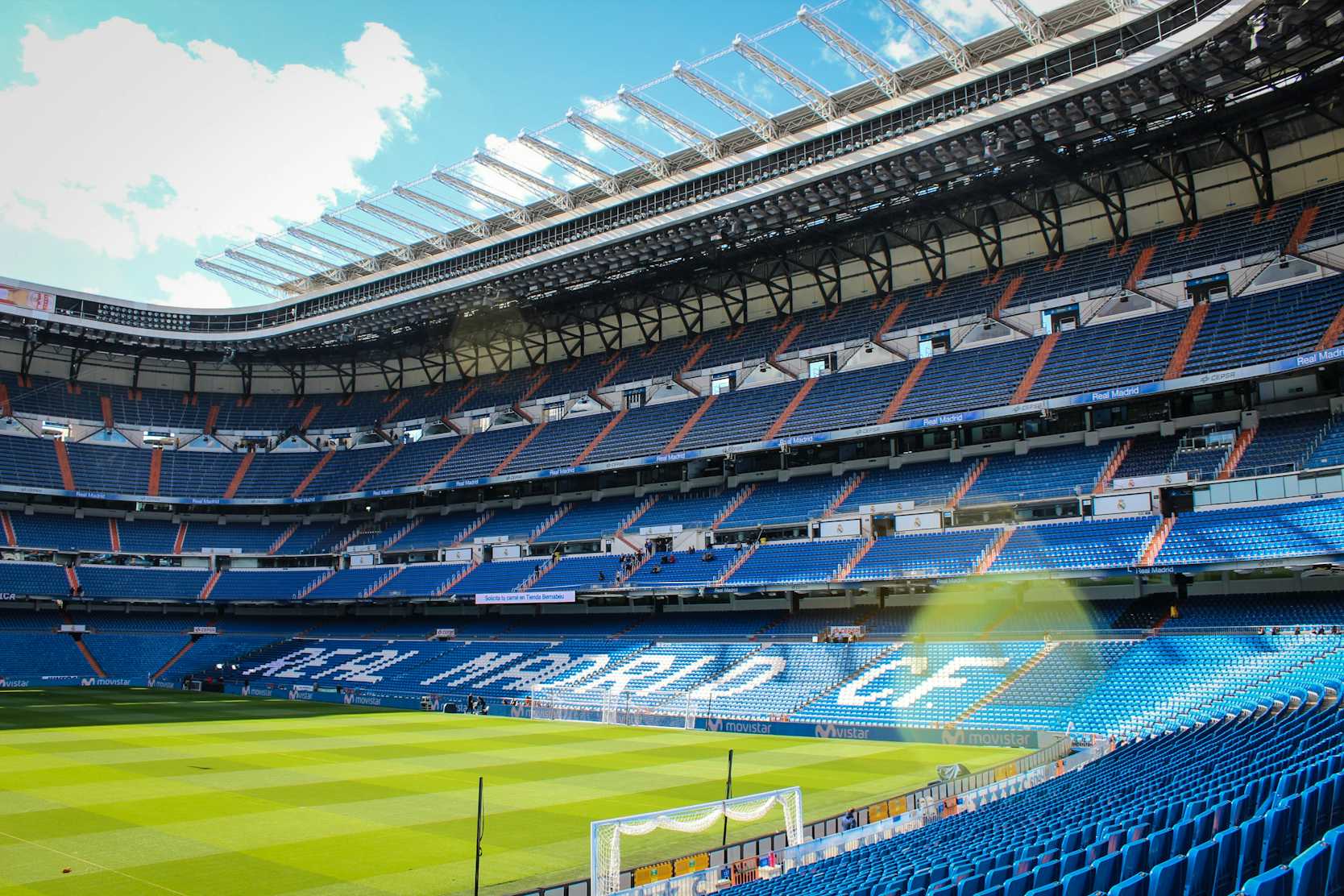
Santiago Bernabeu
Madrid has been home to European football royalty since 1902, and I still get goosebumps walking up to the Santiago Bernabéu. The Real Madrid Santiago Bernabeu stadium football experience sits at the top of most fans’ bucket lists, but Atlético Madrid’s Wanda Metropolitano deserves equal billing. I learned that the hard way after dismissing Atleti as the “other club” on my first visit.
You can visit both iconic stadiums in a single trip, and you should. The Bernabéu tour takes you through trophy-laden corridors and interactive exhibits that bring Puskas, Di Stéfano, Zidane and Ronaldo back to life. Across town, the Wanda Metropolitano offers a tunnel walk to the pitch’s edge and a museum built on humility, teamwork and sacrifice. Both are worth your time, whether you catch a live match or stick to the self-guided tours.
I have queued outside the Bernabéu on matchday, squeezed into a seat with a restricted view, and still left hoarse from singing. I have also wandered the Metropolitano on a quiet Tuesday morning and felt the weight of Atlético’s underdog story. The contrast between the two clubs is the real story of Madrid football.
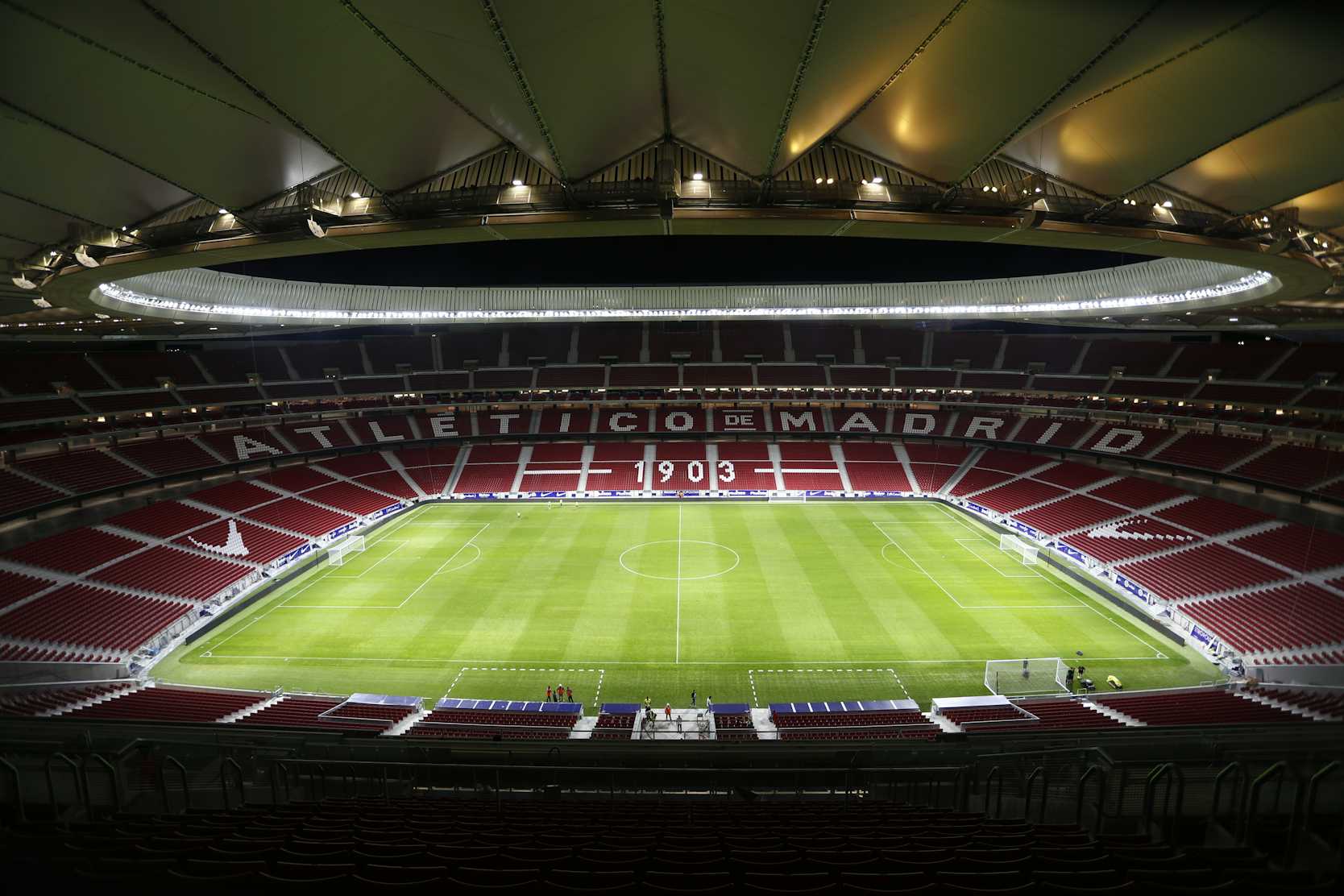
Wanda Metropolitano
Here is what I will walk you through:
- How to experience the Bernabéu tour and museum without wasting time or money
- What the Wanda Metropolitano’s Atleti Territory Experience actually includes
- Why Madrid’s football culture goes far beyond the ninety minutes on the pitch
- How to fit both stadiums into one trip, even if you only have a weekend
Madrid is a city synonymous with footballing success. Real Madrid’s royal dominance has defined European competition for decades, while plucky Atlético Madrid have chipped away at that supremacy in recent years. Deciding whether you represent red or white in Madrid is part of the fun.
I have made my share of ticketing mistakes. Buying from the wrong reseller, showing up at the wrong gate, underestimating how early you need to arrive for a Champions League night. This guide exists so you do not repeat those errors. The process is simpler than it looks once you know the basics.
Tickets for Santiago Bernabeu hereBeyond the stadiums, Madrid offers more than football. The Prado, the Royal Palace, and over 100 points of interest on a downloadable audio guide give you plenty to explore between matches. But the football comes first. It always does in this city.
My first match at the Santiago Bernabéu changed how I see football entirely. The sheer scale of the place, the noise rolling down from the upper tiers, and the sight of Real Madrid players warming up on that pristine turf made every televised match I’d watched feel like a faded postcard. What sticks with me most is how the city splits itself in two: the royal white of Real Madrid and the defiant red-and-white of Atlético Madrid, whose Wanda Metropolitano now offers a stadium tour that finally gives their side of the story equal billing.
Pick a colour, book a ticket, and let the city argue the rest.
Why Madrid is a Football City
Madrid is a city synonymous with footballing success, and in more recent times, plucky Atlético Madrid have started to chip away at Real Madrid’s royal dominance. That tension defines the place more than any museum or plaza ever could.
I’ve made the mistake of arriving in Madrid thinking I’d spend a quiet weekend wandering tapas bars and art galleries. Then I walked through the Puerta del Sol after a major win and found the square awash in team colours. Scarves whipping.
Strangers hugging. A man in his seventies singing a club anthem I’d never heard, tears in his eyes.
That’s not tourism. That’s identity.
Football here isn’t a pastime bolted onto city life. It’s the pulse underneath everything. You’ll hear match analysis in bakeries, see children in replica kits on school runs, and watch bar owners rearrange furniture around a television at 9pm on a Wednesday.
The city doesn’t host football. The city is football, wearing a different shirt depending on which neighbourhood you’re standing in.
What makes Madrid unusual is the split. Plenty of European capitals have one dominant club. Madrid has two, and they represent genuinely different ways of seeing the world.
One side carries the weight of royal patronage and global expectation. The other thrives on being underestimated, scrapping for every point, every trophy, every scrap of respect.
That rivalry shapes daily conversation. I once asked a taxi driver for a restaurant recommendation and got a ten-minute lecture on midfield tactics instead. He didn’t ask which team I supported. He just assumed I cared, because in Madrid, caring is the default setting.
The stadiums anchor this obsession physically. You can see one from certain metro lines, the other from a different artery of the city entirely. They function like rival cathedrals, each with its own congregation, its own rituals, its own version of history.
And the history runs deep. Real Madrid’s story stretches back to 1902, which means generations of families have passed down allegiances the way other cities pass down recipes. Atlético’s supporters carry a different inheritance: the knowledge that glory tastes sweeter when it arrives unexpectedly.
That’s the thing about football in Madrid. It’s not a product you consume. It’s a language you learn, whether you mean to or not.
I’ve watched visitors arrive indifferent and leave wearing a scarf they swore they’d never buy. The city gets under your skin that way. One match, one walk through a celebrating crowd, and suddenly you have an opinion about a left-back you’d never heard of three days earlier.
The specific clubs that fuel this passion deserve their own attention. But the foundation matters first: Madrid doesn’t simply contain football. It’s built on it.
Your Madrid Football Adventure
In 2026, a football trip to Madrid splits into two distinct experiences: the electric chaos of a live match and the quieter, history-soaked rhythm of a stadium tour. Both belong on your itinerary. I learned this the hard way by trying to cram everything into one afternoon, which left me sprinting through the Bernabéu museum like a man late for a flight.
A Madrid football adventure means pairing at least one live match with one immersive stadium tour. The live game gives you the noise, the tension, the collective gasp of eighty thousand people. The tour gives you the context, the trophies, the dressing rooms, and the stories behind that noise.
My first time seeing Real Madrid play at the Bernabéu, the roar of the crowd was absolutely deafening. I’d watched matches on television for years, but nothing prepared me for the physical sensation of sound hitting my chest when the teams walked out. That’s the thing nobody tells you: a stadium doesn’t just surround you with noise. It vibrates through you.
What a Football-Focused Visit Actually Includes
You don’t need to be a lifelong supporter to enjoy this. You need curiosity and a tolerance for standing in queues. Here’s what a typical football-themed trip covers:
- Live match tickets at Estadio Santiago Bernabéu, with seats close enough to see top players in person
- Bernabéu Tour & Museum, a self-guided walk through Real Madrid’s trophy-laden history
- Wanda Metropolitano – Atleti Territory Experience, covering the stands, press room, presidential box, and the tunnel walk to the pitch
- City audio guide app for the non-football hours, with over 100 points of interest
That last item feels like an afterthought, but it isn’t. Madrid rewards you for stepping away from the stadiums. The Prado, the Royal Palace, a quiet plaza with cheap vermouth – these reset your senses between football fixes.
The live match is the adrenaline spike. I’ve sat in the upper tier and behind the goal, and the view genuinely works from any seat. The Bernabéu’s steep stands pull you close to the pitch, so even the cheaper tickets feel intimate.
You’ll see the players’ body language, the tiny adjustments they make before receiving a pass. Television never shows you that.
But the stadium tour is where the history sinks in. Walking through the Bernabéu’s trophy room, I understood why this club carries such weight. The silverware stretches back to 1902, and the interactive exhibits move you from grainy footage of Puskas and Di Stéfano through to the high-definition era of Zidane, Beckham, and Modrić.
It’s not just a museum. It’s a timeline of European football’s obsession with this club.
Atlético’s experience offers something different. The Wanda Metropolitano tour takes you through the home dressing room and out the tunnel to the pitch’s edge – minus thousands of fans screaming your name, as the official description wryly notes. The interactive museum leans into values rather than trophies: humility, teamwork, sacrifice. It’s a deliberate contrast to the Bernabéu’s glamour, and that contrast is the point.
I’d suggest booking the live match first and building the rest around it. Match dates shift, sometimes with little notice. The tours run more predictably, so they flex around the fixture list. That’s the practical order of operations, and it saved me from a very expensive mistake on my second visit.
One more thing worth knowing: you don’t have to choose between red and white. The football-themed bundle covers both stadiums, and plenty of visitors do both in a single trip. I did, and the whiplash between Real Madrid’s polished grandeur and Atlético’s grittier identity made the whole city feel more alive.
The upcoming sections will introduce each club and stadium in detail. For now, the key decision is simpler than it looks: do you want the roar of a live match, the silence of an empty trophy room, or both? I’d take both every time.
I’ve always found it impossible to separate a trip to the Bernabéu from the shadow cast by Atlético Madrid, and that’s exactly what makes this football city so compelling. The decisive point for me is the contrast between the two stadium experiences: Real Madrid’s self-guided tour leans hard into the Galáctico glamour and trophy-laden history, while the Wanda Metropolitano offers a grittier, more intimate walk through the tunnel and dressing rooms. If you’re new to Spanish football, doing both in one visit gives you the full red-versus-white picture without needing to pick a side first.
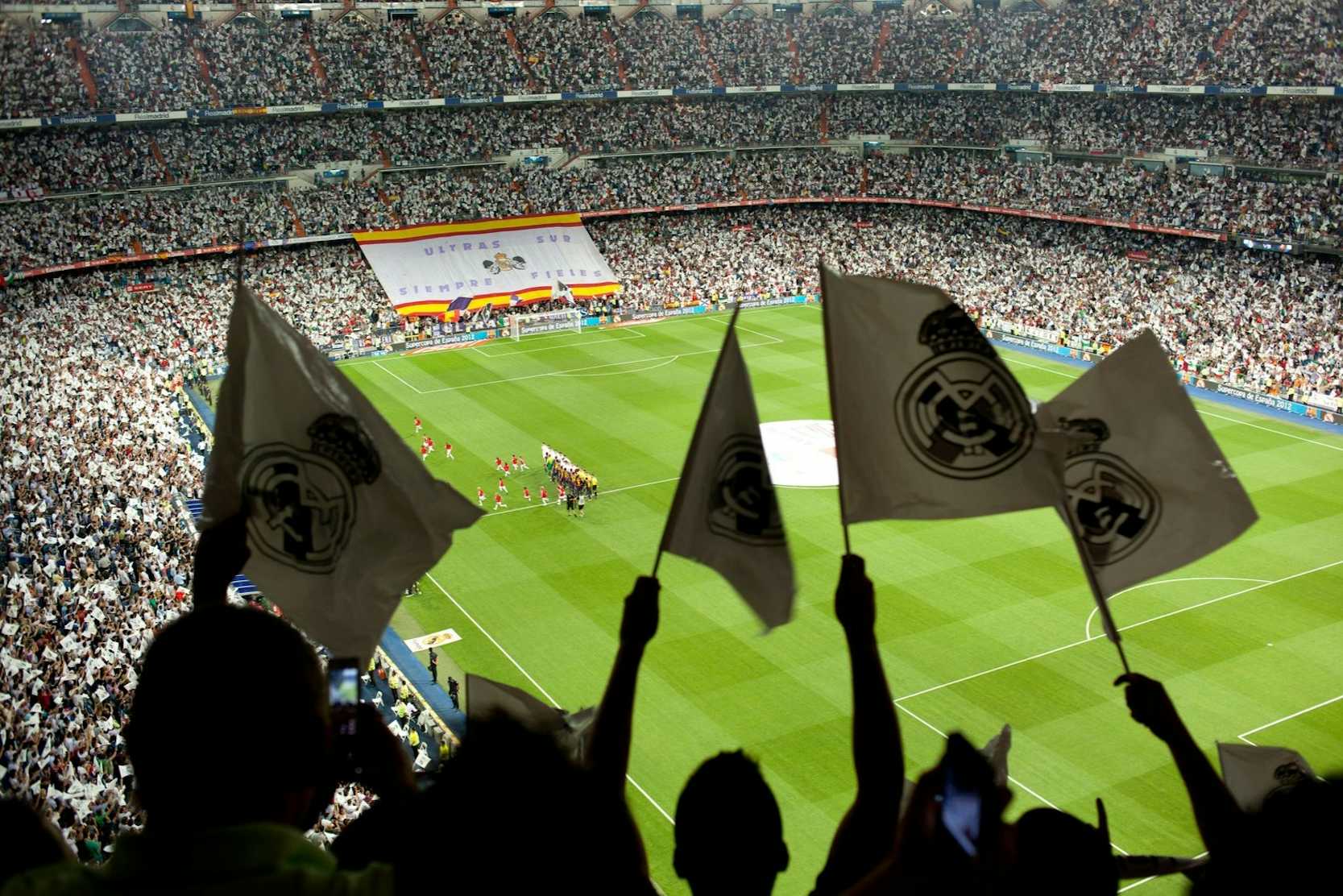
Real Madrid´s Santiago Bernabeu
Real Madrid
I stood in front of the trophy cabinet at the Bernabéu and lost count. That’s not an exaggeration. The sheer volume of silverware, each piece telling a story of a different era of dominance, makes you realise this isn’t just a football club. Real Madrid is a footballing institution, built on a century of star players and unparalleled European success.
The club was founded in 1902. Since then, it has become one of the most famous football clubs on the planet. The name alone carries weight in every corner of the world.
What separates Real Madrid from almost every other club is its relationship with greatness. Other teams have good decades. Madrid has good generations, stacked one after another.
The Galácticos policy wasn’t a marketing gimmick. It was a statement of intent.
The Weight of the White Shirt
I’ve watched players arrive at this club as superstars and still look nervous pulling on the white shirt. That’s the pressure here. Puskas and Di Stéfano set the standard in the 1950s and 60s. Then came Zidane, Beckham, and Modrić, each adding their own chapter to the legend.
Cristiano Ronaldo took it to another level entirely. His goal record here bordered on absurd. But the point isn’t any single player. It’s the conveyor belt of talent that never stops.
Real Madrid’s reputation for acquiring top talent is both admired and resented. Rival fans call it buying success. Madrid fans call it ambition. I call it a club that refuses to accept second place.
The European glory nights under the lights are what define this place. Those evenings when the Champions League anthem plays and the stadium seems to breathe as one. I’ve felt it. It’s different from anything else in football.
Here’s what I’ve learned about supporting or even just watching this club:

Santiago Bernabeu
- Expectations are brutal. A trophyless season is treated as a crisis, not a blip.
- The history is visible everywhere. From the museum exhibits to the stands themselves.
- Star power is the norm. World-class players arrive every summer, not every decade.
- European success is the measuring stick. Domestic titles matter, but European Cups define eras.
That last point matters more than most outsiders realise. Real Madrid judges itself by Champions League trophies. The club has won more of them than anyone else.
That’s not a statistic. That’s an identity.
I’ve met fans who support smaller clubs and roll their eyes at Madrid’s dominance. I understand the instinct. But standing inside the Bernabéu, surrounded by that history, the cynicism fades.
You’re not looking at a club that bought its way to relevance. You’re looking at a club that has been relevant for over a century.
The contrast with Atlético Madrid is stark. Atleti built their identity on resilience, on fighting against the odds. Real Madrid built theirs on expecting to win.
Both are valid. Both are essential to understanding this city’s football culture.
What strikes me most is how the club’s past shapes its present. Every current player walks the same tunnel as Di Stéfano. Every new signing is measured against Zidane. The weight of that white shirt never gets lighter.
Real Madrid doesn’t just play football. It collects legends, polishes them, and sends them into history. The trophy cabinet is simply the receipt.
Atlético Madrid
Atlético Madrid are not simply Real Madrid’s less glamorous neighbours – they are a club built on resilience, humility, and a fighting spirit that has repeatedly challenged their city rivals. Their unexpected La Liga title win in 2021 proved they can step out of Real’s shadow and compete at the very top.
I used to think of Atlético as the underdog story that never quite finished. That’s lazy. The club has competed in the shadow of their royalty-backed city rivals for decades, yet they’ve built something entirely their own.
It’s not about matching Real’s trophy count. It’s about a different way of seeing football.
Atleti’s identity rests on three values: humility, teamwork, and sacrifice. Those aren’t marketing slogans. They show up in how the team defends, how the fans respond to setbacks, and how the club recruits players who fit a system rather than a superstar brand. I’ve watched them grind out results that had no business happening on paper.
That 2021 title run still sticks with me. Nobody expected it. Real and Barcelona had the bigger budgets, the bigger names, the bigger headlines.
Atlético just kept winning ugly. Luis Suárez, discarded by Barcelona, scored the goals that sealed it.
There’s something deeply satisfying about a club that wins by being stubborn.
And they’re not just noisy neighbours. The phrase gets thrown around, but it undersells what Atlético have become. They’ve reached Champions League finals.
They’ve beaten Europe’s elite. They’ve forced Real to take them seriously in every derby, every season, every transfer window.
The rivalry itself is fascinating. Real Madrid represents the establishment – the royal connection, the global brand, the expectation of victory. Atlético represents the working-class counterpoint.
The colchoneros nickname, the red-and-white stripes, the sense that nothing comes easy. I find that far more compelling than another dynasty.
What I respect most is the consistency of their philosophy. Managers change. Players leave.
But Atlético teams still defend in blocks, still counter with precision, still turn matches into battles of will. Diego Simeone has embodied this for over a decade, and the club has backed him through rough patches because the identity matters more than short-term results.
That’s rare in modern football. Most clubs chase the next trend. Atlético double down on what they are.
The physical stadiums where these two rivalries play out tell the same story. The Bernabéu feels like a monument to achievement. The Wanda Metropolitano feels like a fortress built for defiance. I’ll get to both shortly, but the contrast starts with the clubs themselves.
If you’re planning a football trip to Madrid, don’t skip Atlético. Real gives you the history and the glamour. Atlético gives you something rawer – a club that wins by refusing to know its place. That’s the Madrid football story most visitors miss.
I’ve sat in both of Madrid’s great football cathedrals, and the difference in atmosphere tells you everything about this city’s divided loyalties. The Santiago Bernabéu is the polished, trophy-laden home of Real Madrid, where the museum alone justifies the visit with its gleaming silverware and interactive exhibits stretching back to 1902. But the Wanda Metropolitano, Atlético Madrid’s ground, offers the tunnel walk to the pitch’s edge and a museum built on humility, teamwork and sacrifice rather than royal dominance.
If you only have time for one, pick the Bernabéu for history; pick the Metropolitano for heart.
Santiago Bernabéu
The Santiago Bernabéu is the home of Real Madrid and a pilgrimage site for football fans around the world. It stands as a physical monument to the club’s relentless pursuit of silverware and its habit of collecting the sport’s biggest names.
I’ve walked up to plenty of stadiums in my time. Most feel like sports venues. The Bernabéu feels like a cathedral with a pitch in the middle. The sheer scale of it, especially when it’s packed for a Champions League night, does something to your chest before you even find your seat.
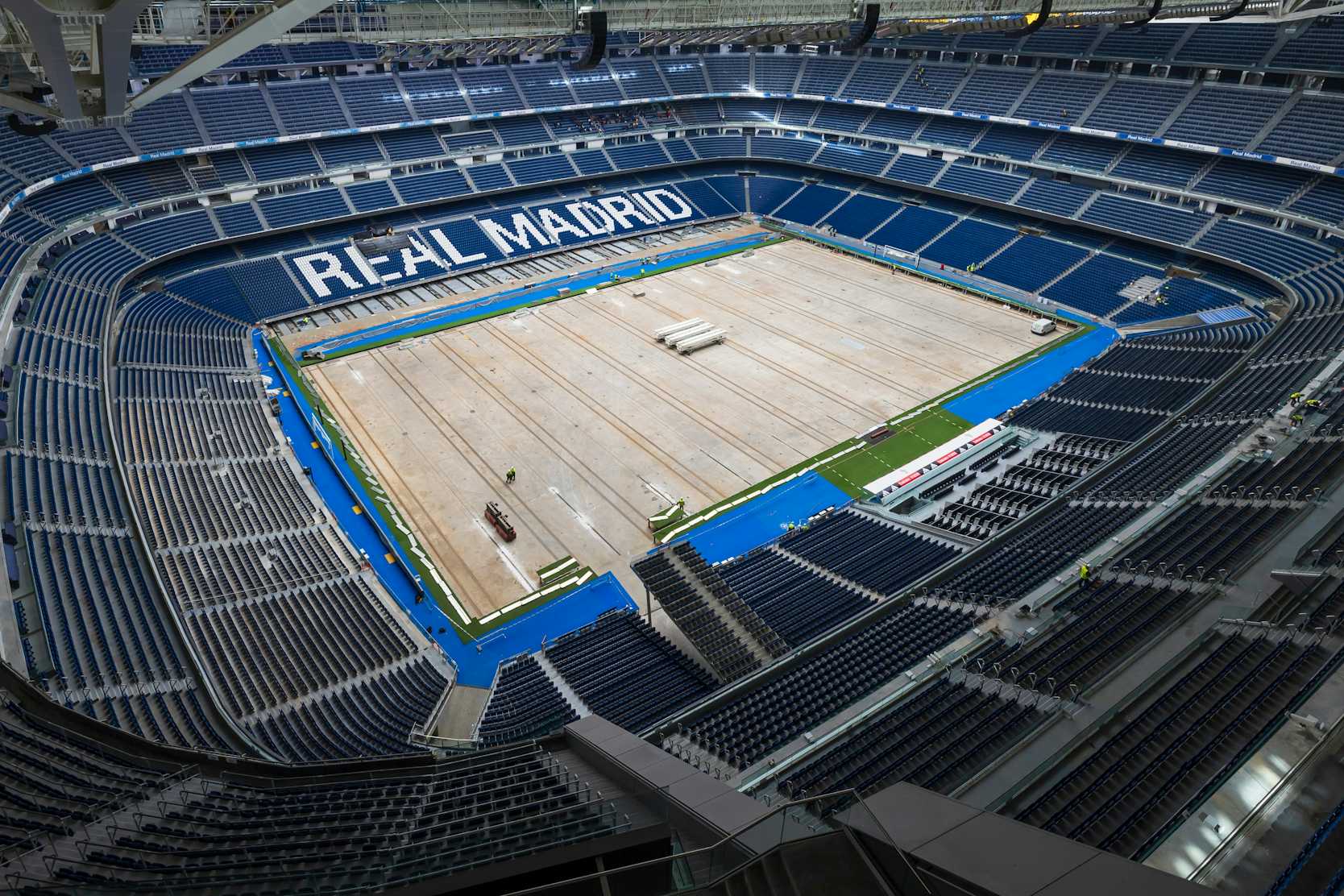
Santiago Bernabeu
That’s not hyperbole. The stands rise almost vertically, tier after tier, until the players below look like figures on a chessboard. You don’t watch a match here so much as you witness it from the walls of a colosseum.
The name itself carries weight. Santiago Bernabéu wasn’t just a president; he was the architect of the club’s ambition. The stadium bearing his name has hosted European Cup finals, World Cup matches, and enough iconic moments to fill a library. Just thinking about it conjures memories of expensively acquired Galácticos and European glory nights under the lights.
What strikes me most is how the building manages to feel both historic and futuristic. The recent renovations wrapped the old bones in steel and glass, but the soul remains. You can still sense the ghosts of old European nights in the concrete.
For a first-time visitor, the experience splits into two distinct parts:
- Matchday: The noise, the flags, the collective intake of breath when a chance opens up. It’s electric chaos with a white-and-gold colour scheme.
- Non-matchday: The tour route, the museum, the trophy room. Quieter, but arguably more revealing about what this club actually is.
I’d argue the Bernabéu works harder than any other stadium to remind you of its own mythology. The corridors are lined with images of past legends. The trophy displays aren’t tucked away in a corner; they’re front and centre, demanding acknowledgement.
That’s the difference between this place and almost anywhere else. Other clubs celebrate their history. Real Madrid weaponises it.
The contrast with the Wanda Metropolitano is stark, and I’ll get to that properly later. But standing outside the Bernabéu, you understand immediately why Atlético fans carry a permanent chip on their shoulder. This building was designed to intimidate before a ball is even kicked.
One thing I always tell people: don’t rush the approach. Walk up the Paseo de la Castellana and let the stadium reveal itself gradually. The first glimpse of those curved towers against the Madrid sky is worth the trip alone.
The Bernabéu isn’t just where Real Madrid plays. It’s where the club’s legend is stored, polished, and put on display for anyone willing to pay attention.
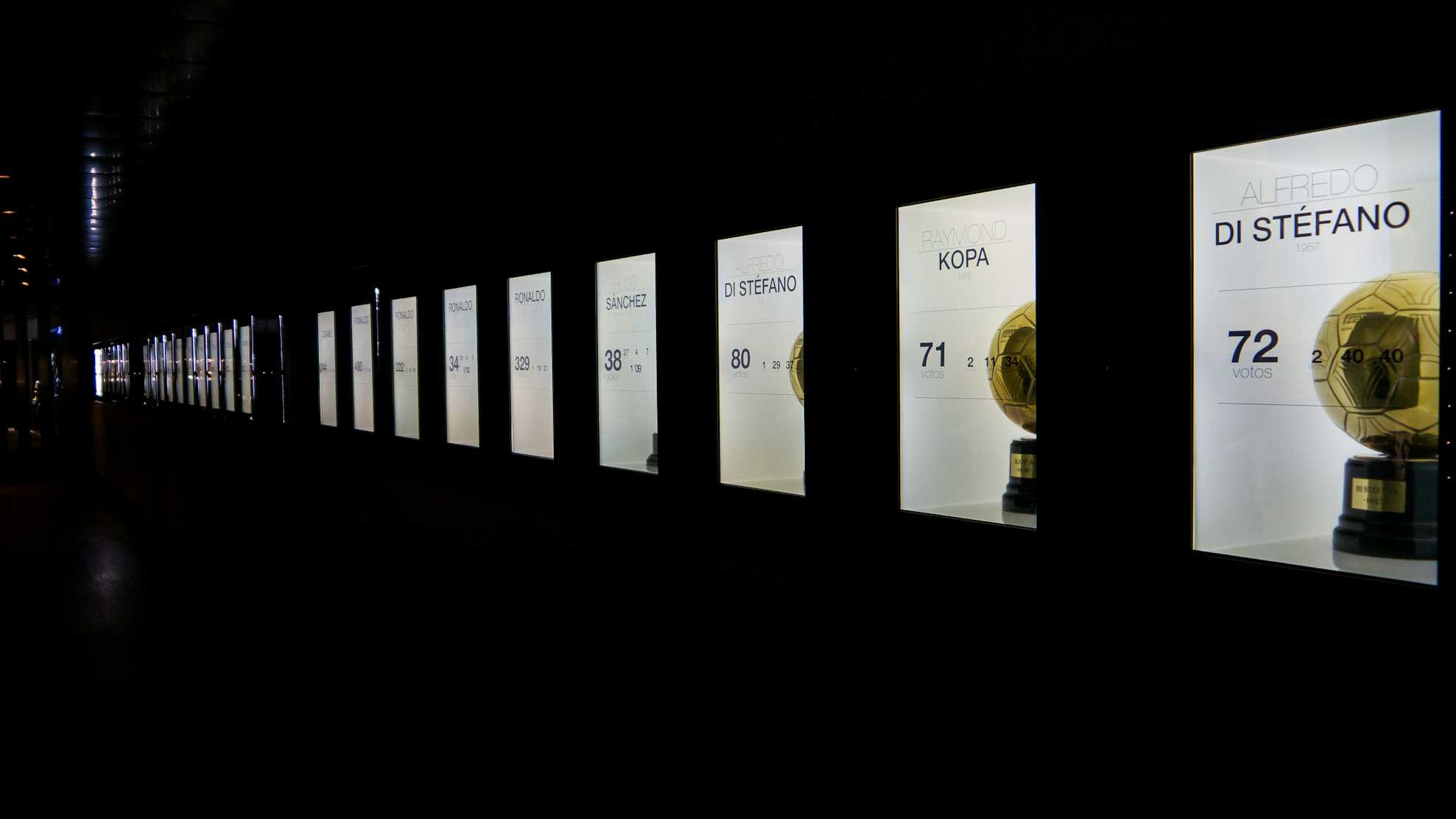
Most stadium tours hand you a headset and shuffle you past a few old shirts. The Bernabéu Tour & Museum does the opposite – it hands you the keys to Real Madrid’s entire identity and lets you wander through it at your own pace. The tour is self-guided, which means no guide rushing you past the good stuff. You move from era to era, from flickering black-and-white reels of Puskas and Di Stéfano through to 21st-century moments streamed in Cristiano Ronaldo-approved HD.
I’ve done plenty of football stadium tours across Europe, and most of them feel like a polite walk through a corporate lobby. This one feels closer to a museum that happens to have a pitch attached. The interactive exhibits do the heavy lifting – touchscreens, old footage, and displays that pull you into the club’s timeline rather than just listing dates at you.
Real Madrid players Santiago Bernabeu museum
What the tour actually shows you
The trophy cabinet is the obvious headline act. Standing in front of the European Cup display, seeing all 14 trophies gleaming under the lights, is the kind of moment that makes even a neutral fan pause. I’m not a Real Madrid supporter, but that room still made me stop and stare. It’s not just silverware – it’s a physical timeline of European football’s most relentless winning machine.
Then there’s the pitch-side view. You walk out to the edge of the turf and look up at the stands, and suddenly the scale of the place hits you. The grass is pristine – almost unnaturally so. It’s the same surface where history has been made time and time again, and you’re standing right there, close enough to imagine the noise.
The player displays span the full spectrum. Zidane, Beckham, Modrić – they’re all there, immortalised in high-definition clips and memorabilia. What struck me most was how the old and new sit side by side. Puskas and Di Stéfano don’t feel like distant museum pieces; they feel like the foundation the modern stars are still building on.
That’s the clever part of the whole experience. It doesn’t just show you trophies and shirts. It connects the dots between generations, so you understand why the weight of that white shirt exists in the first place.
One thing I appreciated: the tour doesn’t force a narrative down your throat. You can spend ten minutes in the trophy room and breeze past the interactive screens, or you can lose an hour watching old match footage. The self-guided format means the experience bends to your level of obsession.
Skip the audio guide if you’re already familiar with the club’s history. I found the visual exhibits strong enough on their own, and the guide sometimes repeats what’s already written on the displays. If you’re new to Real Madrid, though, it’s worth the extra few euros for context.
The museum section covers more than just the men’s first team. Basketball, youth academy, and the club’s broader institutional history all get space. It’s a reminder that Real Madrid is a multi-sport organisation, not just a football club with a fancy stadium.
Here’s the thing about the Bernabéu tour that surprised me: it’s genuinely immersive without relying on gimmicks. No VR headsets, no holograms, no overproduced light shows. Just well-curated exhibits, smart use of video, and the raw material of a century of dominance. That restraint is rare in modern stadium tourism.
Atleti’s stadium tour takes a different approach entirely – more about values and identity than trophy counts. I’ll get to that in a moment, but the contrast is already forming in my head as I walk through the Bernabéu’s halls.
The flow of the tour makes sense, too. You start with the history, move through the trophy room, then out toward the pitch. It builds toward that final reveal rather than blowing it all in the first five minutes. By the time you reach the turf, you’ve earned the view.
My one criticism: the tour can get crowded on match weekends and school holidays. I went on a Tuesday morning in October and had entire rooms to myself. If you can, book a weekday slot and avoid the midday rush.
What you’re really buying here isn’t access to a building. It’s a direct line into how Real Madrid sees itself – as a club that collects legends, polishes them, and sends them into history. The Bernabéu Tour & Museum is that process made visible.
The trophy cabinet alone justifies the ticket price. Fourteen European Cups in one room is a flex no other club on earth can match.
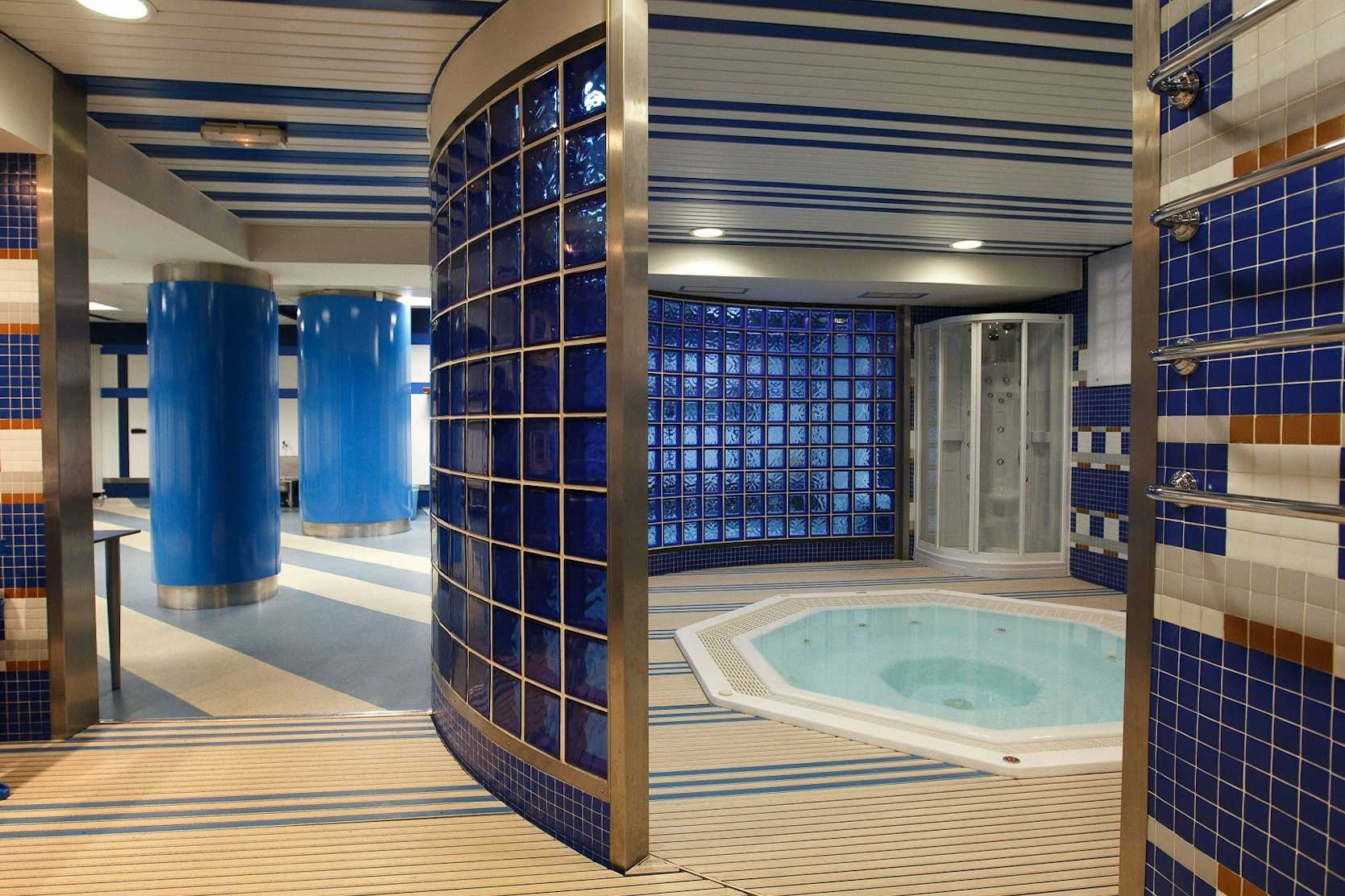
I’ve always thought Atlético Madrid’s Wanda Metropolitano tells the more interesting story of the two grounds, precisely because it was built on defiance rather than dynasty. The self-guided Atleti Territory Experience lets me walk the tunnel to the pitch’s edge without thousands of fans screaming my name, then poke around the home dressing room and presidential box at my own pace. What sticks with me is the museum’s focus on humility, teamwork and sacrifice – values that feel genuinely lived-in when you’ve spent years watching this club scrap in Real Madrid’s shadow.
It’s the antidote to the Bernabéu’s polished glamour.
Santiago Bernabeu
Exploring Atleti’s Home Ground
The Wanda Metropolitano delivers a stadium tour that feels less like a museum visit and more like stepping into Atlético Madrid’s working home. You see the stands, the press room, the presidential box, and the home dressing room before making the tunnel walk to the pitch’s edge. It’s self-guided, modern, and built around the club’s identity rather than its trophy count.
I’ve done both Madrid stadium tours in a single trip, and the Metropolitano hits differently. The Bernabéu wants to impress you. The Metropolitano wants to include you. That’s not a criticism of either approach – it’s the clearest way to understand what separates these two clubs.
The stadium itself opened in 2017, replacing the old Vicente Calderón. It seats just under 70,000 people. The design is sleek, steep-sided, and deliberately intimate.
The stands rise sharply from the pitch, which means even the upper tier feels close to the action. I sat in the top section for a league match and could still hear individual players shouting instructions.
The tour route is straightforward. You start in the upper concourse and work your way down through the levels. The press room is first – a functional space with a long desk and club branding behind it.
It’s not glamorous, but it gives you a sense of how matchday media operations actually work. The presidential box is next, and it’s noticeably less ornate than its equivalent across the city.
Comfortable, yes. Opulent, no. That’s deliberate.
Atletico Madrid
The home dressing room is where the tour shifts tone. It’s circular, with each player’s shirt hung in place. The lighting is low and red.
You can stand in the middle and imagine the pre-match ritual: music, tactical instructions, the captain’s final words. I found it more affecting than I expected.
There’s no glass barrier, no velvet rope. Just the room as the players leave it.
Then comes the tunnel walk. This is the moment the tour is built around. You line up in the tunnel, the same one the players use, and walk out toward the pitch.
The stadium opens up around you. The grass is right there.
The stands tower above. For a few seconds, you can imagine the roar of thousands of fans as you step onto the touchline. You don’t actually walk on the pitch – you reach its edge – but the effect is powerful.
What the Metropolitano tour does well is strip away the distance between fan and club. The facilities on view are working spaces, not display cases. The press room hosts real press conferences.
The dressing room is used every matchday. The tunnel is walked by players who are, at that moment, nervous and focused.
You’re not looking at history behind glass. You’re standing inside it.
That’s the key difference from the Bernabéu experience. Real Madrid’s tour is about legacy – the weight of fourteen European Cups, the legends, the global brand. Atlético’s tour is about belonging.
The club’s identity, built on humility and sacrifice, comes through in every space. There’s no attempt to dazzle you with silverware.
The stadium itself is the statement.
A few things worth knowing before you go:
- The tour is self-guided, so you can move at your own pace. I spent about 90 minutes inside.
- Photography is allowed throughout, including the dressing room and tunnel.
- The pitch-side area is accessible, but you stay on the touchline – no walking on the grass.
- Matchday tours are limited or closed, so book for a non-matchday if you want the full route.
The museum sits inside the stadium, and it’s where the club’s values get their fullest expression. I’ll get to that in a moment. But the stadium tour alone makes a strong case.
It’s not trying to be the Bernabéu. It’s trying to be the Metropolitano – and that’s exactly what makes it worth your time.
Skip the Metropolitano and you miss half the story of football in Madrid. The city’s football identity isn’t just about European dominance. It’s also about a club that built a modern home without losing its working-class soul. The stadium tour proves that point better than any article could.
|
Atleti Territory Experience: Stadium & Museum
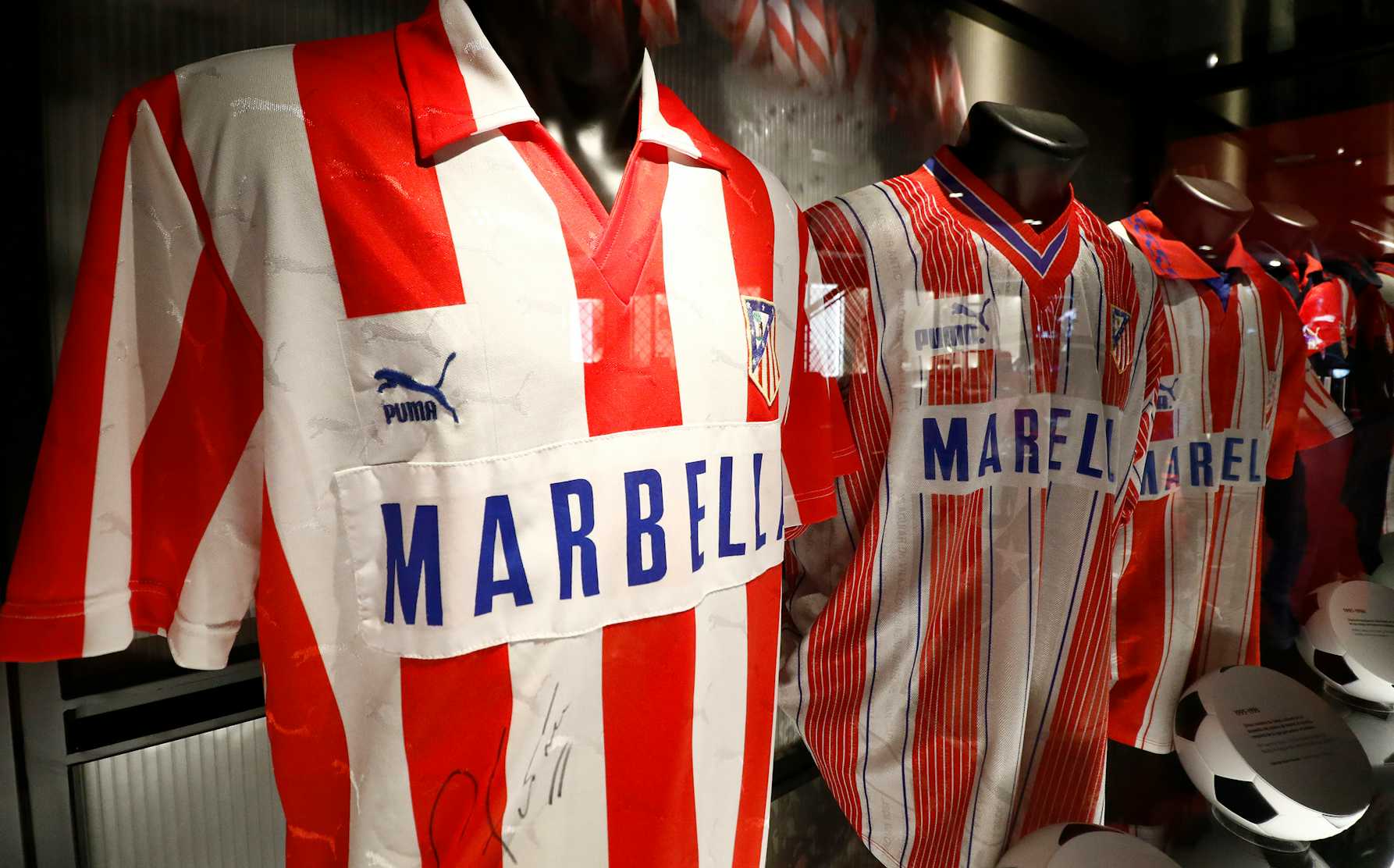
Some museums want you to admire what a club has won. This one wants you to understand what the club has survived. The Atleti Territory Experience is an interactive museum inside the Wanda Metropolitano that tells Atlético Madrid’s story through its values of humility, teamwork and sacrifice rather than through a wall of silverware.
I’ve walked through plenty of football museums that feel like trophy showrooms. This one doesn’t. It celebrates the Atlético teams of yesteryear, sure, but the emotional weight comes from how it frames struggle as something to be proud of.
What stuck with me most was the display dedicated to the ‘El Pupas’ era. El Pupas translates roughly to “The Jinxed One” – a nickname Atlético earned through decades of heartbreaking near-misses and cruel defeats. Most clubs would bury that history. Atlético built an exhibit around it.
What the Interactive Museum Gets Right
The museum doesn’t just show you artefacts. It makes you feel the club’s philosophy. Here’s what stood out:
- The ‘El Pupas’ display – celebrating resilience through past struggles, not hiding them
- Interactive exhibits that connect the club’s working-class roots to its modern identity
- Team-focused storytelling – the narrative centres on collective effort, not individual stars
- Values over trophies – humility, teamwork and sacrifice are presented as the real prizes
That last point matters. Atlético have won plenty, but the museum’s message is that how they won – or how they kept fighting when they didn’t – defines them more than any single title.
The interactive elements are genuinely engaging, not gimmicky. You can explore the club’s history at your own pace, dipping into eras that interest you. I spent far longer in the ‘El Pupas’ section than I expected, partly because the storytelling was so compelling and partly because I kept thinking about how rare it is for a club to embrace its painful moments so openly.
That’s the philosophical heart of Atlético Madrid. They don’t pretend the hard times didn’t happen. They treat them as the foundation everything else is built on.
Diego Simeone’s teams embody this ethos on the pitch, but the museum shows it’s been there all along. The club’s identity isn’t a recent invention – it’s a thread running through decades of history, through players and managers who understood that wearing the red and white shirt means fighting for every ball.
I’ll admit I came in expecting a smaller, less polished version of what I’d seen elsewhere. I was wrong. The Atleti Territory Experience is smaller in scale, but it’s sharper in focus. It knows exactly what story it wants to tell and tells it well.
One thing I appreciated: the museum doesn’t try to compete on glamour. It leans into being the working-class counterpoint, the club that has to scrap for everything. That honesty is refreshing.
By the time I left, I understood why Atlético fans are so fiercely loyal. The club’s values aren’t marketing slogans. They’re survival mechanisms, passed down through generations of supporters who’ve watched their team lose in the cruellest ways and come back anyway.
Madrid has more than football to offer, of course – the Prado and the Royal Palace are worth your time too. But if you want to understand the city’s football soul, this museum gets you closer to it than any trophy cabinet ever could.
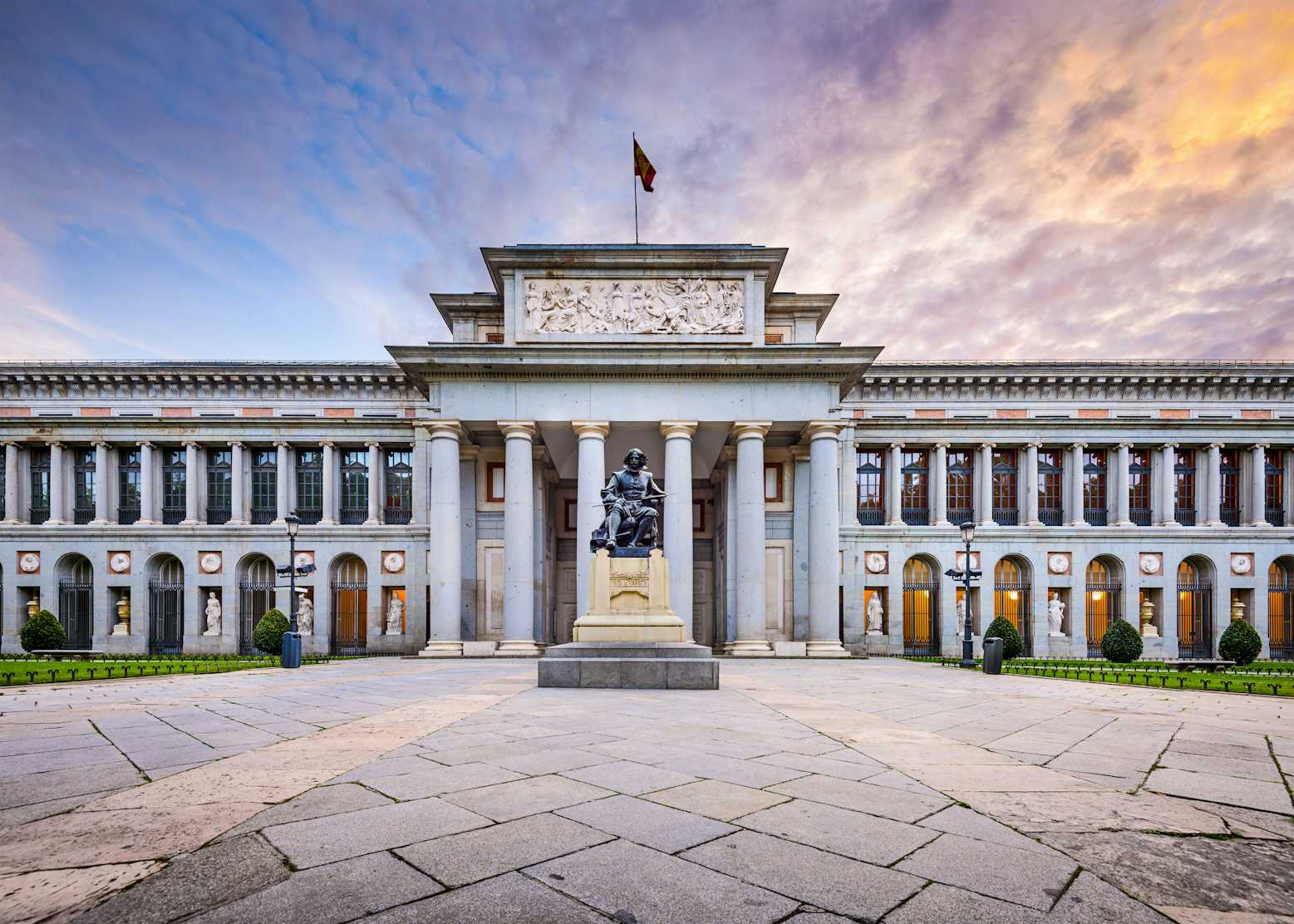
My city tour in Madrid always starts with the same argument: is the Spanish capital a football city that happens to have great art, or an art city that happens to have great football? The downloadable audio guide settles it for me, because I can wander from the Museo Nacional del Prado to the Royal Palace while still keeping one eye on the skyline for the Bernabéu. That flexibility matters more than any single landmark.
I’ve spent whole mornings lost in Velázquez and still made kick-off with time to spare, which is exactly how a day in Madrid should work.
Beyond the Pitch: Madrid’s Other Gems
Madrid’s cultural richness extends far beyond its football stadiums, offering a vast array of historical and artistic treasures that most match-day visitors never see. I’ve spent enough time in this city to know that the Bernabéu and the Metropolitano are just the opening act.
Here’s the constraint I always hit: a football trip eats your schedule. Match day, stadium tour, the museum, maybe a second stadium. Before you know it, three days are gone and you’ve barely left the area around the two grounds. That’s a mistake.
Madrid rewards the visitor who steps away from the pitch. The city has been layering art, royal history, and neighbourhood life for centuries. Football is the loudest story here, but it’s not the only one.
Spending an afternoon wandering through the Royal Palace is a stark contrast to the roar of the stadium. One minute you’re shoulder-to-shoulder with chanting fans, the next you’re standing in a room where kings signed treaties. The silence feels almost physical.
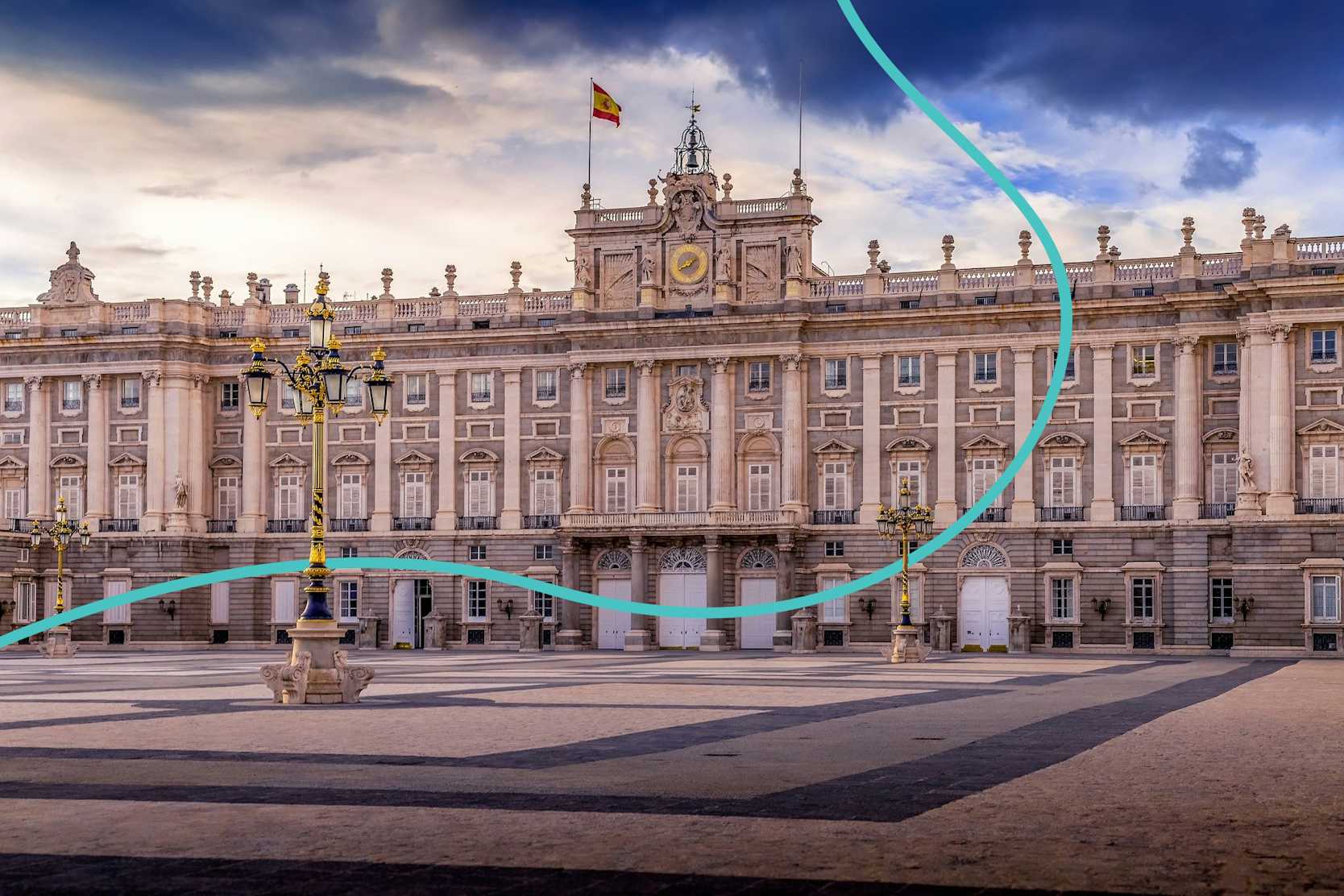
I’ll admit my first trip to Madrid was all football. I skipped the Prado because I thought I’d seen enough paintings in other European cities. That was a misstep. The Museo Nacional del Prado holds works by Velázquez, Goya, and El Greco that you simply cannot see anywhere else at this scale.
What surprised me most is how close everything sits. You can walk from the Royal Palace to the Plaza Mayor in under ten minutes. Grab a coffee, wander through the literary quarter, and still make an evening kickoff without rushing.
The city’s non-football attractions break down into a few clear categories:
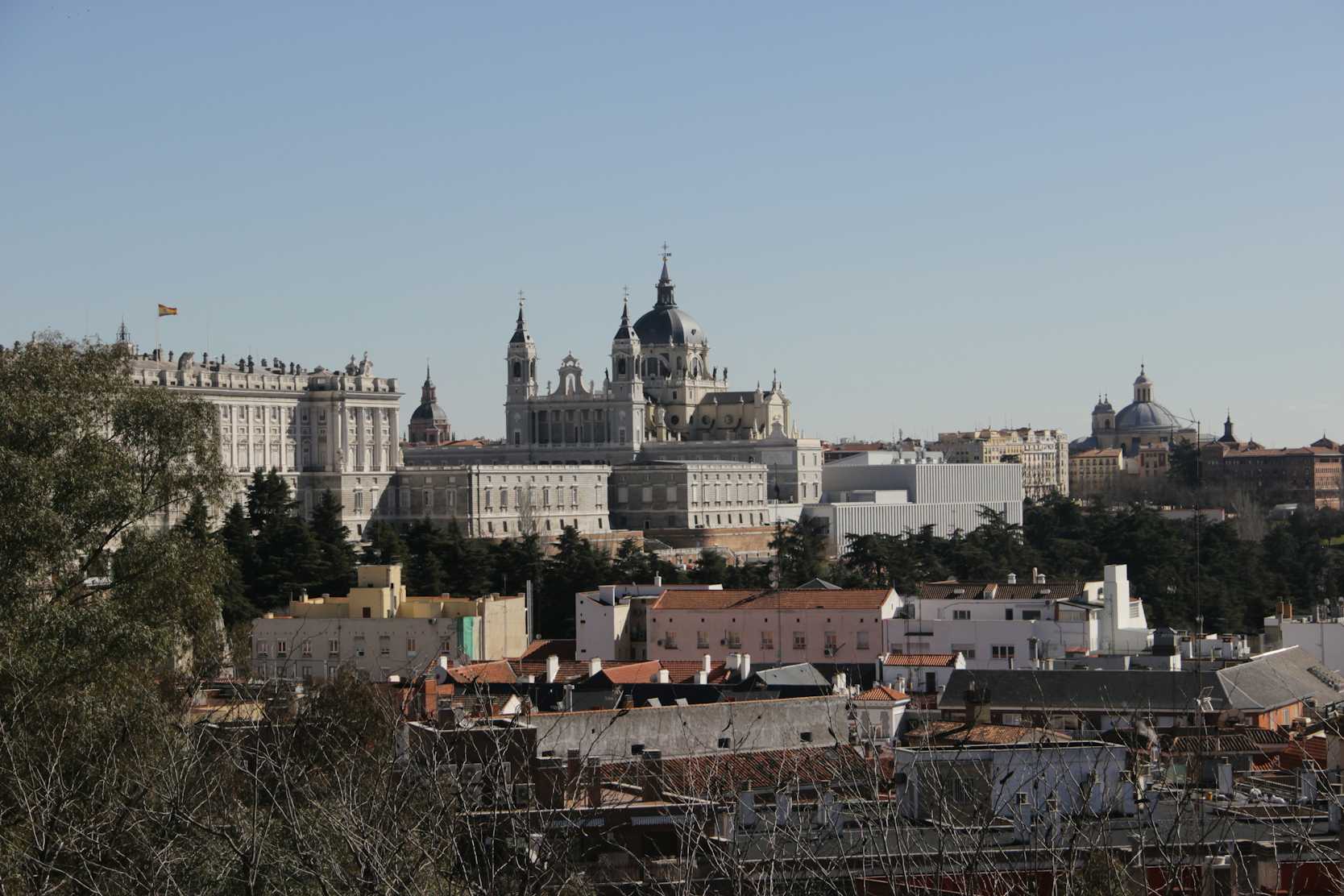
- Art museums: The Prado, the Reina Sofía, and the Thyssen-Bornemisza form a triangle of world-class collections within a short walk of each other.
- Royal and historic sites: The Royal Palace, the Almudena Cathedral, and the Plaza de Oriente give you the city’s monarchical past in one compact area.
- Neighbourhood life: La Latina, Malasaña, and Lavapiés offer tapas bars, markets, and street life that have nothing to do with football but everything to do with Madrid.
- Parks and viewpoints: El Retiro Park and the Temple of Debod provide green space and sunset views that reset your pace after a busy morning.
I’ve learned to build at least one non-football day into every Madrid trip. It changes how I understand the city. The football clubs draw on this same cultural energy – the pride, the history, the sense of place. You see it differently after walking through the Habsburg quarters.
That said, exploring all of this efficiently takes planning. Madrid’s attractions spread across a large area, and the metro, while excellent, doesn’t always connect the dots in a logical order for a visitor.
This is where a downloadable Madrid audio guide earns its place. An interactive map with pre-loaded routes lets you explore at your own pace. You can visit over 100 points of interest with audio snippets available at each stop, including the Prado, the Royal Palace, and many more.
I used one on my last visit and it solved a problem I didn’t know I had. Instead of staring at my phone trying to figure out what was nearby, I just followed a route and listened. The audio snippets gave me context without burying me in detail.
One afternoon I walked from the Royal Palace down to the Plaza de España, then cut through to the Temple of Debod for sunset. The guide pointed out details I’d have missed – a plaque here, a facade there. It felt like having a knowledgeable friend walking alongside me.
Madrid’s football identity is real and worth every minute you give it. But the city’s other gems are not a consolation prize. They’re the reason Madrid feels like a capital rather than just a city with two big clubs.
Interactive map
Decide early whether you want a guide in your pocket or a guide in your ear. The interactive map inside Madrid’s downloadable audio guide app gives you both, and it changes how the city unfolds around you. Pre-loaded routes mean you don’t have to plan a single step, yet you can still wander off-script whenever a side street looks more interesting than the one on screen.
I downloaded the app before a free afternoon and let it steer me from the Royal Palace toward Plaza Mayor. Standing in the centre of that vast square, I pressed play on the audio snippet. The app explained how the plaza once hosted bullfights, executions, and markets, all while I turned in a slow circle to match the buildings to the story. That’s the difference between reading a plaque and actually understanding a place.
The map isn’t just a dot on a screen. It shows your position relative to over 100 points of interest, each with its own short audio clip. You tap a marker, listen for two or three minutes, then walk to the next one.
No tour group. No fixed schedule.
No guide waving an umbrella at you.
What surprised me most was how the app handled the Prado. I’d already spent hours inside on a previous day, but the audio guide focused on the building’s history and the surrounding boulevard rather than rehashing the paintings. It knew when to go deep and when to stay surface-level. That’s smart design.
The Royal Palace marker sits just north of the cathedral, and the app routes you through the Plaza de Oriente gardens to reach it. I’d walked that route before without noticing the statues of Spanish kings along the balustrade. The audio pointed them out one by one. Suddenly a shortcut became a history lesson.
Battery drain is real. I burned through 40% of my phone in three hours because the GPS stays active. Carry a power bank or download the offline map before you leave the hotel. The app works without data once the routes are saved, which saved me from roaming charges.
One thing the app does not do is replace serendipity. I ignored its suggested turn near Calle Mayor and ended up at a churros stand that no guidebook mentions. The map re-routed me without complaint. That flexibility is the whole point of a self-paced tool.
For football fans, the app also marks the stadiums. You’ll see the Bernabéu and the Metropolitano as points on the same map as the Prado and the palace. It’s a small reminder that Madrid’s football identity sits inside a much larger urban story.
Skip the premium upgrade unless you want extended historical deep-dives. The free version covers every major landmark with enough detail for a first visit.
The app turned a random Tuesday afternoon into a structured walk through six centuries of Madrid’s history. I finished at the Plaza Mayor with a coffee, a better understanding of the city, and no one telling me when to move on.
Conclusion
I’ve stood in both stadiums, and the contrast tells you everything about this city. One feels like a cathedral to glory, the other like a fortress built on grit. Madrid doesn’t ask you to choose between them-it asks you to understand both.
My time at the Real Madrid Santiago Bernabeu stadium football experience left me genuinely awestruck. The trophy cabinet alone justifies the trip. Fourteen European Cups sit there, gleaming under lights that make you feel slightly underdressed.
Then I walked through the tunnel at the Wanda Metropolitano and felt something entirely different-a rawer, more human energy. Atlético Madrid’s story of humility and sacrifice hits differently when you’re standing in their dressing room.
Here’s what I’d tell any friend planning this trip:
- The Bernabéu tour is a history lesson you can touch. Interactive exhibits take you from Puskas and Di Stefano through to Modrić and Cristiano Ronaldo, all in crisp HD. The self-guided format means you linger where you want.
- Atleti’s “Territory Experience” is the emotional counterweight. The museum doesn’t just show trophies-it explains why the club values teamwork over star power. The tunnel walk to the pitch edge is quietly thrilling.
- Madrid rewards football fans who also explore beyond the pitch. The downloadable audio guide covers over 100 points of interest, from the Museo Nacional del Prado to the Royal Palace. I used it on my second day and wished I’d started sooner.
- You don’t need to pick a side to appreciate both. Real Madrid’s dominance and Atlético’s resilience are two halves of the same city. Seeing both stadiums gives you the full picture.
Book the Bernabéu tour first-slots fill quickly, especially on match weeks. Then add the Wanda Metropolitano visit for the same day or the next morning. Download the Madrid audio guide before you land so it’s ready when you step off the metro.
Madrid’s football culture isn’t a side attraction. It’s the city’s pulse, and you can feel it in both stadiums.
Frequently Asked Questions
Can I visit the Santiago Bernabéu Stadium if there isn't a match on?
Absolutely. The Santiago Bernabéu Tour & Museum is a self-guided experience available on non-match days. You can explore the club's history, see the trophy cabinet, and walk on the pristine turf, reliving iconic moments from Real Madrid's past. It’s a pilgrimage site for fans, even without a game.
What's included in the Wanda Metropolitano stadium tour?
The Wanda Metropolitano tour offers a self-guided look at Atlético Madrid's home. You'll see the stands, press room, presidential box, home dressing room, and even make the tunnel walk to the pitch's edge. The interactive museum delves into the club's values and celebrates past teams.
Is it possible to see both Real Madrid and Atlético Madrid stadiums?
Yes, many football-themed bundles in Madrid allow you to visit the hallowed homes of both Real Madrid at Santiago Bernabéu and Atlético Madrid at Wanda Metropolitano. This lets you compare the experiences and decide whether you represent red or white in the city.
Beyond football, what else can I explore in Madrid?
Madrid offers much more than football. A downloadable audio guide app with an interactive map can help you explore over 100 points of interest. Key attractions include the Museo Nacional del Prado and the Royal Palace, providing a rich cultural experience beyond the pitches.