
I went to a flamenco performance in a basement in Madrid, and as this dancer was tapping out his rhythms he rattled the glasses off of my table. This vocalist’s crackling voice had something that felt like the age of the building, and for sixty minutes I didn’t even check my phone.
The flamenco experience changed how I see Spanish Culture; and it’s because I tell all travelers the same thing: the right flamenco experience isn’t a performance you are watching. It is an electric current you can step into.
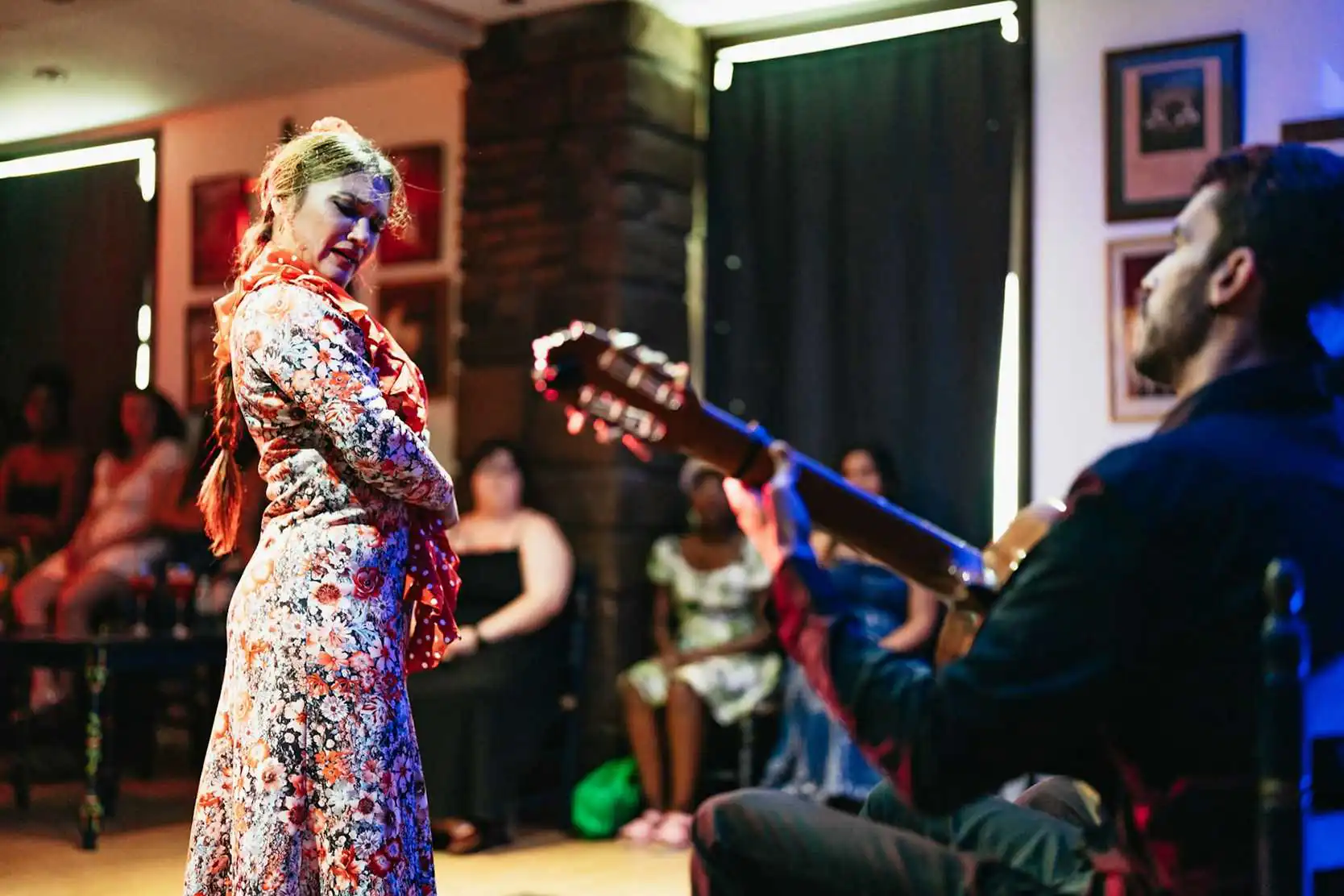

Michael Madsen shares his best flamenco experinces with you
Flamenco is a UNESCO protected cultural heritage from Andalusia, developed around three core elements of flamenco: Cante (flamenco singing), Baile (flamenco dance) & Toque (the guitar).
To experience flamenco first hand avoid going to large dinner theaters. Instead try to find a local tablao or cave location where you will be able to see the performance up close. This proximity creates an environment which allows for an emotional connection to occur between the audience and performer. This is the key differentiator between experiencing flamenco as a tourist attraction versus creating memories of your experiences.
I’ve had my share of both types of experiences. I’ve booked expensive packages at restaurants with subpar food and stages so distant from the performance area that even though there were a few dozen people dancing, they appeared to be postage stamp sized.
At the same time I’ve walked through caves in the Sacramonte district in Granada where one of the most talented musicians I have ever seen has played while closing his eyes, where the wall literally pulled together with each note sung.
It wasn’t good fortune that created these two completely separate and distinct experiences. Rather, it was an understanding of how to identify quality when searching for a live flamenco performance.
This article describes the above mentioned cities and their respective qualities of live flamenco performances, including specific locations, venues and other relevant information.
- What flamenco actually is, and why the guitar, voice, and dance are inseparable
- How to spot an authentic tablao from a manufactured one
- The best intimate venues in Seville, Granada, Cordoba, Malaga, Madrid, and Barcelona
- What to expect from a performance, from the first guitar note to the final stomp
I came to realize quickly one important fact about flamenco performances – they don’t necessarily require a large venue, fine dining, a souvenir photo etc., all they really need is a small space; a hardwood floor; and performers who are acting out of passion rather than adoration.
When the vocalist screams from exhaustion and when the dancer strikes the hardwood floor as if it were her heart beat, you will also come to appreciate why flamenco remains alive after so many years, still burning.
The following isn’t a list of the largest flamenco venues. It’s my compilation of some of the most genuine ones. These are the locations I would recommend to anyone asking “where can I experience flamenco?” instead of simply seeing it. Come with an open mind; leave your expectations outside; allow the music to continue doing what it has for generations.
It is my hope that by reading these recommendations, people will be able to enjoy the true spirit of flamenco. If you ever find yourself visiting any of the cities below, please visit one of the recommended sites listed.
Contents
- Frequently Asked Questions about Flamenco experiences
- Seville performances
- Granada performances
- Cordoba performances
- Malaga performances
- Madrid performances
- Barcelona performances
Flamenco is an unbridled, spontaneous dialogue among a vocalist, a guitarist and a dancer that originated in the southern Andalusia region and has been shaped by hundreds of years of influences from the gypsies, moors and jews.
I thought flamenco was simply rough foot work and fluttering skirts, but when I finally saw a dancers face contorted while she sang the cante (song), I realized it was something more like visible pain.
The dance itself isn’t traditional choreographed movement — rather it’s a physical struggle for control of the beat, where each step of the zapateado foot work answers back to the guitar and each note of the singers cry draws both of them forward.
Flamenco performance
When I saw the performance in front of me as an actual conversation between the singer, the guitarist, and the dancer, the entire art form became clear to me.
Flamenco is a form of expressive arts born in Andalusia. It includes singing with great energy; guitar playing that has a trance-inducing quality; and dance. However, these three parts do not function independently of one another.
Rather, they support, resist, interrupt, and respond to one another at all times during the performance. For example, the vocalist will hold a pitch long enough for the guitarist to fill in the empty space.
Additionally, when the dancer strikes the floor with his heel, he creates percussion that elicits a response from the vocalist who extends a musical phrase. This back-and-forth interaction is what constitutes the performance.
The extreme range of emotions is what first-time viewers find most surprising about flamenco. During a single show, an audience may experience sadness that weighs down upon their heart to such a degree that it seems to be physically sitting in their chest.
Then, almost immediately after, they will experience joy that is so intense it will literally lift you up from your chair. I have personally seen a dancer’s expression change dramatically from the deepest sense of loss to the greatest possible joy within a single “palo,” which refers to a style or form of flamenco.
This transformation seemed less like acting than like a storm moving through.
Artists bare themselves emotionally on stage. In a successful tablao, there is little to no separation between the artist and audience.
That level of exposure was not coincidental. Flamenco originated under difficult circumstances. Therefore, the cante jundo (deep song) continues to carry this weight.
Therefore, it is quite common for vocalists to intentionally allow their voices to crack, rasp or slide off-pitch while performing. Those intentional moments of departure from perfect pitch are not errors – they are examples of emotion overpowering technical precision.
And you need to listen for those moments.
If the overall atmosphere of the show appears to be overly polished or perfectly paced, if it appears to be too “safe” – then you likely are seeing a watered-down version of flamenco intended primarily for tourists and not a traditional flamenco performance.
Besides the emotional connection established between the performers and the audience, the structure of the performance itself is equally important. Typically, a traditional performance will follow an ordered sequence of palos, each having its own rhythm, mood and place of origin.
Some palos are slow and serious – others are fast-paced and playful. Many performances conclude with the upbeat palo known as bulerías. Each type of palo establishes its own distinct energy and provides a framework for the dancers’ movements.
For example, while some types of palos establish a slower and more solemn mood (such as solea), others create a faster-paced energetic environment (like bulerias). Before you realize the names of the various palos, a well-performed show can cause you to perceive differences in energy.
The beat shifts – the dancer changes postures – and suddenly you’re standing in a new room.
I tell my friends before their first show:
- Watch the hands and face, not just the feet. The footwork is loud and impressive, but the emotional story lives in the fingers, the shoulders, and the eyes.
- Listen for the silences. The pauses between a singer’s phrases are not empty. They are where the feeling lands.
- Do not clap unless the locals do. Flamenco has its own rhythmic clapping patterns, and random applause breaks the spell.
- Expect intensity, not comfort. A genuine performance can be uncomfortable. That is the point.
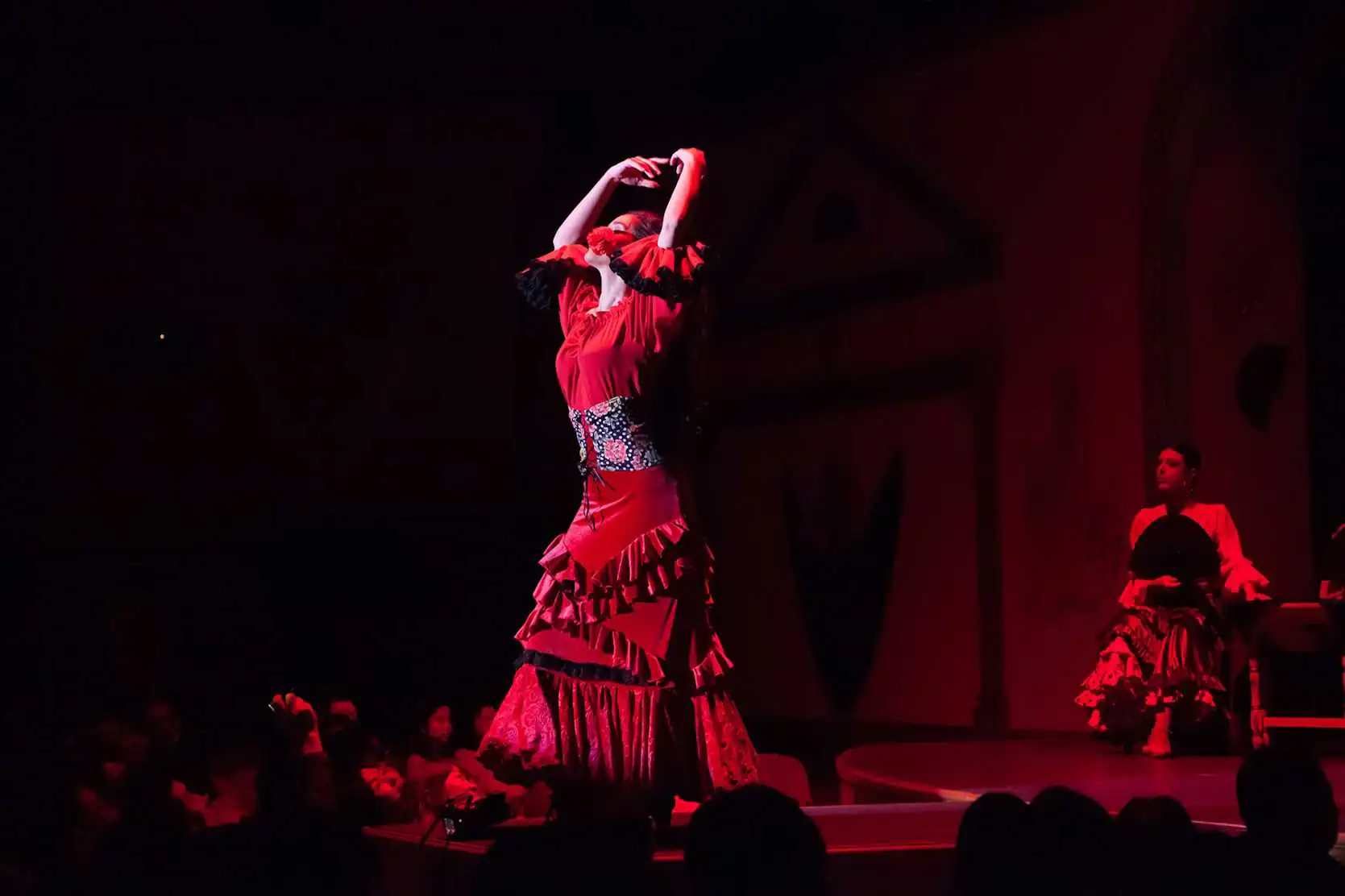
El Palacio Andaluz Sevilla
Over many years of witnessing performances by flamenco artists throughout Spain, I’ve realized that the dimensions of the space used for an artist’s performance is directly related to the nature of the performance itself. When a flamenco artist performs in a narrow cave within Granada’s Sacromonte or in a subterranean tablao in Madrid, they don’t need to throw their voice to reach anyone seated at the rear of the tablao. This creates a sense of shared breathing.
What is visible during the performance includes the dancer’s perspiration; the guitarist’s hardened fingers; the singer’s clench jaws – and this is all possible to observe due to proximity. Proximity doesn’t make anything better.
This is how the art should function.
Repeat viewings of flamenco will allow you to understand more of what occurs. Initially, you’ll experience a spectacle. At your second showing, you begin to hear the structure of the performance. By your third or fourth showing, you’ll identify a compás (the repetitive pattern which provides a rhythmic framework) and feel when an artist intentionally deviates from it. As such, the music ceases to be perceived as merely foreign and begins to become decipherable.
As with any language, it takes some time before you develop an understanding of the language/structure of flamenco.
Understandably, comprehension of the total artistic performance is essential for developing appreciation of each individual component of the performance (dance, guitar and vocal). Each element bears its own portion of the emotional burden; however, they do not exist independently upon that stage. All three elements are intertwined and woven together through the performance.
Flamenco is not background music. Flamenco is not a dinner show. Flamenco is a direct, and possibly uncomfortable, often thrilling exchange of feelings between the artist(s) performing and those individuals who are able to bear witness to it. For decades this exchange has occurred among the people of Andalusia, and thus far it has not been softened.
Flamenco dance and step: An Art
Prior to attending my first tablao I believed that flamenco dancing primarily involved twirling skirts and posing dramatically.
Upon sitting close enough to see a dancer’s feet, I came to realize that flamenco dance involves using the body as a percussion instrument. Every tap/stomp of the foot and every flick of the wrist/turn of the hand contains significance.
The dancer is not simply ornamentally adorning the music – she/he is part of the rhythm section.
The formalized term for this high-energy footwork is zapateado. Zapateado is not mere stomping. A highly skilled bailaora constructs rhythmic patterns with her heel/toe/sol and rapidly produces a counter-rhythmic response to that produced by the guitar.
I have witnessed a dancer’s zapateado build in intensity until it resembled nothing less than a snare drum roll and then abruptly cease on a silence that the guitarist had provided. The silence was almost as audible as the tapping.
Above the waist, a completely different narrative unfolds. Braceo refers to the arm movements; specifically, the slow, sculpted motions which create frames around the body and draw the viewer’s eyes upward. Floreo refer to the finger work; particularly, the twisting motion of the fingers that blooms open/closes much like a flower is illuminated by sunlight.
Beginners may believe these are simply aesthetically pleasing gestures. However, they are not.
An abrupt twist of the wrist can signify defiance. A soft, open hand can signify grief. I recall seeing a dancer maintain a floreo so stationary that the entire audience leaned forward, anticipating the next musical note.
There is another aspect of flamenco dancing known as duende. There isn’t an English equivalent to describe it. Duende represents that point when technique leaves off and emotion takes over.
It is entirely possible for a dancer to have perfect zapateado and still lack duende. Conversely, a dancer could have imperfect technique but evoke an unspoken reaction in you.
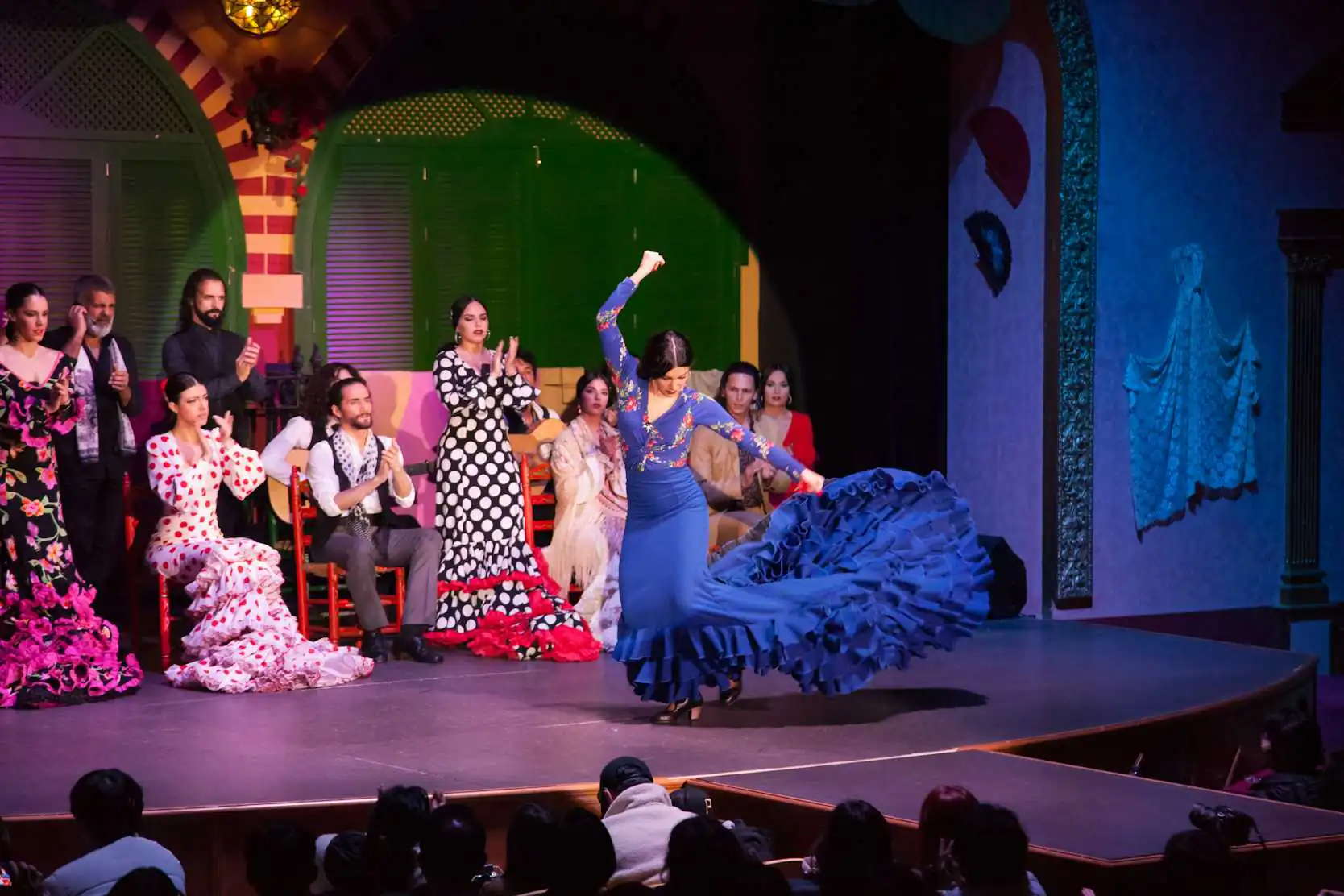
El Palacio Andaluz Sevilla
Flamenco dancers use their bodies as instruments in a rhythmic conversation with musicians, so the dancers don’t need to wear castanets. Many great performances use no castanets at all.
Body percussion (such as snapping your fingers), the slap of hands, the kick of a shoe, etc., can be strong enough. Castanets are a visual element and not the foundation of the rhythm.
More than anything else, it is the type of clothing on stage that has surprised me. A bata de cola is a large, flowing skirt which a flamenco dancer uses by kicking and whipping around her body to create spiral movements. This also creates movement and helps the dancer maintain balance and control.
This large skirt adds additional challenges to the already physically demanding task of executing zapateado. It requires significant physical conditioning to both manage the amount of fabric swinging from the waistband and execute precise footwork at high speeds. I found myself trying to visualize the level of muscular strength required to perform this choreography and ultimately had to stop mid-performance.
Surprising me even more than the physicality of performing flamenco was how much the dance listens. Unlike ballet where a performer follows a pre-determined sequence of steps, flamenco involves constant interaction with the vocalist and guitarist. Great flamenco artists respond to vocal inflections, guitar phrasing, and often allow the other musicians to enter at random times.
Flamenco is a conversation – and one in which the dancer’s feet are just one of many voices. That is why the guitarist and dancer are always connected. A fast zapateado will mirror the intense strumming pattern of the guitarist. Each musician is challenging the other to increase tempo, until one backs off slightly before things collapse.
A flamenco dancer’s body becomes another instrument to support the guitarist. I’ve noticed audience members clapping during a spin when the true artistic work occurred within a brief pause. Attention is rewarded when performing flamenco. The story is in the specifics, and the specifics do not let up.
Although my first serious lesson in flamenco guitar was based on observing a guitarist’s right hand more than a dancer’s feet, this does not mean that the guitarist provides “background” music. The toque sets the emotional tone for the performance by rapidly moving from loud rasgueado-style chordal strums to soft, whispery falsetas in a single breath. In addition to listening to the vocals and dance, a good flamenco guitarist constantly monitors the vocalist and dancer so that he can respond quickly to changes in rhythm or mood that occur suddenly during a performance.
It is this dynamic conversation that gives each performance an energy of life and puts the guitar directly at the center of the flamenco experience.
Now decide if you would like to listen to a flamenco guitarist or experience being one.
Flamenco is not a style or a mood — it is a conduit for an artist’s deepest feelings delivered via the strings and into the room. When a guitarist approaches a falseta — an instrumental melodic break between phrases — the notes are not ornamentation.
They are confession. I have been able to observe closely enough to witness a player grit his teeth prior to executing a difficult section and witness the subsequent sounds emanating from his instrument as akin to opening doors.
There is something that distinguishes this emotional connection that occurs in flamenco from experiencing music at a concert. While there may be some impressive technical aspects to a classical guitarist’s performance, a flamenco guitarist seeks to disturb, soothe, then disturb you again.
While technique is important, it only serves to facilitate the speed at which emotion moves past rational thought.
There was once a time when I witnessed a guitarist in a small Madrid tablao deliver a slow, mournful passage that caused the singer to lower his head and close his eyes. No applause erupted after this performance. Instead, we were left with silence.
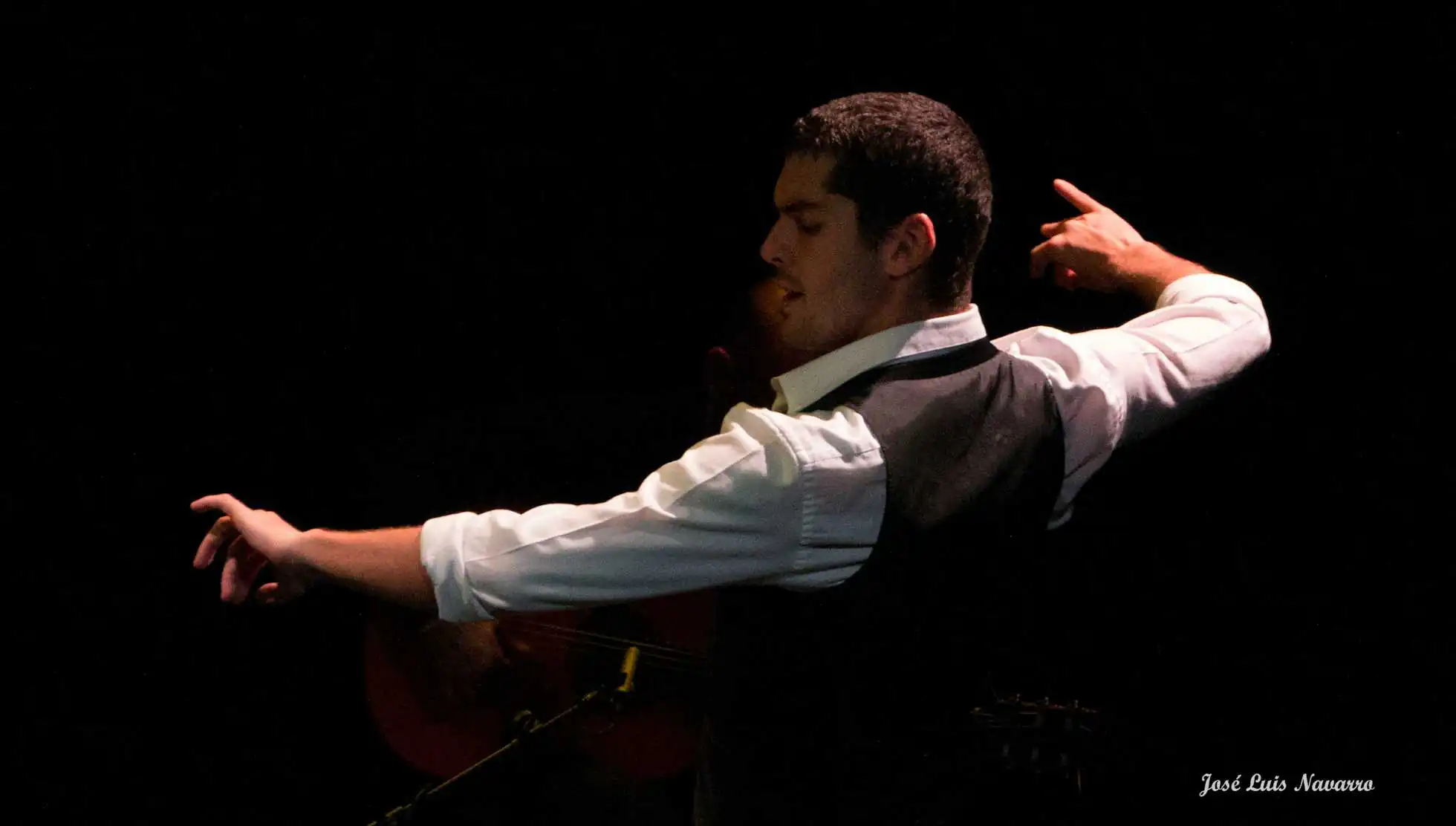
Triana Theater Sevilla
Where the passion can be found
Emotionally speaking, passion in flamenco is not about how loudly you play or how quickly your fingers move; rather, it is all about intent — the feeling that each and every note has a purpose to be there. A guitarist could play one chord and hang onto it long enough that the whole room leans forward.
Being able to show restraint on the guitar is much more difficult than playing quickly. Most beginners miss this aspect because they are focused on the big ending, whereas the emotional center of a piece is typically found in its quietest moments.
In addition to providing an emotional center, both the audience and the musician share a dialogue during a performance. When a musician reaches a very emotional peak during a guitar solo, someone in the crowd may exclaim jaleo (a type of fanfare) with words such as “¡ole!”, or “¡eso!”, which serves to provide additional energy for the musician. In turn, the musician feels energized by those words and responds accordingly.
This back-and-forth also occurs between the musicians themselves. For example, when a guitarist reaches a musical climax and is finished singing a particular phrase, he/she looks up at the dancer who responds with her footwork. I have seen a timid looking tourist in the front row yell “jaleo” at the completely wrong time and yet receive a nod from the musician, simply because his effort to connect was genuine. This represents the essence of flamenco — honesty of emotion before precision.
Here is what I look for when trying to determine whether a guitarist has developed a connection to the music’s roots:
- Breathing with the singer. The guitar does not play over the voice; it inhales and exhales around it.
- Silence as a note. A pause before a resolution can carry more weight than the resolution itself.
- Reaction to the room. A player who changes dynamics because someone shouted or a dancer stomped is present, not performing from memory.
- Imperfection with purpose. A slightly buzzed string or a rushed beat can be more alive than a sterile recording.
There’s nothing about that going to be on a studio album. You have to be in the same space. This is why I always tell my friends to avoid the tourist dinners and go to a small place where you could see the sweat on the forearm of the guitarist.
It isn’t staged. It seeps out.
What strikes first timers is the wide range of emotion within flamenco, and it doesn’t allow itself to remain in one emotion. A guitarist may jump from grief to ridicule in less than a minute. The back-and-forth is not sloppy; it is an honest representation of the art form. People don’t separate their emotions into nice little boxes; neither does flamenco.
Another thing I’ve come to realize is that the guitarist isn’t the headliner. In flamenco, the guitar provides support to both the singer and the dancer; once those two have had their moments, the guitar then takes center stage if called upon by the situation. The guitar player’s humility is a major component of flamenco’s passion.
The best musicians I have seen spend most of their time during a performance looking at other members of the group, awaiting that perfect split second to play either an additional chord or run. Once that happens, it feels like it hits your heart.
Because of this reason, flamenco has been described as being tied into Spanish culture instead of sitting atop it. The passion wasn’t created for tourism purposes. The stage, ticket and spotlight were created after flamenco existed as an art form. A guitarist in a cramped cave in Granada today is doing exactly what all generations of guitarists did prior to him/her – convert private feelings into shared sound. The audience is not just viewing the scene.
They are inside it.
Skip listening to a recording of the song. Go see a live guitarist; get as close as possible; and the first falseta will tell you everything you want/need to know.
The core of Spanish culture: Flamenco
Look through any travel guidebook to Spain and you will likely find flamenco included as an example of Spanish cultural exports. However, this description does not accurately represent what it truly represents.
Flamenco is not some static exhibit or a commercialized tourist destination attached to Spanish identity. Instead, it exists as a vital force of how people perceive themselves in Spain, especially in the south.
Flamenco contains centuries of hardships, migrations and surviving struggles within its melodies and is a UNESCO-recognized intangible cultural heritage due in large measure to its refusal to freeze time.
I learned this fact in Seville – but not while attending a show – I was at the Feria de Abril (annual April Fair). The feria grounds fill with private casitas, which are family/friends/neighbours’ gathering spaces for 7 days of eating/drinking/dancing sevillanas.
Flamenco clothing appears everywhere throughout the feria grounds.
You’ll find women wearing ruffles in their flamenca costume/traje de flamenca. Men riding horses dressed in traditional Andalusian attire. Music flows from every direction. No one is performing for tickets here. They’re celebrating who they are. That’s the difference between flamenco as entertainment and flamenco as culture.
The historical roots date back far. Flamenco originated from blending Romani, Moorish, Jewish and Andalusian folk customs/cultures in Southern Spain. Flamenco developed in personal homes/patios/marginalized groups before it made its way to stages professionally.
Why does that matter? Because that history helps explain why flamenco continues to act as a form of social glue. Flamenco belongs to families, neighborhoods and local festivals FIRST.
Professional tablaos came much later.
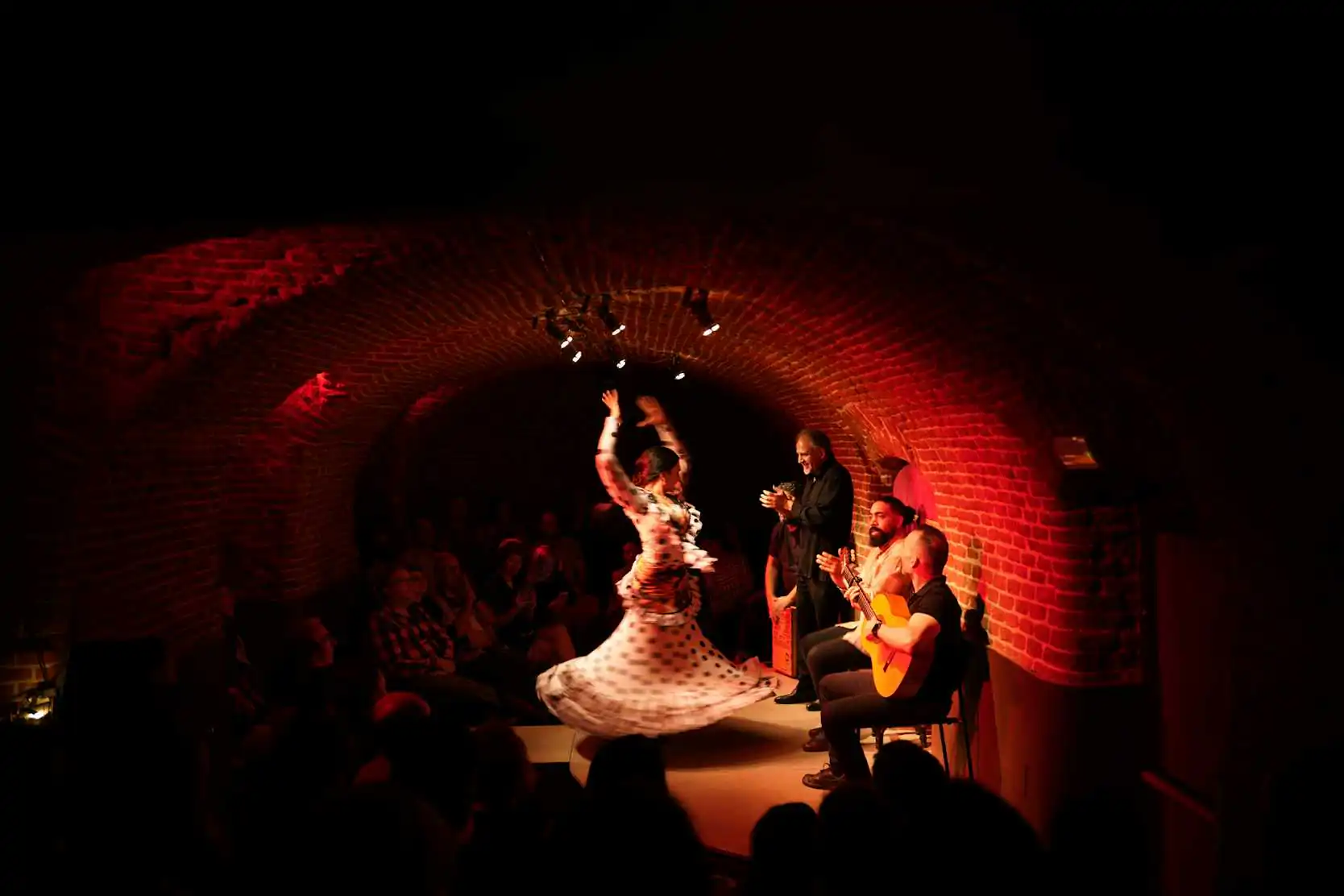
Essential Flamenco Madrid
Flamenco is not just a “decorative” addition to Granada; it is an integral part of its everyday fabric. When walking through the Albaicín (and even the less touristy neighborhoods) of Granada, one may often find themselves listening to someone practicing their guitar behind a partially open door. While riding a public bus a neighbor may be clapping along with a compas (a rhythmic pattern), children learning palmas (hand-clapping rhythms) at school, etc. What is interesting to note about flamenco is how it continues to evolve yet maintain its base structure. From one generation to another, each generation has developed their own style of phrasing, attitude, and even instruments, and yet each generation’s flamenco is unmistakably recognizable. Today, when a young dancer performs a dance move that was used by her great-grandmother decades ago, the audience experiences the same shock or awe that they would if she were performing that dance today. This sense of consistency is very unusual and is one reason flamenco serves as such a strong cultural anchor even though Spain continues to evolve and modernize around it.
Although flamenco originated in Andalusia, it travels. Vibrant flamenco scenes exist in Barcelona, Madrid and Málaga – among many other places outside of Andalusia. Flamenco adapts to these different city environments without sacrificing its cultural identity. In my time traveling through various parts of Spain and observing flamenco performances I have seen audiences from diverse backgrounds respond to flamenco in similar ways – whether in Barcelona or Málaga. After being completely absorbed in a performance of solea (a type of cante de flamenco) in Barcelona, I witnessed an eruption of applause from the Catalan audience. Clearly, the universal language of music transcends borders.
For these reasons finding an authentic flamenco experience is so significant. Not only does a proper venue allow the artist(s) to perform naturally, but it does not provide additional packaging around the culture. Rather, a good flamenco venue allows the culture to unfold before you.
Flamenco is not a relic. Instead, it remains a vital and living art form. As such, it represents an essential component of Spanish cultural identity which is recognized internationally for its artistic value. Once you experience flamenco in its natural environment, you cease to treat flamenco as simply something to check off on your travel list.
Tablaos are small, specifically designed flamenco venues that place the performer(s) within earshot and eye-sight of the viewer.
While large theaters have provided a number of pleasant opportunities for me to witness a flamenco performance, there is no comparison between the energy generated by sitting in the front row of a small cave in Granada’s Sacromonte neighborhood versus being seated in an elegant theater.
In the same way there is no comparison between sitting in a large brick vault in Madrid versus sitting in a crowded cafe watching a singer whose voice is hitting your chest directly.
The better tablaos (those which provide raw proximity instead of polished productions) represent the essence of what creates the electricity associated with experiencing a live flamenco performance.
With or without a meal included
the direct answer is as follows: for those who care about being fully immersed in the music and/or dance of a performance-only ticket is best; for those who can benefit from having their evening simplified through meal-inclusion (but would be fine with some disruption from food) then the meal-inclusive ticket is better. neither one will result in a bad night, however they create two distinctly different evenings.
i made that discovery the “hard” way at a madrid tablao when i had dinner arrive on the table during the second palo. the waiter wanted to serve me by passing behind me with a plate of ham while a singer was singing a quejio, and for the rest of the show, i spent time deciding whether to rush eating so he could pass again, or to have my food sit there until it cooled down. the show itself was great.
my attention was not. that experience formed my decision-making process today for anyone planning on attending a flamenco show in seville, granada, barcelona, etc.
here’s exactly what you are changing when choosing one over the other:
- Focus. A performance-only ticket removes the clatter of cutlery, the murmur of food orders, and the movement of waitstaff from your field of attention. You watch the dancer’s footwork without a fork in your hand.
- Timing. Meal-included shows often serve food before or during the first half. If the kitchen runs late, the show may start while you are still eating.
- Value. Some venues, like Tablao El Jaleo in Cordoba, offer a full dinner add-on with two starters, a main course, a drink, and a dessert. That can be good value if you planned to eat out anyway. But if you only want a light bite, you are paying for courses you do not need.
- Atmosphere. A room full of diners feels different from a room full of listeners. The energy shifts when people are chewing.
Tablao Torres Bermejas is probably the most successful example of how some locations can use their dining options as part of the overall show; the location has a working restaurant and kitchen which runs at the same pace as the stage. The Alhambra-style area of the space helps make the meal seem to be part of the overall “theatrical” experience versus being an interruption to it.
In this case (Tablao Torres Bermejas) I would actually recommend going for the dinner and show option. On the other hand, the Triana Theater Flamenco Show in Seville is focused entirely on the show — no meals are served, there’s no bar activity and the audience sits through a full hour of uninterrupted flamenco in a true theater setting.
I think the above format is the purest way to see the dance without distraction from external stimuli.
It’s possible to find something in between these two formats. Many flamenco tablao venues offer one drink included with your ticket price but still allow customers to buy individual food items. For example, Café Ziryab in Madrid offers each customer one free drink but allows you to purchase additional tapas if you so choose.
The Essential Tablao Flamenco Show in Madrid, also provides one complimentary drink upon entry – sangria, wine, beer, a soda or juice – but keeps the focus of attention on the cave-like stage itself and its fantastic acoustics.
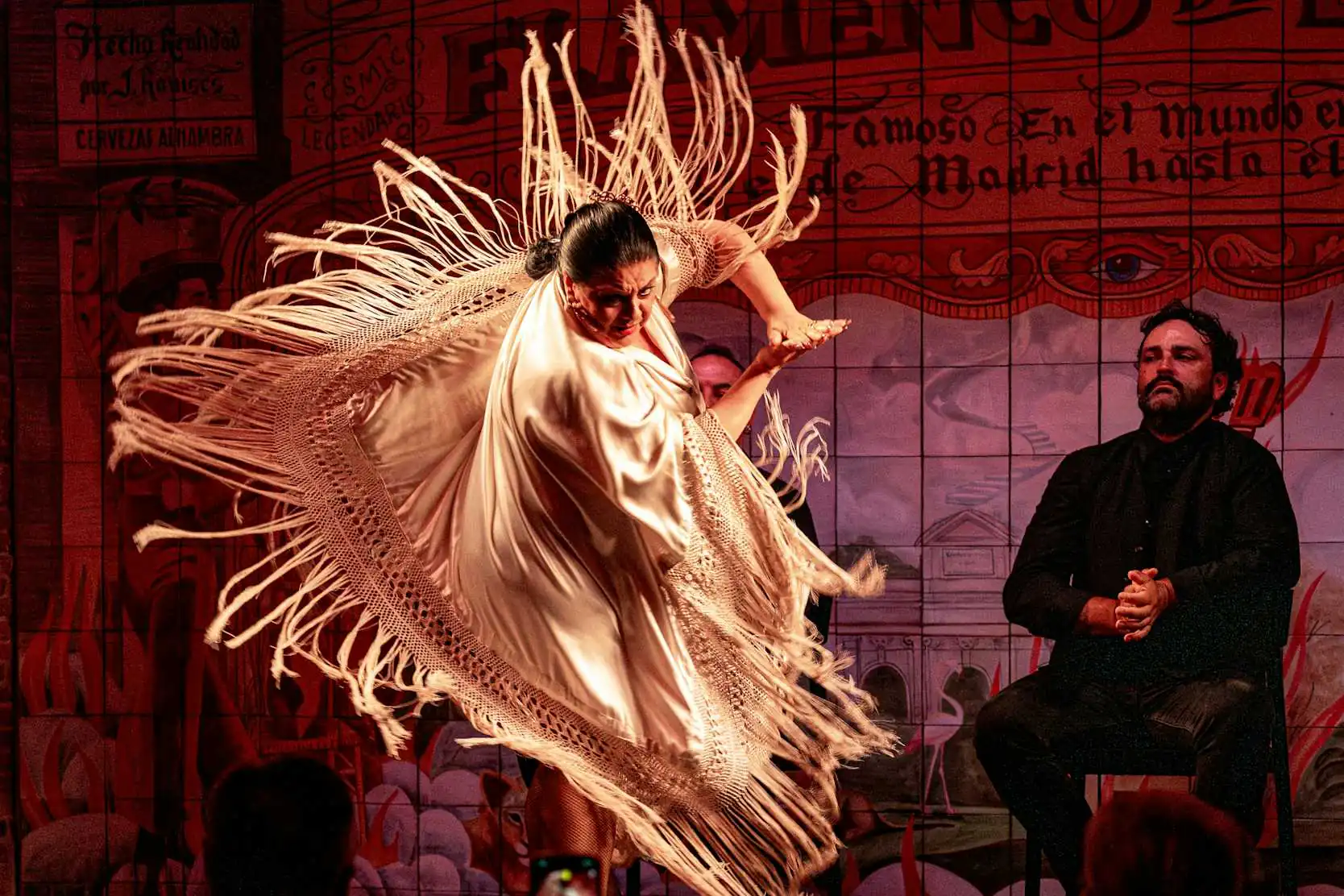
Flamenco de Leones Madrid
In addition to all the other factors affecting the success of your experience, the choice of seating may affect your enjoyment much more than the meal. This is particularly true if you purchase tickets for an entire performance (as opposed to a meal-and-show combo) – especially if you’re sitting near the front. Your overall experience of being close to the action in a small tablao is likely to outweigh your ability to enjoy two courses.
You will also likely forget about dinner by morning. But the image of a singer’s voice cracking on a high note will remain forever.
So, while I am aware of the convenience of purchasing both a meal and show together, I believe that you should know what you are trading off. The clinking of glassware and scraping of chair legs becomes part of your memories of flamenco, regardless of how you feel about it.
Perhaps some of the best flamenco I have ever seen was performed in a space where people were not eating. The audience was completely silent, the lights remained dimmed, and all that could be heard was the music of the guitarist, the singing, and the creaking of the wooden floorboards. When I go back to my first love of flamenco, I always think back to that setting. Dinner can wait.
The worst thing you can do is book the name brand tablao thinking you’ll see “the real deal”. Many times I’ve seen tourists walk into very nice restaurants (with velvet seats and a pre-ordered meal), look bored during a flawless technical show and begin checking their phone. The short answer to the question is that there are many local flamenco experiences (small, family owned, and based on tradition) which offer up the raw emotion that larger commercial shows simply can’t. These experiences take many forms, including private caves in Sacromonte, old cellars in Triana, or long-standing rooms run by generations of families.
The key to understanding what happens when you opt for this type of experience is easy. You receive the choreographed movements of the dancers, but without the rhythm; you get the costumes, but without the cultural context.
I made this error once and the difference was profound. The professional performance was beautiful. The local experience was alive.
A few years ago, we began our own website providing information on all things related to flamenco.
Why the room itself matters
Local venues do not rely on production values. Instead, they put the performance right in your face. In Granada’s Sacromonte neighborhood, Cueva Zincalé, the family (Córdoba) performs at the location of one of their caves where the walls are literally within earshot and touchable distance from each other.
The closeness of the audience to the musicians is not simply a gimmick. The way the musician dances; the way he/she sings a note; how much of it hits you directly will all be impacted by this closeness.
This principle can be applied in Seville as well. While there are many places that claim to provide the authentic flamenco experience in Seville, I would argue that no place provides that experience better than Baraka Flamenco Show located in the historic flamenco neighborhood of Triana which lies just west of the Guadalquivir River. Triana is not merely a backdrop.
Triana is where generations of flamenco singers and dancers developed the language you see being performed today. Once the show is over you leave into the very streets that continue to harbor this past.
A small venue hidden away in a shopping district will never be able to replicate this.
As well as having a unique character, these family run spaces take on an added level of risk. The performer(s) have dedicated themselves to the art form and may work together for years without receiving a salary.
At Kelipé Flamenco Show in Málaga, we have a family of artist who run the space and are comprised of a cast of five that perform together with an enthusiasm and commitment that seems almost personal.
This is something I would choose over a large scale production every day, because these performers have significantly more at stake.
These performers are not working for a contract. They are working to protect their name.
The pressure of performing for reputation alone is exactly what makes local flamenco so powerful. Local flamenco does not allow you to relax.
As soon as the singer decides to start singing she begins immediately. As soon as the room gives its last breath, the performance ends.
You can arrive and participate or you can watch from afar… either way, if you don’t show up on time, you’ll miss it.
Before moving on to my recommendations for specific cities and locations, let me explain why finding these types of venues can sometimes be difficult. These venues do not typically sit on busy commercial streets.
Instead they often sit on hillsides above Granada, behind non-descript doors in quiet neighborhoods in Seville, or tucked away off main streets in Málaga. This is no accident. Finding the most authentic performances means searching for things like these.
And once found, the rewards of experiencing those performances undiminished by mass tourism are worth the extra effort.
I’ve sat through many shows while watching a singer hold a single note for such an extended period of time that the entire room goes silent. None of those moments were interrupted by a dinner bell. None of those moments had spotlights cueing them.
Those moments are what you’re searching for.
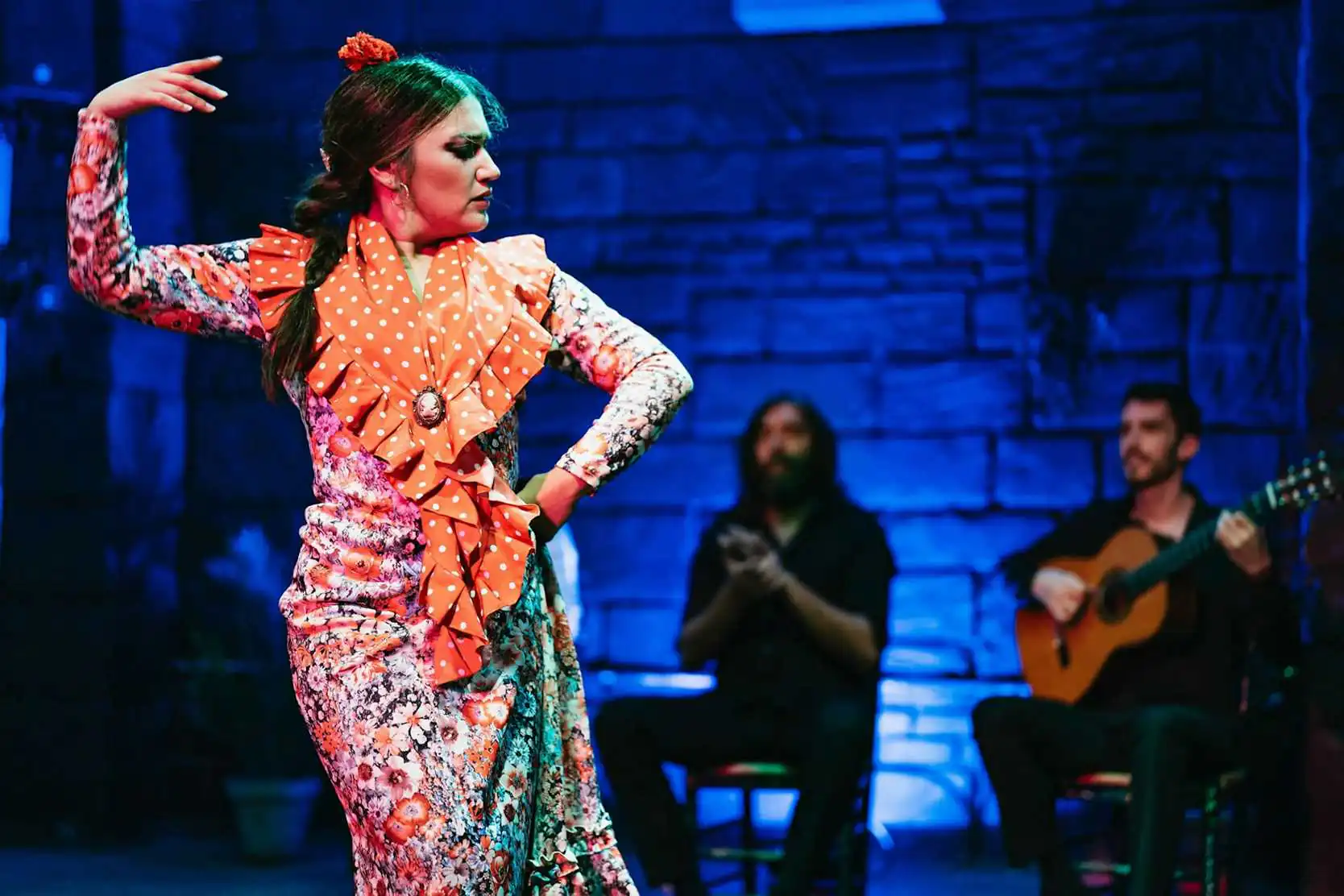
Baraka Flamenco Show Sevilla
Seville performances
Flamenco in Seville is where I find it alive as a battle for me between loss and happiness; I rarely see flamenco elsewhere in such a raw state. When you are in a theater (Triana Theater) it feels almost like you’re watching a performance on a big stage, because they have all of the technical elements to create an almost theatrical experience over the course of one hour of constant foot work.
My heart is located in the opposite direction from this theater. It is called El Palacio Andaluz and has the very intimate setting of a traditional tablao. The seating area is close together and the ceiling is lower than other venues. As a result, each snapped finger and ragged vocal will be felt by me directly.
This venue also allows visitors to visit their museum of flamenco costume, approximately 30 minutes prior to show time.
So I am able to watch the progression of the dresses worn during the April Fair, before the dancers take to the floor.
Triana Theater Flamenco Show
The Triana Theatre in Seville’s Triana District may be carrying the spirit of flamenco, but this venue offers something very different than many cramped and crowded “tablao” venues in other parts of the city.
You will receive one hour of pure unadulterated flamenco performed on a large stage with top-notch technical support. That pairing seems counter-intuitive for those who prefer smaller, sweaty clubs. I understand your preference, however the theatre demonstrates to me that modern production has no need to sacrifice the raw emotion and passion of the traditional art form.
The way I now view live performances was completely altered by my initial experience at the theatre.
A dancer burst into a frenzied taconeo (the fast-paced heelwork that creates the rhythmic foundation of flamenco) and due to the advanced sound design, every single tap hit by the dancers feet was perfectly amplified with crystal clear definition.
In a cramped, smoky tablao, that same movement feels like a massive wave crashing over you.
The larger stage provided ample space for the dancers to move, and the perfect amplification allowed each beat to be defined with such precision that I could even differentiate between when they struck the ball of their foot and the heel.
That isn’t some kind of trickery.
That is technical clarity designed to allow for maximum emotional impact.
The theatre itself is absolutely beautiful. And while I had underestimated the importance of having a comfortable place to sit during a performance, as well as being able to sit back, take a breath, and watch the energy of the performance build, the comfortable seating made all the difference.
Unlike most theatres where wait staff often enter and exit throughout the performance; unlike most restaurants/bars where patrons are constantly getting up to use restrooms, order food/drink, etc., and as a result can easily distract from the artist(s), at the Triana Theatre you simply sit back, relax and enjoy the hour-long performance.
What the modern staging does
Flamenco purists often dislike modern technology (especially microphones) because they feel it makes the raw emotion of flamenco less pure. However, I do not think that is the case.
The lights move with the singer when he sings a cante jondo piece where he focuses on his own voice; then the lights expand to capture the full stage during those parts when the dancer takes over.
The speakers also do not increase the overall loudness of the music, but rather provide separate audio levels for each element of the performance (guitar, voice, palmas, footwork).
This allows either individual components or the total effect of all elements combined to be appreciated by the viewer.
This large stage also influences how choreography is created.
Dancers will now use the entire floor area of the stage to create longer sequences of steps and larger movements visually. While intimacy is generated by closeness of dancers and performers in smaller venues, there is a lot more room to create dramatic effects using movement alone in a larger setting such as this.
Both approaches have validity.
In short, the Triana Theater has chosen to combine spectacle with traditional flamenco music and dance while maintaining its emotional essence.
Something else that was noted was that the audience included many local residents of Seville – both from Triana and other areas of Seville. To my mind, this indicated that the production had been developed with respect to flamenco traditions strong enough to attract an audience of people who were raised with flamenco.
- The opening minute. The lighting and first guitar phrase set the tone. Notice how the room quiets.
- The dancer’s footwork clarity. The sound design should let you hear individual strikes, not a muddy rumble.
- The singer’s stillness. On a wide stage, a cantaor who barely moves can still hold the whole room. That is harder than it looks.
- The transitions. With no interruptions, each palo flows into the next. Watch how the mood shifts.
- The final pose. A well-produced show lands the ending with precision. If it feels rushed, the production failed.
I wouldn’t say this is one of the more personal flamenco experiences for me in Seville either. But it’s not really trying to be.
Instead, it delivers a highly developed emotional and technical performance which pays homage to the tradition by utilizing all the tools available at your fingertips as a contemporary theater.
There are some visitors who will travel for the caves. There are others who have an interest in traveling with comfort.
Triana Theater will give you the later (comfort) without having you feel as though you were selling out.
Seville also has rooms where they focus on tradition more than Triana Theater does. There are also several rooms which combine a visit to a museum along with dinner to make up the rest of your evening.
Triana Theater performs somewhere in between: One hour of polish, focus on flamenco that trusts the art itself to carry through the evening.
El Palacio Andaluz Flamenco Show
The 30 minutes prior to the flamenco performance at El Palacio Andaluz provides an opportunity to tour the Flamenco Costume Museum. This museum opens 30 minutes prior to the show. Walking through the museum allows me to see the flamenco costume as documentation of Andalusian culture during the April Fair instead of merely viewing the costume as a decorative item for the flamenco performance.
Raquel Revuelta, director of SIMOF (Seville International Fashion), directs the flow of information in the museum. As such, she does not present the flamenco costume as a relic or artifact; she presents it as a vibrant art form that continues to evolve by incorporating elements from other cultures, yet maintains the core style and traditions of flamenco.
I did not realize how much the background knowledge provided by the museum would enhance my appreciation of the performance. In addition to understanding the intricate design and craftsmanship that goes into each piece of clothing worn on stage, I also understood the significance of each element. Each fold, drape, and movement of fabric carried historical, social, and emotional meanings that I had previously been unaware of.
When the dancers take to the stage in their elaborate costumes, I am able to appreciate all of these elements. The way that they fit together creates an image of a woman’s body that is both beautiful and strong. The fabrics create a sense of elegance and sophistication. However, there is also a great deal of power and strength conveyed by each element. From the folds in the skirt to the sleeves that move with each gesture, nothing is done arbitrarily. I now have a “language” with which to interpret and analyze this type of clothing.
Internationally known flamenco artists perform in the large, ornate tablao-style theater within El Palacio Andaluz. While the space may be larger than some of the small cave-like settings I have witnessed flamenco performances in, it does provide an intimacy and immediacy to the performance. The level of comfort and trust that exists between the performers and the audience allows for a connection between the two. The dancers own the stage with a level of confidence born of many years of study and practice. The audience is close enough to feel the gasps of breath taken just before a performer enters into a long singing phrase.
While I have seen flamenco performed in very small spaces with so much energy emanating from the performers that it has been almost overwhelming, El Palacio Andaluz provides a unique contrast. It provides both the excitement and passion associated with flamenco along with a rich history and educational component.
Most venues require patrons to select whether they will receive either an educational or emotional experience.
However, El Palacio Andaluz offers both in one single visit.
Walking through the history of the development of the traje de flamenca (the flamenco dance dress) and watching how it evolved from a simple work garment to become a symbol of Andalusian identity, followed by watching that same identity displayed on stage is truly unique.
It is essential that patrons follow this order. Watching the performance after visiting the museum enhances my ability to perceive and analyze many elements that I might have otherwise missed.
Therefore, this sequence is significant. Because I was prepared to observe elements that I would normally overlook due to my lack of prior knowledge, I found the performance even more compelling and enjoyable.
Ultimately, this is the greatest benefit that El Palacio Andaluz provides.
First-time attendees can enjoy a wonderful performance regardless of whether or not they visit the museum. However, attending the museum will allow spectators to become slightly more educated about flamenco.
Flamenco appreciates informed attention. Therefore, learning more about this artistic tradition allows me to feel what the artists are attempting to do with this tradition.
El Palacio Andaluz is neither the smallest nor the most raw of flamenco venues in Seville. Rather, El Palacio Andaluz represents a comprehensive cultural package providing patrons with both a performance and an educational experience regarding flamenco.
For travelers seeking to gain a deeper understanding of flamenco beyond witnessing it, this distinction holds greater importance than size or intensity.
See also our article about Seville here.
Granada performances
Tablao La Alboréa in plaza nova is where you go for a night of flamenco that’s intense and professional.
It has four artists right on top of each other so you get to see every fleck of their sweat drops, every twist of their waists, and every sway of their hip.
Los tarantos show at the caves of sacromonte are like nothing else. This is not a concert venue; this is where generations have been born.
Caves of Sacromonte Los Tarantos Flamenco Show
Flamenco venues don’t get much tougher to find than Los Tarantos in Granada. And that’s the reason I’m always coming back. The cave itself is located in Sacromonte – the hilly neighborhood that Gypsy families dug their homes out of rock over a couple hundred years. Attending a flamenco performance at this venue doesn’t feel anything like attending a paid performance; rather it’s as if you’re being welcomed into the ancestors’ living room. To provide a straightforward response, Los Tarantos provides the oldest and most authentic flamenco in a cave in Granada. For decades now, Los Tarantos has produced countless unknown performers into national name status.
I have attended flamenco performances in upscale theaters and in many other tablaos throughout Spain. In fact, none of those experiences could possibly compare to what happens to sound when you’re listening to music inside a cave. First, there aren’t really even flat surfaces inside a cave. The ceilings of caves are usually very low and everything reflects back from every direction, including every heel-strike (you hear each heel strike from left center right).
In contrast to projecting forward into a crowd, a singer’s voice encircles the room. That is what makes the raw energy of the cante so powerful and reverberates off the cave walls in an almost primal and historic way that cannot be replicated by any type of modern sound system.
More Than the Stage: Why Sacromonte Is Important
Sacramonte is far more than a pretty background. It is where the identity of Granada’s flamenco roots were born – far removed from the grand public spaces of the city and tourist attractions. Many of these caves provided shelter to families whose primary language was song/dance/guitar playing because they were their only means of expression/survival/celebration.
When I attend a performance at Los Tarantos, I am not simply observing an attempt to recreate that history. I am inside it.
Los Tarantos has been drawing prominent artists for decades and the list of artists who have performed here read like a map of flamenco’s development:
• Luis Heredia “El Polaco”
• Morenito De Illora
• Chonchi Heredia
• Each of these singers created movements in the dance world via such notable dancers as Manolillo Linan. He won the National Prize for Spanish Dance.
• Los Tarantos has also hosted Vitorino de Pinos
• Guzman Alba
• Julio Terremoto
• Along with such flamenco dancer legends as La Porrona
• La Coneja
• Bienvenido Maya
• El Gabriel
• Guitarists Antonio El Chispita
• Pepe y Paquito Amaya
have been playing musical arrangements within Los Tarantos’ space that still resonate within the memories of the neighborhood residents today.
The Talent Pipeline You Will Not See Anywhere Else
– this is what sets flamenco caves in Granada apart from every other flamenco room.
Los Tarantos has been able to provide a platform to develop many young flamenco artists in all aspects of flamenco (guitar, dance and song). Many of these artists now perform at a high level internationally.
You are not simply purchasing tickets when you purchase tickets to see a show at Los Tarantos. You are helping fund the development of the next generations of what i believe will be an evolving art form.
I firmly feel that you can save your money by skipping dinner-and-a-show packages offered at various venues and spend it at Los Tarantos instead. It is because of its cave format that no distractions exist to detract from your viewing experience. Food service can create distractions that do not allow the audience to remain focused on the performance. There is no noise created by glasses being clinked together during a soleá or a waiter trying to squeeze through a table while a dancer is building towards the climax of their performance.
The audience is seated near the stage; the lighting is low; the performer controls the entire atmosphere of the room.
- The acoustics change everything. Guitar notes linger longer, footwork sounds sharper, and a singer’s breath becomes part of the rhythm.
- The intimacy is physical. You are close enough to see the dust rise from the floorboards and the tension in a dancer’s shoulders before a turn.
- The history is present. The cave walls have absorbed decades of flamenco, and that weight is palpable from the first note.
- The talent is unpredictable in the best way. You might see a veteran sharing the stage with a teenager who will headline festivals in five years.
The level of realism achieved in Los Tarantos is difficult to reproduce. While other venues in Granada may try to recreate the same atmosphere as Los Tarantos; all such attempts to do so will be hindered by the venue’s current architectural layout.
Converted theaters, and modern tablaos will provide both comfort and clarity.
However, they cannot replicate the sense of being subterranean (underground), embedded within solid rock, when a singer reaches a crescendo of a sustained note which appears to originate directly from beneath your feet. This is the difference and it is substantial.
I have exited this cave with my ears still ringing and my chest constricted.
I was not experiencing constriction due to volume. I was experiencing constriction because of my proximity to something prior to tourism, prior to ticket sales, and prior to all efforts to commercialize Flamenco for export.
Los Tarantos is not somewhere you would visit to watch a performance. Los Tarantos is somewhere you visit, and for approximately one hour you remain there.
Tablao La Alboreá Flamenco Show
Tablao La Alboreá is located directly on Plaza Nueva. In fact, you could walk out of your hotel, across the plaza, and be seated in about 10 minutes. The reason this venue stands out is because it offers a concentrated, 1 hour flamenco performance in the most accessible area of Granada. All performances include four very accomplished artists; the program includes heartfelt singing, intricate guitar playing, and energetic dancing culminating in a truly electrifying conclusion.
Flamenco is an art form I have witnessed many times in Spain. What I know is that convenience usually comes at the cost of atmosphere. La Alborea achieves both.
The venue is ideal for the requirements of flamenco. Most travelers don’t understand how much acoustics affect what happens. The vocalists’ voices must reach the back of the room and return without becoming dull or muddy. The dancers’ footwork must sound like percussive sounds and not like muted thuds. La Alborea accomplishes these tasks.
La Alborea was designed such that every heel impact occurs clearly, and every note played by the guitarist stays clear of being blended together. That is a big detail. I’ve attended some older venues in which the sound bounced around like a tray of glasses had been dropped. Here, the clarity allows you to follow the conversation between vocalist, guitarist, and dancer without strain.
One thing I remember is how close I sat and could see all the intricate movements made by the fingers of the guitarist and all of the dancer’s expressive face gestures. Sitting that close changed how I experienced the performance. Flamenco is not a spectator sport. It is a language of subtle signals (an eyebrow lift, an inhalation, a wrist snap precisely timed to coincide with a break in the vocalist’s voice). When you can observe those subtleties, the hour-long performance doesn’t feel like a show but like a shared experience.
Also beneficial to the viewing experience were the unobstructed views from every seat. There wasn’t a single pillar obstructing your view of the stage, nor was there any odd angle from where you viewed the top/back of someone else’s head.
In terms of duration, 60 minutes is a perfect amount of time for most visitors to experience the complete arc of a flamenco performance without experiencing fatigue typically felt from longer performances. The performance begins with the guitarist setting a mood, followed by the vocalist entering, and eventually the dancer taking the stage. By the end of the last piece of music, the energy level inside of the room has increased. Conversations cease. That is what a well-structured hour of flamenco should do.
Plaza Nueva is the middle of Granada’s busiest tourist district. Some tourists may look at that and assume that the show will be “watered-down” for tourists. Not true. The four artists performing at La Alborea are professional musicians who have spent decades honing their skills. The difference here is that you do not need to hike to Sacromonte or travel through the narrow streets of Albaicin to find them. For people traveling with limited time, mobility issues, or having already had a long day of walking around town today, that convenience is a definite plus.
There are ways to provide authenticity without providing difficulty to access.
La Alborea also presents a good alternative to the caves used to present flamenco in other areas of Granada. Caves provide history and atmosphere. La Alborea provides precision and comfort.
The stage at La Alborea is positioned to allow the performers freedom of movement. Lighting provides focus on the performers. You aren’t watching flamenco from a wooden bench in a cave.
You are in a contemporary space designed specifically for flamenco. Both options are viable options that satisfy two completely different desires.
I choose La Alborea based on whether I am interested in enjoying flamenco without complications. No lengthy walks, no confusion about directions, no wondering if your taxi driver knows where to drop you off. Arrive at La Alborea, sit down, and enjoy your performance.
Simplicity has value. Especially when you spend hours walking around the Alhambra or winding your way through Albaicin yesterday. Your performance starts at its scheduled time and lasts for exactly one hour leaving you on Plaza Nueva with plenty of time left to continue your evening.
The four artists perform in their assigned roles with great cohesion due to consistent rehearsal with one another.
The vocalist never overwhelms the guitarist. The dancer never rushes ahead of the rhythm. Each artist has ample opportunity to express themselves creating an overall sense of unity among all aspects of the performance. Sometimes flamenco becomes competitive with each artist trying to outdo the others.
Do away with the notion that you must journey to a cave to receive authentic flamenco in Granada.
Cordoba Performances
I’ve walked out of this place twice already; and both times I’ve had the same thought: that hour flew by much faster than it should have.
This tells me that I’ve seen something special. It doesn’t matter how long the show was – you don’t think about what time it is, or when you can get some food after the show. You simply absorb the sounds around you.
And then the lights go up. And it’s as if you were somewhere else altogether. In an area of town so packed with people that most places are all hustle and bustle, this is quite an accomplishment.
The flamenco experience here seems more personal, but less refined compared to the large city tabaos.
Which is precisely why I continue to return. My top pick for my experiences would be Tablao el jaleo.
At el jaleo, the talented and highly recognized national and international artists deconstruct the artistic style to its most basic beat- the dancers, musicians, and singers feed off one another in a setting that seems to be designed to produce emotional reactions rather than to create a spectacle.
Should you prefer a longer, more elaborate celebration of the art form, you can attend the Cordoba Flamenco Show which is 75 minutes in length and transforms the evening into an energetic night-long event comprised of choreographed routines and live music.
In either case, it leaves you with the feeling that Cordoba does flamenco, their own way.
Tablao El Jaleo Flamenco Show
Skip Tablao El Jaleo in Cordoba and you miss the rawest flamenco the city offers. The venue calls itself the “heart and soul” of flamenco on its website. That’s not marketing fluff.
Award-winning artists from Spain and abroad take the stage here. They’ve already proven themselves in competitions and on stages far beyond Andalusia.
These aren’t students. They aren’t hobbyists. They’re professionals who earned every minute under those lights.
I’ve sat through plenty of mediocre tablao shows, so I know a polished tourist routine when I see one. El Jaleo isn’t one. The artists perform like each night could be their last. You feel it. A singer holds a note half a second longer than you expect, and a dancer’s footwork builds into a fury that no human body should sustain.
The whole room changes.
What the award-winning talent actually changes
People toss around the phrase “award-winning” until it means nothing. At El Jaleo it means something real: technical precision under emotional pressure. A newer dancer can hit the steps.
A seasoned one hits them with tears running down her face while the guitarist drags the tempo somewhere dangerous. That’s the gap between watching flamenco and feeling it.
One moment from my last visit sticks with me. Midway through a soleá, the singer stepped away from the microphone. No amplification. No safety net.
His voice filled the room anyway, raw and bare, and it hit the audience head-on. That told me everything. El Jaleo cares about the art more than the production.
The room is small, so a trained voice needs no help reaching the back.
You can’t fake that. So stop overthinking your Cordoba flamenco pick and book this one.
The venue offers a dinner option with two starters, a main course, a drink, and a dessert. The food isn’t the main event. Let’s be honest about that.
The option works for travelers who want a full evening without racing between a restaurant and the show. The performance stays the star, and it should.
First-timers get pulled under fast. No slow warm-up act. No awkward gaps between numbers. The artists dive into the first piece with total commitment, and the audience has to keep up. By the second song, the room has gone from polite watching to a kind of shared breath-holding.
El Jaleo also sets the bar for the rest of Cordoba’s flamenco scene. Once you’ve seen what award-winning artists do in a small room, you’ll spot that same intensity in the city’s other venues. Some shows meet the standard. Some don’t.
Here’s my blunt opinion: skip the dinner if you’re short on time or money. The show delivers the full punch on its own. The meal is a convenience. Nothing more.
Got a free evening and want the whole package? Get the dinner. Just don’t let a missing meal stop you from booking the show.
The math is simple. Cordoba gives you a limited number of nights. Spend one at El Jaleo and you carry the memory home. Spend it somewhere forgettable and you’ll learn what you missed when a friend describes the show you should have seen.
Cordoba Flamenco Show
Seventy-five minutes. That’s the sweet spot. A standard Cordoba flamenco show runs that long, and it gives the dancers enough time to build a fire, let it burn, and leave you a little singed. Talented dancers and choreographers take the stage and pour everything into passionate routines that turn a plain evening into a lively flamenco celebration. I’ve sat through longer productions in other cities. Cordoba knows that intensity beats length every time.
The choreography leads the room here, and that’s what hits me most. The dancers don’t just run through steps. They push the music forward with their bodies. A sharp heel turn, a sudden freeze mid-phrase, a slow unfurling of the arm – every choice has a purpose. The musicians watch the dancers as closely as you do, and the whole show tightens into one breathing thing.
What the 75-Minute Format Actually Feels Like
The first ten minutes settle you in. The guitar sets a pulse, the singer tests the air, and the dancers warm the stage with slow, deliberate movement. By the halfway mark, the energy flips.
That’s when the Bulerías often kicks in – a fast, playful rhythm that makes the crowd clap and shout. I once watched a group of dancers hit a synchronized Bulerías with such contagious energy that half the room started clapping without anyone asking.
The show stops being a performance. It becomes a party.
Then comes the final stretch. The pace speeds up, the footwork gets denser, and the singer pushes into raw, bare territory. The last ten minutes feel shorter than they are.
When the lights come up, you’re not tired. You want more. That’s exactly how a good flamenco show should leave you.
Cordoba’s shows don’t pad themselves with filler. No long costume changes. No wandering interludes.
The 75 minutes overflow with dance and music, and the choreographers trust you to keep up. That trust is rare.
Here’s what I tell first-timers:
- Show up a little early. Settle in and feel the room before the first note.
- Don’t sit stiff. Clap when the rhythm asks you to.
- Watch the dancers’ faces as much as their feet. The emotion lives there.
- Let the Bulerías pull you in. Joining in is part of the tradition.
The party atmosphere is no accident. Cordoba’s flamenco tradition leans into the communal side of the art, where the line between performer and audience blurs. A show here isn’t a museum piece. It’s a living exchange, and 75 minutes keeps that exchange sharp.
I’ve left Cordoba shows with stinging palms and a hoarse voice. That’s the point. The city won’t let you watch flamenco from a distance. It hands you a rhythm and dares you to sit still.
Malaga Performances
Malaga’s flamenco scene is compact and honest, with none of the tourist gloss I’ve felt in bigger cities. The show I keep thinking about is Kelipé, a family-run tablao where the performers sit close enough that you hear fingernails scrape guitar strings and watch sweat fly off a dancer’s brow. It reminds me why I fell for this art form. Raw. Unamplified. Personal.
Book only one flamenco night on the Costa del Sol? Make it this one.
Teatro Flamenco Show
Before I walked into Malaga’s Teatro Flamenco, I’d sat through a dozen shows across Andalusia where the air conditioning died, a pillar blocked my view, or the performance started forty minutes late. Here, I noticed the difference in the first minute. I got a proper theater seat, a clear view of the stage, and a show that started exactly when the ticket said. Teatro Flamenco in Malaga delivers a daily, reliably authentic flamenco performance in the city center, built around a show called Esencia. That consistency is the whole point. You don’t gamble on whether the cast will show up or whether the room will cram you in like sardines.
Malaga has a strong flamenco tradition, and this theater sits right in the middle of it. The show runs every night, which kills the biggest headache for travelers: scheduling. I’ve planned whole trips around a flamenco show’s random calendar. It wears you out.
Here, you book a ticket, show up, and get live music and dance. No hunting for a monthly schedule.
No finding out the venue closes on Tuesdays.
For a first flamenco experience, I look for four things:
- A stage close enough to see faces and footwork clearly
- A cast that performs as if the room is full, even when it isn’t
- A venue that doesn’t treat the show as background noise for dinner
- A running time that respects your evening without rushing you
Teatro Flamenco checks all four. The theater layout gives you good sightlines from nearly every seat. I can’t say that about the cave venues in Granada or the cramped tablaos in Seville. You won’t crane your neck around a stone column.
You won’t share a bench with a stranger’s elbow in your ribs. You sit, you watch, and the performance does the work.
The show’s name is Esencia, and it’s not marketing fluff. It means “essence,” and the production strips flamenco to its core: singing, guitar, and dance from a group of talented artists who know the form. I’ve seen technically brilliant dancers who move like machines. I’ve seen raw performers who miss steps and still break your heart.
The best do both. The cast at Teatro Flamenco leans into the emotional weight of the material and keeps its precision.
One moment from my last visit sticks with me. Midway through a soleá, the dancer froze a beat longer than the music expected. The guitarist held the chord.
The singer inhaled. For maybe three seconds, the whole room hung in that silence.
Then the dancer’s heel came down, and the audience breathed out together. That’s duende – the sudden, unplanned surge of emotion that flamenco artists chase their whole careers. You can’t schedule it. A good venue sets the stage for it.
A comfortable room, a focused audience, and performers who trust the space all help.
Purists won’t admit how much comfort matters. Flamenco is intense. It demands your attention.
If you’re physically uncomfortable, you check your watch. If the room runs too hot, your mind drifts.
Teatro Flamenco removes those distractions. The seats are proper theater seats. The climate control works.
The lighting lets you see the sweat on the singer’s forehead and the dust rising from the dancer’s shoes. Those details pull you into the show instead of shoving you out.
Let me say this plainly: Teatro Flamenco isn’t the most intimate flamenco experience in Malaga. It isn’t a family-run cave or a tiny tablao where performers could touch the front row. It offers reliability.
You know the show will happen. You know it’ll be good.
You know you’ll be comfortable. If you have only a few nights in the city, that baseline matters. It’s the safe choice that doesn’t feel like settling.
The daily schedule lets you build an evening around it with no stress. Take a late afternoon walk through the Alcazaba, eat dinner, then stroll to the theater. The show fits into a normal tourist day, so you don’t rearrange everything around one performance time.
That easy access is part of the authenticity. Flamenco was never an exclusive, hard-to-reach ritual.
It belongs to the people, and a city-center theater that performs it every night keeps that spirit alive.
Malaga’s flamenco scene has deeper, more specialized corners, and I’ll get to them. For a first taste that won’t let you down, Teatro Flamenco is the baseline I use to measure every other show in the city. It sets a standard for comfort and consistency that smaller venues must work hard to match.
Kelipé Flamenco Show
Malaga has plenty of flamenco stages, and most ask you to sit back and watch from a safe distance. Kelipé says no to that. TripAdvisor ranks it the number one flamenco show in Málaga, and the reason has less to do with production value than with distance. You sit close enough to feel the floor shake under the dancers’ heels and hear the guitarist’s fingers slide across the strings. Here’s the short answer: want Malaga’s most intimate, artistically dedicated flamenco? Go to Kelipé.
The venue is small. Not cramped, but tight on purpose, the kind of room where a singer’s bare voice reaches you before any sound engineer could. I’ve sat in the back row and still counted the beads of sweat on the dancer’s forehead.
That’s not a flaw. It’s the whole design.
Flamenco was never meant for a balcony seat fifty metres away. It lives in the space between a performer’s breath and your own.
The family behind it sets Kelipé apart from every other stage in Malaga. This isn’t a rotating cast of hired pros clocking in for a tourist shift. A family of artists runs the show, and the cast has five talented artists known for their dedication, passion, and technical and interpretive skills.
You see the difference right away. They don’t perform at each other.
They perform with each other. One glance between the dancer and the singer carries years of shared meals, shared rehearsals, and shared arguments about tempo. You can’t fake that history.
I’ve watched audiences lean forward without knowing it. The guitarist starts a falseta, the dancer holds a pose half a second too long, and the singer answers with a phrase that makes the dancer smile mid-step. That’s the link between the five family artists on stage.
It isn’t choreography. It’s muscle memory built over a lifetime.
Kelipé grew out of a lifetime of dedication to the art of flamenco. Marketing copy throws that phrase around a lot, but here it carries weight. The family didn’t open a venue and then learn flamenco.
They lived it first. The show exists because the art form needed an outlet, not because a business plan spotted a gap in Malaga’s tourism market.
That matters more than any lighting rig or costume budget.
Skip this show and you risk settling for a polished but hollow copy. Malaga has those too – big rooms, big sound, big distance. Kelipé sets the benchmark for what dedication looks like from the inside, and most other Malaga shows fall short of it.
The math is simple. You have a limited number of nights in this city. Spend one in a room where the performers sit close enough to see your reaction, and where your reaction changes how they perform.
That’s not a passive evening. That’s flamenco doing what it was always meant to do.
Madrid Performances
I go to Madrid when I want flamenco that feels like a living argument between tradition and reinvention. The capital’s scene splits into two moods: the historic tablao, where the walls sweat with decades of cante jondo, and the small room, where you watch a dancer’s heel strike the floor from arm’s length. Intimacy is the real luxury here. I’ve learned that.
A venue like Café Ziryab, with its changing artistic program, gives you emerging talent and established figures in one breath. That surprise keeps me coming back.
Tablao Opera Flamenca Show
Walk into Tablao Opera Flamenca in Madrid’s San Bernardo neighborhood and you find two spaces that work as one idea. A dedicated flamenco theater sits right next to a traditional tavern. It’s no gimmick. The pairing changes how the night flows, how you settle in, and how close the performers feel.
The short answer: this venue gives you an intimate, interactive flamenco experience by mixing a proper theater setup with the warmth of an old Madrid tavern. You’re not in a giant hall. You’re not in a bar with a stage bolted on. You’re in a room built for the art form, with the easy energy of a place where people have been drinking and talking for hours before the first guitar note.
I’ve sat through big-production flamenco shows where the dancer is a distant silhouette. Not here. The small setting lets performers and audience interact up close.
A guitarist can look straight at you during a solo, hold the eye contact a beat too long, and suddenly the performance isn’t happening in front of you. It’s happening with you.
That eye contact is why I keep returning to small tablaos. It has nothing to do with comfort. It’s about the unspoken deal that flamenco is a conversation.
The singer pushes a phrase. The dancer answers with footwork.
The guitarist leans into a chord and watches the room react. At Tablao Opera Flamenca, the room is small enough that you see the reaction on every face.
What the theater-tavern split actually does
The theater side gives the show structure. Good sightlines, a focused stage, and acoustics that work with the room. The tavern side gives the evening texture.
You arrive early, hear glasses clink and low voices, and slide into the show without any ceremony. Madrid rarely offers that blend.
Most venues pick a lane: polished stage or rustic bar. This one won’t choose.
Renowned artists perform here throughout the month in different shows. The rotating lineup keeps the venue from settling into one predictable routine. One week the dance might lean on soleá. The next, on alegrías.
The cast changes, the energy shifts, and the room stays the same cozy size. Travelers get a quiet advantage from that variety.
You can return twice in one trip and see two different shows.
I’ll say this plainly: the tavern next door isn’t a waiting room. It’s part of the experience. You don’t sit in a lobby scrolling your phone.
You sit in a space that smells like old wood and wine, and the anticipation builds the way it should before live music. Then you walk a few steps into the theater and the night shifts gears.
What to expect from the performance
The show follows the classic flamenco structure: guitar, song, and dance trading the spotlight. The closeness changes how you read each part. You see the singer’s breath before a long note.
You hear the dancer’s shoes scrape the floor before the rhythm locks in. You catch the guitarist’s fingers doing things a large venue would blur into a vague impression of speed.
Here’s what that close setting gives you:
- Clear sightlines to the performers’ faces and hands, not just their bodies.
- Footwork you can hear, with no heavy amplification drowning the room.
- A direct line between the guitarist’s eye contact and your own reaction.
- A chance to see how the singer and dancer talk through small gestures.
- A sense that the performance unfolds for this exact group of people, not a generic crowd.
That last point matters more than most visitors expect. Flamenco isn’t a fixed script. The artists read the room.
A quiet audience gets a different show than a loud one. At Tablao Opera Flamenca, the room is small enough that your applause, your silence, and even your posture become part of the exchange.
Madrid has bigger, more famous tablaos. Some are excellent. This venue sits in a different category.
It doesn’t try to wow you with size. It tries to close the gap between the stage and your chair.
That’s a specific choice, and it works.
The San Bernardo location keeps the experience grounded. You’re not in a tourist corridor. You’re in a working neighborhood, so the crowd often includes locals who know what they’re watching. That raises the bar for the performers and sharpens the mood for everyone else.
I pick this venue when I want the focus of a theater and the warmth of a tavern. The two spaces don’t compete. They complete each other. And when the guitarist locks eyes with you during a solo, you get why someone built the room this way.
Flamenco Show at Café Ziryab
Sixty minutes isn’t a compromise. At Café Ziryab, that hour acts like a pressure cooker, and it delivers flamenco that most two-hour productions never reach. The venue strips away everything that doesn’t serve the music, the dance, and the voice.
I’ve sat in grand theaters where the distance between me and the stage felt like a polite apology. Here, the small room near Acacias and Embajadores puts you close enough to see the sweat on a guitarist’s brow and the tremor in a singer’s hand.
That closeness changes how you hear the show.
The program at Café Ziryab changes constantly. That’s no marketing gimmick. The show I saw last spring won’t match the show you see next month.
Established figures share the stage with emerging talents, and the mix keeps the art form from turning stiff. I once watched a seasoned dancer rule the room with footwork so precise it felt like a metronome made of bone.
Then a young singer stepped up, raw and unpolished, and delivered a seguiriya that left the room silent. That contrast is the point.
Most tablaos in Madrid sell a fixed product. Same cast, same setlist, same emotional arc every night. Café Ziryab sells a living process.
The guest musicians change. The repertoire shifts.
A dancer nobody knew last season might come back as a headliner. I find that thrilling. The venue acts less like a museum and more like a workshop where people still make flamenco.
Emerging artists get a platform here that larger venues rarely give. A new singer tests his voice in front of an audience close enough to feel every mistake and every breakthrough. That pressure produces something real. I once watched a young cantaor fight through his first number, his voice cracking on a high note.
By the third song, he’d found his footing. By the fifth, the room belonged to him.
You don’t get that arc in a polished, tourist-focused production.
The small room isn’t a luxury. This kind of work needs it. When a dancer stamps a heel three feet from your chair, you feel the vibration in your chest.
When a guitarist plays a falseta, you hear the wood of the instrument, not just an amplified signal. Café Ziryab needs no massive stage or fancy lighting.
The small room does the heavy lifting. It forces the performers to be honest, because nowhere exists to hide.
Here’s a provocative thought: Madrid’s flamenco scene has too many venues that treat the art like a postcard. They package it, frame it, and hand it to you with a receipt. Café Ziryab fights that.
The rotating program means the venue can’t coast on one famous name or a proven formula. Every night carries a small risk.
Some nights the risk pays off in a big way. Other nights, a young artist stumbles. Both are worth seeing.
The location near Acacias and Embajadores matters more than tourists realize. This isn’t the polished center of Madrid. It’s a working neighborhood with grit and rhythm.
You walk past ordinary bars and corner shops before you find the venue. That context sets you up for what happens inside.
Flamenco never belonged in a sterile room. It grew out of kitchens, courtyards, and cramped rooms where people gathered to sing about hunger, love, and survival.
Your ticket includes one drink. I won’t dwell on that, because the performance is the reason to book. But the small bar area before the show gives everyone a natural place to gather.
Strangers talk. Regulars greet the staff.
The line between audience and performer blurs before anyone plays a note. Madrid’s more theatrical venues rarely offer that kind of ease.
I’ve been back to Café Ziryab three times. Each visit felt like a different venue. The first time, a veteran guitarist owned the evening with solos that stretched for minutes.
The second time, a young dancer from Jerez brought a ferocity that made the front row lean back. The third time, a guest singer from Granada delivered a taranta I still think about.
That variety is the venue’s signature. It’s also why I hesitate to describe a typical night. There isn’t one.
Sixty minutes of live flamenco dance, singing, and guitar. That’s the format. The content never repeats.
Want a predictable, polished show? Book somewhere else. Want to see flamenco as a living argument between generations? Café Ziryab is your place.
The venue doesn’t ask you to watch from a distance. It asks you to sit close, listen hard, and accept that some nights get messy. That mess is where the art lives.
Barcelona Performances
Barcelona gives me flamenco with a Catalan edge, and I keep going back to Los Tarantos, a compact tablao just off Las Ramblas. The room feels like a pressure cooker for raw footwork and close-range guitar, and its three short performances every night never overstay their welcome. Want a totally different mood? Palau Dalmases puts the same art inside a 17th-century palace in El Born, where stone walls and low light make every palmas clap land in my chest.
That contrast between gritty intimacy and baroque grandeur is why I tell first-timers to book one of each.
Los Tarantos Flamenco Show
Book the wrong flamenco show in Barcelona and you sit through a polished tourist package with nothing to do with the city’s real flamenco history. Los Tarantos is the opposite. It’s the oldest flamenco tablao in Barcelona, and it has entertained crowds since 1963. It sits right off Las Ramblas, where a new generation of Catalan flamenco keeps the tradition burning.
I walked past its plain entrance three times before I finally went in. That’s not a knock. The place doesn’t need a neon sign or a costumed greeter. Six decades built its reputation, and the room feels like it has soaked up every heel strike, every held note, every sharp gasp from the audience since the early 1960s.
Three shows run every night, each lasting 30 minutes. That sounds short on paper, but the performances pack a punch. No filler. No long applause break. No rambling introduction. The artists step onto the small stage and launch straight into the cante, the toque, and the baile. Thirty minutes of focused flamenco leaves you hungry for more. That’s the point.
The venue has boosted the careers of many international and local flamenco artists. Some of them still return to the stage here, which tells you what the room means to them. I once watched a singer close his eyes and lean into a note while the guitarist watched his face and shifted the rhythm by a fraction of a second. You can’t fake that kind of listening, and a bigger theater can’t produce it.
Picture the countless artists who have walked this stage since 1963. That’s part of the experience. You’re not just watching a show. You’re sitting in a room where careers began, where young dancers first learned to hold a crowd, and where visiting artists tried out new material.
No plaques hang on the walls. No framed photos. The history lives in the performances.
Barcelona isn’t Seville or Granada. Flamenco here has its own character, shaped by Catalan artists who soaked up the Andalusian roots and added their own flavor. Los Tarantos has stood at the center of that process for decades. The art form adapts here without losing its core, and that balance is harder to pull off than it looks.
The location helps. Right off Las Ramblas, the venue is easy to reach and easy to fit into an evening. The cozy interior offers a welcome break from the noise and chaos outside. You step out of the crowd into a dark, warm room where only one thing matters: what happens on the small stage a few feet away.
I love the lack of pretense. Nobody hands you a glossy program. Nobody explains the history of flamenco before the lights go down.
The show assumes you came to watch, not to hear a lecture. That confidence comes from being the oldest tablao in the city.
Los Tarantos has nothing to prove.
Here’s what to expect:
- Three shows nightly, each 30 minutes long
- Located right off Las Ramblas, easy to reach on foot or by metro
- A small, cosy room with close views of the stage
- Performers drawn from Barcelona’s active flamenco scene
- A mix of established artists and newer Catalan talent
The short format suits you if you’re new to flamenco or short on time. You get the full emotional range of the art form without signing up for a 75-minute production. And since the shows run three times a night, you can catch one before dinner, after dinner, or as a late-night cap to your evening.
Los Tarantos gives you a classic, easy option before you explore Barcelona’s more unusual venues. It’s the baseline, the reference point. See flamenco here and you’ll have a standard for every other tablao in the city. That’s no small thing.
The UNESCO-protected cultural tradition on display here isn’t a museum piece. It’s a living, breathing practice that changes every night depending on who’s on stage and how the room responds. Los Tarantos has hosted that exchange since 1963, and the fact that it still sells out three shows a night says everything about its place in Barcelona’s flamenco scene.
Palau Dalmases Flamenco Show
In 2026, I walked into a 17th-century palace in Barcelona’s El Born neighborhood and understood something I’d missed about flamenco. Palau Dalmases offers a one-hour show that blends world-class artistry with the enchanting mood of a historic palace. The setting doesn’t just frame the performance. It joins it.
I’ve seen flamenco in caves, theaters, and cramped tablaos where a dancer’s sweat lands on your shoe. Each has its own pull. Stepping through the stone entrance of Palau Dalmases feels different.
The grand courtyard hits you first. Arched stone, old ironwork, the hush of centuries.
You don’t just attend a show. You step back in time before anyone strikes a guitar string.
Outside, El Born buzzes with narrow streets and late-night tapas bars. Inside, the palace swallows the noise. I remember standing in the courtyard, looking up at the stone walls, and thinking: this is what people mean when they say a venue has duende.
That untranslatable pull. The building carries weight before any performer walks on stage.
What the show actually feels like
The performance runs one hour. That’s enough time to move through several flamenco forms without losing the thread. The artists are world-class, and the production leans into the palace’s mood.
Lights shift across old stone. Music fills the courtyard.
Dance cuts through it all. The mix of passion, music, lights, and dance isn’t a marketing line. It’s what happens when a historic space meets performers who know how to use it.
I’ve watched flamenco in venues where the lighting felt like an afterthought. Here, it matters. The stone walls catch the warm glow.
Shadows move with the dancers. The whole room breathes.
That rich sensory feast is the point. You don’t just hear flamenco. You stand inside it.
The dancers rule the floor with precision. The guitarist’s fingers work the strings with a clarity the stone courtyard amplifies on its own. The singer’s voice rises and falls, raw and unpolished in the best way.
No microphones needed. The palace does the work.
I like one thing in particular: the show doesn’t lean on the setting to carry weak performances. The artists earn their place. The palace lifts what’s already strong. That’s the difference between a gimmick and the real thing.
Barcelona’s flamenco scene is diverse. Los Tarantos gives you historic tablao energy. Palau Dalmases gives you something else entirely. It contrasts with the more traditional venues, and that variety is why I keep coming back to this city for flamenco.
I sat near the back during my visit. Even from there, the connection felt instant. The courtyard is small enough that every stomp, every sharp turn, every held note reaches you with no effort.
You don’t strain to see or hear. You just take it in.
The one-hour format works. Long enough to sink in. Short enough to leave you wanting more.
By the end, my toes were tapping and I hadn’t noticed. That’s a show doing its job.
Palau Dalmases doesn’t try to be a cave in Granada or a tavern in Madrid. It’s a Barcelona flamenco experience rooted in a palace that has stood for centuries. The history doesn’t overshadow the art. It gives the art a home worth remembering.
People ask me about flamenco etiquette more than anything else, and my honest answer is this: you don’t need to know the rules to feel it. I tell every first-timer one thing. Book ahead, especially for the smaller tablaos in Seville and Granada where a handful of seats vanish fast. Once you’re inside, put your phone away, let the silence between palmas breathe, and don’t worry about clapping until the locals start.
My biggest mistake was treating a show like background music with dinner. The best nights happen when you stop analysing and let the singer’s voice pull you somewhere uncomfortable and beautiful.
See also our article about Barcelona here.
Frequently Asked Questions about Flamenco experiences
First-timers ask the same five or six questions before they book a flamenco show, and the answers are simpler than the forums make them sound. A standard performance runs 60 to 75 minutes. You don’t need formal dress. Photo rules vary by venue, but nearly every one bans flash. The real prep is cultural: knowing when to clap, when to stay silent, and how to read what’s happening on stage. That turns passive viewing into a real flamenco experience.
I’ve watched enough confused audiences to know a little context changes everything. The questions below come from readers, friends, and the occasional stranger in a venue queue.
Before you book
- How long is a typical flamenco show? Most run 60 to 75 minutes. Some Barcelona venues offer shorter 30-minute sets, and Cordoba shows often stretch to 75 minutes. Check the listing before you make dinner plans.
- What should I wear? Smart casual works. No venue enforces a dress code, but skip the beachwear and flip-flops. You’re going to a performance, not a pool party.
- Is clapping along appropriate? Yes, but only when the crowd gets an invite or the rhythm is clearly communal. Flamenco has a specific off-beat clap called palmas. Can’t find the beat? Don’t fake it. A wrong clap is louder than silence.
- Can I take photos? Most venues allow photos without flash. Some ban all photography during the show. Check the venue’s policy at the door, and never use a flash. It breaks the performers’ focus and the room’s mood.
- When is the best time to see flamenco? Evening shows, usually starting between 19:00 and 22:00, carry the most intensity. Late-night performances in Madrid and Seville often draw the most passionate local crowds.
- Do I need to understand Spanish? No. Flamenco’s emotional range – joy, grief, defiance – needs no translation. A few terms like cante (singing), toque (guitar), and baile (dance) help, but the performance won’t wait for subtitles.
That last point matters more than most travelers expect. Flamenco doesn’t tell a story with a plot. You’re not missing anything. You’re reading a mood, and the singer’s face, the dancer’s posture, and the guitarist’s attack on the strings carry it.
During the show
Silence is part of the performance. A singer holds a long note or a dancer pauses mid-phrase, and that stillness is on purpose. Talk during those moments and you mark yourself as a tourist fast. I once watched a couple chat through an entire soleá in Seville, and the singer’s glare could have stripped paint.
The audience has its own rhythm. A spontaneous olé or a sharp eso es from the crowd is welcome when it lands on the right beat. Not sure? Watch the locals. They’ll show you when to make noise and when to hold your breath.
One more thing: don’t expect a polished, Broadway-style production. Flamenco is raw. A dancer might miss a step.
A singer’s voice might crack. That’s not a flaw.
It’s the art form breathing.
The practical answers are simple. The cultural ones take a little more attention. Learn when to clap, when to stay quiet, and what to wear, and one job remains: sit close and let the performance do what it has done for centuries.
I didn’t set out to write a guide about flamenco. I set out to explain why a dark cave in Sacromonte made me cry, and why a polished theater in Seville made me hold my breath for an hour straight. One thread ties both moments together: flamenco only works when it’s close, raw, and unguarded.
Years of chasing this art form across Andalusia and beyond taught me that the venue matters less than the distance between you and the performer. A family-run cueva in Granada can hit harder than a grand tablao in Madrid. A 30-minute show in Barcelona’s oldest venue can outlast a 75-minute spectacle in Cordoba. The difference never changes. Either the artists give you a performance or they let you witness something real.
Here’s what I’d tell any friend planning a first trip to Spain:
- Pick the small room over the big production. Kelipé in Malaga seats a handful of people and runs on family dedication. Los Tarantos in Barcelona has done this since 1963. Small rooms force connection.
- Skip the meal if you want the full emotional arc. I’ve done both. On the nights I wasn’t cutting into a main course during a soleá, I felt the singer’s voice in my chest.
- Go to the caves at least once. The acoustics in Sacromonte aren’t a gimmick. They’re the original sound system, and no modern theater can copy that reverb.
- Watch the dancer’s face, not just their feet. The footwork impresses, but the story lives in the eyes and the hands. That’s where duende shows up.
- Don’t overthink the city. Seville, Granada, Madrid, Barcelona, Malaga, Cordoba – every one has a room where flamenco is alive. Find the smallest one and go.
Tonight, open a map and pick one venue from this article. Book the ticket that gets you closest to the stage. Put your phone away when the lights go down.
Flamenco doesn’t need your applause. It needs your attention.
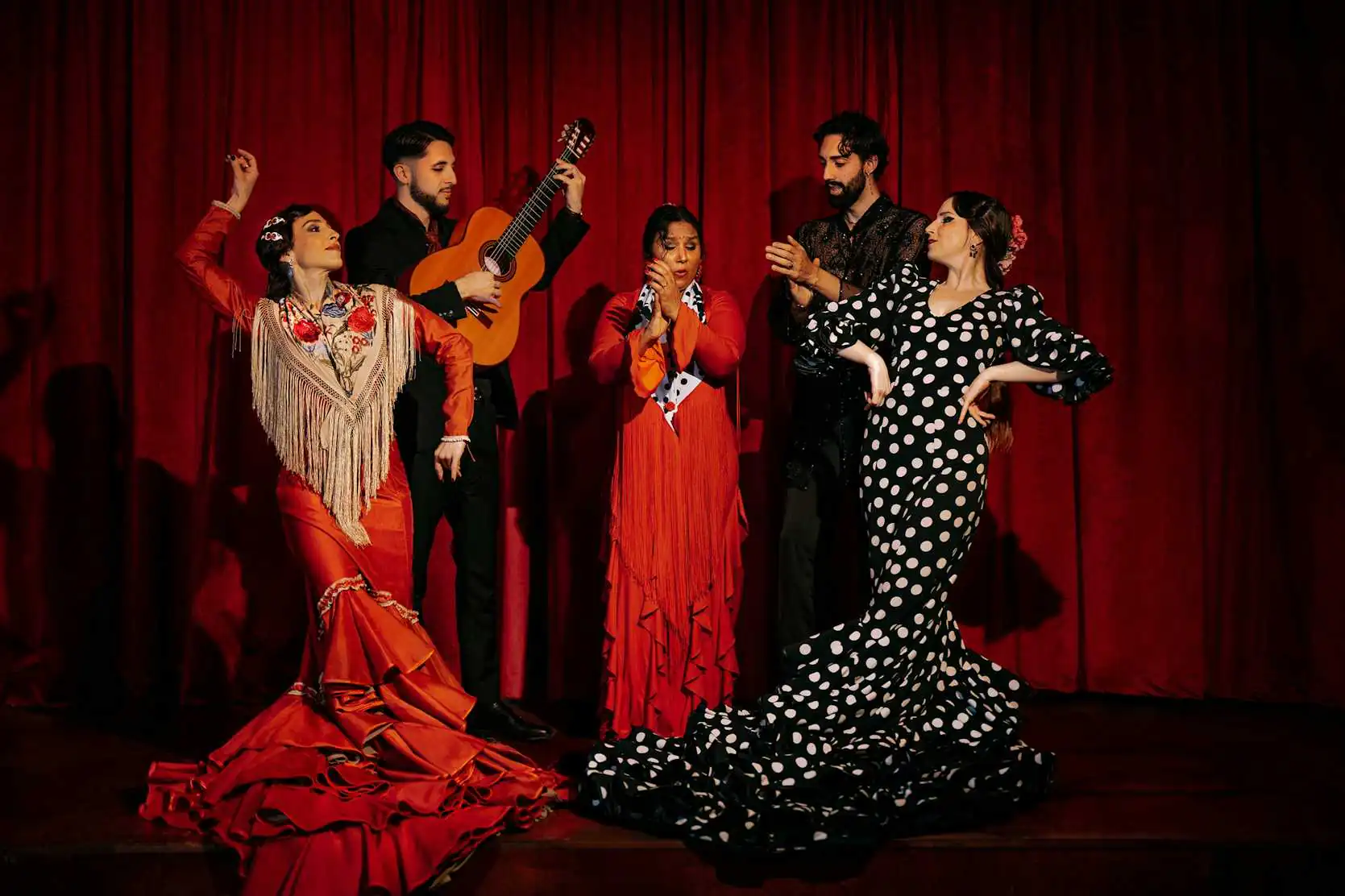
Flamenco Laietana Flamenco Show
Other questions people ask
What makes a flamenco show ‘authentic’?
An authentic flamenco show puts raw emotion and artistic integrity ahead of tourist spectacle. Look for small venues like tablaos or little theaters where performers connect straight with the audience, often with no amplification. The focus belongs on the pure expression of cante (singing), baile (dance), and toque (guitar playing), which reflect the deep cultural roots of this art form.
Do I need to book flamenco tickets in advance?
Yes, especially for popular tablaos and shows in big cities like Seville, Granada, or Madrid. Many venues have limited seating. Booking ahead locks in your spot, particularly in peak tourist season or for weekend shows. It often gets you better seats and sometimes a small discount.
What should I wear to a flamenco show?
No strict dress code exists, but smart casual shows respect for the performers and the art form. Skip the beachwear and athletic gear. Think comfortable but neat: a nice shirt or blouse, trousers, or a skirt all work. The goal is to enjoy the experience, not to win a fashion show.
Is flamenco only in Andalusia?
Flamenco began in Andalusia, in southern Spain, and its roots run deep there. It has spread far since then. Andalusia remains its spiritual home, with the most traditional and frequent performances. Big cities like Madrid and Barcelona also host plenty of high-quality tablaos and theaters, and they offer varied flamenco experiences that draw on both traditional and modern styles.
Can children attend flamenco shows?
Many flamenco venues welcome children. Check with the specific tablao or theater first. Some shows run late in the evening, which can be tough on younger kids. Look for earlier performances or shows marketed as family-friendly. The lively music and dancing can grab people of all ages and give kids a great cultural introduction.
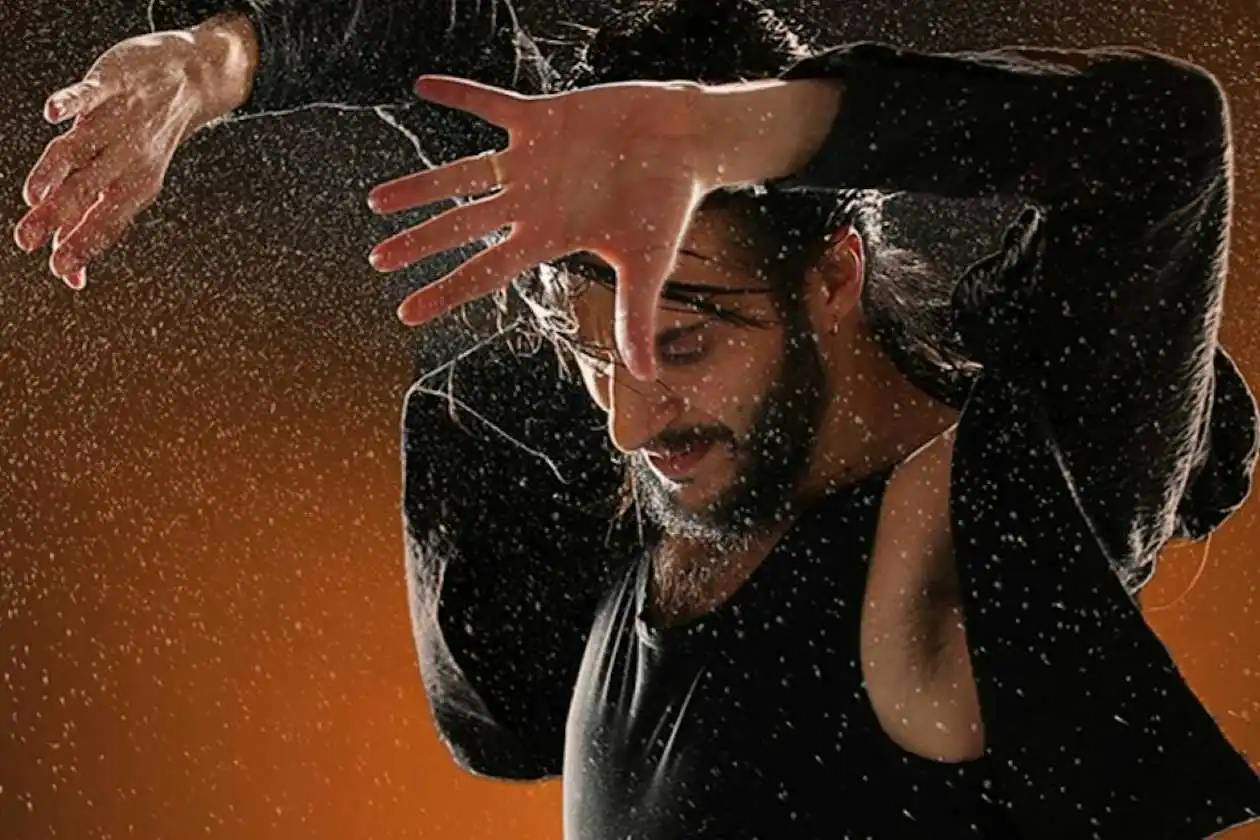
La Perla del Born Flamenco Show