
The number of bullrings throughout SPAIN is estimated at over 400. Every one that I have personally been inside had an effect on me, but none of them did what I thought they would do. My first visit to a bullring was to the Real Maestranza in SEVILLE, however it wasn’t as a spectator to a bull fight. It was for me to experience a sense of history and tradition through the structure of this building itself which I saw as a cathedral to a part of Spain’s culture from before my time.

Plaza de toros Ronda
Visiting a historic bullring isn’t about viewing a fight. Instead, it is about strolling through an area that has defined Spanish identity for generations. You can visit (tour) these venues, stand in the empty bullring and experience the power of the location without having to pay for a ticket to see a “corrida” – a bullfight. This is how I do it; this is also what this article will assist you in planning.

Michael Madsen shares his bullring tips with you
In my time traveling I have made mistakes as well. One of those was when I arrived at Las Ventas in Madrid one day in the early afternoon thinking that I could simply walk-in. Not true. The audio tour was available at certain hours. Therefore, I stood outside of a locked gate for forty minutes until a nice security guard walked me over to the ticket office down the street. Lesson learned: these are active venues, not outdoor museums.
Therefore, your travel plans should follow their schedules not yours. What you will receive from the effort you put in will be worth it. Standing on the sand floor of the world’s oldest bullring in Ronda is said to be like turning the page of a history book. Las Ventas’ Moorish arches, the classicism of Valencia’s 48 sided polygon, and Seville’s intimate chapel where bullfighters pray before entering the arena – all these details will remain with you.
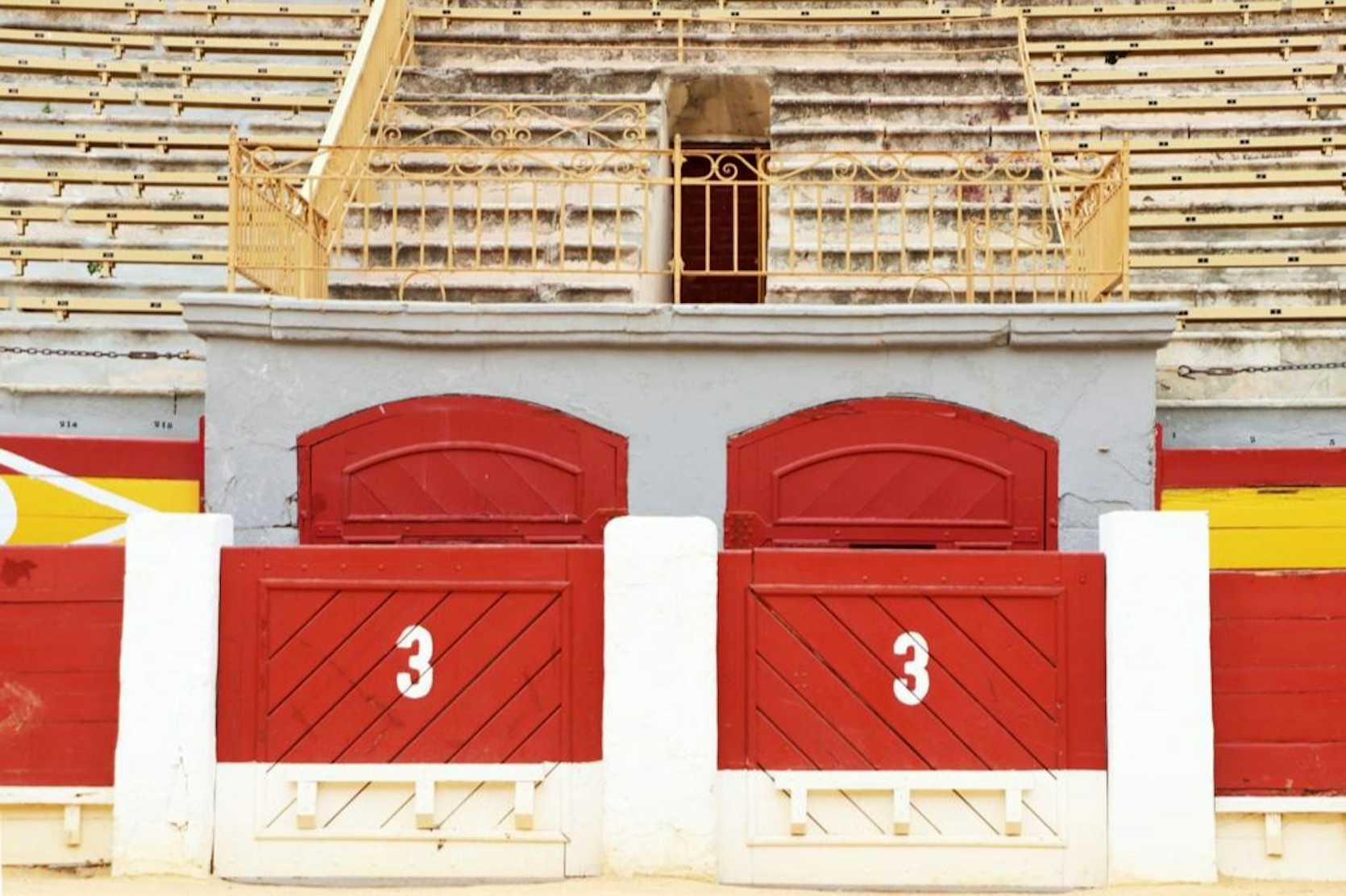
Plaza de toros Alicante
Here is what I will share with you in this article:
- Why bullrings matter as cultural sites, even if you never attend a bullfight
- How to visit the Real Maestranza in Seville and Las Ventas in Madrid
- What to expect at La Malagueta in Malaga, Alicante, Ronda, Valencia, and Granada
- Practical tips for tours, tickets, and timing
I don’t want to discuss animal rights or the ethical implications of bullfighting. Those debates have been widely covered in other places and they’re also not the focus of this article. I want to illustrate the architectural and cultural aspects of the structures – those qualities that stopped me in my tracks, allowed me to appreciate the beauty around me, and recognize that I was at a place of importance.
Even though many bullrings allow visitors during non-bullfighting seasons, it’s still possible to visit them when there is no one present and the atmosphere can be very peaceful (and possibly meditative). In addition, when you walk on the empty seats you will notice how the sun shines onto the sand differently. I’ve experienced both Andalusian and Madrid bullrings and had great experiences; you may as well as I did.
As part of your completion of reading this article, you’ll learn all you need to create a trip itinerary to visit a Spanish bullring. Additionally, I’ll explain which ones are worthwhile, what you’ll get from visiting each one (in terms of content), and how to avoid common mistakes I made. Beyond that, you’ll come to appreciate that these structures aren’t simply sports stadiums. These are symbols of a long-standing custom that has formed the essence of Spanish culture for centuries.
Bullfighting is such a large part of the makeup of who Spaniards identify themselves with and their traditions that goes far beyond what happens within the confines of the ring itself. This was most evident to me while I stood inside the old bullrings that were able to tell me so much through their architectural design regarding their regional pride and hundreds of years of history. For instance, the Real Maestranza in Seville is not merely an arena; it’s a living monument that has its own chapel where bullfighters pray before entering the ring to face the bull.
Appreciating this cultural significance turns an ordinary visit into a true encounter with Spain’s heart.
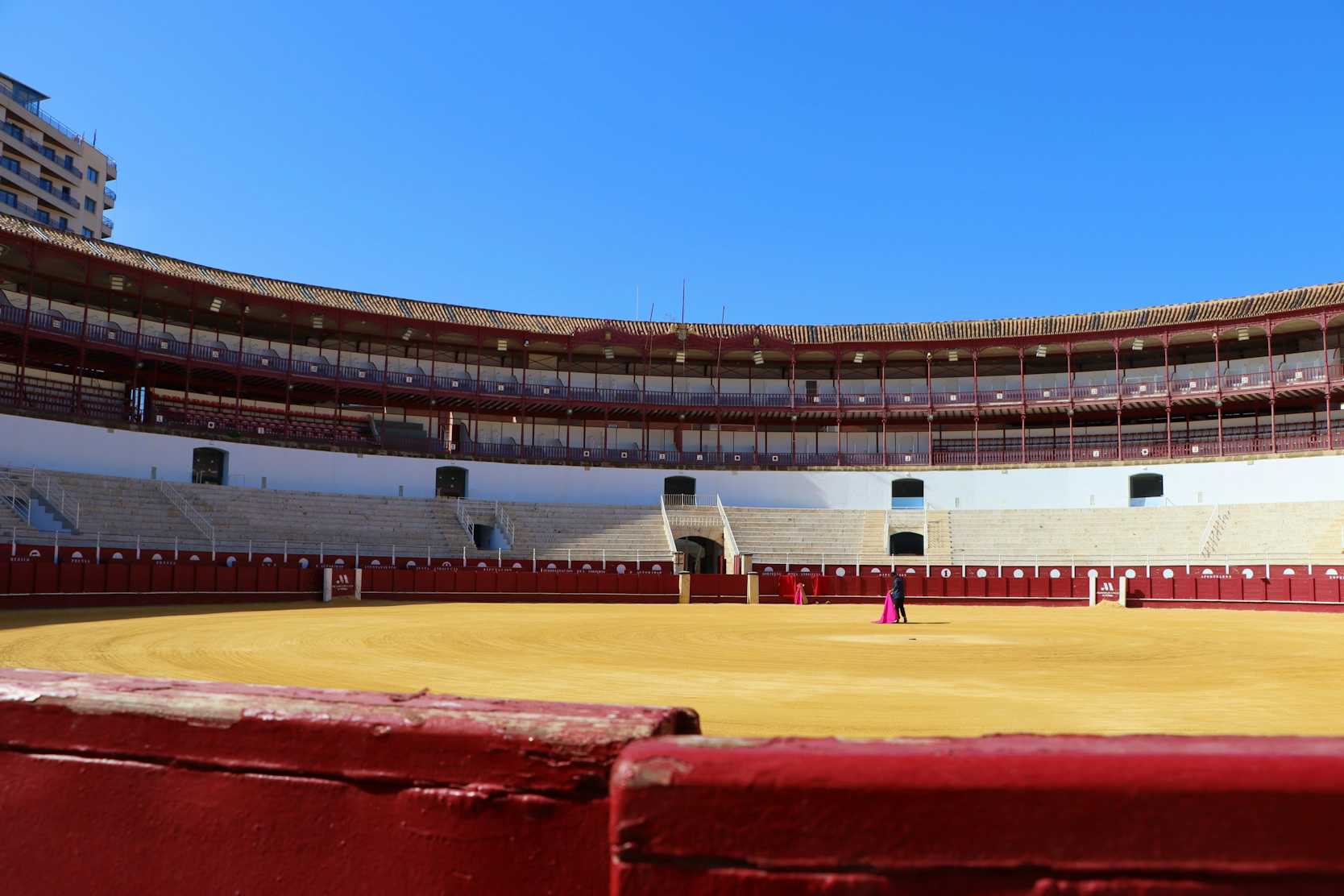
La Malagueta plaza de toros Malaga
What this article is not about
When I receive an email from someone inquiring if I am for or against bullfighting, I realize that the article has been unsuccessful at meeting its primary purpose. Bullfighting is a completely separate topic than the purpose of this article which is to provide a historic/architectural/traveler’s guide to Spain’s bullrings as structures worthy of being visited.
I will not address this subject in the context of how to feel about bullfighting nor how to weigh the pros/cons of the bullfighting issue. There are numerous other resources available that present both sides of the argument and those resources should be used by travelers. What I do intend to provide is some information that is specific to traveling – how to enjoy the architecture and history of Spain’s bullrings without attending a bullfight. Travelers can approach this situation similarly to when visiting an ancient temple; they can marvel at the intricately carved stones, admire the engineering, appreciate the countless hours spent constructing the temples and still avoid supporting all of the rituals that were conducted within the temple walls. That is the approach I use when evaluating each bullring I visit.
Rather than providing an opinion regarding the bullfights themselves, I will explain the detailed craftsmanship evident in the carvings that adorn many of the bullrings’ facades. I will also discuss the horseshoe-shaped arches, the ironwork designs, and how sunlight affects the sand during late afternoons. Each detail provides insight into who constructed these facilities and what aspects of their culture provided the foundation for construction of such venues.
Many readers come to articles written by travel writers anticipating a pro/con style of discussion. Some readers expect the writer to present evidence for or against the bullfights. In this article I will not be taking a side.
Travelers are interested in understanding where to stand (to observe), what to look for (aspects of design, architecture) and why this structure merits their interest. The issues surrounding bullfighting (ethics) constitute a different article for a different time/day.
I have walked through numerous bullrings throughout Spain – specifically in Seville, Madrid, Málaga, and Granada. At no time while walking through each venue did I participate in a bullfight. Never did I feel as though there was anything missing from the experience. The architecture, history, peacefulness of empty arenas on Tuesdays, etc., were sufficient.
There is a reason that I set this limit. To keep the focus narrow and on the tangible (things that are physically observable); on the walkable; on the things that you can touch, sit upon, enter, etc.
If you wish to enter one of these chapels where matadors once prayed prior to entering the ring, then I want to assist you in finding those opportunities.
The animal welfare debates have merit and significance but they are omitted from this article simply because including them would consume the content of the article. As soon as I begin presenting moral arguments and perspectives regarding bullfighting, then the architecture vanishes, the history evaporates, and the practical travel tips disappear beneath a never-ending debate that lacks resolution.
Therefore, my explicit editorial stance: leave ethical debates behind for now. If you oppose bullfighting due to concerns about animal welfare, that is a perfectly legitimate perspective. Your opposition to bullfighting does not preclude you from experiencing a 200-year old building as part of an overall appreciation for Spanish culture. The two concepts may exist together in your thoughts without contradiction.
I previously committed this error. Early in my career as a travel writer, I attempted to include all subjects – history, controversy surrounding the bullfighting issue, architecture, local opinions – in each article. Unfortunately, the results were confusing to everyone involved.
At this stage in my career as a travel writer, I create boundaries. Articles exploring bullrings as cultural monuments and traditional buildings as components of culture are acceptable topics for exploration. Nothing more.
That is where the real excitement begins.
The Majestic Bullrings
Bullrings in Spain (the ones with the bulls) are much bigger than anything I’d seen before in a city. They’ve also made me think differently about how we build buildings to be used by everyone — in short they’re monuments to cities as much as a place where people fight bulls.
Now after having walked into probably half of them, each one has an entirely unique story to tell about its own style. Many of them look like a Roman temple, using large columns and symmetrical designs reminiscent of the Romans’ grandeur.
Many others use the brick work of the Mudéjares, with large horseshoes and complex geometric shapes that are similar to those found in Moorish palaces. This variety is what I was trying to get at.
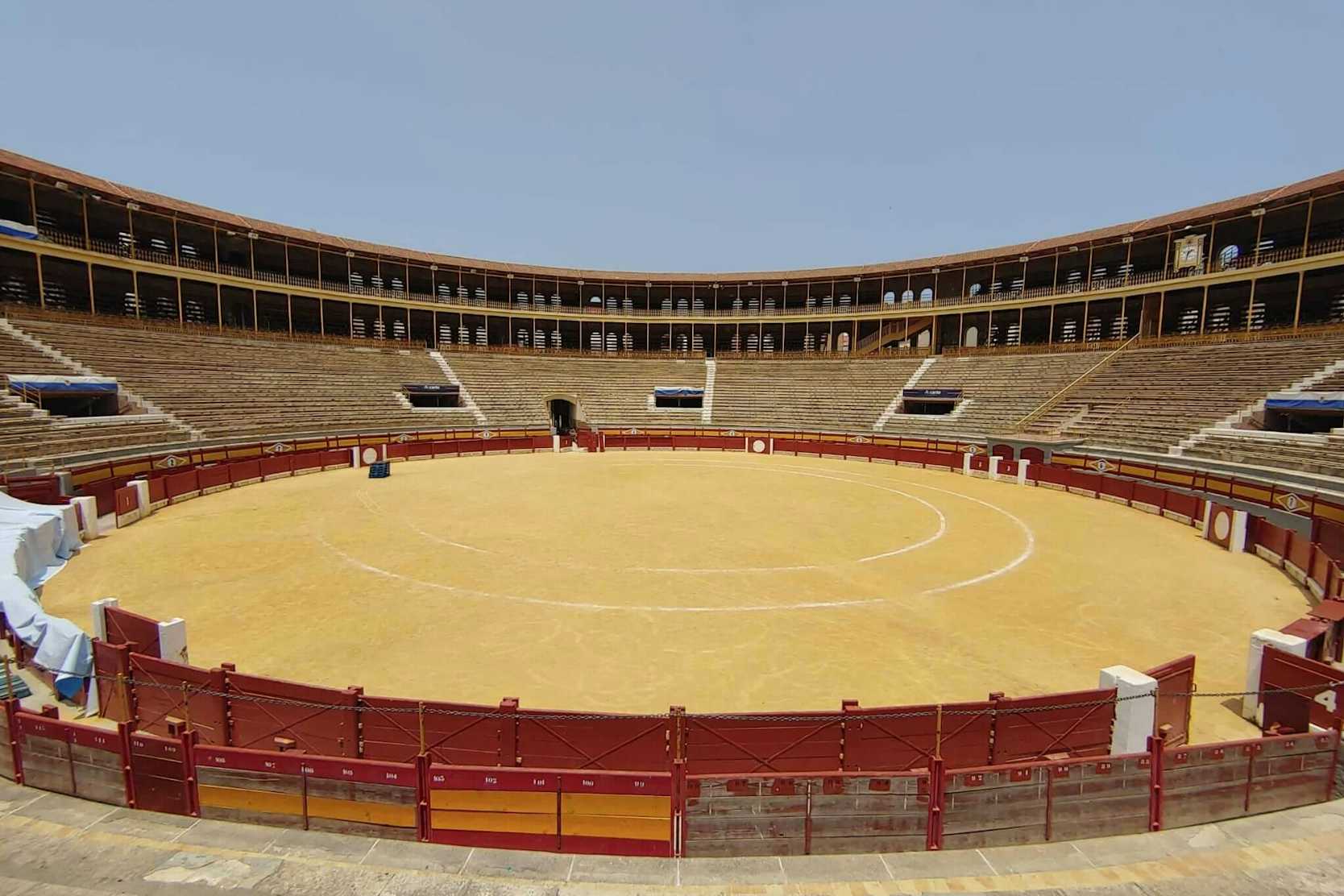
Plaza de toros Alicante
Las Ventas’ ornate brick work resembles an opulent Moorish palace and demonstrates its architectural significance beyond serving as a space for bullfighting. While standing in the tendido area and gazing upward toward the Royal Box at Las Ventas, I lost sight of it being a cultural venue altogether. It reminded me of a cathedral without a roof.
Why Architecture Matters Over An Event
Many bullrings are over one hundred years old. These old bullrings show evidence of that age through the stone walls, worn stairs and old iron gates. However, it’s the way in which many bullrings become anchors to their respective cities that I find fascinating.
Seville’s bullring is located along the river, so therefore has been integrated into the urban landscape. The Monumental de Frascuelo in Granada serves as a historicist symbol from the late 1920s.
Not all bullrings exist on the outskirts of towns as separate stadium type spaces. Many bullrings are strategically placed in prime locations within their cities.
Bullrings have an array of architectural designs ranging from neoclassical to Neo-Mudéjar. The style of the bullrings reflects their history. For example, Valencia’s bullring was constructed between 1850 and 1859. The bullring designers (Monleón) were inspired directly by two Roman structures; the Colosseum in Rome and the Arena of Nîmes. What a powerful lineage.
The architect Sebastian Monleon designed a 48-sided polygon bullring with 384 exterior arches. I too have had to count several of those arches while visiting.
It takes time to do so.
Each bullring also possesses large scale characteristics. Bullrings are not small buildings. The arena floor is massive enough to engulf a small town square.
The stands tower above each other in tiered form. The outside perimeter of the wall stretches for long distances. When I first arrived in Málaga to visit La Malagueta I assumed the bullring would be relatively small.
La Malagueta proved otherwise. Its sheer size occupies the corner of the city. The permanent exhibition housed inside only adds to my belief that this is indeed a multi-use cultural center, rather than simply a venue for one event.
Concerts, festivals and even political rallies have taken place in many bullrings. That ability to host multiple types of events and adaptability is part of why many consider bullrings majestic.
A building capable of holding 20,000 spectators for a corrida can just as easily house a summer music festival. The building itself doesn’t care about what occurs inside. It merely offers the backdrop.
What impresses me most is the regional pride inherent in the design of each bullring. The bullrings in Andalusia feel distinctly different than those found in Valencia or Madrid. Materials used differ greatly. Proportions vary greatly. Decorative language varies based upon regional histories.
For instance, the bullring in Ronda is considered to be one of the oldest in existence and is smaller and more intimate. Las Ventas feels imperial and both feel distinctively Spanish, yet both could never be confused for one another.
This diversity is what I hope travelers will note prior to entering any bullring. The building itself is the first exhibit. The bricks, arches, symmetry—these are all decisions made by architects that recognized a bullring as a platform for civic engagement and not solely a corral for animals.
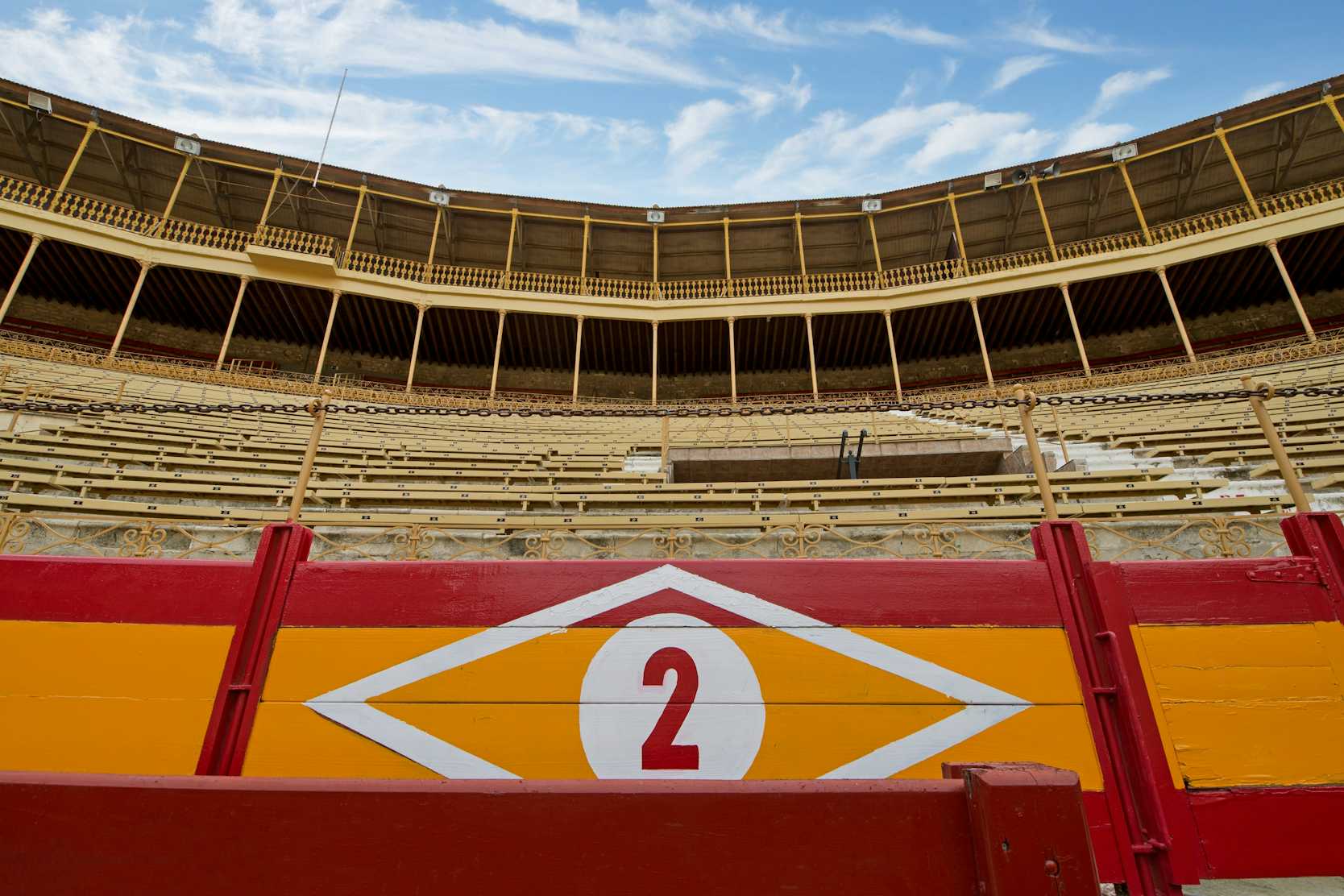
Plaza de toros Alicante
Here is a short list of what to look for when you approach any historic bullring:
- Facade material: brick, stone, or stucco-each signals a different era and region.
- Arch shape: horseshoe arches point to Moorish influence; rounded arches suggest Roman revival.
- Symmetry and rhythm: repeated arches or columns create a visual beat around the perimeter.
- Urban placement: is the bullring central or peripheral? That tells you how the city grew around it.
- Secondary entrances: gates like Seville’s Puerta del Príncipe carry ceremonial weight beyond mere function.
Visiting a historic bullring is an architectural experience as much as it is a cultural event. A visitor can measure the majesty of these structures in terms of their history (centuries), in terms of how many people they have been able to hold (number of spectators) and in terms of their physical presence (arches). A person does not need to be admitted into the stadium to experience its majesty. This can be experienced by simply standing across the street from a historic bullring and looking up at it and/or looking around at the surrounding area.
When visiting a historic bullring I would recommend booking either a self-guided audio tour or having a live guide rather than simply showing up at the venue unannounced. In my own case, I learned this the “hard” way when I visited Las Ventas in Madrid; I spent twenty minutes sitting in the empty ring with no idea what I was really seeing. When I used the audio guide I was walked through each section of the stadium including the tendidos (seating areas) the Royal Box and the President’s balcony; the audio guide also explained why some seating areas are better than others due to shading.
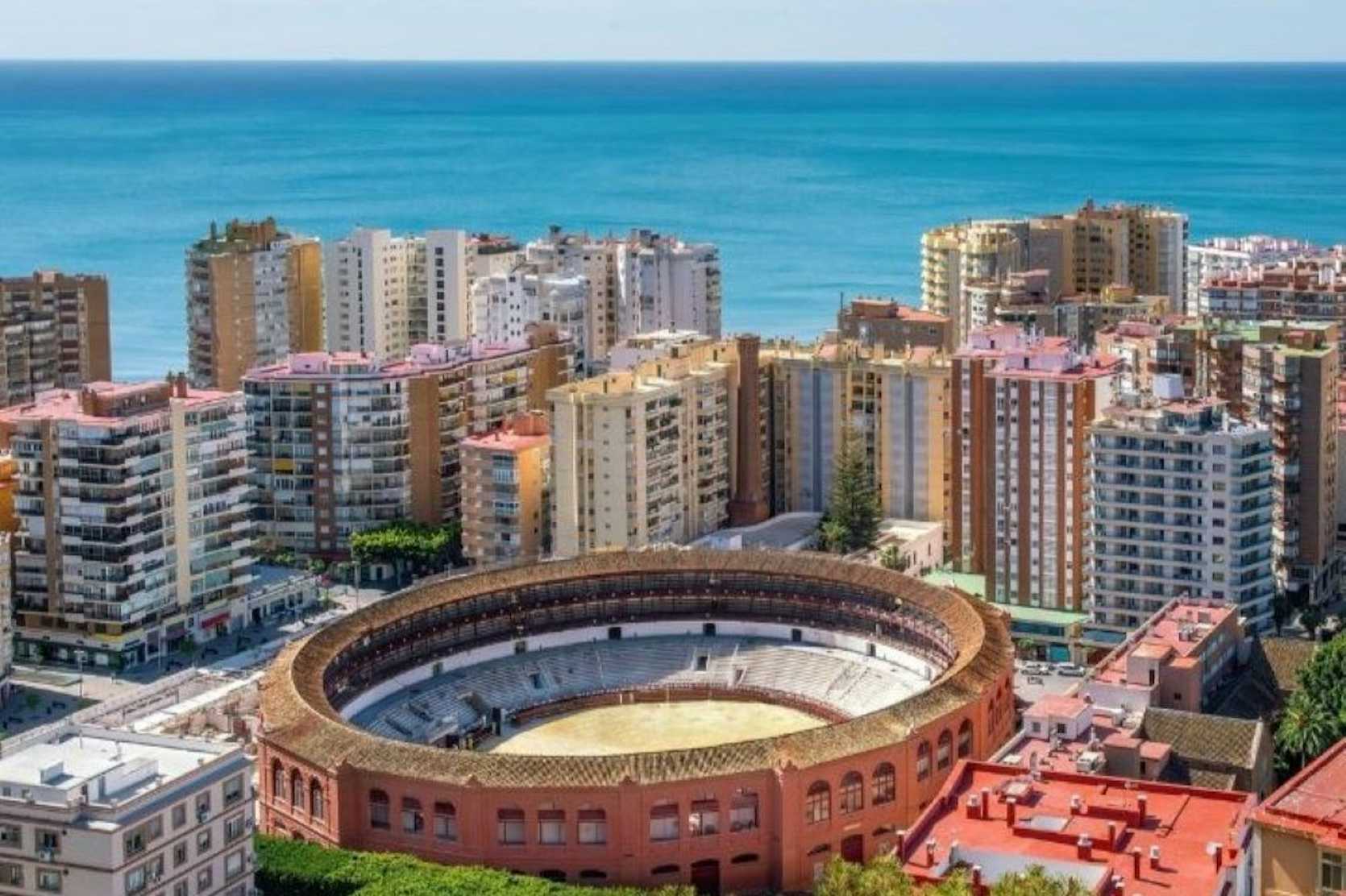
La Malagueta plaza de toros Malaga
Real Maestranza Bullring in Seville
What makes the real Maestranza in Seville so unique is how the bullring pulls you into a particular, tangible past.
You’re not seeing the monument from afar; you’re inside the same rooms where the actual ritual took place.
The horse courtyard was another area that really stood out. Even though it had been hours since anyone had used the courtyard for any kind of preparation (I visited early on a Tuesday), I could almost feel the vibrations of the horses’ hooves as they prepared for their next run. The stone walls seemed to hold those sounds. The wood stalls smelled of old hay and leather even on such a quiet day.
Then you come to the chapel. This is my favorite part. Bull fighters pray here before they enter the bull fight arena.
The chapel is small, dimly lit, and extremely intimate. One doesn’t need to be knowledgeable about bull fighting to grasp the significance of that doorway.
A man enters that doorway, standing by himself, knowing he will walk into a ring where his life hangs in the balance.
I liked that the headsets provided enough background information without being too much. They told the story of bullfighting in Spain and explained the changes over the years as you moved through each space.
One thing I found to be especially important were the skip-the-line tickets. When we arrived at the bullring in Seville, it was very hot and crowded with many tourists who didn’t realize how long the line would be. We went right in while a family waited nearly 40 minutes for the heat of the sun beating down on them. To me, that alone made it worth the cost of our tickets.
As you look up, the bleachers form an arc above you and surround you in a soft oval. Beneath your feet lie the dark and cool pens holding the bulls. Then there is the door; the Puerta del Principe.
That is the most significant door of all within the Plaza de Toros. If a matador performs well enough during a fight, he is picked up by the crowd and carried out of that door.
He goes from being anonymous to legendary when he leaves through that door.
Here is what I would tell a first-time visitor:
- Book the skip-the-line option in advance, especially between April and October.
- Wear comfortable shoes. The stone floors are uneven in places.
- Bring water. The arena bowl traps heat even on mild days.
- Give yourself at least ninety minutes. The chapel and horse courtyard deserve slow attention.
- Do not skip the bullpens. They are the most atmospheric part of the tour.
I have seen many bull rings including those located in Madrid, Malaga, and Granada. Each of them is unique. And while the Real Maestranza isn’t the largest nor the oldest, it has the strongest sense of history.
There’s no question about that when you visit a historical bull ring. A visitor doesn’t go to a bull ring to watch the bulls being killed. He or she goes to experience the architecture, the quietness, and the weight of all that has taken place inside these walls. The Real Maestranza offers this better than almost anywhere else in Spain.
When I finished my tour at the Real Maestranza I was left with an image of the Puerta del Principe (the Prince’s Gate). I spent quite a bit of time standing in front of it. It is simply a gate. However, as I looked at it I realized that it is the reason why buildings like this continue to be important.
See also our article about Seville here.
Las Ventas Bullring in Madrid
For many tourists, the bullring in Madrid seems to be little different than the one in Seville. As soon as you enter the Las Ventas Arena, however, you realize that this cannot possibly be true. Las Ventas is the home of toreo nationally and offers the best way to learn about the ceremonial nature of Spanish bullfighting (without having to watch a fight).
Las Ventas is self-guided via their Audio Tour and therefore allows you to move at your own pace while listening to the history and pageantry of Spanish bullfighting. At Las Ventas you will find yourself wandering the arena alone and at your leisure wearing headphones and learning about the traditions and ceremonies that have captivated the attention of the Spanish people for centuries.
Las Ventas Audio Tours do something that none other bullring or tourist attraction can. Las Ventas Audio Tours explain why bullfighting has been able to captivate the hearts of Spaniards; not as a sport but as a cultural ceremony with its own vocabulary, social structure, and emotional rules. I have taken this Audio Tour two times. The second time I took the tour I was able to notice things that I had completely overlooked when taking the tour for the first time.
Throughout the hallways are plaques and memorials honoring former greats and legendary matadors whose names continue to evoke emotion and admiration in Madrid’s cafes and barber shops today. The Audio Tour provides background information on these individuals and what drove them to take such incredible risks in this arena.
Finally, you come to the Tendido section of the Arena, where the adoring public watches the action unfold. From here, I could envision the throngs of people cheering and jeering, feeling the electric atmosphere of the past that continues to fill the air today, really realizing the lasting impact of this arena.
The sheer size of Las Ventas hits you very quickly. With seating capacity for over 23,000 spectators, from the Tendido area you get a sense of every single seat pressing toward the sand below.
The Neo-Moorish style arena encircles you in brick and tile. It’s nothing short of ornate. The arched gallery, intricate ceramics, and geometric lines all pull your eyes toward the middle of the Arena.
Above it all sits the Royal Box and the President’s Balcony, reserved for the elite few who control this ritual from afar. The President’s Balcony is where the authority of the fight resides. A simple handkerchief dropped from this balcony can alter the course of an entire afternoon.
On a sweltering hot summer day, you’ll appreciate why some areas offer shade. In fact, the shaded areas charge substantially more than the unshaded areas. After spending 10 minutes standing in a sunny area of the Tendido area, you’ll definitely understand why.
That happened to me last July. Not again.
Once you leave the Tendidos area, you make your way down to where the bull meets his fate in the Ring. The sand is perfectly groomed. There is a strange quietness in this area. Here is where you will witness (or sit) at the epicenter of the ritual. And, for a moment, you will have the chance to reflect on this through the Audio Tour.
There will be no live bull fights during your visit using only the Audio Tour. That is precisely the idea behind visiting Las Ventas. This visit is geared toward fans who wish to delve into Spanish Culture & Customs rather than just viewing entertainment. The Las Ventas Arena speaks for itself.
One thing that caught me by surprise is how much focus is placed on Pageantry – costumes, processions, music, and formalized gestures. Bullfighting in Madrid is theatrical almost as much as it is a blood sport. The Las Ventas Audio Tour views it that way too – allowing you to walk across an enormous Stage.
If possible – skip the group tours. The advantage of walking on your own schedule with head phones means that you can stop where you want, speed ahead where you don’t care about certain aspects of bull fighting. I stopped for 20 minutes in front of a memorial plaque about a Matador that I had never even heard of. The audio brought him alive.
Las Ventas does not attempt to convince you to become enamored with bull fighting. What it does is show you the Architecture of Tradition. Each bullring in Spain has its own unique blend of Architecture and History – but Madrid’s is by far the most Formal, Nationalistic, Ceremonial of them all.
The Las Ventas Arena was built in 1929 and it still feels like a Monument to Something Larger Than Sport. That is the Legacy that you are standing within.
La Malagueta in Málaga is the bullring I would recommend to anyone who believes that a Historic Arena is simply an Empty Circle of Sand. La Malagueta is a Bullring Museum that spans six rooms and houses a number of Large Audio Visual Displays, Period Artwork, and an impressive Collection of Bull Fighting Costumes and Accessories. My favorite part was the Interactive 360° Experience which simulated the Roar of the Crowd so well that I actually got Goosebumps.
With an Audio Guide available in Six Languages La Malagueta remains one of the most Multi Media-Rich Bullring Museums I have encountered in Spain.
Alicante Bullring
There is no other way to see the backstage areas of Alicante Bullring than by taking the VIP guided tour. These include the bull pens, chapel, and main entrance, and your own personal guide will tell you about these areas in either Spanish, English, Polish or Russian.
As someone who has visited many Spanish bullrings, I knew that usually all tours take place from the seats and/or museum area. However, Alicante does things differently. It was clear to me once my guide unlocked a “staff” door that there was a huge difference between this tour and a regular visit.
- Direct access to the bullpens where bulls waited before entering the ring
- Entry to the chapel, a small room most visitors never see
- Time in the grand entrance and the ring itself without crowds
- A private guide who adapts the stories to your questions
- The museum’s bullfighting art collection: paintings, sculptures, and vintage posters
- Interactive games and virtual videos that make the history stick
Beginning with the Bullpen
As I stepped through the bullpens, I felt as though I was getting a first-hand look at how this arena originally operated. There were the walls, old, thick and heavy; the stone, weathered; and the small chutes for animals. They told me so much more about what went on here than any plaque ever would. Only a handful of tourists experience that.
Private guides matter more than I thought they would. On your own (or in a group of 40), you just hear the script. With a private guide, you hear the story behind the script – the rivalry, the accident, the folklore surrounding this area that will never be put into an official travel book.
That is where the true value lies. It isn’t the ability to go into the bullring, but rather the opportunity to talk about it.
The Museum Art Collection Surprised Me
As I walked around the museum looking at all of the artwork on display, I saw vintage posters from the early 20th century hung right alongside modern day sculpture. The paintings showed moments that no photograph can capture – the tension in an animal before it makes a pass, or the stillness of an empty ring at dawn. I spent a lot more time here than I had initially planned.
The Interactive Displays Were Not Gimmicks
When I looked at the videos, showing me what it looks like inside a fully crowded bullring (and I was lucky enough to visit on an empty Tuesday morning) helped to understand the atmosphere. The video games were easy and forced me to learn some of the lingo and rituals of a bullfighting arena, something that simply watching wouldn’t have allowed me to do.
If you really want to see beyond the basic entrance fee, skip over buying a ticket to enter, and buy tickets for one of the VIP tours. Yes, they cost more money, but that is exactly why you came – for a chance to see this arena. This is not somewhere you come to walk by an empty ring and leave.
Something To Know About The Tours:
Each tour goes in four different languages. Unfortunately, each guide’s availability is subject to their individual schedules. Therefore, it is important to call ahead and ask for your preferred language upon booking. When I didn’t do that (once) and ended up going on a Spanish-speaking tour with my limited high school vocabulary… I survived. You can too.
Although Alicante may not have the same level of recognition as Seville or Madrid, that actually works to your advantage. You’ll likely have fewer people waiting outside the bullring for admission to take photos, you’ll have more time to explore and enjoy your experience while you’re there, and most importantly, you’ll probably find that your guide is very excited to have someone interested in learning about his/her city.
While I think the architecture of larger arenas such as those in Seville or Madrid are certainly impressive in terms of size, I believe that smaller arenas like Alicante have their own type of power. Intimacy creates an atmosphere that is hard to replicate when surrounded by thousands of other people.
Royal Cavalry Bullring in Ronda
Ronda’s bullring is worth going to whether or not there is a fight. It is called the oldest bullring in the world, and it is a piece of art. You go into the bullring expecting to find an arena, when really you find yourself standing in front of a historic stone monument.
I have been in many Spanish bullrings. None compare to the beauty of this one. The elegance of the Regal Facade contrasts beautifully with the deep canyon walls of El Tajo Gorge. In my opinion, the building looks more like a castle than an arena. I am serious about this.
There are differences in size and shape compared to other plazas. The arches sit much lower. The sand ring appears to be smaller and more intimate. All together, this arena has a presence that new arenas lack.
I was shocked at how little the experience of being in this arena relies on seeing a bullfight. Most weeks, sometimes months go by without a bullfight taking place here.
To be honest, that is exactly why people visit this site. You are not visiting an event space. You are visiting a piece of Andalusia’s history in the form of a bullring.
This is a story told by the building itself. The stonework, the wooden barriers, the horse trails through narrow passages were all present before the modern bullfight took place. This used to be a Royal Cavalry training grounds before becoming a public arena.
This military influence can be seen in the strictness of its design. Everything about it seems functional as opposed to purely decorative.
I walked around the perimeter of the arena for an hour. The small museum inside had pictures of old-time bullfighters, matador outfits and some relics that seemed very worn rather than staged. However, the main attraction (the exhibition) is the actual structure. The two tiered arcade, the sand ring, the way that sunlight shines onto the sand ring during late afternoons.
Do not take the audio guide for this arena. I did, and while it explains everything you see perfectly well with your eyes, it just takes up too much time explaining things that aren’t necessary. This is an arena meant for slow observation.
If I were to come back to this arena again; I would try to arrive prior to noon. When the sun shines directly upon the facade at this time of day, it creates an amazing photograph opportunity. The gorge behind the arena becomes radiant as well. At mid-day, the sun will begin to fall behind the arena creating a flat affect on the scenery. This is a minor detail; however, it changes the photo opportunities drastically.
Ronda’s arena provides something that no other arena achieves. It allows visitors to totally remove their minds from the debate regarding the ethics of the corrida.
As you walk into Ronda’s arena, you’re not thinking about the bloodshed associated with bullfighting.
You’re thinking about two centuries of stonework, horses and men walking down these paths side-by-side. That is a special type of cultural link.
All Spanish bullrings each contain its own unique architectural story. Ronda contains the earliest part of that story. The next bullring I want to write about is located in Valencia. It is a 48 sided polygon with 384 outside arches. This is a different animal altogether – but I’ll save that for now.
The Royal Cavalry Arena does not require a bullfight to make it important. It only requires you to enter it.
Valencia’s bullring is the one I always recommend to my friends who love architecture to view regardless of their intentions to ever attend a bullfight. Constructed between 1850-59, this enormous arena borrowed its majesty from both Rome’s Colosseum and France’s Arena of Nimes; yet, architect Sebastián Monleón Estellés added his twist which stops me every time I walk by. The arena is a 48-sided polygon with 384 exterior arches – A Neo-Mudéjar flourish that gives it a look more akin to ancient Roman Amphitheaters then any other standard bullring round Spanish plaza.
At one time, I circumnavigated this entire plaza to count all of the arches; I lost track twice.
See also our article about Ronda here.
Bullring of Granada
The Bullring of Granada, known formally as Monumental de Frascuelo, was a 20th century Historicist Landmark constructed by local Architect Ángel Casas, between 1927-28. This structure represents one of the most visible examples of Granada’s architectural legacy regardless of whether or not visitors choose to enter to watch a fight.
I initially encountered this structure while walking down an alleyway close to the city center, and the exterior of the building froze me. The building is loud; it makes its presence felt. Its large and somewhat elaborate front echoes other monumental structures within the city, speaking directly to Granada’s history. That is essentially what Historicist Architecture is intended to do – take the visual references from previous time periods and use them in a fluent manner.
Ángel Casas did not create a minimalist bullfighting arena. On the contrary he intentionally referenced historical styles. As such the bullring now has the same relevance to Granada as does the Alhambra but in another register. The impetus behind creating this bullring came from Sociedad Nueva Plaza de Toros (New Bull Ring Society), a privately owned entity which sought to provide a venue to complement the cultural stature of the City.
What Creates Success in the Facade Design
There are many ways for Historicist Architecture to fail quickly. If there is too much ornamentation then the building looks like it is wearing a costume. If there is not enough reference to the historical style(s) then the building loses all reference to those previous architectural styles.
Ángel Casas successfully struck a balance. The facade incorporates decorative archways and brickwork patterns reminiscent of older Spanish traditions, however these are not copied from any single monument.
Upon completing my walk around the periphery of the structure twice I observed how the entrance rhythms change depending upon your position around the circular shape. That is no accident.
The designer created the exterior of the structure as a series of sections rather than as a singular wall. As such each segment frames the adjacent segment creating movement toward the central entry/exit gate.
This is what I encourage visitors to note during their visit:
- The layered brick patterns above the main entrance
- The way the facade curves with the arena behind it
- The contrast between solid lower walls and lighter upper detailing
- The local materials that tie it to Granada’s other historic buildings
There isn’t anything that requires a ticket to see at all. Walking around the outside of the building is worth taking your time over. I walked around the entire building for 40 minutes and would do so again.
In addition to bullfighting, this arena has hosted many other types of public events. Because of this, there are always people using the arena throughout the year. That is important because if an arena can only be used for only one reason then it will become a museum. As such, this arena continues to act like a community space.
Granada’s Arena de Toros does not get the same amount of attention as Seville’s Plaza de toros or Madrid’s Las Ventas. I believe that is a mistake. The architecture of this arena creates its own unique conversation. It is very local, with a strong relationship to the historical development of the City’s architecture. The 1920’s were a defining period in Granada and this building represents that moment in the cities architecture.
As far as bullrings go I would say it is one of the most underrated bullrings in all of Andalusia. The facade of this bullring makes it well worth the trip. Additionally the neighborhood surrounding the arena has many shops and restaurants where you could spend time after visiting the arena.
It was built in 1928, yet almost 100 years later, it looks as though it was deliberately constructed by someone who knew what they wanted to build. It looks as though the builder had confidence in their vision and in doing so, he created something that is clearly from Granada. That is the lasting impression of a local man who understood his city.
Frequently Asked Questions
Yes you can walk into the bullring itself at most historic Spanish bullrings and many of these tours let you stand right on the sand where matadors used to work. Travelers ask me questions all the time about access, timing and what actually is included in a visit.
The first time i planned to go to my first bullring i over thought it. I assumed that we couldn’t walk on the arena floor, we must book weeks in advance and we will feel awkward because we don’t know anything about bullfighting. None of this turned out to be true.
For example, at Valencia’s bullring the route for your tour takes you through the tendidos down to the bullring itself and into the areas behind the stands. When you stand on that packed sand looking up at 384 exterior arches you finally understand why people describe these buildings as monumental civil buildings rather than sports venues. The size does the selling job.
Do you need to book in advance? No you do not but between April and October the skip-the-line option will save you real time at the busier sites. I learned that the hard way in Seville where a group waited 40 minutes direct sun while i walked straight through with a pre-booked ticket.
What about language? The alicante bullring offers tours in English, Spanish, Polish and Russian. La Malagueta’s audio guide has six languages covered. If you have a specific language need confirm it when booking before making other assumptions.
Accessibility varies. Older bullrings like Ronda’s have uneven stone surfaces and steep steps. New or renewed ones, including Valencia’s, usually have flat paths and ramps in key areas. I always tell travelers who have mobility concerns to call ahead and check which route they will take.
How long should you plan for? Give your self at least ninety minutes. That covers your tour of the area, the museum part of the building and just sitting in the stands and absorbing the geometry of the place. Rushing through a 48-sided polygon feels wrong.
The One question i get constantly is; do you need to watch a bullfight to appreciate the building? No. The architecture, history and quiet of an empty arena deliver the experience by themselves. That is the whole point of visiting these places as cultural landmarks.
The best time to visit is mid-morning on a weekday. The light comes clean from the arches, the crowds are thin and the temperature is still pleasant. I have never regretted starting early at a bullring
At the end of the day…
Standing in the horse courtyard of the Real Maestranza, I was at last able to grasp the essence of what had driven me throughout Spain. Bullring’s are not simply places where fights take place; they are containers of history made from stone, brick and memories.
Using an audio tour while walking through Las Ventas, I followed along as it pointed out the many Neo-Moorish arches on display and read all the information placards listing all of the many great matadors I’ve never even heard of. I did not have to go see a bull fight, the tendidos were enough to tell me about how hot and crowded it is there and why the shade seats cost so much money.
My experiences from visiting these historic bullrings:
- Seville’s Real Maestranza gives you skip-the-line access and a headset, but the real prize is the Puerta del Príncipe gate and the chapel where bullfighters prayed before stepping into the ring.
- Las Ventas in Madrid is the national home of toreo. The self-paced audio tour covers rituals, pageantry, and the Royal Box without a single bullfight happening during your visit.
- Ronda’s Royal Cavalry Bullring is said to be the oldest in the world. It rarely hosts bullfights now, and honestly, the building itself is the experience.
- Granada’s Monumental de Frascuelo, built between 1927 and 1928 by local architect Ángel Casas, stands as an emblem of historicist architecture in the city.
- Alicante’s VIP tour takes you into bullpens and behind-the-scenes areas most visitors never see, with guides speaking Spanish, English, Polish, and Russian.
The best option? Go into one of the many bullrings in Spain. Take a tour, buy a ticket. You don’t need to just get a photo of the front of the building. Photographs can be nice but they do not capture the feeling that comes when you are standing on the same ground as those who came before us, whether it is Seville for its rich history and wonderful architecture or Madrid for its place in the national story or Ronda because of its beauty and few people.
Frequently Asked Questions
Can I visit bullrings in Spain if I don't want to see a bullfight?
Yes. For sure! Most major bullrings offer guided tours or self-guided audio tours that allow you to explore the architecture, museums, and historical significance without witnessing a bullfight. These visits focus on the cultural and historical aspects of the bullring as a landmark.
What's the best time of year to visit a bullring in Spain?
Bullrings are generally open for tours year-round, but spring (April to June) and autumn (September to October) are ideal. The weather is milder, making outdoor exploration more comfortable, and you might catch some cultural events or festivals related to the bullring's history.
Are all bullrings in Spain similar in design?
While many bullrings share a circular or polygonal arena, their architectural styles vary greatly. For example, Valencia's bullring is neoclassical with a Neo-Mudéjar influence, while Ronda's is known for its classic elegance. Each offers a unique visual experience.
Do I need to book bullring tours in advance?
For popular bullrings like Real Maestranza in Seville or Las Ventas in Madrid, booking skip-the-line tickets online in advance is highly recommended, especially during peak tourist seasons. This saves time and ensures availability for your preferred tour slot.
How many bullrings are there in Spain?
Spain has over 400 bullrings in cities and towns all over the country.
Is bullfighting forbidden somewhere?
Yes, e.g. Cataluña and on Mallarca there are no bullfights anymore.
When are the bullfights?
Most bullfights are celebrated when there is a town festival (“feria”) as part of the feria activities.
The major cities also have bullfights outside the feria period. Always on Sundays or bank holidays, usually from 17h in the afternoon.
How long is a bullfight?
You will be surprised to hear that it often takes up to 6 hours! There are always 6 bulls to fight – and each fight take up to an hour.
What should I expect to see in a bullring museum?
Bullring museums typically house collections of bullfighting costumes, historical posters, art, and audiovisual displays detailing the history and evolution of bullfighting. You'll often find artifacts related to famous matadors and the cultural significance of the sport.