
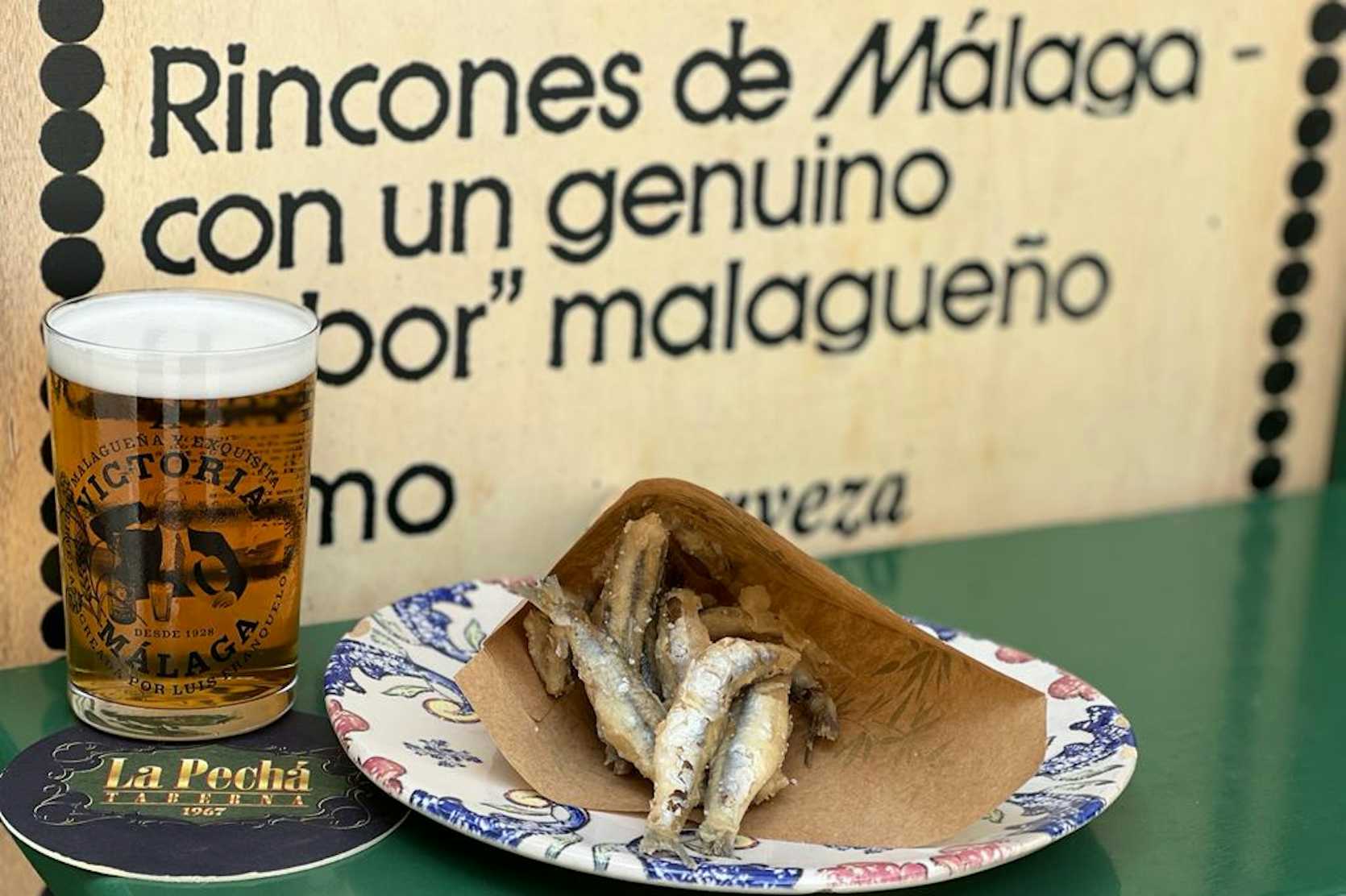
Tapas in Malaga: Pescaíto frito
Twelve tastings across four bars. That was the moment I stopped eating tapas like a tourist and started eating them like someone who actually understood Malaga.
I used to wander into the first busy-looking place near Calle Larios, point at whatever looked fried, and call it a cultural experience. I was wrong. The real tapas malaga scene hides down side streets, inside 200-year-old wineries, and behind unmarked doors where locals order a sherry before noon without a hint of shame.
My answer after years of chasing those plates: the best tapas experiences in Malaga come from guided tours that pair food with history, local guides, and stops you would never find alone. A good tour gives you 4-5 venues, 7-12 tastings, and enough context to understand why buquerones in vinegar matter here.
This article covers the tours I would actually recommend to a friend. Some focus on wine pairings. Others take you through the Atarazanas Market before cooking your own tortilla de patatas. A few crawl through historic taverns where the decor has not changed in decades.
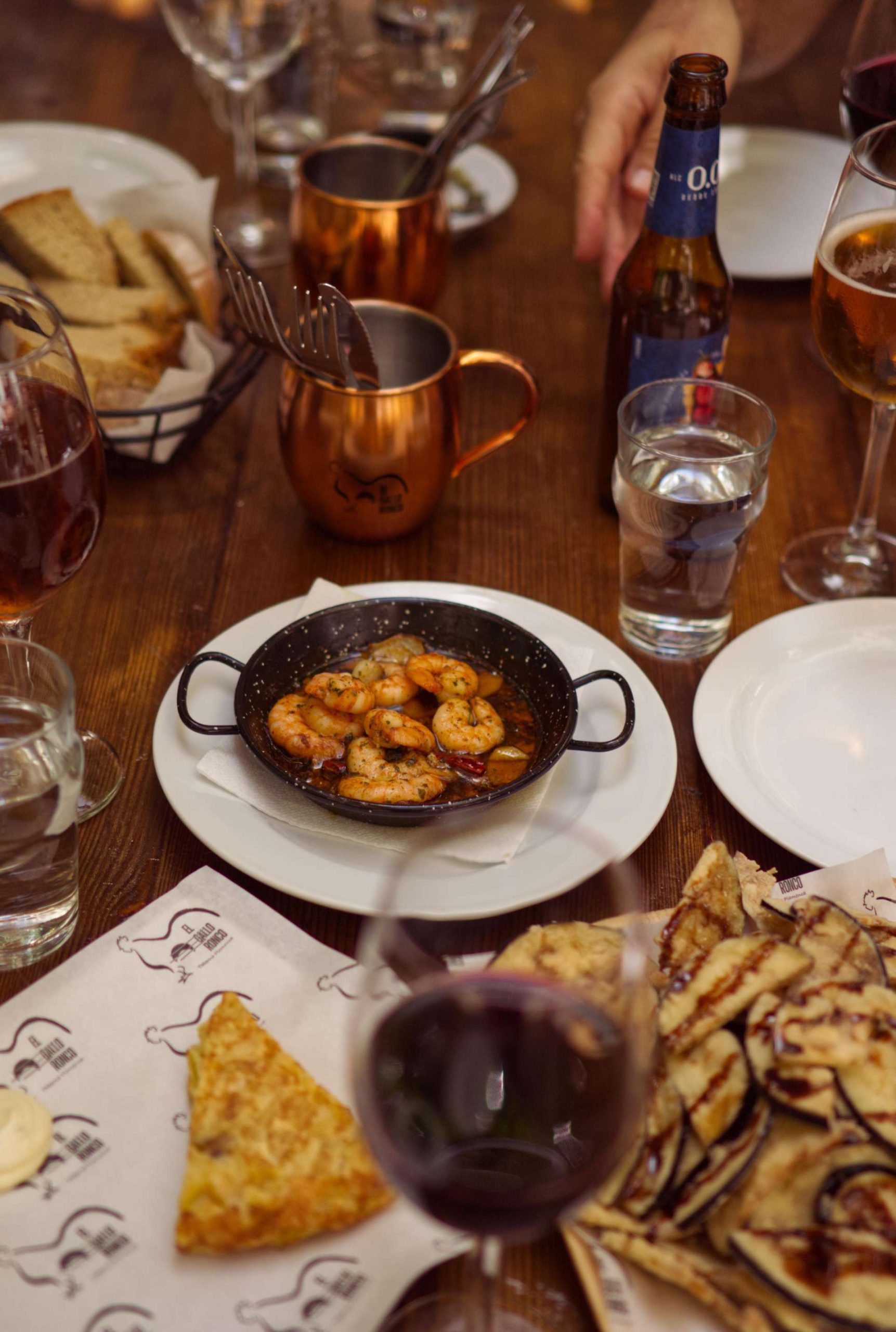
Tapas in Malaga: Gambas pil-pil and tortilla española
What I look for now:
- Small groups – under 12 people, ideally fewer
- Stops that mix hidden local favorites with iconic institutions
- Guides who explain the stories behind each dish, not just the ingredients
- Drinks included – wine, vermouth, or something local
I have made the mistakes so you do not have to. The overpriced plaza menus. The sad patatas bravas with ketchup.
The tour that felt like a sales pitch for a souvenir shop. None of that appears here.
Malaga blends Andalusian tradition with coastal ingredients in a way few cities manage. Fried fish, Iberian ham, sweet Moscatel wine, and gildas that punch far above their size. The tours below show you how to experience all of it without wasting a single meal.
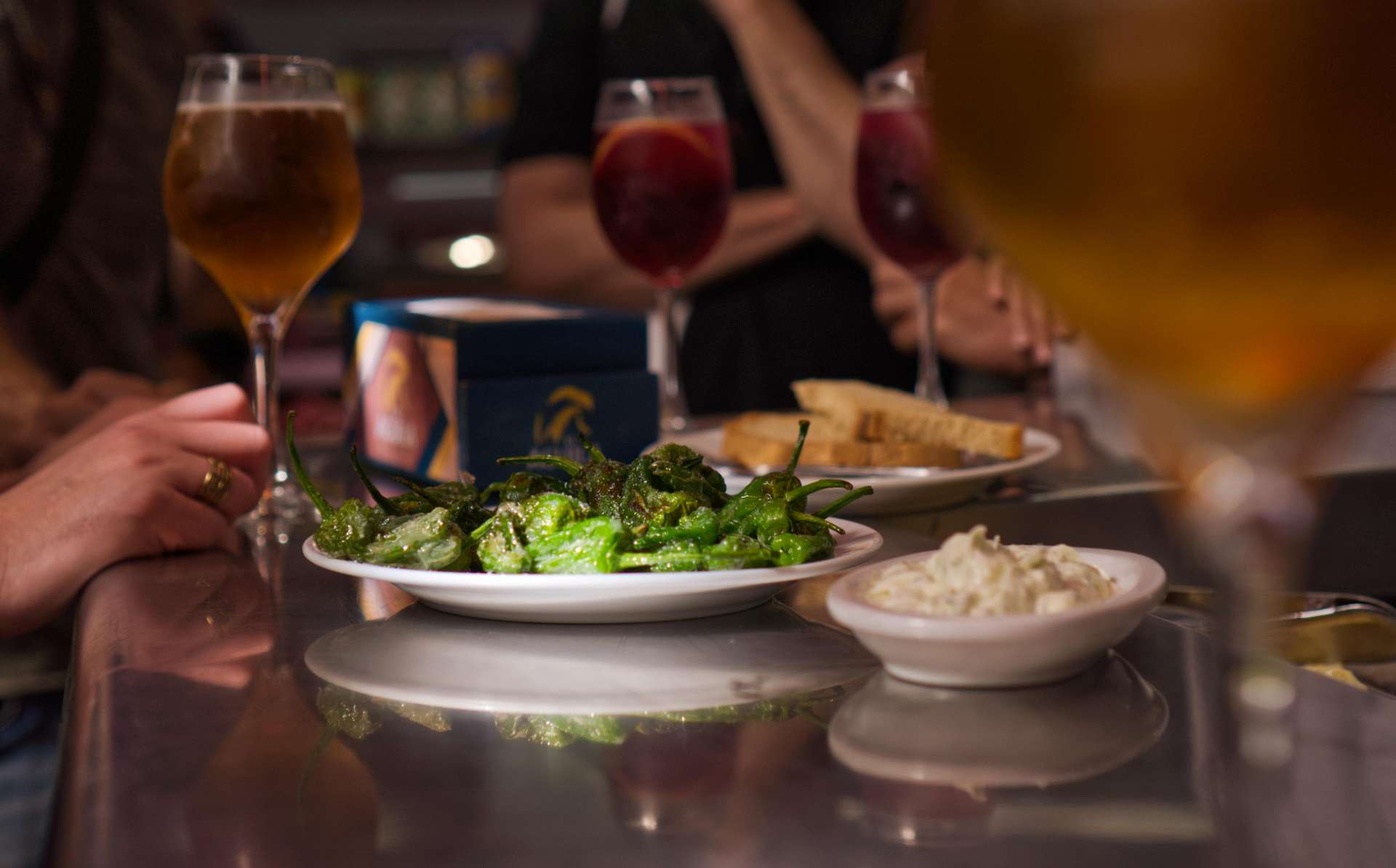
Tapas in Malaga: Pimientos al padron
What Is the “Guided Food Tour With Drinks” in Malaga?
A guided food tour with drinks in Malaga is a structured walking experience that takes you to at least four restaurants or eateries, pairing tapas and local dishes with Spanish wine, sangria, beer, or soft drinks while a local guide explains what you’re eating and why it matters.
I used to think I could figure out Malaga’s food scene on my own. Then I walked past a tiny bar on Calle San Juan three times without noticing it. My guide pulled me inside, and twenty minutes later I was eating albóndigas so tender they collapsed under my fork. That’s the whole argument for a guided food tour in one anecdote.
The structure is refreshingly simple. You meet your guide, usually in the historic center, and walk to four or more stops over roughly three hours. Each venue serves something different – a family-run grocery store slicing Iberian ham, a vermouth bar specializing in sausage and cheese, a traditional tavern pouring regional wine. You’re not just eating; you’re learning the rhythm of how Malagueños actually move through an evening.
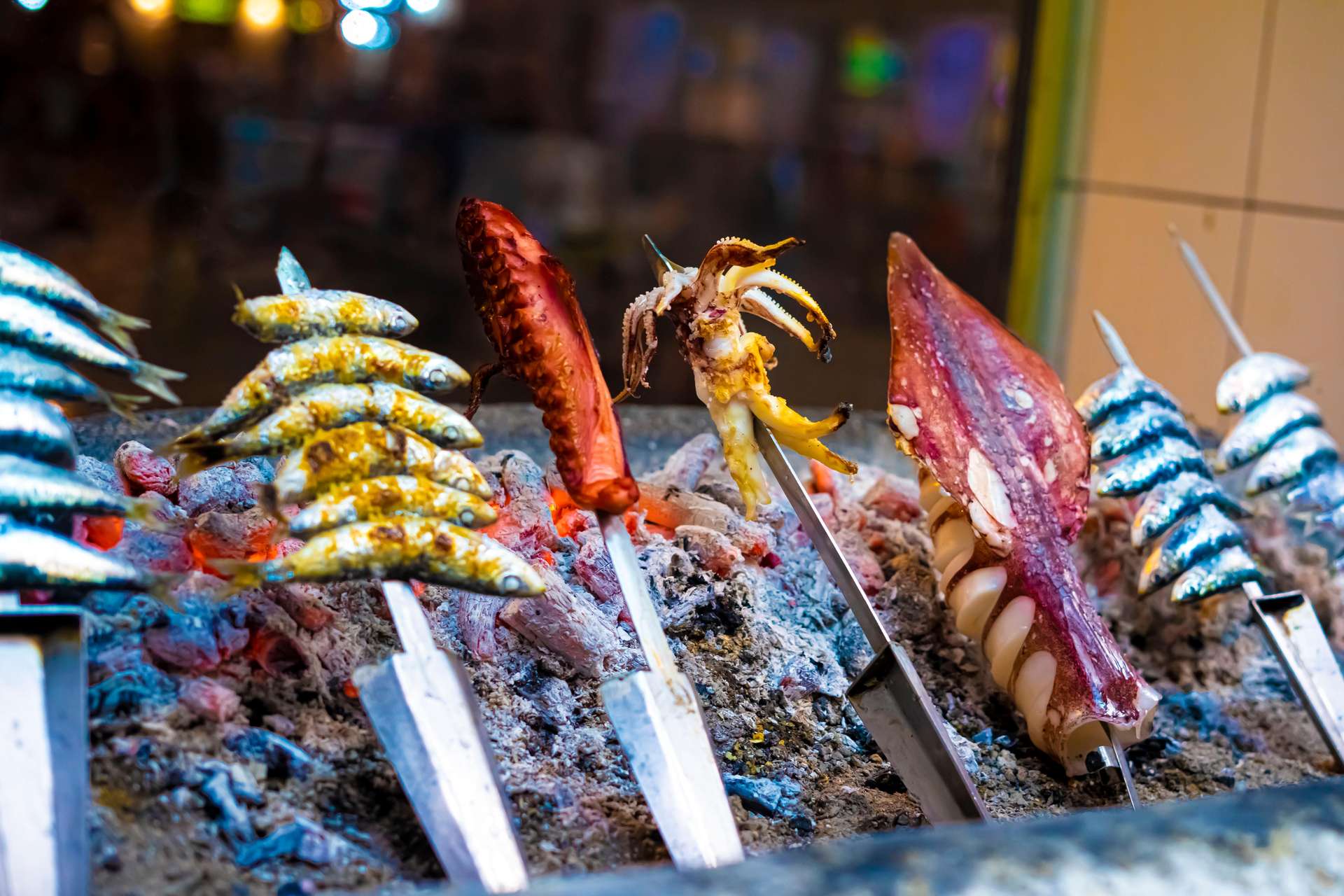
Tapas in Malaga: Espetos de sardinas, etc.
Drinks matter more than most first-timers expect. A proper tour pairs each round of tapas with something specific: a chilled glass of Moscatel with fried fish, a rough red with slow-braised pork cheeks, a crisp beer to cut through garlicky pil-pil prawns. Soft drinks are always available, which I appreciate because not every stop needs alcohol to make sense.
The social aspect sneaks up on you. I’ve joined tours where strangers from three continents were swapping restaurant recommendations by the second stop. There’s something about standing shoulder-to-shoulder at a crowded bar, reaching for the same plate of boquerones, that breaks down the usual travel awkwardness faster than any hostel common room.
What a guided food tour is not: a replacement for exploring on your own. It’s a primer. You’ll leave with a mental map of which streets reward wandering and which ones serve reheated tourist portions. The hidden gems and local favorites you hear about on these tours become the foundation for deeper, more specialized food adventures later.
Here’s what a typical guided food tour with drinks includes:
- At least four restaurants or eateries, each with a different specialty
- Multiple tapas and small dishes per stop, often 7–12 tastings total
- Drinks at every venue – Spanish wine, sangria, beer, or soft drinks
- A local guide who explains ingredients, history, and bar etiquette
- A small group, usually under 12 people, which keeps the pace relaxed
My honest opinion: if you have one evening in Malaga and zero local contacts, book the guided food tour before you do anything else. The efficiency alone justifies it. You’ll taste more regional staples in three hours than most visitors manage in three days of guessing.
I still remember the albóndigas from that first tour more vividly than any Michelin-starred meal I’ve had in the city. That’s not nostalgia talking. It’s what happens when someone who knows exactly where to look hands you a plate you’d never have ordered on your own.
What Is the “Tapas Food Tour” in Malaga?
A tapas food tour in Malaga is a guided expedition through five different tapas bars, each serving 10–12 local delicacies, designed to immerse you in the city’s authentic eating habits and hidden culinary spots. It moves beyond simple tasting into understanding the tradition behind every small plate.
The 80/20 rule applies here – 80% of tourists crowd the same three streets, while 80% of the best tapas sit in neighborhood joints they never find. A dedicated tapas tour flips that ratio. I’ve watched first-timers walk past unmarked doorways on Calle San Juan that hide some of the best albóndigas in the city, simply because nothing outside screams “eat here.” That’s the gap a specialized tour closes.
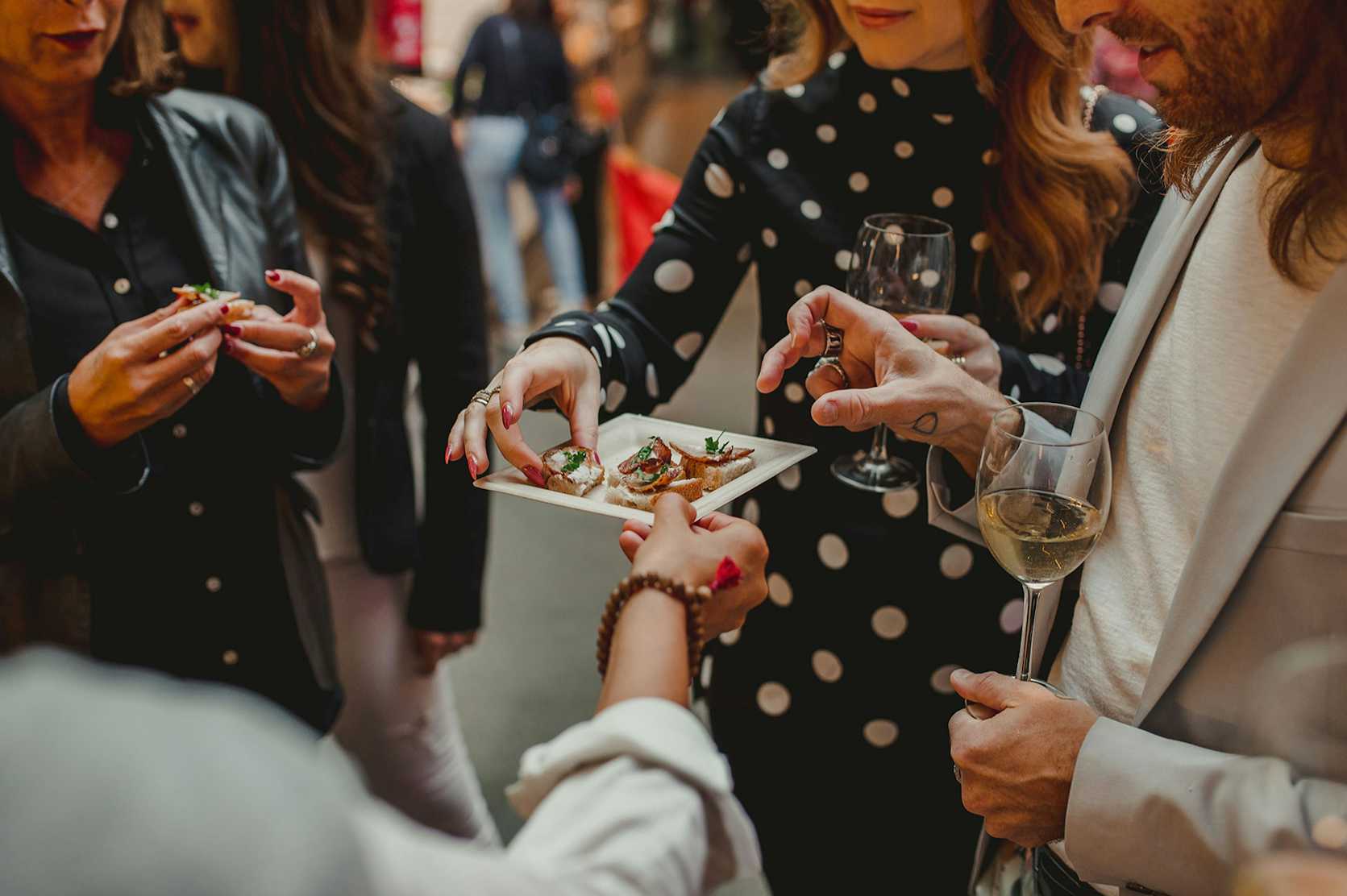
Tapas in Malaga: To share
What separates a true tapas food tour from a generic food walk is volume and variety. Five bars, each serving 10–12 local delicacies, means you’re sampling anywhere from 50 to 60 distinct bites across one evening. That’s not a meal. That’s a survey of Malaga’s gastronomic identity, from coastal seafood to inland pork cheeks.
How Guides Reveal the Hidden Gems
My clearest memory of this came in the El Palo neighborhood, far east of the tourist center. A traditional bar there – known only to locals – serves espetos de sardinas straight off the beach grill, the sardines still crackling from the open flame. No guidebook listed it.
No sign pointed to it. The guide simply walked in, greeted the owner by name, and within minutes we were eating sardines that tasted like the sea itself.
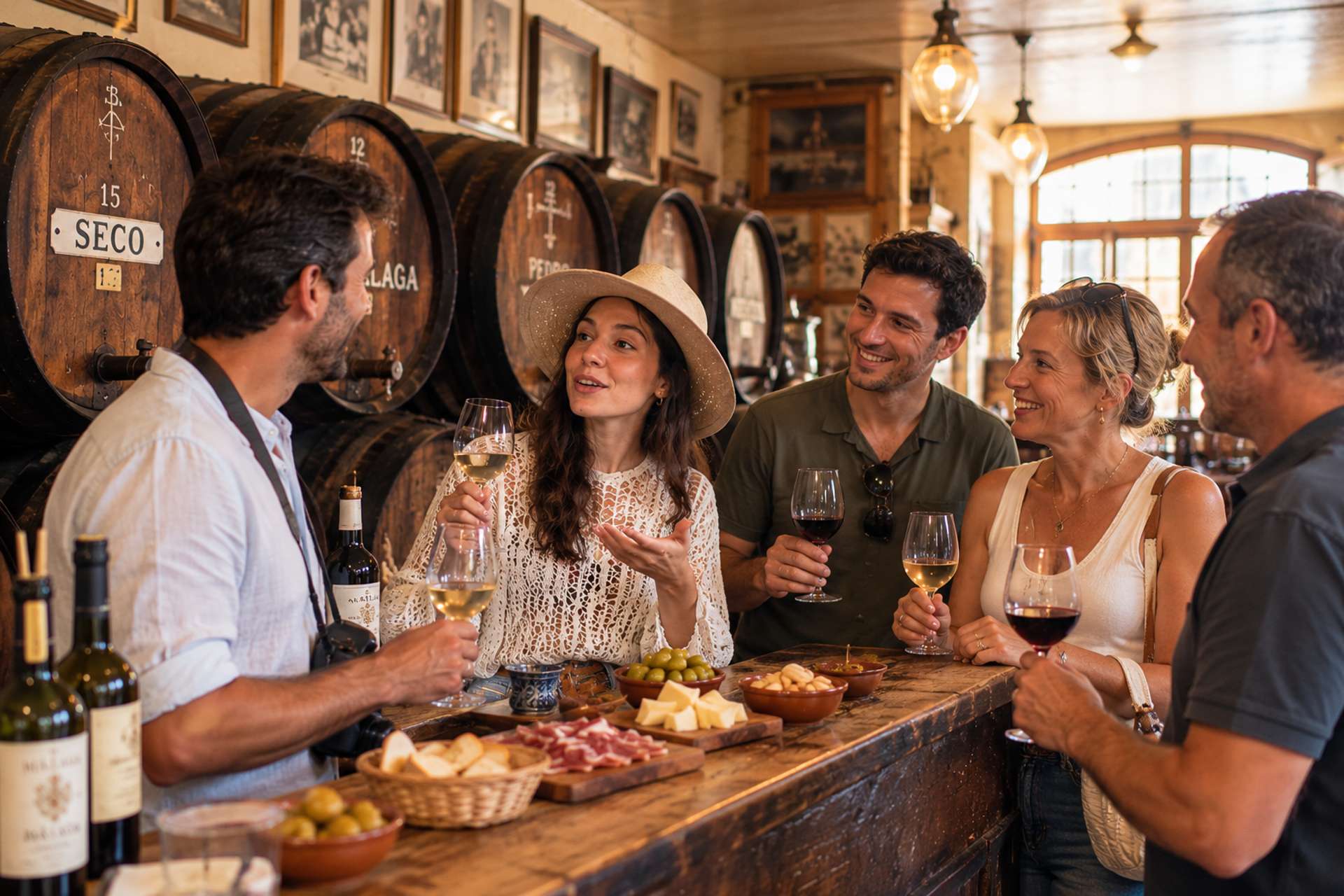
Tapas in Malaga: Wine, cheese, ham and olives.
That’s the difference between reading about tapas and experiencing them. Guides don’t just point at plates; they share city history and culture between stops. You learn why Malaga’s fried fish tradition exists, how the Phoenicians introduced salting techniques, and why a particular bar has served the same ensaladilla rusa recipe for three generations.
The social element compounds the value. Bonding with fellow food enthusiasts over a shared plate of jamón ibérico turns strangers into temporary locals. I’ve seen solo travelers join a tour and leave with dinner plans for the next night.
Some tours specialize even further – wine pairings, historic taverns, market-first approaches. But the dedicated tapas food tour remains the broadest introduction to how Malagueños actually eat.
- Five bars spanning local spots, iconic city staples, and traditional neighborhood joints
- 10–12 delicacies per bar – a volume impossible to replicate solo
- Hidden gems you’d never find without local knowledge
- Cultural context woven into every stop, from history to bar etiquette
The sheer variety forces you past your comfort zone. One bar might specialize in boquerones en vinagre, another in slow-braised carrillada. By the fourth stop, you’re ordering with confidence, reading the room like a regular.
That’s the real outcome: you leave not just full, but fluent in the rhythm of Malaga’s tapas culture.
When a wine pairing goes wrong, it’s not subtle. A sweet Moscatel dumped next to a briny anchovy tastes like someone poured syrup over the ocean. I’ve made that mistake exactly once, and it’s why I now pay attention to tours that treat wine as a structural element rather than an afterthought.
What is the “4-Bar Wine & Tapas Tour with 12 Tastings”?
The 4-Bar Wine & Tapas Tour with 12 Tastings solves this by design. It pairs regional wine varietals with diverse tapas across four venues, making it the most comprehensive introduction to Malaga’s viticultural heritage alongside its food. You get twelve tastings total, but the real education is in how each pour interacts with what’s on the plate.
What separates this from a standard tapas crawl is the sequencing. The tour starts in a traditional tavern where you sample characteristic wines of the region before moving to a family-run grocery store for freshly sliced Iberian ham. That order matters. The fat in the ham softens the tannins in the wine, and a good guide explains why without lecturing.
What the 12 tastings actually cover
I found the middle stretch the most instructive. A small, cosy bar specializing in sausage, cheese, and vermouth sits between the tavern and the more famous bars. It’s the kind of place I’d walk past without a second glance, but the vermouth there changed how I think about pairing entirely.
The tour then moves to some of the most famous bars in Malaga, where modern cooking techniques get their moment. The contrast is deliberate: traditional formats first, innovation after. By the time you reach the final stops, you’ve built a reference point for what Malaga’s cuisine was before it became what it is.
One discovery stuck with me. In a small bodega in the historic center, I tasted a Moscatel wine I’d never encountered, paired with a local goat cheese. The wine’s sweetness wasn’t a dessert note; it was a counterweight to the cheese’s salt. That single pairing justified the entire tour.
The guides also hand out insider tips and local recommendations for the rest of your stay. I’m skeptical of tours that promise this, but the advice here was specific: which bars to revisit, which vermouth to buy, where to find the same ham without the markup.
Skip this tour if you want quantity over context. The twelve tastings are curated, not piled on. But if you’re after a structured education in Malaga’s wines and how they interact with its tapas, this is the one I’d book before any of the more historic tavern routes.
What is the “Andalusian Tapas & Wine Tour of Historic Taverns”?
In 2024, I walked into a Malaga tavern that had been pouring the same house sherry since before my grandparents were born. That single stop reshaped how I think about tapas malaga tours. The Andalusian Tapas & Wine Tour of Historic Taverns is the one I now recommend to anyone who wants the city’s oldest drinking and eating rooms, not just its most photographed ones.
It starts in a 200-year-old winery. That’s not a marketing line. The barrels, the stone, the slightly damp air – all of it predates modern Malaga.
My first glass of Málaga wine there came with a quick lesson on grape varieties and why the same region can produce such wildly different styles. I’d done wine tastings before, but never in a room that felt like it was still deciding whether electricity was a fad.
From there, the tour moves to spots popular with local Malagueños. That distinction matters. You’re not following a laminated map of tourist hits.
You’re standing where regulars order the same homemade tapas their parents ordered. I counted 7–8 varieties of homemade tapas across the evening, each one tasting like someone’s abuela was in the back refusing to share the recipe.
What the Historic Taverns Actually Feel Like
One tavern had faded bullfighting posters on the walls and a family that had served the same gambas al pil-pil for over a century. The sizzling oil still arrived at the table angry, the garlic still fought the chili for dominance, and nobody rushed me. That’s the thing about these rooms – they don’t perform history. They just never stopped being themselves.
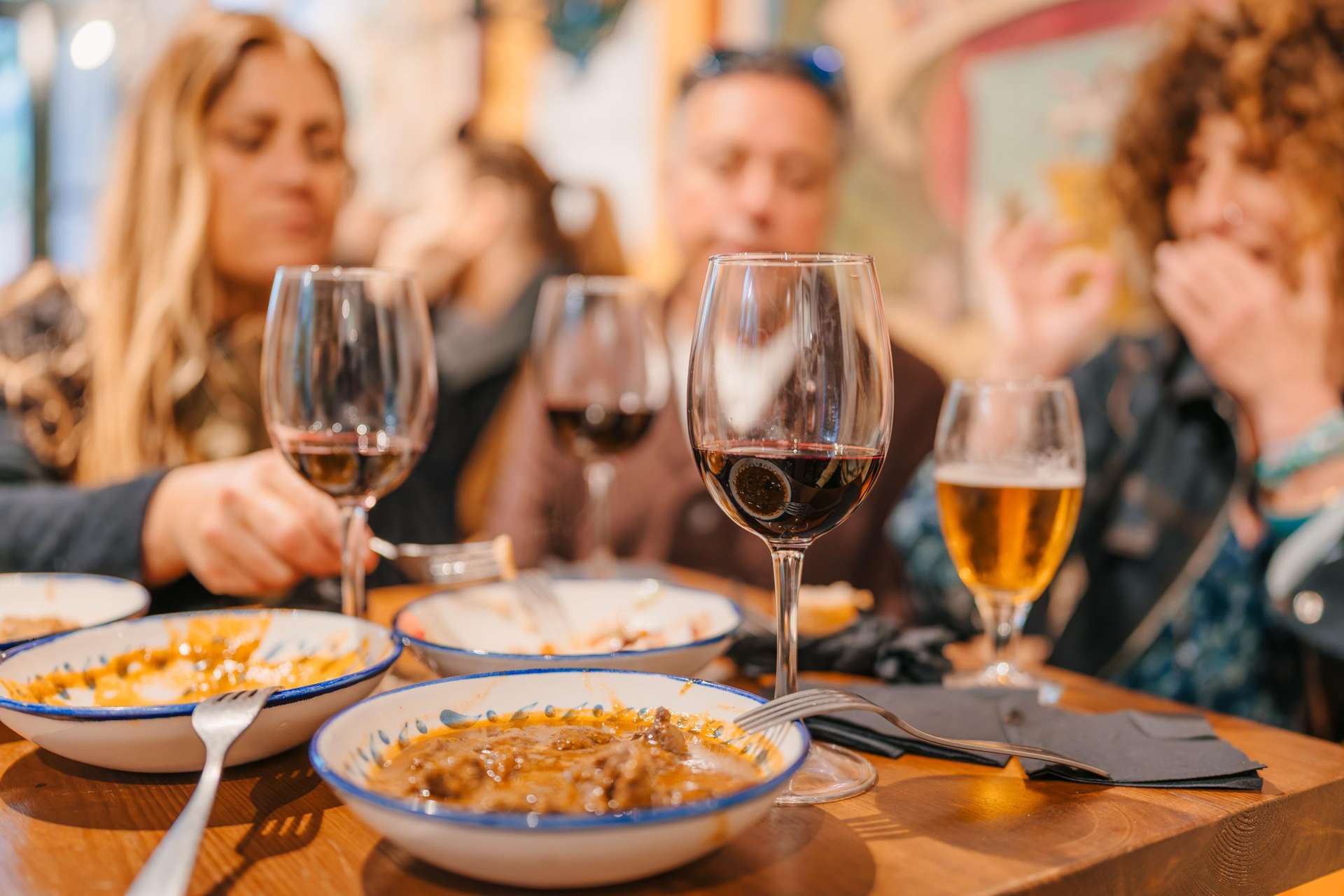
Tapas in Malaga: Wine and sharing tapas
The tour includes 3 glasses of wine, beer, or vermouth. I went with vermouth at the final stop, a typical Andalusian tavern away from the tourist crowds. The house specialty was local vermouth, poured from a bottle with a handwritten label. It was bitter, herbal, and slightly sweet in a way that made me regret every mass-produced vermouth I’d ever ordered.
What I didn’t expect was how much the guide’s explanations of wine types and grapes changed what I tasted. A dry white I’d normally ignore suddenly made sense next to a salty anchovy. A sweeter pour cut through the richness of a slow-cooked pork cheek.
The pairings weren’t fussy. They were practical, the way locals actually drink.
Skip this tour if you want a quick crawl through crowded bars. The pace is slower, the rooms older, and the focus sharper. But if you want the historical heart of Malaga’s food scene – the taverns, the cellars, the recipes that outlived every trend – this is the one I’d book first.
I still think about that vermouth. Not because it was the best I’ve ever had, but because it tasted like a place, not a product.
What Is the “All-Inclusive Tapas Crawl” in Malaga?
An all-inclusive tapas crawl in Malaga is a guided evening that visits 4 handpicked venues, serves around 10 traditional and contemporary dishes paired with 4 drinks, and handles every detail so you simply eat, drink, and socialize. It’s the most varied and worry-free way to experience the city’s food scene in one sitting.
I’ve watched friends freeze at the door of a crowded Malaga bar, unsure whether to order at the counter, grab a table, or wait for a waiter who may never come. The all-inclusive crawl removes that friction entirely. Your guide walks you in, the food appears, and the drinks keep pace with the conversation. That’s the point.
What separates this from a standard tapas tour is the range. You’re not locked into one neighborhood or one style. The crawl moves between hidden local favorites and iconic Malaga institutions, each stop carrying a different atmosphere and specialty.
One venue might lean traditional, the next pushes contemporary fusion. My friend, who usually shies away from guided tours, loved the all-inclusive crawl because every detail was handled, allowing her to simply enjoy the food and company, discovering a modern tapas bar with fusion dishes she wouldn’t have tried otherwise.
- 4 handpicked venues with different atmospheres and specialties
- Around 10 traditional and contemporary dishes
- 4 paired drinks included
- Expert guide explaining local food, traditions, and bar culture
- Social setting with fellow food lovers
The social element matters more than most people expect. Eating around a shared table with strangers who also care about tapas malaga turns a meal into an event. You trade recommendations, compare bites, and by the third stop you’re arguing about which anchovy was better. That’s the Spanish food experience working as intended.
Some of these places you probably wouldn’t discover on your own. Others are Malaga classics that simply shouldn’t be missed. The guide’s commentary on bar culture and local traditions fills the gaps between stops, so the evening feels educational without ever becoming a lecture.
Four drinks across four venues sounds modest until you realize each one is chosen to match the dishes at that specific stop. The pairing logic is practical, not precious. And because everything is prepaid, you never pause to calculate the bill or wonder if you should order one more round.
That’s the real consequence: you stay present. The crawl removes the small decisions that usually eat up an evening, leaving you with the food, the company, and the city itself.
Walking past the Roman Theatre with a glass of sweet Málaga wine in one hand and a gilda in the other, I finally understood what people mean when they say the city’s history lives in its food.
What is the “Tapas and wine route through local bars and restaurants”?
A tapas and wine route through local bars and restaurants is a guided stroll that pairs tastings of buquerones, Iberian products, seafood, and Moscatel wine with visits to Málaga’s most iconic landmarks. You eat, you walk, you learn – all in one relaxed evening.
What I like about this format is that it refuses to separate sightseeing from eating. The route moves through the historic quarter, stopping at local bars and restaurants where the guide explains not just what’s on the plate but why it matters here. A gilda isn’t just a skewer of olive, anchovy, and pickled pepper. It’s a salty, briny shorthand for Andalusian bar culture, and it tastes different when you’re standing a few steps from a two-thousand-year-old theatre.
The typical stops include:
- Sweet wine and Moscatel wine poured at a traditional bar
- Anchovies and gildas as the first bite
- Iberian products sliced fresh at a local counter
- Seafood and other Andalusian delicacies at a second or third stop
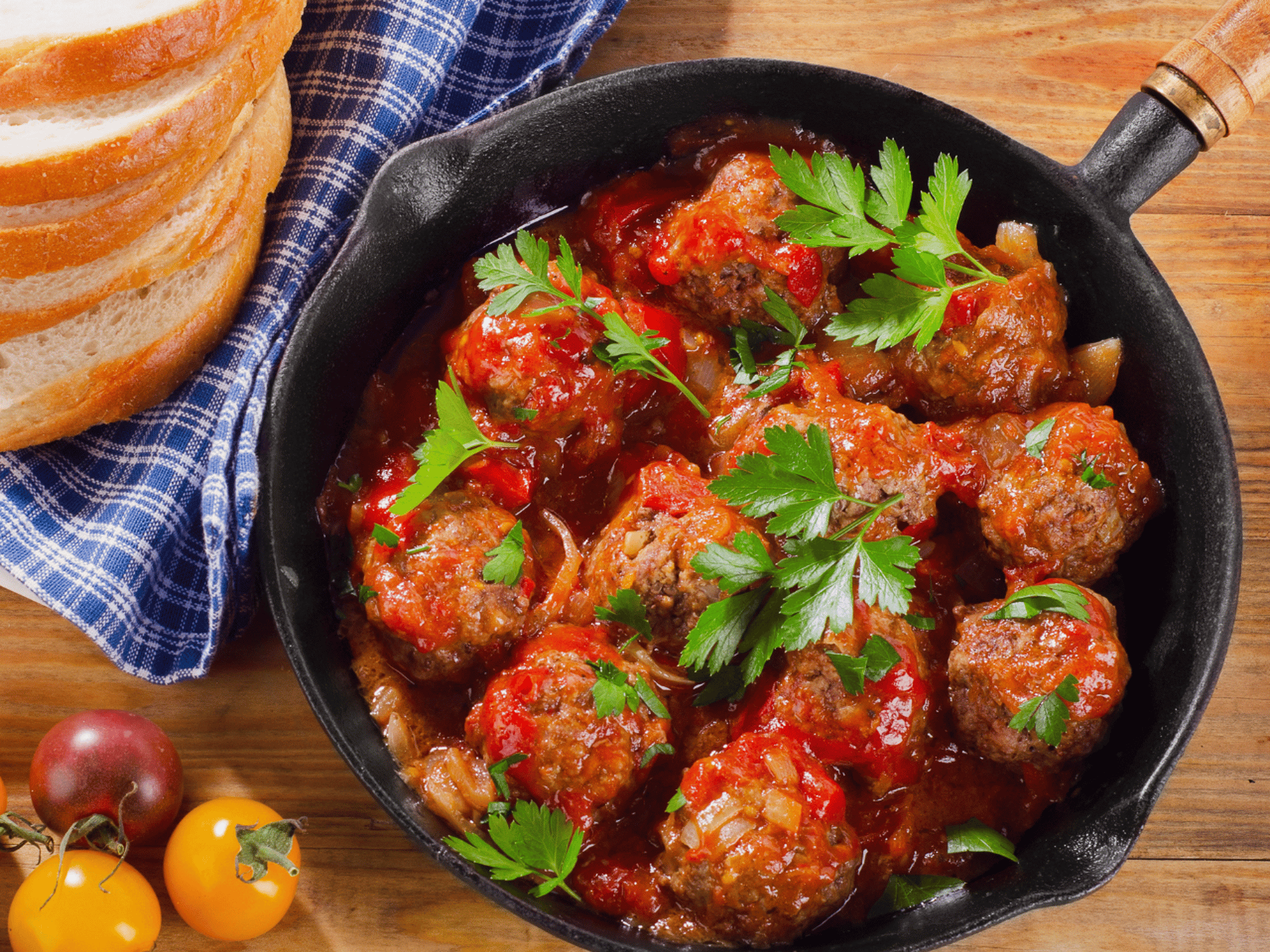
Tapas in Malaga: Albondigas en salsa
An international group keeps the atmosphere fun, and the local guide stays with you the whole route. That matters more than it sounds. The guide connects the food to the streets you’re walking through, so the experience never feels like a history lecture with snacks or a tasting with a map.
It’s also deliberately non-conventional. No flag-following, no rushed photo stops. The pace is laid-back, and the route leans into the local atmosphere rather than performing it. I’ve done versions of this where the guide pointed out a hidden plaza between tastings, and that unplanned moment became the highlight of the night.
This is the tour I’d recommend to someone who wants context with their tapas. It plants the seed for a deeper market visit later, but for now, the city itself is the table.
What Is the “Tapas Tasting Tour” in Malaga?
A tapas tasting tour in Malaga is a guided small-group walk that starts at the Atarazanas Market, where you taste regional produce before sampling up to 7 tapas dishes at 4 popular stops in the Old Town. It links the raw ingredients to the finished plates, so you understand why a pil-pil prawn tastes the way it does.
Most tapas routes drop you straight into the first bar. That’s fine, but it skips the foundation. I’ve done enough of these to know that starting at the market changes how you taste everything afterward.
The Atarazanas Market isn’t a photo stop. It’s where the city’s cooks buy their tomatoes, their olives, their fish.
When you stand at a stall and taste a regional olive, then recognize that same olive in a dish an hour later, the connection is immediate.
That’s the whole argument for this format. A tapas tasting tour that begins with the market gives you ingredient context before you ever lift a fork. You learn the history of Malaga and its gastronomy as you walk, but the real education happens at the stalls. Chatting with a stallholder about seasonal produce tells you more about Spanish food than any menu description.
What You’ll Taste
The tour moves from market to Old Town, hitting four popular stops. The selection varies by season, but the core lineup includes Spanish wines, Iberian ham, and pil-pil prawns. You’re not just eating; you’re tracing a supply chain from grove and sea to plate.
- Regional produce at the Atarazanas Market, including olives and seasonal fruit
- Freshly sliced Iberian ham at a traditional stop
- Pil-pil prawns, a Malaga staple with garlic and olive oil
- Spanish wines paired with the tapas
- Up to 7 tapas dishes across 4 stops
I’ll be blunt: the market visit is what separates this from a standard tapas crawl. Without it, you’re just eating. With it, you’re understanding. The variety of olives alone is staggering, and once you’ve tasted three or four types, you start noticing them in the dishes that follow.
Why the Market Matters
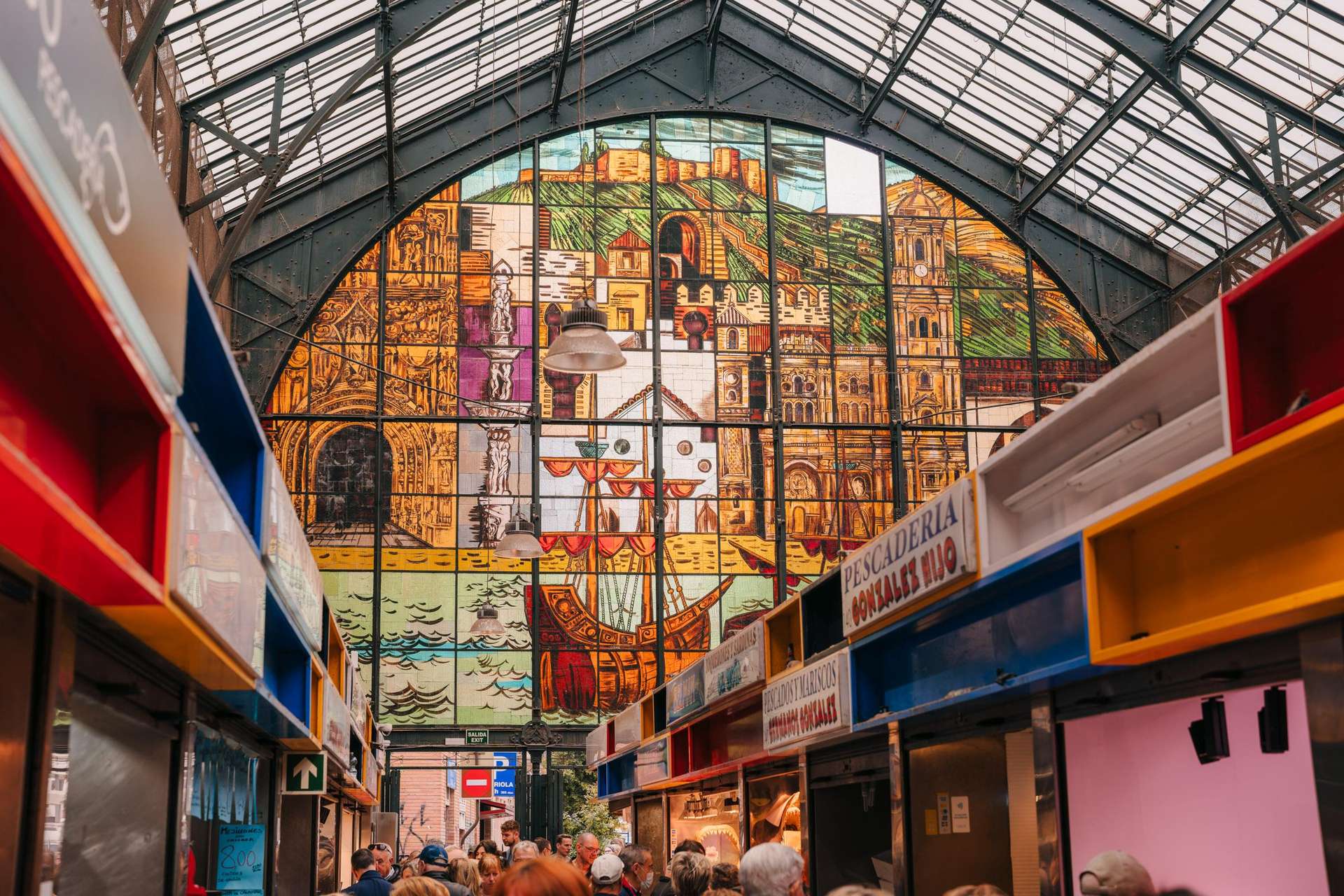
Tapas in Malaga: Mercado Atarazanas
The Atarazanas Market sits in a 19th-century building with a stained-glass window that depicts the city’s history. That’s not decoration. It’s a reminder that Malaga’s food culture is built on trade, fishing, and agriculture. The market is where those threads converge.
This tour isn’t the premium experience. That’s a different animal, one with smaller groups and deeper cultural narratives. But for understanding the foundation of tapas malaga, the market-first approach is hard to beat. You leave knowing not just what you ate, but why it tasted that way.
The pil-pil prawns hit differently when you saw the prawns on ice that morning.
What Is the “Premium Tapas & Local Wine Tour” in Malaga?
A premium tapas and local wine tour in Malaga is an intimate small-group walk capped at 8 guests, pairing traditional Málaga wines with authentic Andalusian specialties while a guide unpacks the city’s flamenco, Holy Week, and brotherhood culture. It trades quantity for narrative depth, threading wine through every stop as the connective tissue between food and history.
Most tapas malaga experiences treat wine as an afterthought. This one doesn’t. The first pour arrives in a traditional local setting, and the guide immediately ties it to the city’s long relationship with winemaking. That’s the difference between drinking and understanding.
I’ve done crawls where the guide points at a building and moves on. Here, the route cuts through atmospheric streets and hidden passages like Pasaje de Chinitas, where flamenco history clings to the walls. You’re not just walking between bars. You’re walking through the stories that shaped what’s on the plate.
The reserved example still sits with me: a carefully chosen Pedro Ximénez sherry paired with a specific almond cake, poured while the guide tells a poignant story about Pasaje de Chinitas and its flamenco heritage. That pairing wasn’t random. The wine’s raisin sweetness mirrors the cake’s nutty density, and the story gives both a reason to exist.
Then the tour pivots to Semana Santa and cofradía culture. Family, music, art, tradition, and local identity collide in one of the city’s most important celebrations. A guide who can connect that to a glass of selected wine and a plate of Andalusian specialties earns the premium label.
What the route includes:
- Small group of max. 8 guests
- Multiple gastronomic stops, each with a different selected wine
- Authentic Andalusian specialties at carefully selected local spots
- Stories covering flamenco, Holy Week, and brotherhood traditions
- Non-alcoholic alternatives at every stop
- A Sweet Málaga Surprise to finish
That final surprise matters. Just when the experience feels complete, one more stop lands. It’s a small gesture, but it reframes the whole tour as generous rather than transactional.
This isn’t a formal wine tasting. It’s a relaxed gastronomic journey where wine acts as a thread, not a lecture. The complete meal experience with drinks belongs to a different tour entirely – this one leaves you full on context first, food second.
What is the “Guided food tour with tapas and drinks”?
A guided food tour with tapas and drinks in Málaga is a three-hour walking meal that turns the city into your dining room. You get a complete meal with drinks included across 4+ stops, moving from fried fish to slow-braised meat to local pastries, all in a group of up to 12 people.
I used to think a food tour meant nibbling. This one corrected me fast. The first stop alone brings pescadito frito, that mix of lightly battered fish fried crisp enough to eat with your fingers, followed by boquerones – anchovies in vinegar that taste nothing like the salty tins I avoided for years. Freshness changes the whole argument.
Then the tour keeps stacking. Pincho de pulpo arrives as a tender octopus skewer with olive oil and paprika. Albóndigas en salsa follow, meatballs in a tomato sauce that tastes like someone’s grandmother made it. Depending on the day, you might get carrillada – slow-braised pork or beef cheeks – or chivo malagueño, a goat dish that carries the region’s inland flavors better than any menu description can.
Why the sweet ending matters
Most tapas routes in Málaga stop at savory. This one doesn’t. Ensaladilla rusa bridges the gap – a creamy potato salad with tuna and vegetables that feels like a palate reset.
Then comes locas de Málaga, light pastries filled with cream, or pionono, a syrup-soaked sponge roll with cinnamon. That’s the difference between tasting and actually eating a full meal.
Three hours through the Old Town and its quieter neighborhoods gives the guide room to explain why these dishes exist, not just what they’re called. I’d pick this over a faster crawl any day. The only thing missing is knowing how to make the meatballs yourself – but that’s a different kind of afternoon entirely.
What Is the “Ultimate Tapas Workshop with Market Visit”?
It’s a hands-on cooking class in Málaga’s Soho District where you prepare five traditional tapas from scratch, visit the Atarazanas Food Market for ingredients, and pair everything with selected local wines. You leave with a Kulinarea apron and the skills to recreate the dishes at home.
Most tapas experiences in Málaga end when the plate is empty. This one starts there. I’ve done the tasting tours, the crawls, the historic tavern routes – they all made me a better eater.
None of them made me a better cook. That’s the gap this workshop fills, and it’s the reason I keep recommending it to anyone who asks me about tapas malaga experiences that actually stick.
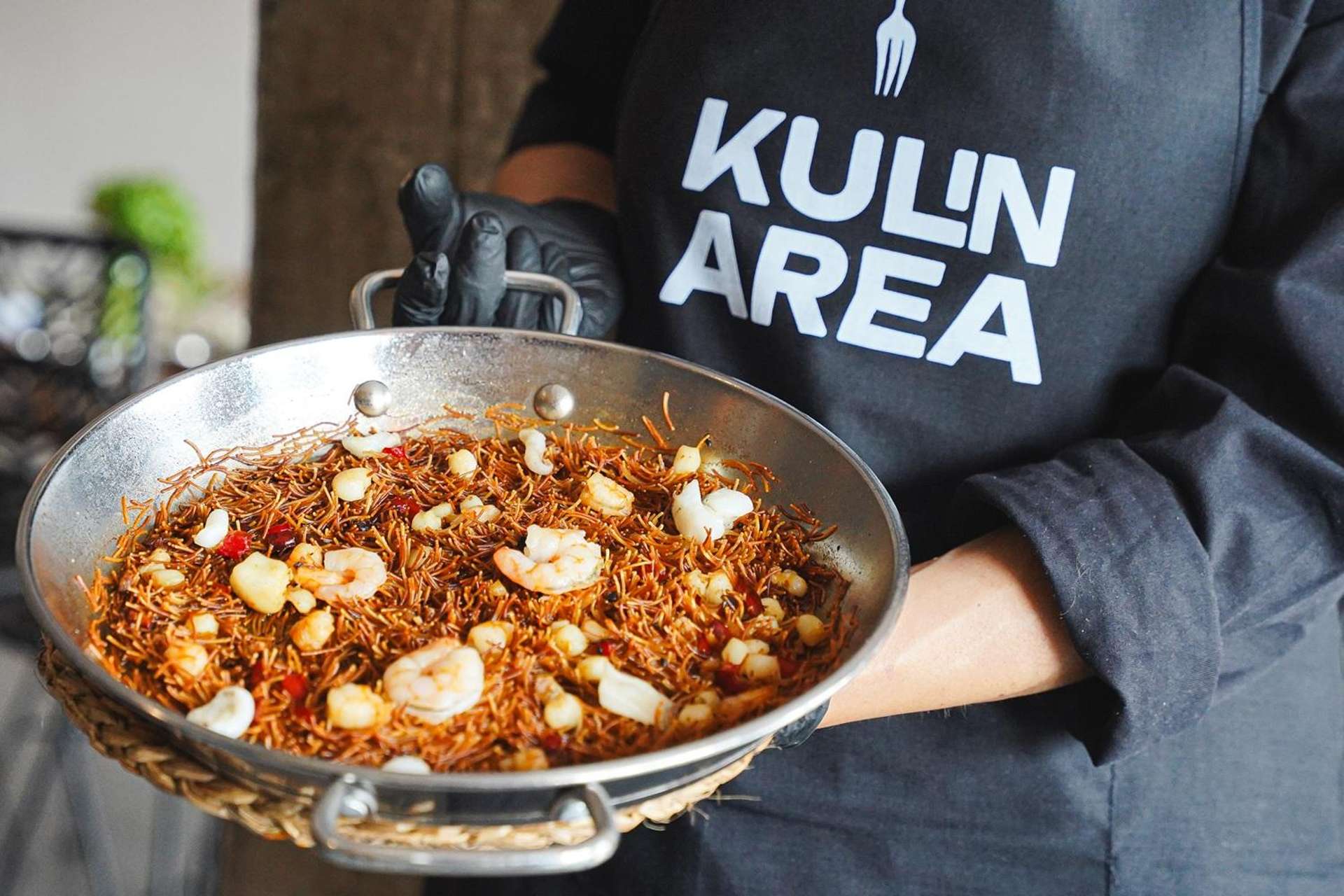
Tapas in Malaga: The ultimate workshop
The morning sessions run Monday to Saturday and begin with a short walk to the Atarazanas Food Market. You’re not just browsing this time. You’re selecting, asking questions, learning why a stallholder reaches for one batch of tomatoes over another. The market stops being a photo opportunity and becomes a pantry.
What You Actually Cook
The sample menu rotates with seasonal availability, but the core lineup is deliberately classic. These aren’t fusion experiments or chef ego projects. They’re the dishes Spanish home cooks have been making for generations, taught by a local chef who corrects your technique in real time.
- Sangría – You build the base yourself, learning the ratio of wine to fruit to spirit that makes it taste like Spain instead of a tourist bar.
- Fideos tostados – Crispy toasted noodles that most visitors never encounter, yet they’re a staple of Andalusian home cooking.
- Tortilla de patatas – The Spanish omelette. This is the one that humbled me for years.
- Solomillo al Pedro Ximénez – Sirloin in a sweet, dark sherry sauce that taught me how Málaga’s wines work in savory cooking.
- Churros – Made from dough you pipe yourself, fried until they shatter, then dragged through thick chocolate.
The tortilla was my personal breakthrough. I’d attempted it at home maybe six times, always ending up with something dry and cakey. The chef showed me the secret: low heat, patience, and pulling it off the flame while the center still wobbles.
The residual heat finishes it. That creamy interior I’d been chasing for years finally happened in a Soho kitchen, not a restaurant.
Why the Workshop Beats Another Tasting Tour
Wine pairings here aren’t an afterthought. Each dish gets a selected local wine matched to its flavors, and the chef explains why the pairing works while you eat what you just cooked. That’s a different kind of learning. You’re not memorizing tasting notes – you’re tasting cause and effect.
Sunday and evening classes skip the market and go straight to the kitchen. The space sits in Málaga’s artistic Soho District, a stone’s throw from the market itself. You’ll cook, eat, drink, and leave with a Kulinarea apron that actually means something because you earned it.
I’ve watched people who claimed they couldn’t boil water plate a tortilla they’d be proud to serve. That’s the souvenir no tapas bar can hand you.
At the end of the day
The single most important thing I’ve learned after years of eating my way through Malaga: the best tapas experiences are never just about the food on the plate. They’re about the stories behind each bar, the people pouring your wine, and the feeling of being let in on a local secret.
Malaga gives you options, and that’s the beauty of it. My own early trips involved wandering into tourist traps with laminated menus and sad, pre-frozen croquetas. I don’t want that for you.
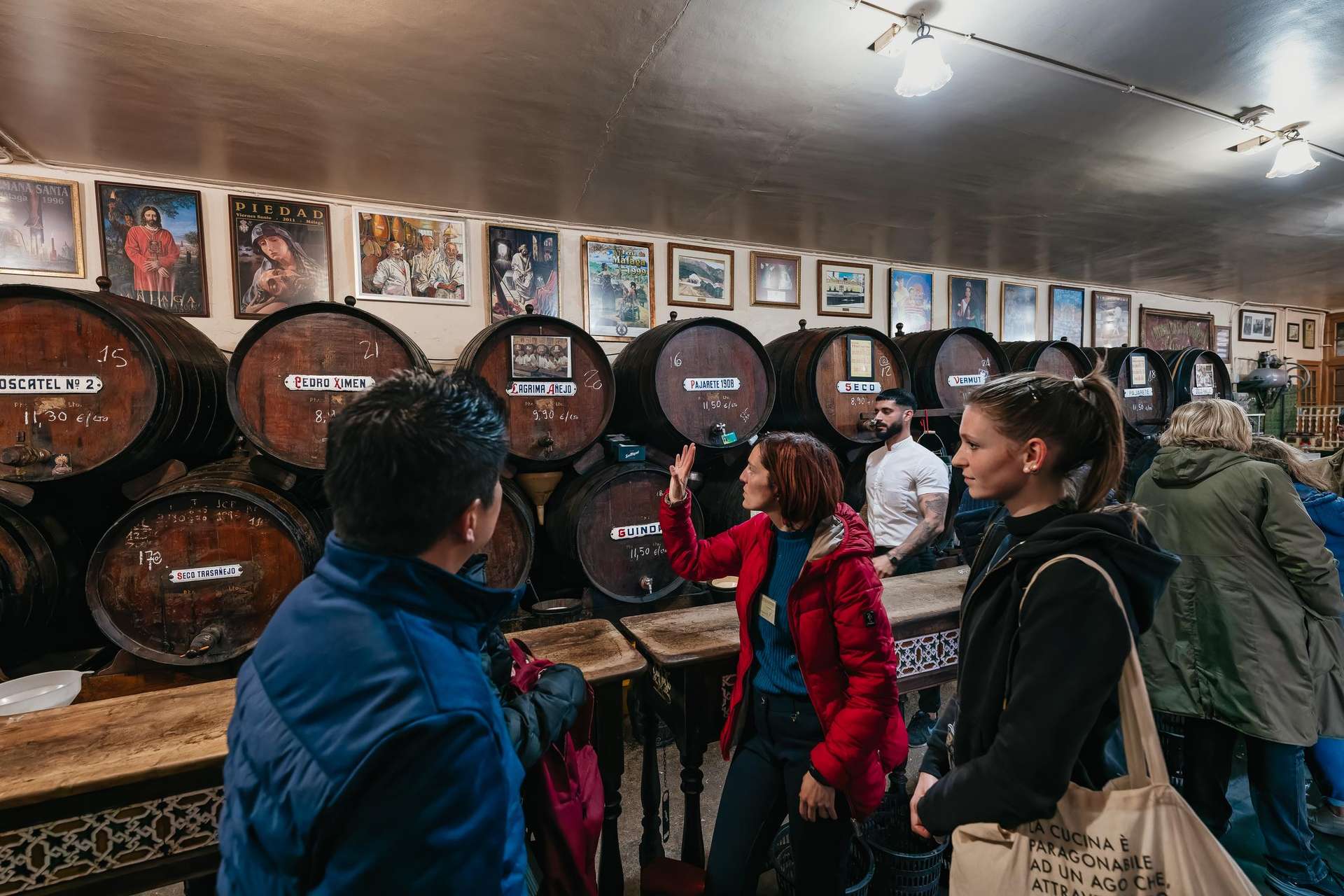
Tapas in Malaga: The oldest wine and tapas bar in Malaga
Here’s what actually matters when choosing:
- For history buffs: The Andalusian Tapas & Wine Tour of Historic Taverns starts in a 200-year-old winery. You’ll taste 7–8 homemade tapas and 3 glasses of wine, beer, or vermouth in spots locals actually frequent.
- For wine lovers: The 4-Bar Wine & Tapas Tour packs 12 tastings across four venues, including a family-run grocery store slicing fresh Iberian ham.
- For social explorers: The all-inclusive Tapas Crawl hits 4 handpicked venues with around 10 dishes and 4 drinks. You’ll bond with fellow food lovers over shared plates.
- For hands-on learners: The Ultimate Tapas Workshop takes you through Atarazanas Market, then into a Soho District kitchen to make tortilla de patatas, solomillo al Pedro Ximénez, and churros yourself.
My advice? Book a guided tour for your first night. A local guide unlocks hidden gems you’d walk right past, and you’ll get insider recommendations for the rest of your stay. Then revisit your favorite spots solo with confidence.
Skip the guesswork. Pick the tour that matches how you like to travel, and let Malaga’s tapas culture do the rest.