
Eating tapas in Malaga without falling into tourist traps can be a challenge. There is simply too much to choose from, and it all looks good.
Especially if you aren’t familiar with the hidden gems—or the best neighborhoods—it is easy to end up with a “tourist experience” that comes with an inflated price tag.
On the main thoroughfare, Calle Larios, and its side streets, you can certainly find excellent food and tapas. However, these tend to be the expensive spots; expect to pay a premium for the prime location.
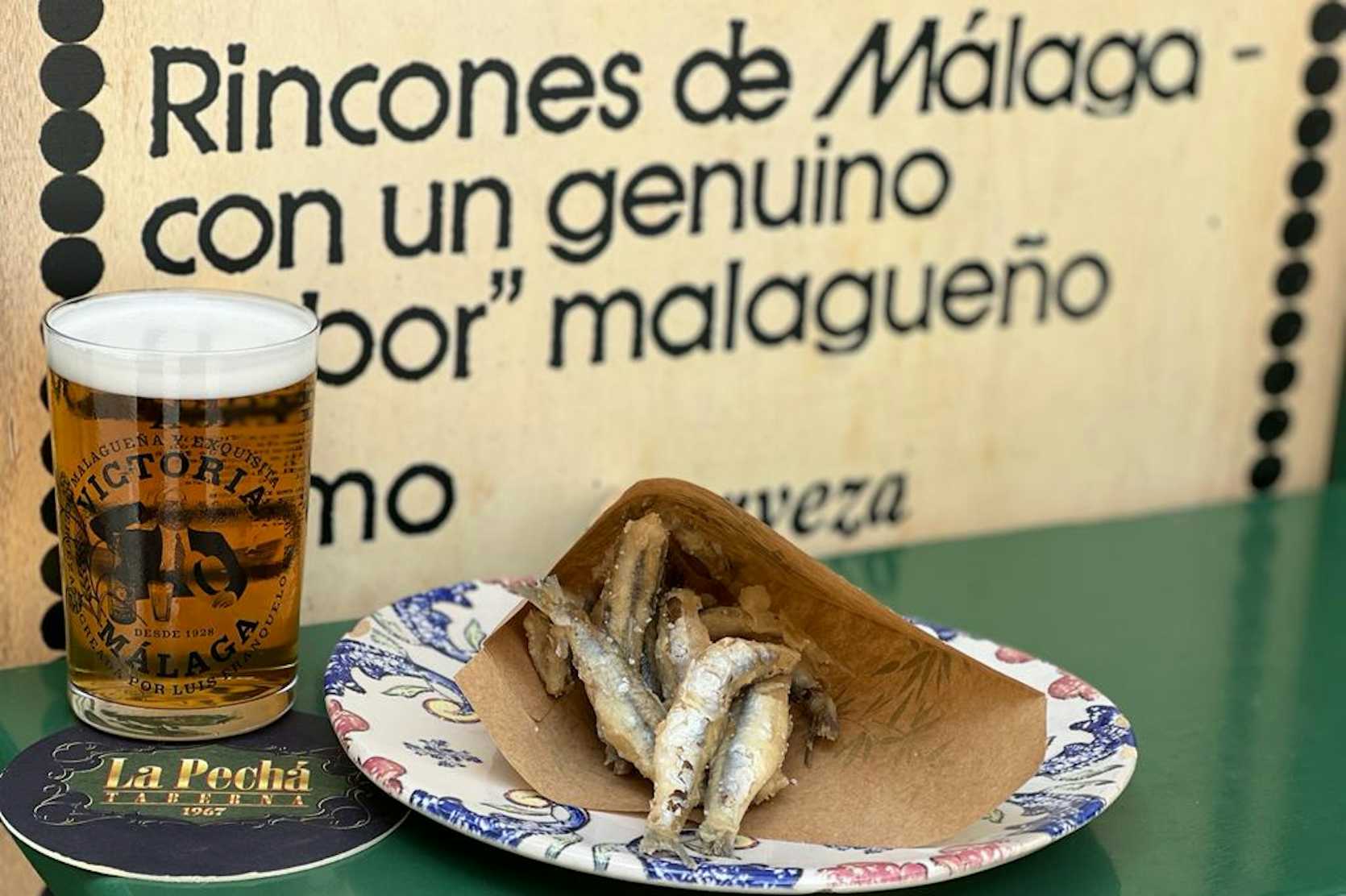
Tapas in Malaga: Pescaíto frito
In fact, many of these high-end establishments don’t serve tapas at all—simply because they are too inexpensive. While you could share regular main courses to create a tapas-style experience, these places often leave small tapas dishes off the menu because the profit margins are too low.
The famous Plaza de la Merced is lined with restaurants. While the price point is lower here, the offerings are often “tourist menus,” making it difficult to find an authentic tapas experience.

Michael Madsen shares how to get the best tapas experiences in Malaga
There are also several sidewalk restaurants around the cathedral. You should be particularly cautious regarding prices and tourist menus here; this is not an area I would recommend.
Similarly, the narrow streets surrounding the Picasso Museum can be home to tourist traps. You won’t find the best tapas experiences here, either.
To discover fantastic, authentic local tapas, you need to venture a bit further afield. Try heading up Calle Granada and continuing toward Plaza Uncibay. That is where you will find the real deal.
In the streets around Plaza Uncibay, prices are low, there is an abundance of great tapas, and this is where the locals go. This is one of the places where you can find great tapas experiences.
A wild card in Málaga is the area near the harbor known as Soho. Soho has become the new trendy spot for both tourists and locals. While the price point is a bit higher here, you can also find some truly excellent tapas. Whereas the Plaza Uncibay area is somewhat gritty and unpolished, Soho is stunningly beautiful and well-maintained. Both areas offer great tapas, though with a different vibe: raw and local around Plaza Uncibay, versus fancy and international in Soho.
It is difficult to avoid falling into every tourist trap—not least because you aren’t yet familiar with all the great little hidden gems. A guided tour is therefore a good idea for your first day; you can always revisit some of the places you saw or heard about during the tour later on.
In this article I have outlined several of the tapas tours I would personally recommend to anyone seeking recommendations.
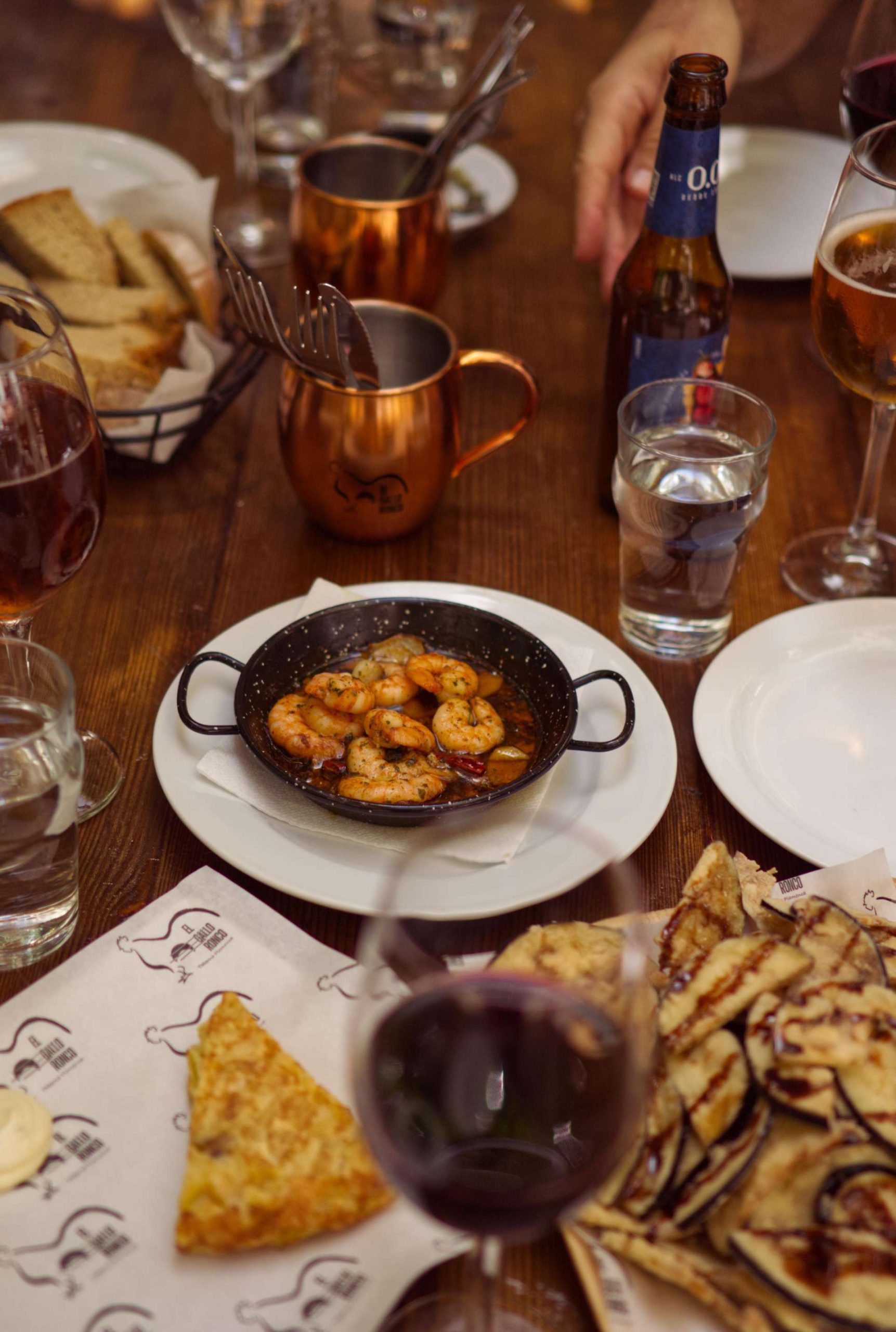
Tapas in Malaga: Gambas pil-pil and tortilla española
What I look for now:
- Small groups – under 12 people, ideally fewer
- Stops that mix hidden local favorites with iconic institutions
- Guides who explain the stories behind each dish, not just the ingredients
- Drinks included – wine, sherry, or something local
I’ve made the mistakes so you don’t have to. The expensive Plaza food. Sad Patatas Bravas with Ketchup.
The Tour that was a sales pitch for a souvenir shop. None of that is included in what follows.
Malaga combines Andalusia’s history with its coastal ingredients better than almost any other city. Fried Fish. Iberian Ham. Sweet Moscatel Wine. Gildas that are huge on flavor and tiny on price. These tours will help you learn how to eat all of this without wasting one bite.
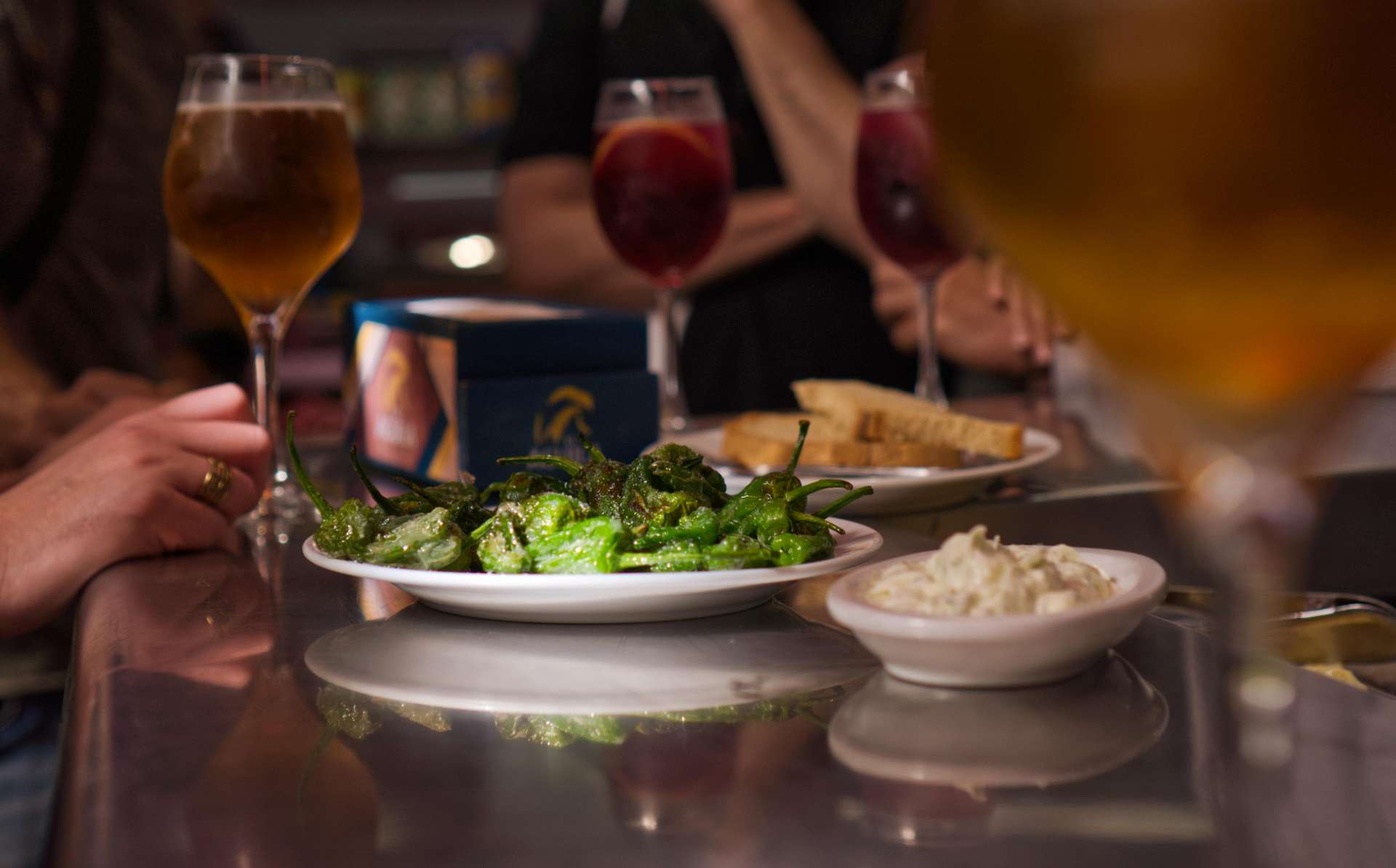
Tapas in Malaga: Pimientos al padron
See also my article about Malaga here.
What Is the “Guided Food Tour With Drinks” in Malaga?
A guided food tour in Málaga including drinks will take you to at least four restaurants (or other places where you can eat), and each stop will serve you tapas and/or local dishes along with Spanish wines, sangrias, beers, or soft drinks. Your guide will explain both what you are eating and why it has significance.
Prior to this trip I thought that I could learn about Malaga’s food scene by myself. However, I passed by a small restaurant/bar on Calle San Juan at least three times before my guide took me inside. Twenty minutes after entering the small bar/restaurant I was consuming albóndigas which were so tender that when i attempted to pick them up with my fork they fell apart. This anecdote illustrates why a food tour is a better way to go than attempting to find the best places to eat on your own.
A food tour is also very basic in terms of its format. Upon meeting your guide (in the old town) you will have a roughly three hour walk from one location to another. At each stop, there will be something different – a family-owned grocery store slicing cured meats such as Jamón ibérico; a Sherry Bar that specializes in sausages & cheeses; a tavern serving wine from the region. It is not simply a matter of sitting down to enjoy some food – you are learning the routine of how locals (Malagueño) typically spend their evenings.
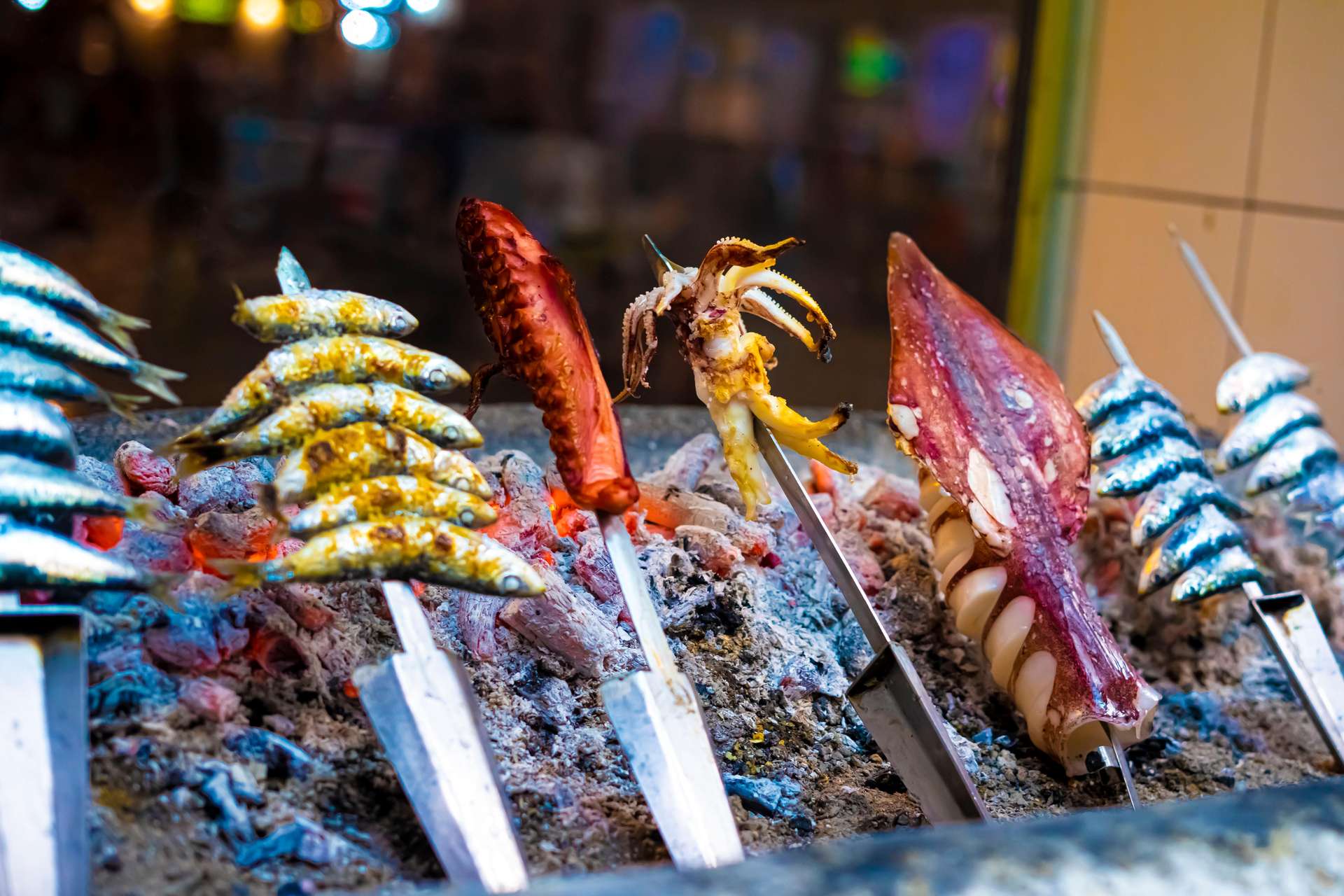
Tapas in Malaga: Espetos de sardinas, etc.
Drinks can be much more important than many people think they will be when it comes to their first trip. When visiting, a quality tour will pair each selection of tapas with an appropriate drink. For example, if one stops for fried fish, there would be a chilled glass of Moscatel; if another stop has a slow-cooked pork cheek dish, there would be a rough red wine; and a cold beer is usually served in order to cut the rich flavor of garlicky pil-pil prawns. However, soft drinks are always available as well. This is helpful to me, since every stop does not have to include drinking to make sense.
Although many people do not plan to meet others while traveling, this happens fairly quickly. I’ve been on tours where tourists (who came from all over the world) had already exchanged several suggestions for restaurants by the second stop. Standing side-by-side in a crowded bar, both trying to grab a plate of boquerones may help break the ice sooner than almost any other type of place to meet new people.
A food tour using guides is not: an alternative way of exploring cities. Instead, a food tour is an introduction. At the end of your food tour, you should have a good idea of which streets are worth walking along and those that provide only warmed-over versions of food intended for tourists. In turn, those places you learn about during the food tour, which are often the best or favorite foods for locals, can form the basis for further exploration of the food scene in that area.
The following items are typically included in a guided food tour with drinks:
- At least four restaurants or eateries, each with a different specialty
- Multiple tapas and small dishes per stop, often 7–12 tastings total
- Drinks at every venue – Spanish wine, sangria, beer, or soft drinks
- A local guide who explains ingredients, history, and bar etiquette
- A small group, usually under 12 people, which keeps the pace relaxed
My real honest view: If you are visiting Malaga for one night with no locals then sign up for the guided food tour as soon as possible. In terms of efficiency alone this will be a great value. On my first visit to Malaga, we did the food tour on our very first night. We tried many of the regional staple dishes in less time (three hours) than most people try them during their entire trip (three days) by stumbling upon restaurants or ordering randomly.
That is why I can still recall the flavor of those albóndigas so much better than any meal I have ever eaten at a restaurant in Malaga. That isn’t me being nostalgic; it is because someone knew exactly where to find all of the best local food options and put a dish on my plate that I would never have thought about ordering.
What Is the “Tapas Food Tour” in Malaga?
In essence, it is an escorted tour of five restaurants with their own tapa bars. At each restaurant there are ten or twelve (the average) tapas available for sampling; each restaurant serves as a portal into the culture and history of tapas in Malaga. The tour will take participants from mere tastings to learn about the traditions behind each tapas.
The 80 / 20 rule applies well to this area — 80 percent of all tourist traffic passes by the same three blocks, while the majority (80%) of excellent tapas can be found in the little-known bodegas in the neighborhoods where tourists rarely go. The best way to flip those numbers is to sign up for a tapas-only tour.
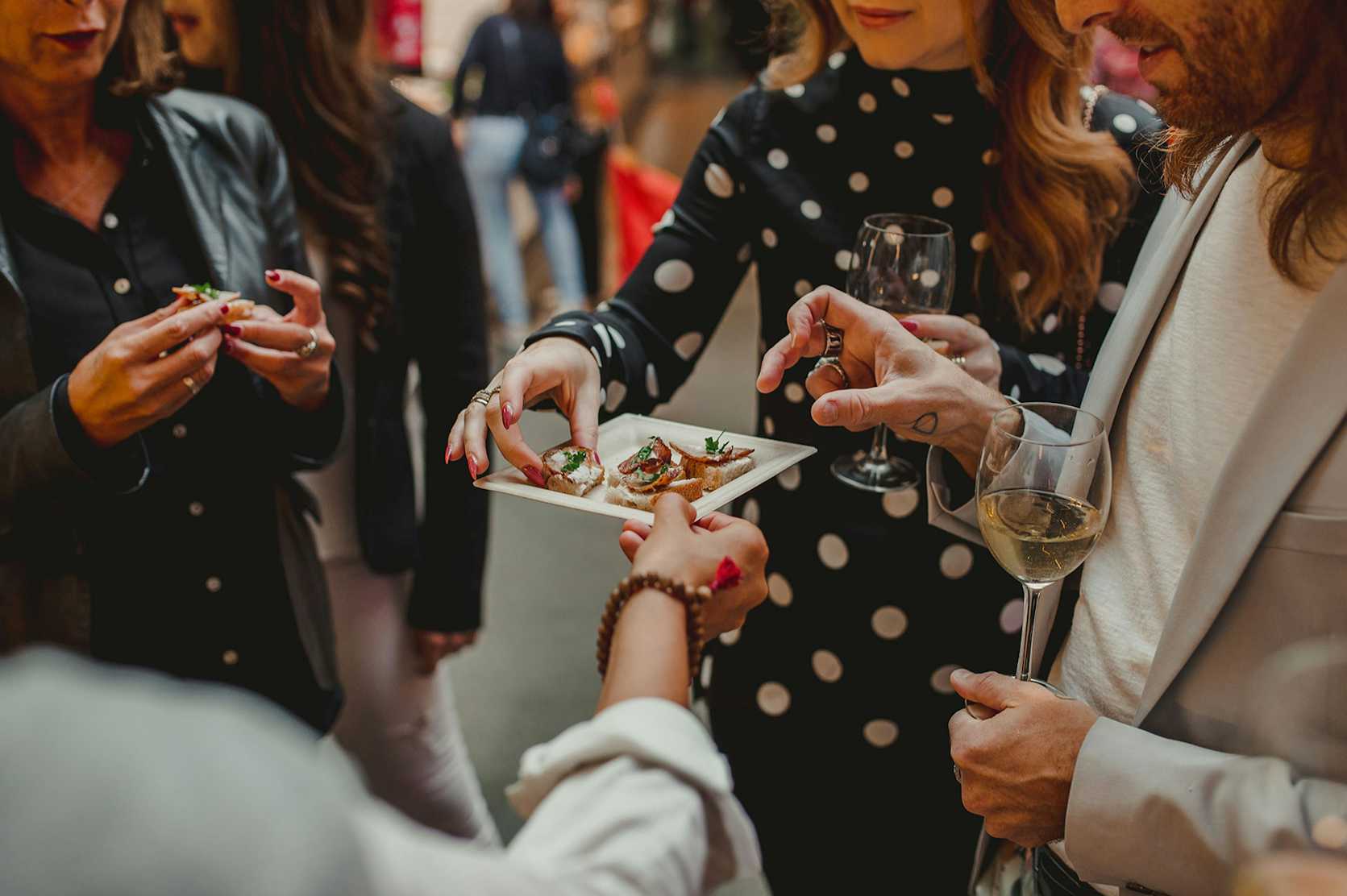
Tapas in Malaga: To share
What distinguishes a serious tapas food tour from an ordinary food walk is scope. As my company has five bars, with approximately ten to twelve local specialties at each, our guests sample around fifty to sixty different items over the course of one evening. This is not dinner; this is a taste of Malaga’s culinary identity—everything from fresh seafood to meaty pork cheeks.
The Hidden Food Treasures Revealed by the Tour Guides
One of the most vivid memories I have was when the tour visited a quaint little town called El Palo. It was located on the other side of town from where all tourists go.
A family owned bar in El Palo (which the guides could not find in their books) makes espetos de sardinas right off of the beach grill. They had just cooked them using an open fire and they were steaming hot.
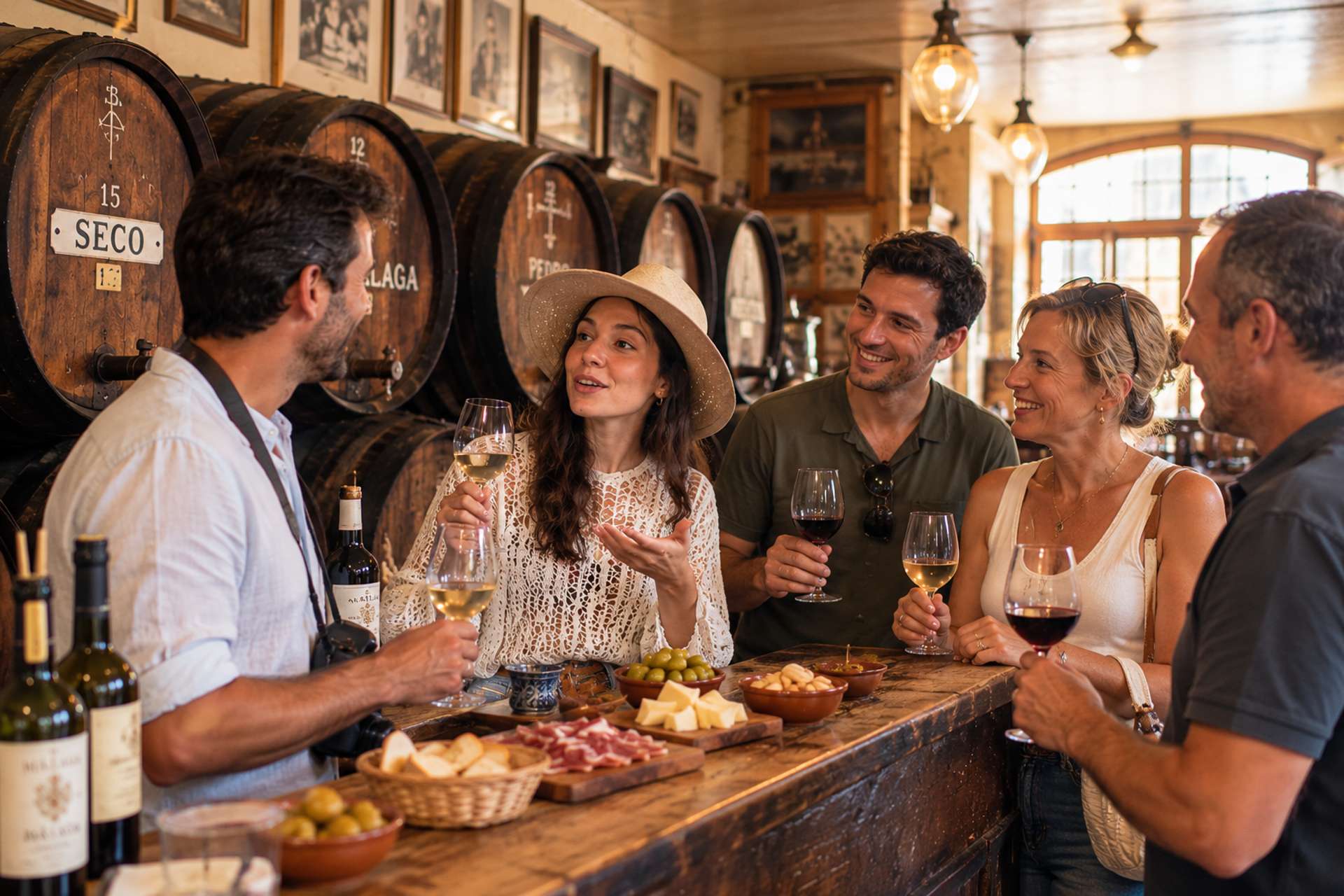
Tapas in Malaga: Wine, cheese, ham and olives.
This is what separates learning about tapas from tasting tapas. Guides do not merely point out dishes. They also tell you about the history of the city in which you are eating and the cultural background that connects each stop.
You will learn why there is a strong fried fish tradition in Málaga, how the Phoenicians were responsible for bringing the method of curing salted fish to Spain, and how one family-owned restaurant can have been serving an identical version of its ensaladilla rusa since their children were small.
It is not the food alone, however. The experience of bonding with fellow travelers who are all interested in trying new foods as much as you are – and doing so while enjoying a common plate of jamón ibérico – makes you feel like a temporary local when you travel by yourself. I have seen solo travelers take a tour, and then receive dinner invitations for the evening after the tour.
There are many types of specialty tours available – those focusing on wine pairing, historical taverns, etc. However, the general tapas food tour is generally the best way to get a taste of how Malagueños (people from Málaga) really live and eat.
- Five bars spanning local spots, iconic city staples, and traditional neighborhood joints
- 10–12 delicacies per bar – a volume impossible to replicate solo
- Hidden gems you’d never find without local knowledge
- Cultural context woven into every stop, from history to bar etiquette
You are pushed beyond your comfort zone by the vast number of bars. It is possible one bar will be specializing in the boquerones en vinagre while the other is featuring a slow-braised carrillada. After visiting three or four establishments you have the confidence to order without thinking, you can read the environment like a local.
The true benefit is that when you leave for the day you are both stuffed, but also proficiently speaking in the rhythms of Málaga’s tapas.
If a wine pairing fails, there is no way to describe it as anything less than obvious. A sweet Moscatel poured alongside a salty anchovy tastes like someone took a bottle of syrup and poured it into the ocean. I made this mistake exactly once, which is why today I pay attention to tours that feature wine as part of their overall structure rather than an afterthought.
What is the “4-Bar Wine & Tapas Tour with 12 Tastings”?
The 4-Bar Wine & Tapas Tour with 12 Tasting provides an alternative solution. This tasting offers different wine varieties from each of the regions and tapas at each bar. This tasting tour will give you the best opportunity to learn about Málaga’s history of winemaking as well as its food culture.
You will taste a total of twelve items throughout your visit, however, there is far greater educational value in understanding the combination of each item that was poured. The difference in this type of tasting versus just going from one tapas place to another, lies in the way they are sequenced. The first stop is at a classic tavern, where you can try some examples of typical wine of the region. At the second stop, which is a small, family-owned grocery store, you will be able to slice freshly cut Iberian ham.
What the 12 tastings actually cover
I had my best experience at the Middle Stretch of the Tour. A small, cozy bar serving sausages, cheese and sherry sits between the taverns and the more well-known bars. This is the type of bar I would have walked by without even giving it another look, however, the Sherry at this bar has completely altered how I see pairing.
Following the middle stretch of the tour, we visited many of the most popular bars in Malaga as well. At these bars, the modern methods of food preparation were on full display. However, there was a clear distinction in presentation between traditional preparations and innovative preparations. After visiting all of the last stops on the tour, you will be able to use the previous experiences as a guide to help you understand what Malaga’s cuisine was like before it became what it is today.
There was an experience during this trip that has continued to resonate with me. While walking through a small Bodega (Wine Shop) located in the historic district of Málaga, I sampled a Moscatel Wine that I had never tried before. The wine was paired with a local Goat Cheese. The sweetness of the wine was not a sweet note associated with desserts; rather it acted as a counterpoint to the salty taste of the cheese. To say this single pairing made the entire tour worth while would not be inaccurate.
In addition to taking you to various bars throughout Malaga to sample local foods and drink, the guides give you “insider” information and suggestions as to where to go next once your tour ends. Like many people, I am very skeptical when companies advertise that they can provide “Insider Tips & Recommendations” for places you may visit or things you may do next, however, every suggestion given by our tour guides was specific as to where to go and what to purchase. They suggested which bars to return to and which Sherry to purchase from those locations so that we could avoid paying a premium price.
If you prefer having a lot of options to choose from versus having a few high-quality options presented to you, then skip this tour. The 12 samples of local items offered at each stop are carefully selected and are presented to you in a way that creates a quality learning experience. If you are looking for a structured approach to learning about the Wines of Malaga and how they pair with the Tapas, then this is likely the only tour you need to consider prior to booking any other tour that visits historical taverns.
What is the “Andalusian Tapas & Wine Tour of Historic Taverns”?
I went into a 200 year old bar in Malaga with the same house sherry poured for generations. It changed the way I see tapas tours in Malaga. If you want to go to Malaga’s oldest drinking and dining places – not just those places that are most photographed – I would take people on this Andalusian Tapas & Wine Tour of Historic Taverns.
The tour begins at a 200 year old winery. That isn’t a sales pitch. The casks, the stone walls, the slight humidity – everything pre-dates modern Malaga.
That first glass of Málaga wine taught me some basic information about grape types and what produces such drastically varying wines from the same area. Although I have gone through many wine tastings prior to this event, none took place in a space which appeared to be debating whether or not the invention of electricity will pass as a fad.
Afterward, the tour moved to several locations that locals frequent. This distinction is important; you weren’t going off of a printed-out version of the top things tourists visit.
You were standing in the spot where locals order homemade tapas that they ordered from their parent. By the end of the evening, I was able to count seven/eight variations of homemade tapas. Each type tasted like someone’s abuela (grandmother) was hiding in the back and wouldn’t give away her secret family recipe.
Historic taverns have an emotional quality to them
The old bar room I was in had faded pictures of bull fights on the walls and a family that has been serving their Gambas Al Pil-Pil since before my grandparents were alive. And as with all things, there is a time lapse; however, when the hot oil arrives at your table it is still angry, the garlic still wrestles with the chilies for domination, and you are not rushed.
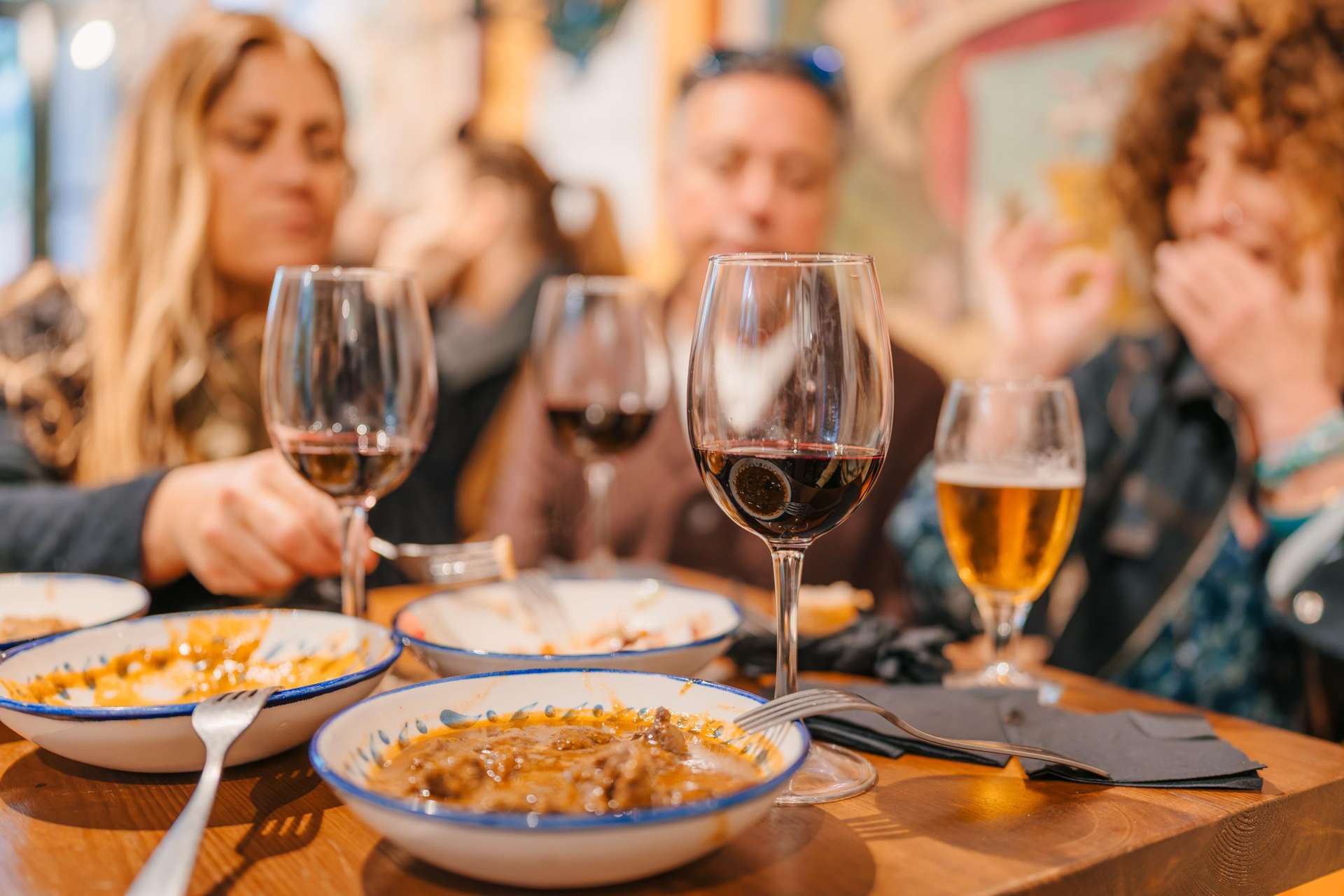
Tapas in Malaga: Wine and sharing tapas
This tour included three servings of your choice of wine, beer or sherry. I selected the Sherry option for my third serving at the last location; an authentic Andalusian bar located off the beaten path from the masses of tourists. The specialty of the house featured hand-labeled bottles of locally produced sherry. The flavors were bitter and herbal, yet also contained a slight sweetness that caused me to reflect on every mass-produced sherry that I have ever purchased.
What I did not anticipate was how much the information provided by our tour guide explaining different types of wines and the grape varieties would influence how I perceived the flavor profiles of each glass of wine. A dry white wine that I typically do not give much consideration to, became meaningful when paired with a salty anchovy. Additionally, a sweeter pour helped break down the rich flavors found within the slow cooked pork cheek.
The pairing options presented were not overly complicated. In fact they seemed very practical as if these are ways in which the local population actually consume their beverages.
Do not consider booking this tour if you desire a fast-paced visit to several crowded bars. As opposed to other tours, this experience has a slower paced environment, older buildings, and a greater focus on providing a historical insight into the food culture of Malaga. However, if you wish to be immersed in the history of the food culture of Malaga (the taverns, the cellar, etc.) and explore the recipes that survived all trends, then I would recommend booking this tour prior to any others.
What Is the “All-Inclusive Tapas Crawl” in Malaga?
A tapas crawl in Málaga as an all-inclusive evening is a guided visit to four bars chosen by us which includes about ten classic and innovative Spanish tapas (dishes) served together with four drinks. We will take care of everything so that you can simply sit down, eat, drink, meet new people and have fun.
Every time I see my friends standing outside a very busy bar in Málaga they don’t know if they should go to the counter to place their order, find a free table or look for the waiter. In the case of a “crawl”, we are going to remove that entire obstacle. Your guide is going to walk you inside, your food will be brought to your table and your drinks will flow through your conversations. That’s what it’s all about.
The difference between this and a regular tapas tour is the variety. You’re not limited to one type of restaurant, nor one area of town. Our crawl goes from one local favorite to another, from one of Málaga’s most famous restaurants to others where there are always new things to discover. One place may be more classical than the other, and the next may be pushing the boundaries with a mix of old school and innovation. My friend doesn’t like to do organized tours but she liked the all-inclusive crawl because it took care of all the details and allowed her to just enjoy her meal and good company, and even discover a modern tapas bar with innovative fusion dishes she would never have tried on her own.
- 4 handpicked venues with different atmospheres and specialties
- Around 10 traditional and contemporary dishes
- 4 paired drinks included
- Expert guide explaining local food, traditions, and bar culture
- Social setting with fellow food lovers
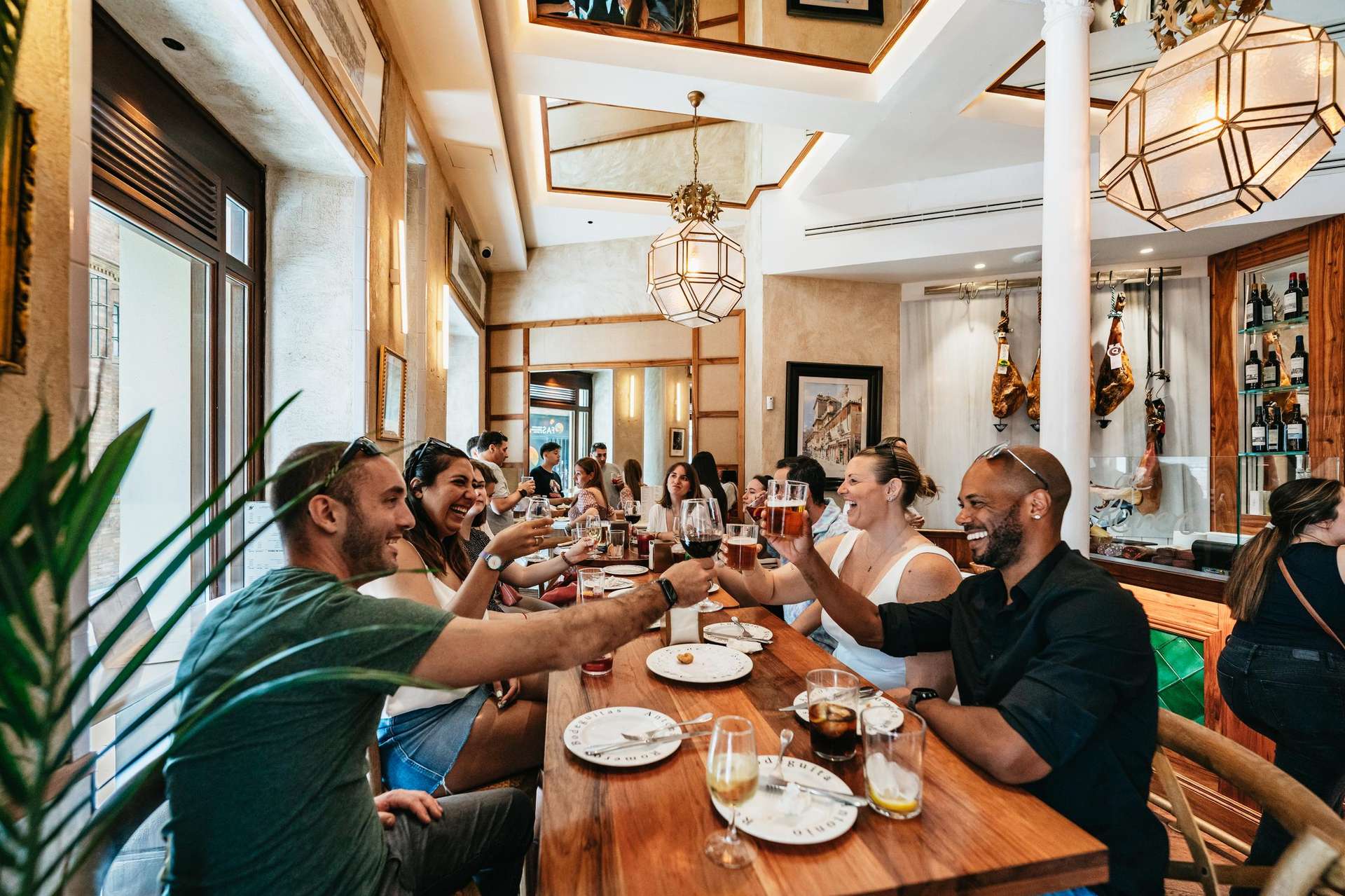
Tapas in Malaga: brindis
The social aspect of eating at Tapas bars in Spain means so much more than many may have anticipated. When you take a seat next to others at a table with the same interest for food (Tapas) it becomes an occasion to share meals together, offer suggestions to one another and compare different portions of food. After three stops, you will find yourself debating over which anchovy was best. This is how the Spanish culinary experience is supposed to work.
Many of the establishments listed here would likely go undiscovered unless you were guided there. Some are just classic restaurants in Malaga that no traveler should miss. The commentary offered by the author regarding the cultural aspects of bars in Spain as well as local customs allows you to feel educated while traveling through the city, but never lectured during the tour.
The idea behind having four drinks across four venues seems simple enough, until you realize that each venue has a drink that matches their menu items. There is nothing overly pretentious about this approach to pairing drinks with food. Additionally, because all costs are prepaid, you do not need to worry about whether or not you should have ordered one more round.
This is really the key benefit of going on this type of crawl; you can remain present. Typically, you spend time making decisions throughout an evening, such as deciding where to dine, what to order, etc. During this crawl, those decision-making periods of the evening are removed from consideration, allowing you to focus solely on the food, the company and the city itself.
As I walked away from the Roman Theater sipping my sweet Málaga wine and eating a gilda, I finally realized why people say the history of Málaga resides in its cuisine.
What is the “Tapas and wine route through local bars and restaurants”?
A “tapas & wine route” is an organized walking tour. The route is designed to help tourists explore both some of Málaga’s major sights and sample local cuisine. Each stop includes tasting samples (of buquerones, Iberian product, seafood, etc.) and samples of Moscatel wine paired with a visit to an important landmark.
I enjoy the fact that there is no separation of “eating” and “sight-seeing”. This allows you to learn while you dine, in a relaxing way. The route goes through the old part of town, making stops at local bars and restaurant. At each stop, the guide will explain what is being served as well as why it was chosen for the area. For example, a “gilda”, which consists of a pickled olive, anchovy and pickled pepper on a toothpick, may be simply considered by many as a tasty snack. However, for someone visiting the old part of Málaga, it represents much more than just a quick bite. It represents the local tradition of going into a bar after work or school for a small snack and drink. In addition, because it can be eaten quickly, it has become a staple of Andalusian bar culture. Therefore, a gilda tastes very differently depending upon how close you are to a 2000 year old theater.
The typical stops along the route include:
- Sweet wine and Moscatel wine poured at a traditional bar
- Anchovies and gildas as the first bite
- Iberian products sliced fresh at a local counter
- Seafood and other Andalusian delicacies at a second or third stop
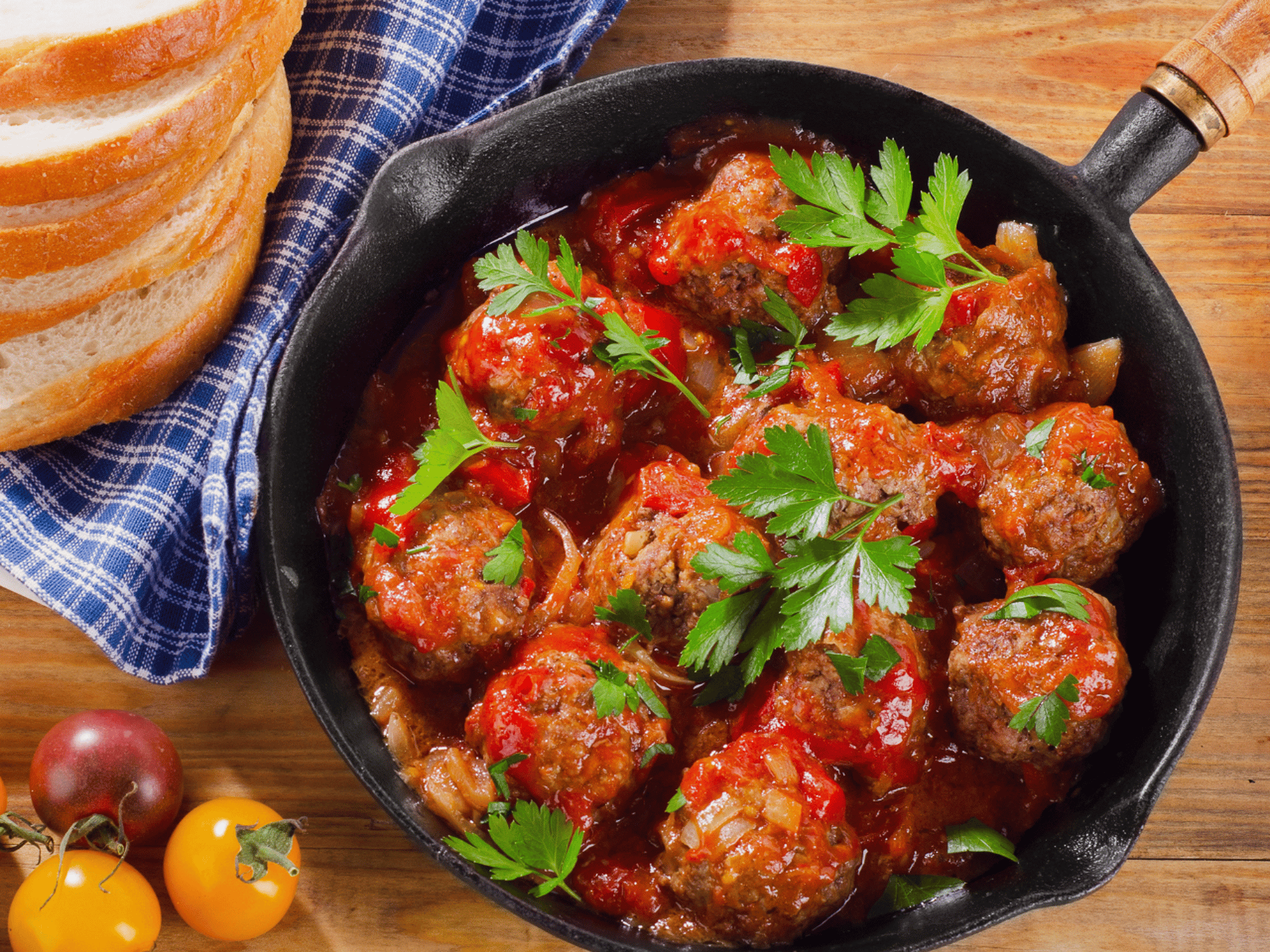
Tapas in Malaga: Albondigas en salsa
The local guide will be with you for the entire walk, and as much as it may seem insignificant at first, this can actually make a big difference. The local guide ties together what you are eating with the street you are on. This way, your food/tapas experience is not just about eating while looking at pictures of the city.
I would say this is an unconventional approach. There are no flags waving, no rushed photo shoots. The pace is relaxed. The route does not perform the local culture. In my experiences (tasting tours) the local guide has told me about a hidden plaza in between tastings. At that time I did not know there was even a plaza. The discovery of the plaza ended up being the most memorable part of the evening.
What Is the “Tapas Tasting Tour” in Malaga?
In Malaga, there are many guided tapas tours that take place on foot. These walking tours start at the Atarazanas Market (and finish at the old town), where guests sample local products, followed by samples of up to 7 different tapas at 4 local bars in the historic center. This makes sense because it shows guests the difference between raw products and finished product. As such, when they sample their pil-pil prawns, they will be able to see how much better they taste due to the quality of the tomato they were cooked with (due to being purchased at the Atarazanas).
While most tapas tours will drop you off right in front of your first bar stop. While this works well for some people, the experience can be significantly enhanced if you begin your tour at the market. If you do so, you will have a greater appreciation for the items that you are eating at each bar stop.
The Atarazanas Market is NOT a “photo-stop”. This is where all of Malaga’s cooks purchase the majority of their ingredients including fresh fish and tomatoes.
For example, when you purchase a regional olive from one of the vendors in the market. Then you are able to taste it again in a dish after one hour. The connection you make is instant.
This is the main point behind our format. We feel that a tapas tasting tour which begins at the market provides guests with knowledge of what type of ingredients were used. Guests learn the history of Malaga and its cuisine while walking to the various restaurants/bars. But, the true education takes place at the markets and/or the conversations you have with the vendors regarding seasonal produce. Your conversations with the vendors discussing the variety of foods available tell you more about Spanish cuisine than any menu item could describe.
What Will Be Sampled?
The tour starts at the market, then continues through to Old Town. The tour has four stops. The selections vary depending upon the time of year however we always include Spanish wines, cured meats (Iberian Ham) and pil-pil prawns. Guests will not only be sampling food but also learning about how many of those foods made it to their table (i.e. from farm/grove/sea to table).
- Regional produce at the Atarazanas Market, including olives and seasonal fruit
- Freshly sliced Iberian ham at a traditional stop
- Pil-pil prawns, a Malaga staple with garlic and olive oil
- Spanish wines paired with the tapas
- Up to 7 tapas dishes across 4 stops
In my opinion, the difference between this trip and a regular tapas walk is the market tour. If you don’t do that, you’re just going to eat. When you have done that, then you will understand. To say the number of olive varieties are amazing is an understatement. Once you taste at least 3-4 different olive varieties, they begin to pop up in all the dishes after.
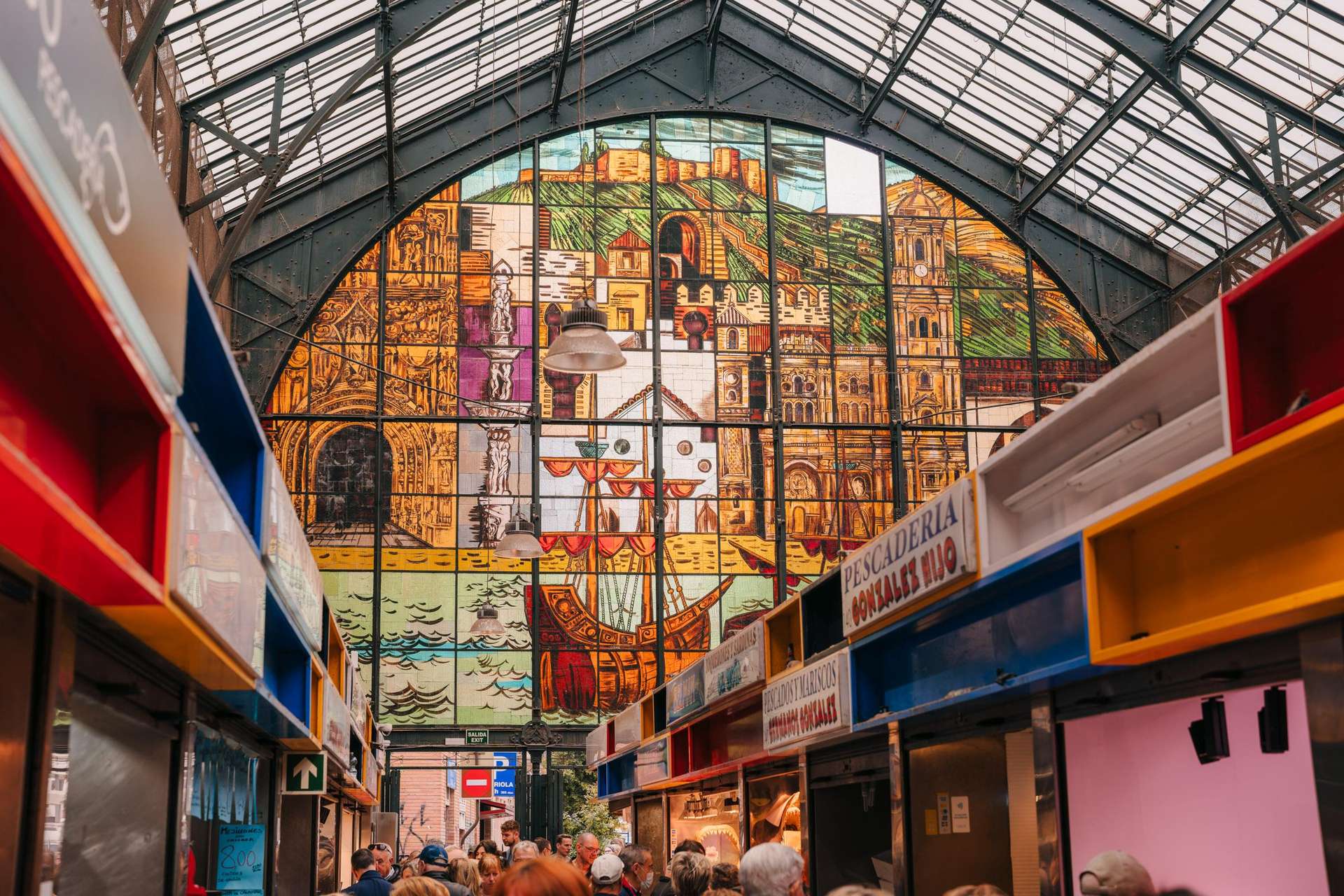
Tapas in Malaga: Mercado Atarazanas
Why The Market Tour Is Important
Atarazanas Market sits inside of a historic building constructed in the 19th century that has a glass stained window depicting the history of Málaga. The stained-glass window does not serve as decoration; it serves as a reminder that the food culture of Malaga was developed based upon fishing, agriculture and commerce. The Atarazanas Market is the location of where these three traditions meet.
I am not talking about the high end experience. This experience would require much smaller tours, and provide much deeper insight into many aspects of the culture. However, if your goal is to learn about how tapas originated in Malaga, and how its’ flavor profile is created, there is no better way than starting your day by visiting the market first.
When you see prawns on ice in the morning before you have eaten the pil-pil prawns, you can tell me that the experience is different.
What Is the “Premium Tapas & Local Wine Tour” in Malaga?
Tapas tours can be large groups of people. But this Málaga wine experience will have no more than 8 people. Guests will get a personal taste of Malaga’s traditional wines while enjoying local specialties and learning about the city’s flamenco, holy week and brotherhood culture from a guide who has spent time in Malaga.
While many tapas tours include wine in a casual way, this one does not. The first glass of wine is served in a typical Spanish environment. The guide then connects the wine to Malaga’s history of winemaking. This is the difference between tasting and understanding.
Unlike some other tapas tours I have taken part in (such as those in which the guide simply points out a building) there are several stops along the route that are in the historic center of the city. The route takes you through the narrow streets and alleys such as Pasaje de Chinitas. These places give off a strong sense of history and flamenco culture. You are not just going from bar to bar. You are experiencing the background of everything you eat.
One memorable example remains vividly in my mind; a special Pedro Ximénez sherry was paired with an almond cake. While pouring the sherry the guide told us a moving story about Pasaje de Chinitas’ flamenco past. Neither the wine nor the almond cake were randomly paired. The sweet raisin flavors of the wine complemented the dense flavor of the cake perfectly. Both foods existed because of their connection to the story of Pasaje de Chinitas.
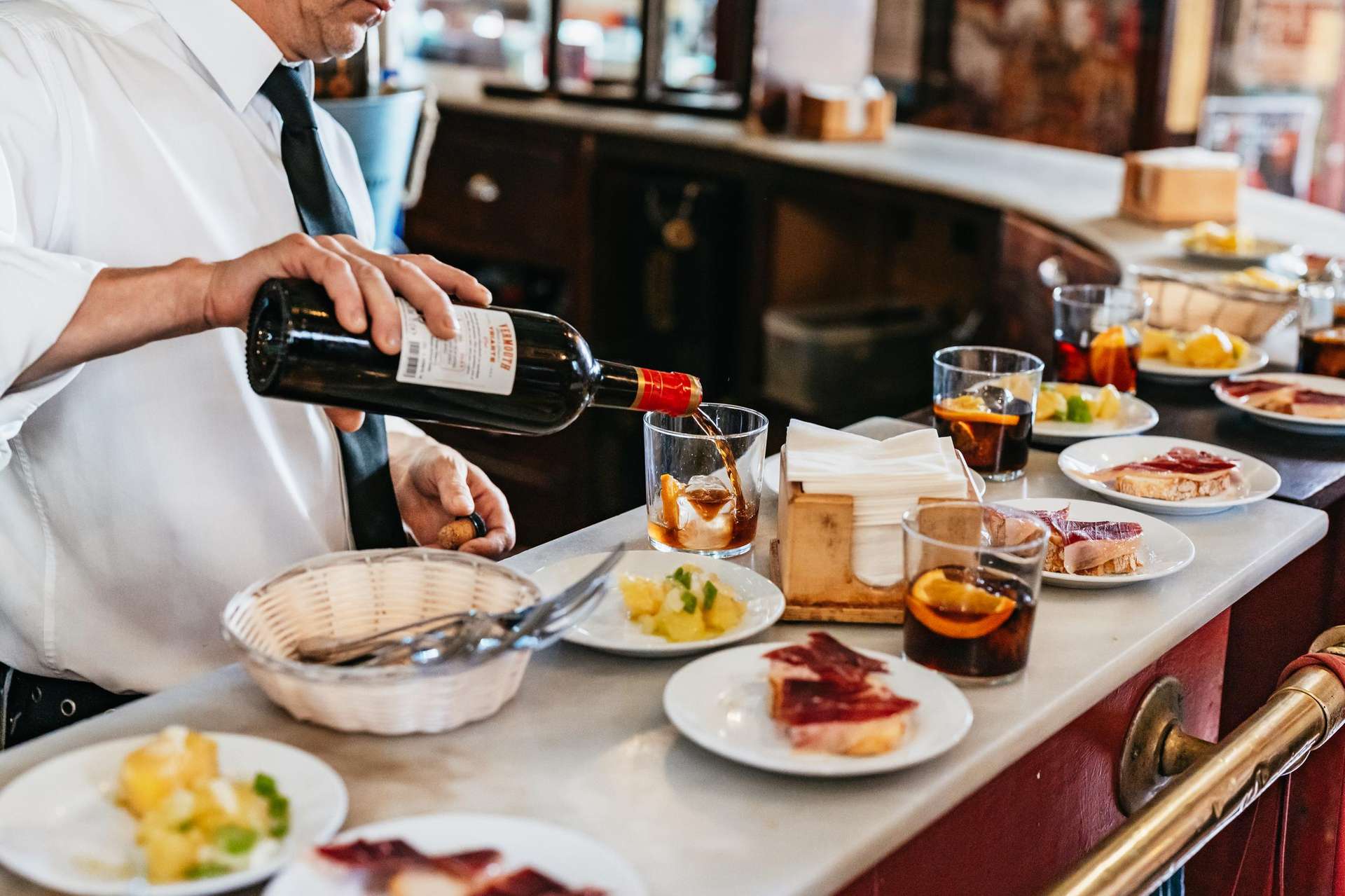
Tapas in Malaga
That last part is key. Right before the experience feels like its at an end; another stop is made. Its a nice little touch, however it completely changes the way your tour comes across. Instead of feeling like your being sold something; it will feel more like you’re receiving something for free.
What the route includes:
- Small group of max. 8 guests
- Multiple gastronomic stops, each with a different selected wine
- Authentic Andalusian specialties at carefully selected local spots
- Stories covering flamenco, Holy Week, and brotherhood traditions
- Non-alcoholic alternatives at every stop
- A Sweet Málaga Surprise to finish
That final stop doesn’t include a formal wine tasting. This is just a casual culinary experience where the wine acts as a unifying thread instead of as a lesson. This experience would be classified differently than an experience which offers a meal (with drink) because with this experience the focus is on providing you with enough cultural information to provide you with context first and then later fill you up with food.
What is the “Guided food tour with tapas and drinks”?
I used to believe a “food tour” would mean sampling (or nibbling). That was quickly disabused at this tour. In fact, just the first stop will be delivering the pescadito frito – lightly battered fish pieces which are so crispy they can be eaten with your fingers, then the boquerones – raw whitebait pickled in vinegar that taste little like the salted tins I always avoided in my youth. It is the freshness of both that changed everything.
The rest of the tour continues to add to the experience. The pincho de pulpo is served as an octopus skewer cooked in olive oil and smoked paprika. The albóndigas en salsa are served as meatballs cooked in tomato sauce that tastes like grandma did make them. On some days you may receive carrillada – slow braised pork or beef cheeks – or chivo malagueño, a goat dish that conveys the regional land-based flavor much better than any menu description.
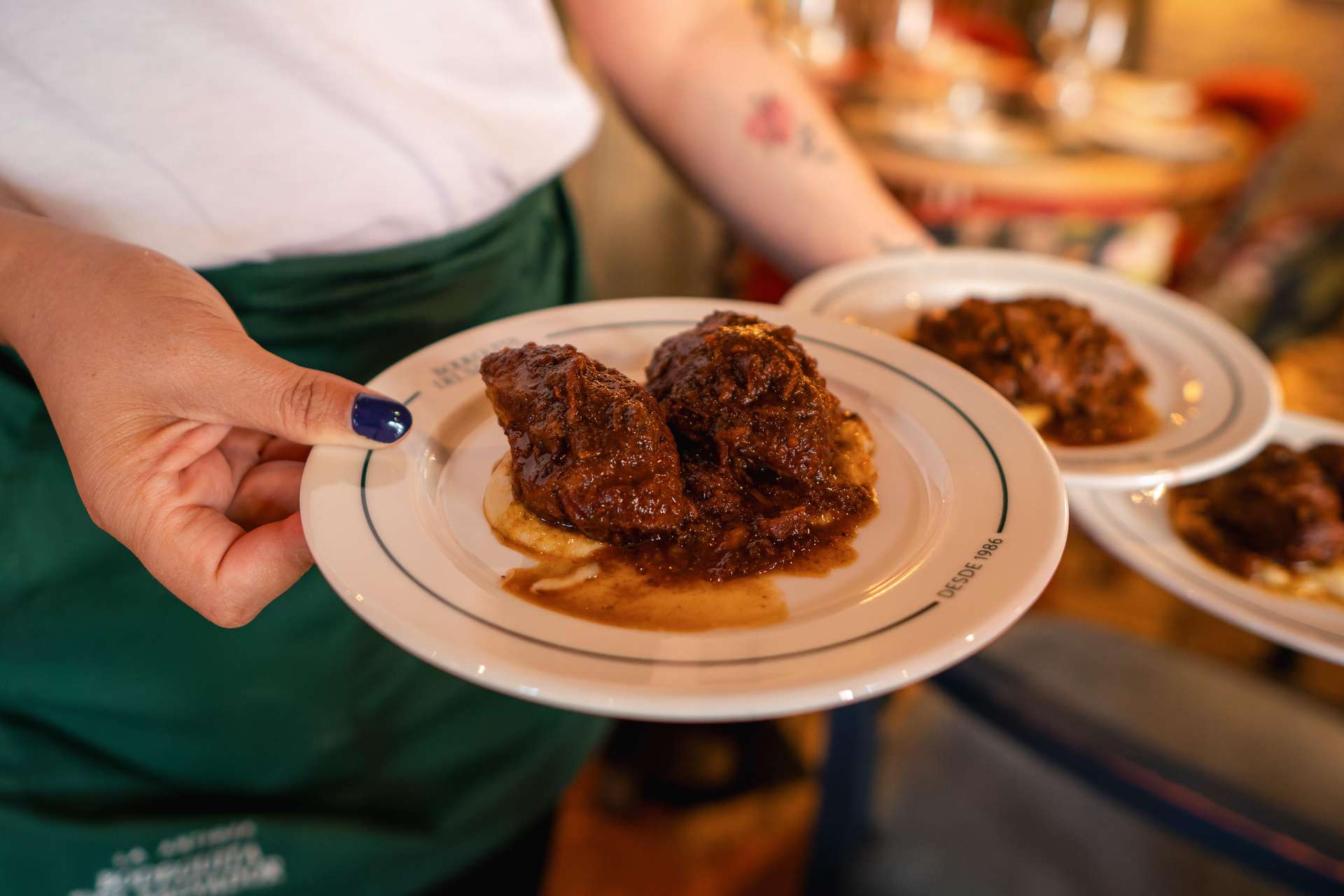
Tapas in Malaga: Rabo de toro
Why the sweet ending matters
While most tapas tours will end on a savory note, this tour does not. The ensaladilla rusa acts as a palate cleanser – a creamy potato salad made with tuna and vegetables; while the locas de Malaga (light pastry doughs filled with cream) and the pionono (a sponge cake roll soaked in sugar and cinnamon) are both sweet enough to be considered the final course for your full meal experience.
After three hours walking throughout the old town and some of the less traveled neighborhood areas you have ample time to learn about why these dishes exist versus simply learning their names. And if given a choice between doing a fast paced tapas crawl and this slow pace, I would choose this tour every time. Unfortunately, there was no explanation of how to prepare the meatballs themselves which would have been an ideal way to spend another few hours together.
What Is the “Ultimate Tapas Workshop with Market Visit”?
In a hands-on cooking experience located within Malaga’s vibrant Soho district, you will prepare 5 traditional tapas from the beginning. Prior to preparing your tapas, you will be taken on an ingredient shopping tour to Atarazanas food market. The experience also includes local wine pairing for each dish prepared. Each student leaves with a Kulinarea apron as well as the knowledge to replicate the recipes at home.
While most Tapas tours in Malaga stop once the plate has been cleared; this Tapas workshop begins where most tours stop. I have done numerous Tasting Tours, Crawls & Historic Tavern Routes in Málaga – All of which have greatly improved my ability to eat as a local.
None of those tours allowed me to become a better chef, and that’s what this Tapas Workshop allows me to do (and that’s why I always recommend it to people asking for tapas malaga experiences that truly last).
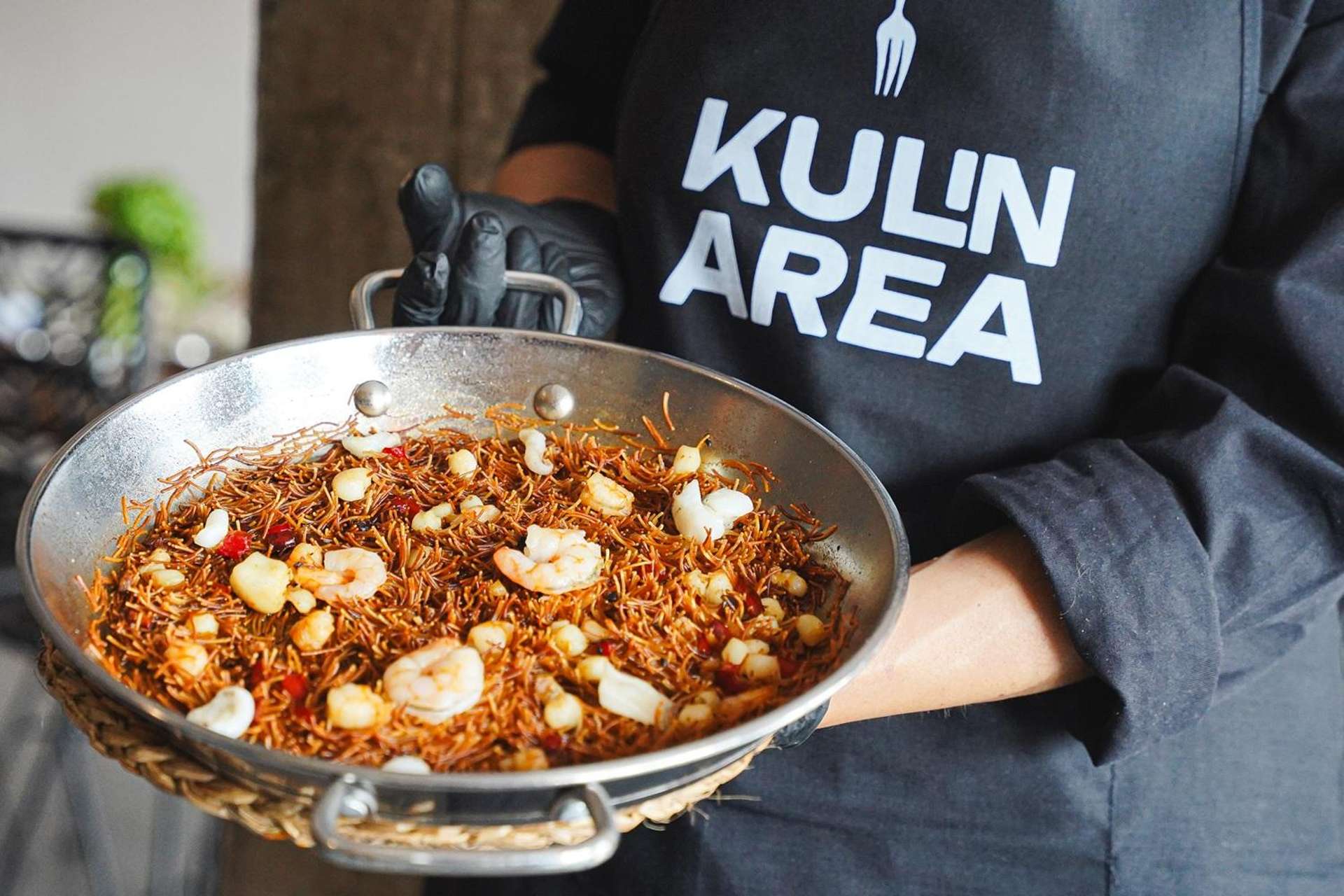
Tapas in Malaga: The ultimate workshop
You will attend an actual cooking class every day from Monday through Saturday. Each morning you will take a very short walk to the Atarazanas Food Market. This time at the market is about purchasing ingredients for that days lesson. It’s also about asking questions. Learning what makes a good tomato (for example) and how you can tell when they are ripe.
You Will Be Cooking What You Are Buying
There will be many different options on the sample menus as there are seasonal products available. But the majority of the samples we offer will always be traditional. We want to provide our students with the same types of meals their grandmothers were teaching them years ago. Our local chefs teach techniques in real-time while correcting student mistakes.
- Sangría – You build the base yourself, learning the ratio of wine to fruit to spirit that makes it taste like Spain instead of a tourist bar.
- Fideos tostados – Crispy toasted noodles that most visitors never encounter, yet they’re a staple of Andalusian home cooking.
- Tortilla de patatas – The Spanish omelette. This is the one that humbled me for years.
- Solomillo al Pedro Ximénez – Sirloin in a sweet, dark sherry sauce that taught me how Málaga’s wines work in savory cooking.
- Churros – Made from dough you pipe yourself, fried until they shatter, then dragged through thick chocolate.
The tortilla is when I made my own break through. At home I tried making it approximately 6 times before I ended up with either a cake or dry tortilla. The Chef told me the key was, low heat (he said he cooks them on very low heat), wait for them to finish cooking, then pull them off the stove so long as there is a slight “wobble” in the middle.
That’s where the residual heat comes into play. Finally, after all these years of trying to get this right, I achieved a tortilla that had a soft center. This wasn’t at a restaurant; this was in a small kitchen in Soho, London.
Why A Hands-On Cooking Experience Will Beat Any Other Tasting Tour
At Wine & Tapas Workshops we don’t think about matching wines to our dishes last minute. We have each dish carefully paired with a local wine based upon flavor profiles and the Chef will explain to you why that specific pairing worked so well as you enjoy eating what you have prepared. That’s not just a new way of learning, that’s learning by experiencing cause and affect.
Our Sunday & evening workshops do not include going to the market first. Instead you go directly to the kitchen. Our kitchens are located in Malaga’s artistic neighborhood called “Soho” which is literally within walking distance of the market. You’ll learn how to prepare your meal, eat it, enjoy drinking some wine and take away your brand new Kulinarea Apron that you actually earned!
You may see people that claim they cannot even boil water proudly show off their newly acquired tortillas skills. That is not something any tapas bar can give you.
At the end of the day
The one experience I have taken from years of traveling through Málaga to find great tapas; is that the greatest tapas experiences will always be much more than what is served. The greatest tapas experiences will also include the history of the bars you visit, who is serving your drink, and the sense of belonging to something beyond just another tourist experience.
Malaga has many options for travelers. That is part of the excitement of visiting. Unfortunately, some of my earlier experiences in Málaga were walking into places that catered to tourists. These places often had their menu printed out on plastic and frozen croquetas.
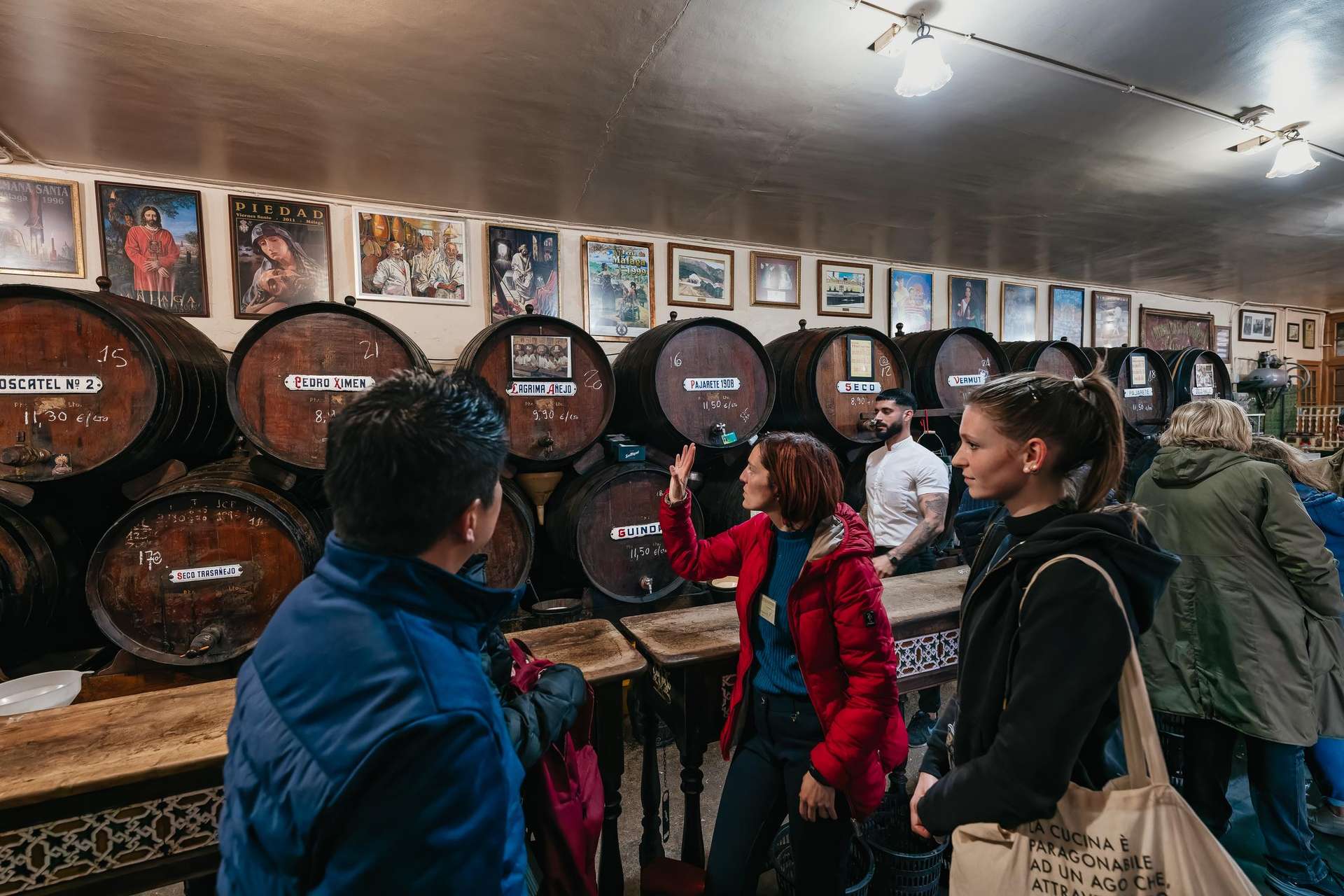
Tapas in Malaga: The oldest wine and tapas bar in Malaga
Here’s what actually matters when choosing:
- For history buffs: The Andalusian Tapas & Wine Tour of Historic Taverns starts in a 200-year-old winery. You’ll taste 7–8 homemade tapas and 3 glasses of wine, beer, or sherry in spots locals actually frequent.
- For wine lovers: The 4-Bar Wine & Tapas Tour packs 12 tastings across four venues, including a family-run grocery store slicing fresh Iberian ham.
- For social explorers: The all-inclusive Tapas Crawl hits 4 handpicked venues with around 10 dishes and 4 drinks. You’ll bond with fellow food lovers over shared plates.
- For hands-on learners: The Ultimate Tapas Workshop takes you through Atarazanas Market, then into a Soho District kitchen to make tortilla de patatas, solomillo al Pedro Ximénez, and churros yourself.
Book a guided evening tour on your first day in Malaga. A local will show you many wonderful sights you would probably miss if walking by yourself.
Your local guide can also give you tips on where else to eat and what else to see while staying in Malaga.
After the tour, go back to the places you liked best and explore them at your leisure.