
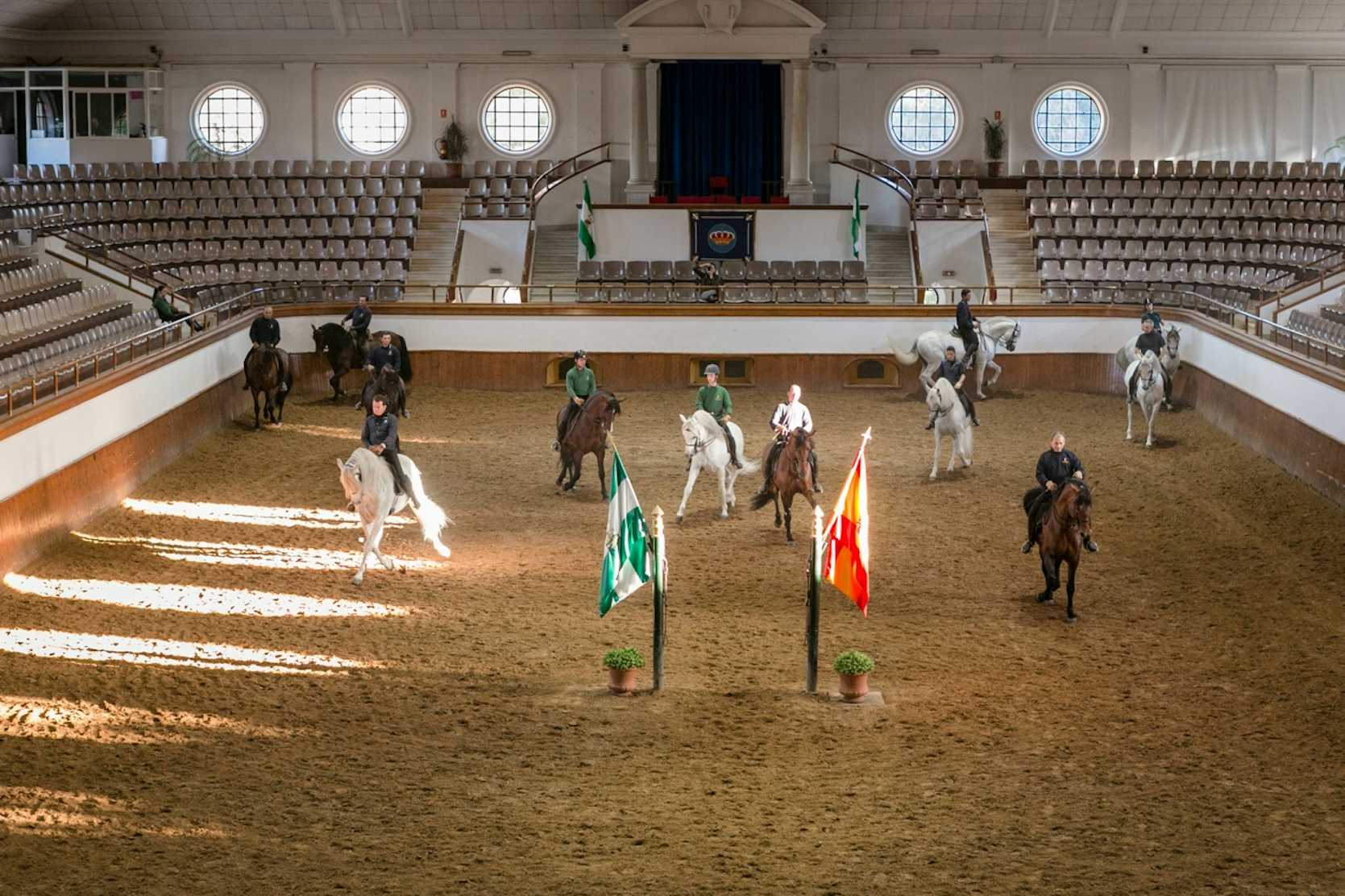
Royal Andalusian School of Equestrian Art, Jerez de la Frontera
I will never forget when for the very first time I witnessed an Andalusian horse moving perfectly in sync with his rider at a show in Jerez de la Frontera. He did not just trot. He danced. This experience changed how I understood what it really means to be part of Spanish culture.

Michael Madsen shares tips for experiencing the Andalusian horse with you
A pure race spanish horse does not make for a good secondary activity. A pure race spanish horse makes for a great main event. The Royal Andalusian School of Equestrian Art presents performances that include six to eight different choreographed pieces using classical dressage, Doma Vaquera and carriage driving all combined together into one continuous equestrian ballet. To begin to understand Andalusia, look to the horses of this area.
I have made the decision to build my trip itinerary around a real life performance (not a post card). The Andalusian Horse has been designated by UNESCO as an “intangible” unique breed of horse. Watching a purebred levade or a pure bred performing a Spanish Walk within an 18th century riding arena can provide far more insight than viewing most museums.
Here’s what I’ll talk about in this article:
- The sandy streets of El Rocio, where horses have priority over cars and people
- The Royal Andalusian School of Equestrian Art in Jerez, including the full visit and VIP upgrade
- The flamenco-infused show in Cordoba’s 16th-century Royal Stables
- Club Hipico El Ranchito near Malaga, where 20 horses star in an equestrian ballet
- A countryside spectacle in Cadiz with Torrestrella bulls and Alvaro Domecq horses
- The Yeguada de la Cartuja stud farm, home to more than 200 Carthusian horses
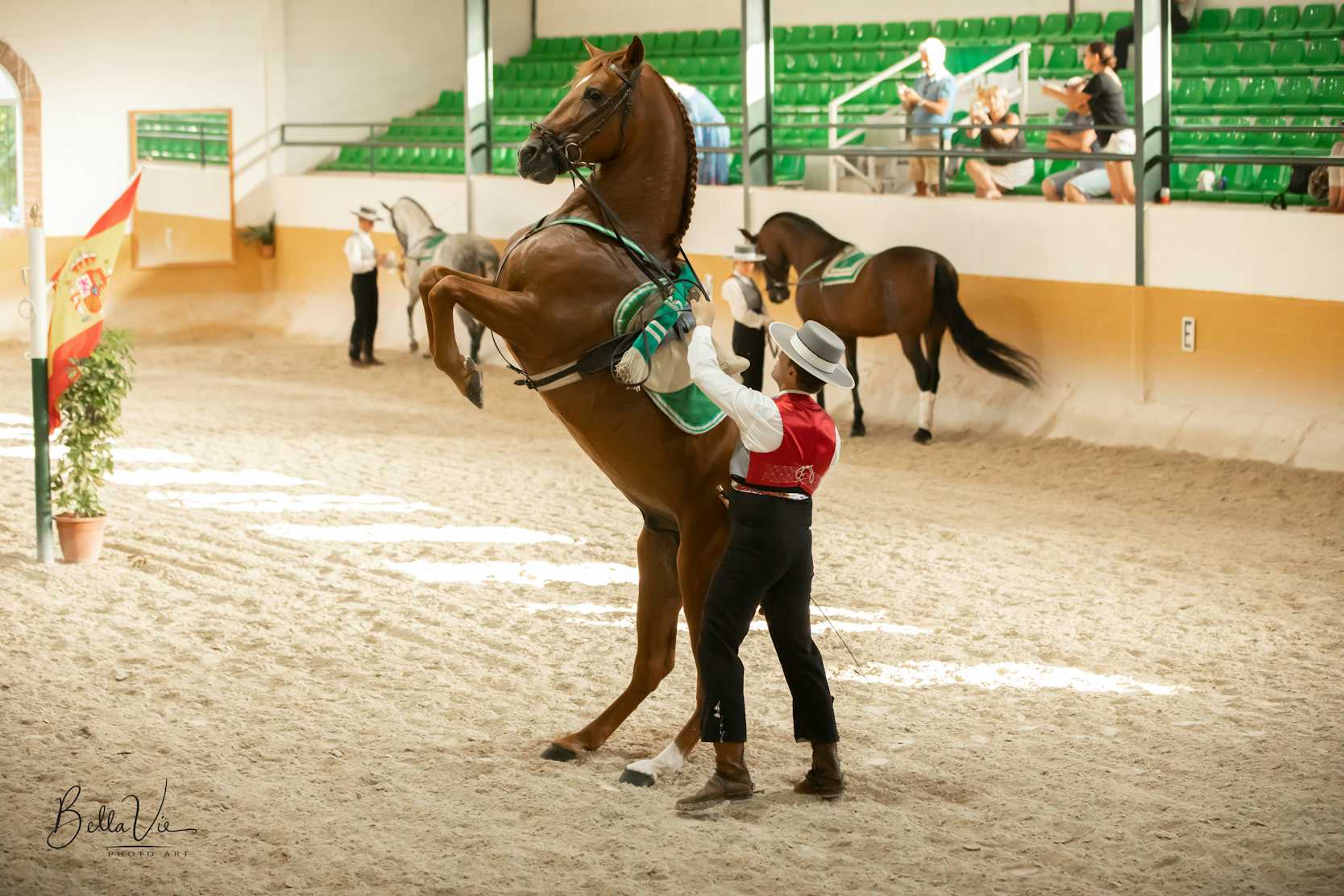
Club Hipico El Ranchito, Torremolinos
I have been traveling to these events for years. The experience has become as much about the atmosphere (the dust, the music, the smell of leather and hay) as it is about seeing the horses. Once you see a stallion burst into an arreon while running at full gallop, you will begin to see why I continue to travel here.
Riding horses in the sandy streets of El Rocio
Whether you wish to witness the performance of horses, or live with the horses themselves, there is only one location in all of Spain that allows you to do so without experiencing the animals as a spectacle: El Rocio. The village of El Rocio does not contain paved streets; instead, it consists of long stretches of sand and each of its many whitewashed homes contains wooden bars on their fronts for tying horses.
You can park your vehicle outside, attach your horse to the bars and then go inside. This is essentially the entire process.
Here’s what you’ll notice within five minutes of arriving:
- Horses have right of way over cars, bicycles, and pedestrians-always
- Riders wear cowboy boots and traditional traje corto, not riding helmets
- Women in flamenco dresses ride sidesaddle or travel in horse-drawn carts
- The sand muffles everything, so the loudest sound is often hooves and harness bells
Most of the time (not always) there are more males than females on horses in Spanish ferias. This has developed over generations because of the cultural influence of cattle work and doma vaquera. I have seen young teenaged boys ride and lead stallions as calmly as many other adults do.
This is where El Rocio does exactly what it was designed for. The Romeria is 50 days post-Easter. Thousands of pilgrims show up by horse, wagon or on foot. They come dressed in their best flamenco. The only ones who live in El Rocio year round are the owners. Every year the town swells to tens of thousands of people and animals. What is religion and what is celebration? It doesn’t matter – they all become one.

Riding horses in the streets of El Rocio
The Spanish purebred (Pura Raza Española) is one of Spain’s national treasures as well as an important part of its culture. The horses are found in large numbers grazing in the marshes at Doñana, near the coastal villages. In their natural habitat they can appear almost semi-wild, roaming freely through the tall marsh grass. They look nothing like most modern show breeds. Instead, this is a true working horse that also has great beauty when it moves.
See also my article about El Rocio here.
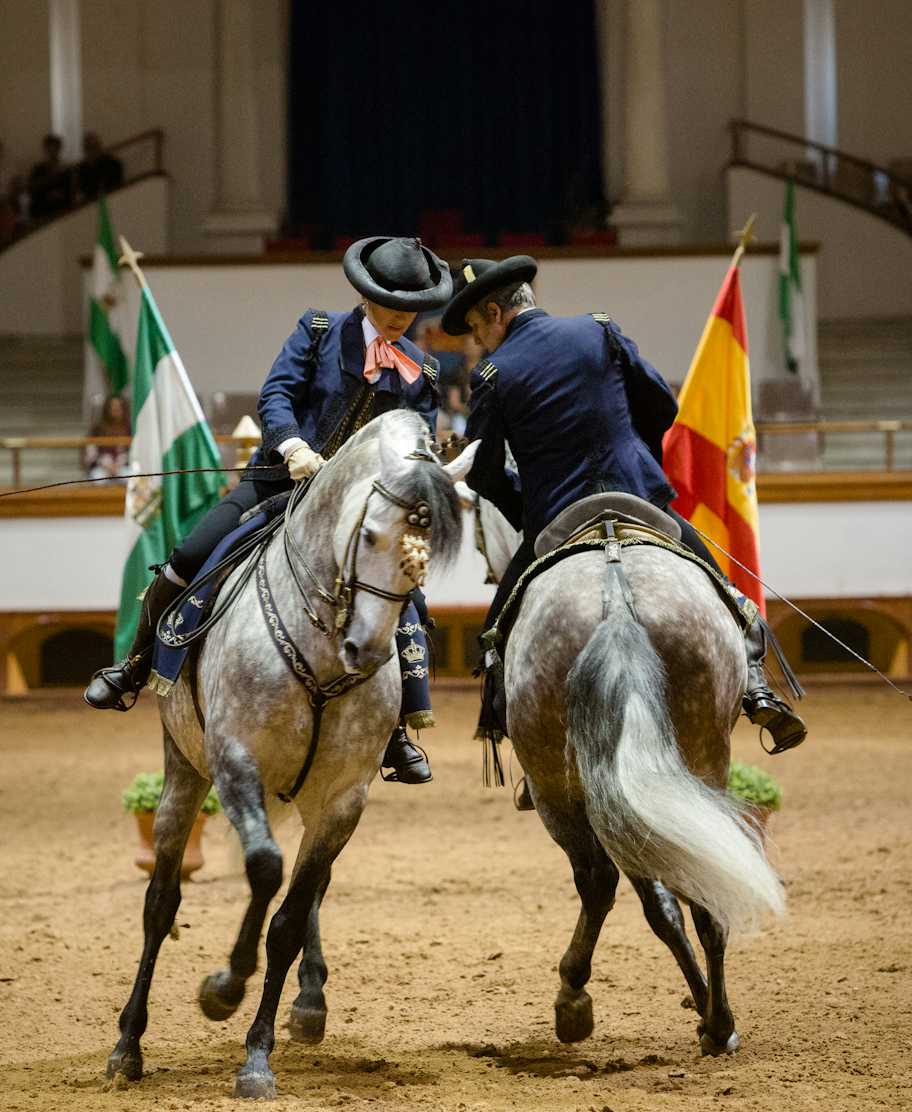
Royal Andalusian School of Equestrian Art, Jerez de la Frontera
Royal Andalusian School of Equestrian Art: Andalusian Horse Show
The 90-minute equestrian ballet performance “How the Andalusian Horses Dance” at Jerez de la Frontera includes six to eight choreographed routines blending Classical Dressage, Doma Vaquera, horse-drawn carriages and haute école work all based on 18th-Century inspired music and costumes.
I have seen many (dozens) of equine performances throughout Spain and I can honestly say there was no way to prepare for the exactness that occurs within that performance area. As soon as the first stallion entered the arena to classical Spanish music, it became apparent that this is not an entertainment centered around performing tricks but rather a history book of equine disciplines that have been part of Andalusian culture for centuries.
There are three different traditions being drawn upon by the choreographer. Classical dressage provides the horses and riders with an opportunity to perform the most advanced exercises while working perfectly in sync with the orchestra. Doma vaquera is the cowboy or rancher tradition where riders use only one hand to ride their horses. They transition from a trot to a gallop, they execute quick pirouettes, and they complete arreones, which are sudden bursts of speed that simulate cutting cattle. The third tradition is simple; it consists of day-to-day duties performed by the stable personnel elevated into artistic movements.
The Disciplines You’ll See
Each performance rotates through six to eight choreographies, but the core elements remain consistent. Here’s what unfolds:
- Classical Dressage: Advanced exercises performed to classical music, where horse and rider move as one organism.
- Doma Vaquera: One-handed riding based on cattle herding, featuring pirouettes and explosive gallops.
- Carriage Driving: Coachmen demonstrate the dexterity required to maneuver horse-drawn carriages with precision.
- Work in Hand: Horses perform without any physical connection to humans – levades, caprioles, courbettes, piaffe between pillars, the Spanish walk, and long reins.
- Carousel: A group of horses and riders executing advanced exercises in unison, a fitting finale.
The “Work In Hand” section is typically when I take a deep breath. When I see a stallion leap perfectly into a capriole (where all four hooves leave the ground while his hind legs kick) it looks like gravity has stopped for just a second. That feeling will stay with you long after everyone leaves the arena.
Why It Matters
Music and costume are not simply decorations. They establish a time frame and location for the performance which would be during the late 1700s when the pure Spanish horse was still being developed as a breed. Therefore, what you are seeing is an actual continuation from that historical period, using horses bred through lines directly connected to those early breeding farms.
A trip to the Royal School including visiting the stables, viewing the training sessions, and seeing the Palace is another entire aspect of your experience. However, the performance itself is the ultimate expression of what these horses are capable of achieving.
What Does a Full Visit to the Royal Andalusian School of Equestrian Art Include?
A total experience consists of an educational class indoors plus self-directed visits to the palace, the garden, the museum and carriage museum. An optional VIP version (VIP = Very Important Person) includes a 2 hour tour with a guide and allows for a better view into the area where the training forecourt is located.
As much as I have seen the evening show so many times I could recite all the choreographed sequences. However, the morning training sessions are something else altogether. There is no costume or music. The lights are nothing like what you would expect from a theater. It’s simply a person dressed in street clothes, a horse learning new routines and the repetitive motion of making the impossible seem effortless.
This is what you get from buying a standard ticket. You will be able to see the process and not just the final product.
What the Standard Ticket includes
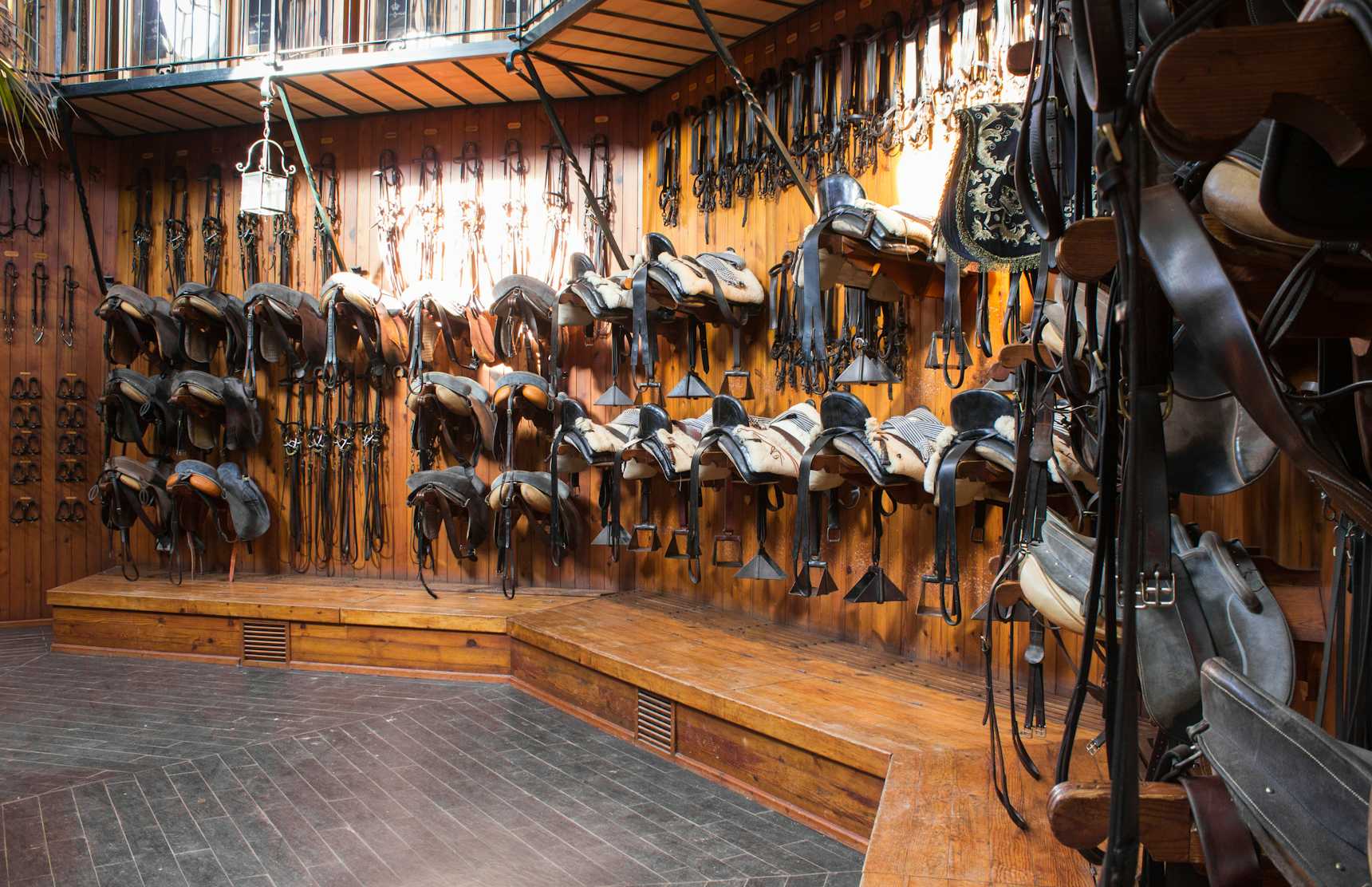
You will go through the Recreo de las Cadenas by yourself. This means going through the harness workshop, the palace and the gardens. I spent 20 minutes in the harness workshop by myself while I watched leather workers sew bridle straps together one at a time. The smell of saddle soap and fresh leather will stick with you forever.
Then you go through the Museum of Equestrian Art and the Carriage Museum. What I found surprising was the carriages. Some of them were so fancy that they looked like they belonged in a royal wedding while some of them were old workhorses with worn axels and cracked varnish. They both told you the truth about how horses affected people’s everyday lives here.
There is also an option for a guided tour of the stables and saddleries in various languages. If possible take this tour. Guides know which stallions are being trained and which ones are retired and can give you information you wouldn’t find otherwise during your self-directed tour.
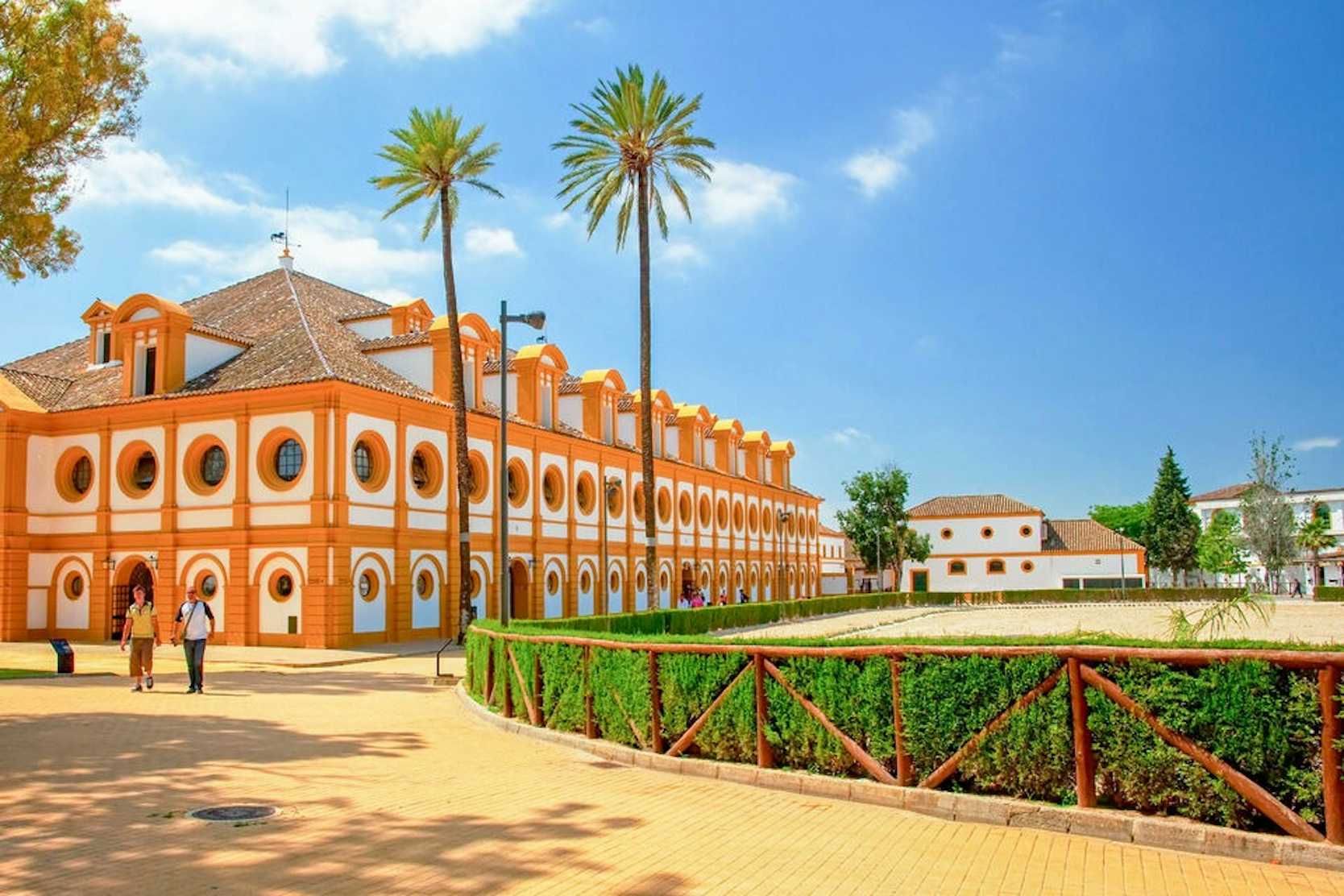
Royal Andalusian School of Equestrian Art, Jerez de la Frontera
Is the VIP Upgrade Worth It?
VIP tickets include a special audio visual presentation in addition to a private, 2 hour, guided tour of the Saddlery, Stables, Tack Room and Museums as well as being able to watch training from the fore court.
But that is what sets them apart. Standing at the fore court allows you to be close enough to see the trainers hand move with the rein; The horses ears turn towards commands; The precise time when a new action develops.
You can see how the ride is developing.
Royal Andalusian School of Equestrian Art, Jerez de la Frontera
Here’s what I’d weigh:
- Standard ticket: training session, self-guided palace and gardens, both museums, optional stables tour. Solid half-day.
- VIP ticket: everything above, plus the screening, the 2-hour guided tour, and forecourt access during training. A deeper, slower experience.
If your trip is specifically for the performance, a general tour of the facility will give you an appreciation for how this all works. On the other hand, if you are the type that asks a trainer a million questions or stands at the stalls for hours looking at horses, then paying extra for the VIP will be worth every penny.
I have taken both tours. The regular tour gave me the history of what I was watching. The VIP experience taught me patience. To watch a horse work on a levade (a style of dressage) from just three feet away from the trainer, to see the trainer correct a slight tilt in the horse’s shoulders by simply talking softly and lightly touching his back, that is commitment and professionalism that I could sense the evening performance did not come near to capturing.
All the equestrian events throughout Andalusia each bring something unique. However, there are no others that allow visitors as close to the actual training area.
What Is the ‘Passion and Spirit of the Andalusian Horse’ Show in Cordoba?
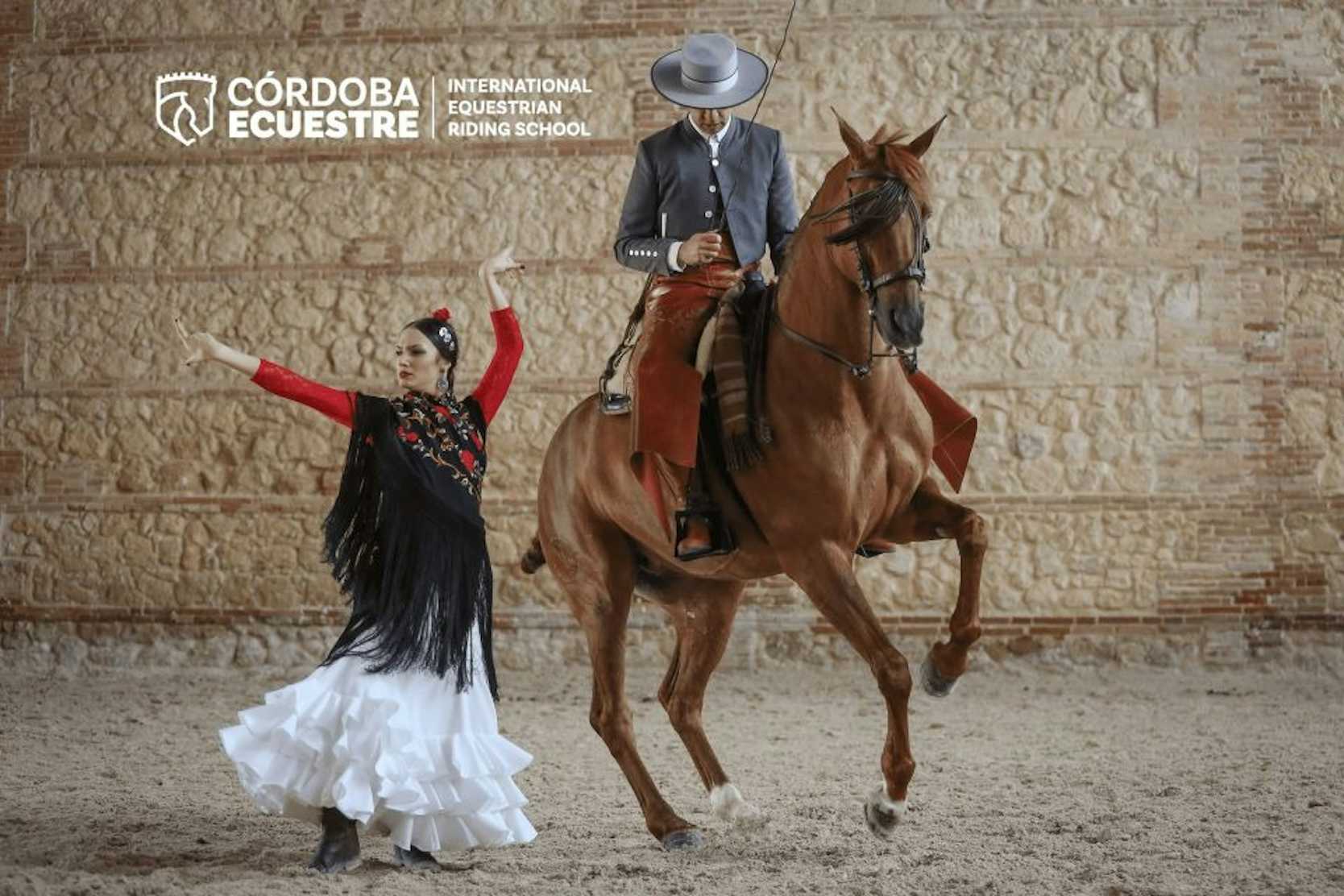
The passion & spirit of the andalusian horse” is an 1 hour (70 minute) show at the Cordoba location that combines classical dressage, cowboy dressage, and high school dressage with flamenco dance, performed live. The show takes place in the historic royal stables of Cordoba from the 16th century.
The 80 / 20 rule applies here — most equestrian shows give you 80 percent horse and 20 percent atmosphere. This one flips that ratio. I have sat through my share of dressage exhibitions to know when a performance is simply going through the motions, and this isn’t that. A flamenco dancer doesn’t simply accompany the horse; she mirrors its energy with intricate foot work while the stallion executes precise high school movements. The synchronized artistry is the whole point of the performance.
This show works because of the venue. The Royal Stables of Cordoba were constructed in the 16th century, and the stone arches and open courtyard do something to the acoustics that a modern arena can’t replicate. The horse’s hooves echo. The dancers heels crack against the floor. It feels less like a show and more like you have wandered into something private.
Córdoba Ecuestre. International Equestrian Riding School.
Here’s what the 70 minutes actually includes:
- Classic dressage sequences performed by Andalusian horses
- Cowboy dressage elements drawn from traditional cattle work
- High school dressage movements like levades and piaffe
- Live flamenco dancing that responds to the horse’s rhythm
- Period-inspired costuming that ties the two art forms together
I’m going to tell you something: If you have seen the Jerez show, then you may believe that you have had a look at the Andalusian Horse Box. No. Cordoba has an added element of emotional rawness, which is often missing from pure Classical Dressage. That “flamenco” is NOT ornamentation – it’s dialogue between two dancers who know about Tension & Release.
This blend is important as it illustrates how adaptable the Andalusian horse is toward the notion of Regional Identity. There are other shows throughout Andalusia that also incorporate some elements of regionalism; however, this event incorporates those aspects for ARTISTIC PURPOSES, not as mere TOURIST FARE. The horse is still the STAR, but the dancer gets you to FEEL the MUSIC IN YOUR CHEST.
Do Not sit in the Back Row. Sit so close that you will see when the horses’ muscles contract before they jump into a Levade. Then you will realize why Cordoba’s take on this experience continues to resonate with you long after the last stomp of a flamenco heel.
Club Hipico El Ranchito: Andalusian Horse and Flamenco Show
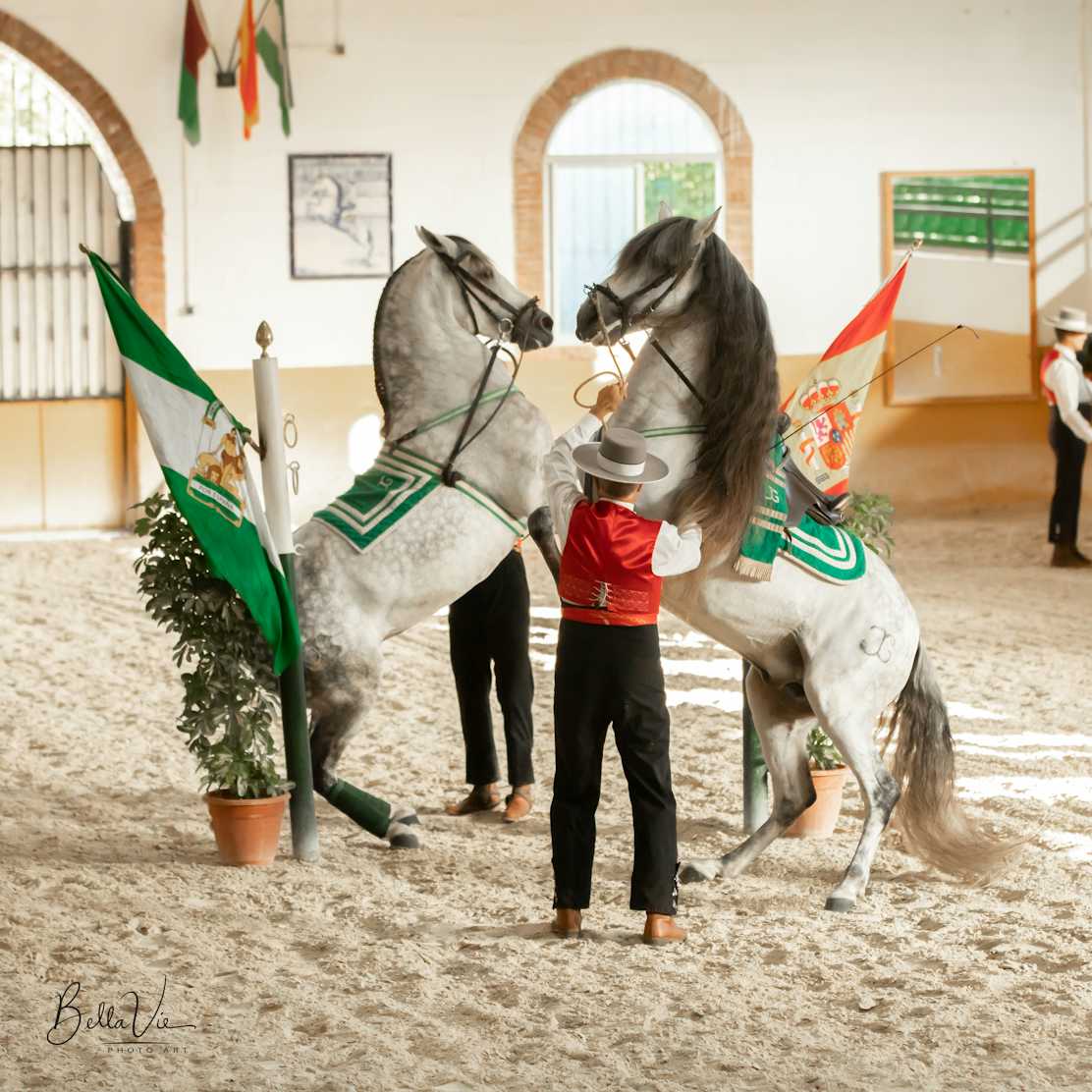
The Club Hipico El Ranchito in Torremolinos has been running Ritmo a Caballo since its inception over 25 years ago. This is the only equestrian ballet on the Málaga coast and uses 20 horses all of which have been ridden exclusively by their riders. More importantly, it offers much more as an experience than just a traditional dressage event for any enthusiast.
Most people are incorrect when they assume that because Ritmo a Caballo is the longest running show on the Málaga coast that it will be a dull display of tired routines in a dusty arena.
Club Hipico El Ranchito, Torremolinos
The format breaks down like this:
- 20 horses, each trained by the person riding them – no hired guns, no borrowed mounts
- Cowboy moves mixed with classical dressage, all set to Spanish music
- Riders and amazons in period Andalusian dress, not modern show jackets
- Over 25 years of continuous performance at the same venue
I have seen so many equine performances at shows, I can tell when a performance is about precision or personality. The equine performance of Ritmo a Caballo combines both elements; however, they are also very serious.
The cow-boy sequences would probably cause a traditionalist of Doma Vaquera to raise an eyebrow. That’s what they are going for. They want to entertain – this is Torremolinos, not Jerez. They deliver as much entertainment as possible without apologizing.
What amazes me most is how well the training comes out. To get twenty horses to move together in unison is difficult enough. However, twenty horses moving in unison while their riders change disciplines (dressage) and add on cowboy flair? That is an additional level of skill.
These horses were ridden by the same people who trained them. This means there is a true partnership with the horses, not just a rental agreement. If you’re going to stay close to Málaga, this is the easiest way to watch the Andalusian horse perform without having to go inland. This is not one of the better shows you will see in Andalusia. However, it does not need to be. It has been selling out every performance in its arena for nearly thirty years.
Cadiz: Country Show with Andalusian Horses & Bulls
It is the first time I have seen, as of 2026, the Spanish purebred (purraza espanola) share billing space with livestock raised purely for their sheer nerve. These bulls are exposed to open fields for four years prior to entering that ring. That is not simply decorative; those are four years of developing muscle, developing instinct and having no direct interaction with humans, resulting in an animal which does not perform – it reacts.
A Campo Abierto, Cadiz
I have spent many hours viewing perfectly groomed, highly polished dressage performances in Jerez and flamboyant flamenco infused performances in Cordoba. What happens here is completely different. The dirt will cling to your clothing.
If you sit in the wrong spot in the sun, it will be hot. When a stallion crosses the arena to swing a bull, you begin to understand why the Alvaro Domecq name is so respected by rural Andalucians.
What Actually occurs at A Campo Abierto
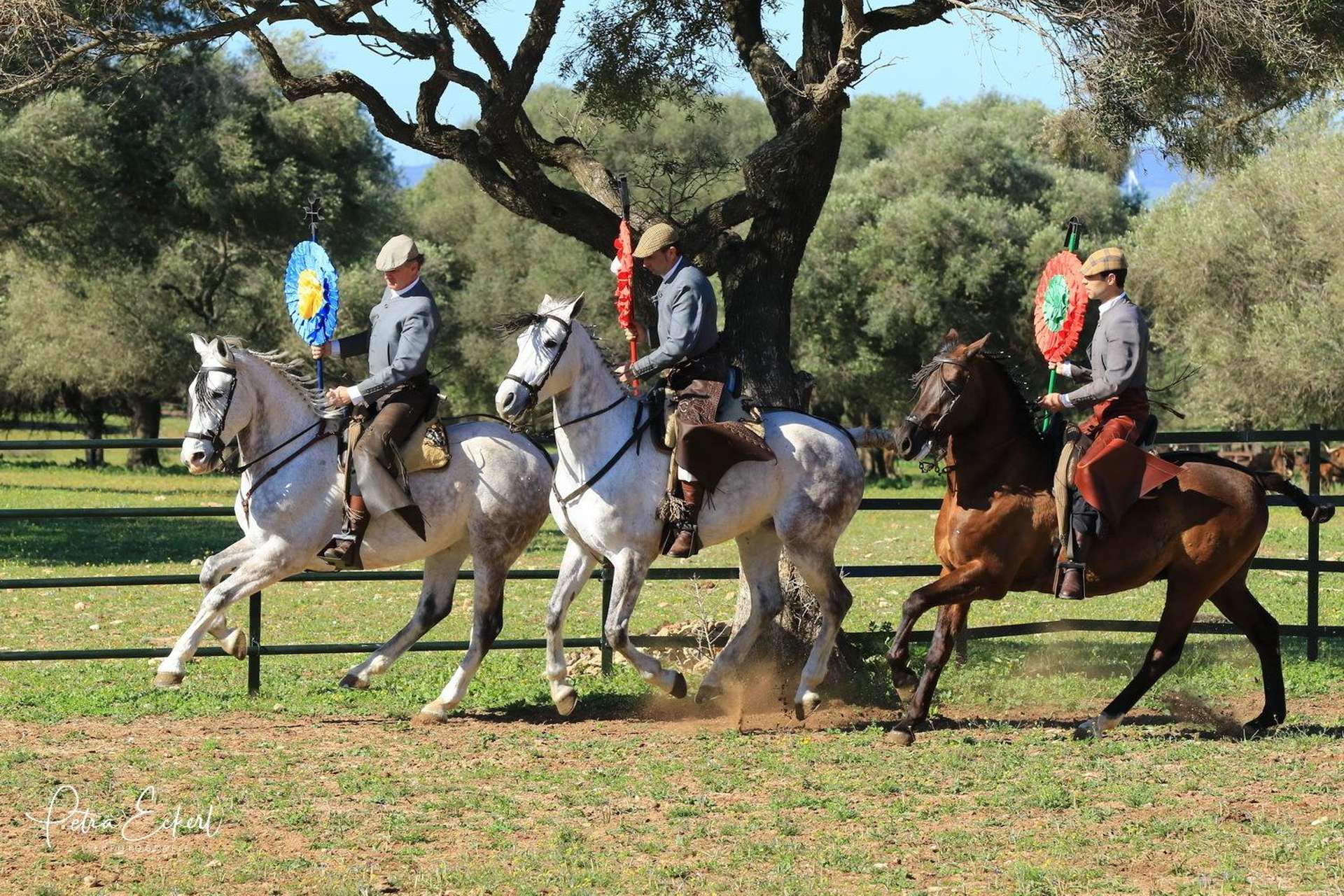
The event alternates between two forms of display. First there is the cattle demonstrations: Stallions, Calves, Mares and Foals displaying courage while performing acts that appear less rehearsed then bargained for. After that the horses transition from classical and rural dressage (Doma Vaquera), the same type of riding you would view in Jerez but performed on land that has never been thoroughly cleaned.
Countryside Dressage (Doma Vaquera) is the older version of Arena Riding. There is only one hand on the reins. The horse reads cattle not music.
Classical Dressage demonstrates what the breed can be trained to accomplish. Rural Dressage demonstrates what it was originally bred to do.
You have two options for seating based upon your preference for sun or shade. I have experienced both. Sitting in the sun offers better access to the events, however sitting under shade is generally easier on people. Regardless of whether you prefer shade or sun, you will be able to hear the breaths of the bulls.
There is little to nothing left after the event aside from the applause. What is still present long after the last act is finished is the quietness that exists during the periods between acts. It is a moment when a Torrestrella Bull sizes up an Andalusian Horse. It is also the essence of rural Cadiz and it is being lost much faster than most visitors realize.
Yeguada de la Cartuja Tour with Carthusian Horse Show
This is a walking tour around a working stud farm (Yeguada de la Cartuja) with over 200 Pure Spanish horses (Andalusians), which includes viewing free running colts, mares, and stallions, followed by a dressage exhibition in the central ring.
While I have visited many equestrian events throughout Andalusia, there was something different about this event. It wasn’t an event designed to receive applause. It’s a breeding operation that just lets visitors walk through their facility.
The monastery of La Cartuja and the historic estate of Fuente del Suero are located side-by-side; they both had similar climates and soil conditions making them the undisputable center for the breeding of Jerezano horses in the 15th Century. The tradition has continued to be active since that time.
Cartujano or Carthusian lineage is the purest branch of the Pura Raza Española. When you look at these horses, you are looking at a bloodline that monks preserved and developed for centuries. In addition to preserving the bloodline, the sole mission of the Yeguada de la Cartuja is to develop and improve the purity of that particular breed.
This singular goal creates an entirely different environment. There is no sales pitch here. They’re showing you a legacy.
Wandering through the paddocks of the pastures and observing free running Cartujano colts while being aware that you are witnessing the continuation of a 15th-century breeding tradition is a very humbling experience. The tour continues as it progresses through each stage of life. First you view this year’s foal crop, then you view the mares, and finally you view the separate groups of stallions. Each group provides insight into how the breed develops.
In addition to viewing all aspects of the horses on the farm, your guide will explain the history of the farm and their philosophy on breeding. After this explanation you’ll observe a short dressage exhibition in the central ring. While less long than the big Jerez show, the proximity makes it far better. You can literally hear a horse breathe.
Most memorable from my day was the tranquility of the location. No live music like flamenco to create excitement. No elaborate costumes. Just horses, grooms, and the everyday work involved in maintaining a breed. The Cartujano is considered Spain’s national treasure, and after spending an afternoon at the Yeguada de la Cartuja, you realize why that statement isn’t simply promotional hyperbole.
The tour includes:
- Guided visit through the farm’s different breeding areas
- Free-running colts and mares in pasture
- Free-running stallions in their own enclosures
- A dressage exhibition in the main arena
- This year’s foals
Book ahead. The farm limits visitor numbers, and the tour runs on a fixed schedule rather than continuous entry. Mornings work best-the horses are more active before the Andalusian heat settles in.
You leave with a different measure of what these horses are. Not performers. Not athletes. A living archive.
Frequently Asked Questions
The questions you have as a visitor are all very practical. You are likely trying to figure out which location will work best for you; when would be the best time to attend one of these events; and what should you expect from the Andalusian breed. Below, I put together my findings over many years of being at Andalusian Horse Shows in different locations such as Jerez and Malaga.
I am probably asked the question of “when” more than anything else. Jerez de la Frontera hosts equestrian events throughout the entire year. However, if you like warmer weather without the heat of summer or the cold of winter, then Spring and Autumn may be your best bets for visiting the outdoor arenas. On the other hand, shows during the summer months (June through September) can be extremely hot for both humans and horses. That being said, there are some excellent evening performances available during this time period. Additionally, the Ferias (horse festivals) take place in both April and May and provide a unique experience of equine culture in the streets that cannot be replicated by any ticketed event.
As for booking tickets, I find that there is a routine. The Royal Andalusian School sells out their weekend events several weeks prior to performance date. On the other hand, the Yeguada de la Cartuja Tour has a set schedule that rarely reaches maximum capacity. When planning your trip to see the Cadiz Country Show, I advise you to book shade-covered seating well in advance. After all, we know how strong the Spanish sun can be, especially when it comes to those who sit outside.
Many people inquire as to whether they should bring young children or inexperienced riders to watch the Andalusian horse perform. In either case, the answer is yes. The temperament of the Andalusian horse is characterized by its calmness and willingness. This is precisely why they dominate classical dressage and doma vaquera. Newcomers to watching this breed often comment that although they appear smaller in stature than warmbloods due to their compact body type and high stepping gait, they move with much greater collected movement.
- Which show is best for a first-time visitor? The Royal Andalusian School in Jerez offers the most complete introduction to classical equestrian art.
- How long do performances last? Most run between 60 and 90 minutes, with the Cordoba flamenco fusion show clocking in at 70 minutes.
- Are shows suitable for children? Generally yes, though the Cadiz bull show includes moments of raw intensity that may unsettle very young viewers.
- Do I need to book in advance? For Jerez and Cordoba, yes. For smaller venues like Club Hipico El Ranchito, same-day tickets often work.
- What is the difference between Carthusian and regular Andalusian horses? The Carthusian line is a closed breeding population within the pura raza española, prized for its purity and consistency.
- Can I visit a stud farm without watching a show? Yeguada de la Cartuja offers guided tours that focus on breeding and daily life rather than performance.
- Is the Andalusian horse the same as a Lusitano? They share ancestry but diverged as separate registries; the Andalusian is Spanish, the Lusitano Portuguese.
One single question warrants a more detailed response to this: Why do these horses have so much cultural significance? Due to its history of being bred by Kings, Bullfighters and Cattle ranchers. These characteristics are not just marketing. I’ve seen the same lines of horses performing Levade at a Palace Arena and working cattle on a large open range over the course of a week.
Your practical take-away is very straightforward. Choose one event you want to attend and has some proximity to where you will be traveling. Book early if you want to see the most well known. Leave time for unexpected experiences (a Feria, Training Session or Stable Visit). This horse can thrive with both Planning & Spontaneity.
At the end of the day…
I’ve watched Andalusian horses perform in gilded arenas, dusty village streets, and working ranches across Spain. The one thing that stays with me isn’t the choreography or the costumes. It’s the feeling that I’m witnessing something alive, not a museum piece.
Here’s what I want you to remember:
- Jerez de la Frontera is the beating heart. The Royal Andalusian School of Equestrian Art delivers the full spectacle: classical dressage, Doma Vaquera, carriage driving, and work in hand. The VIP upgrade gets you into the stables and saddlery, where the real magic happens before the show.
- Cordoba and Malaga offer the flamenco fusion. The Royal Stables of Cordoba pair a 70-minute performance with 16th-century architecture. Club Hipico El Ranchito in Torremolinos has run its 20-horse equestrian ballet for over 25 years.
- Cadiz and El Rocio show the rustic soul. The Alvaro Domecq family’s country show at El Carrascal mixes Torrestrella bulls with countryside dressage. El Rocio’s sandy streets, where horses have priority over everything, feel like stepping back in time.
- Yeguada de la Cartuja is for the purists. More than 200 Carthusian horses, free-running colts, and a dressage exhibition on the farm where the lineage has continued uninterrupted since the 15th century.
First reserve one of these experiences as soon as possible. During Feria Season (June) many tours sell out in advance, like the Royal School tour. Also, because of time constraints, tours are scheduled for specific hours. So choose: Jerez to see an incredible Grand Ballet; Cadiz for the unbridled energy of rural Spain; or Cordoba if flamenco is what you’re into.
The Andalusian Horse is so much more than a purebred animal. It has roots that run deep within Spanish Culture. Once you have experienced an Andalusian Horse performance you will be able to grasp the sense of pride that the Spaniards feel about their Pura Raza Española.