
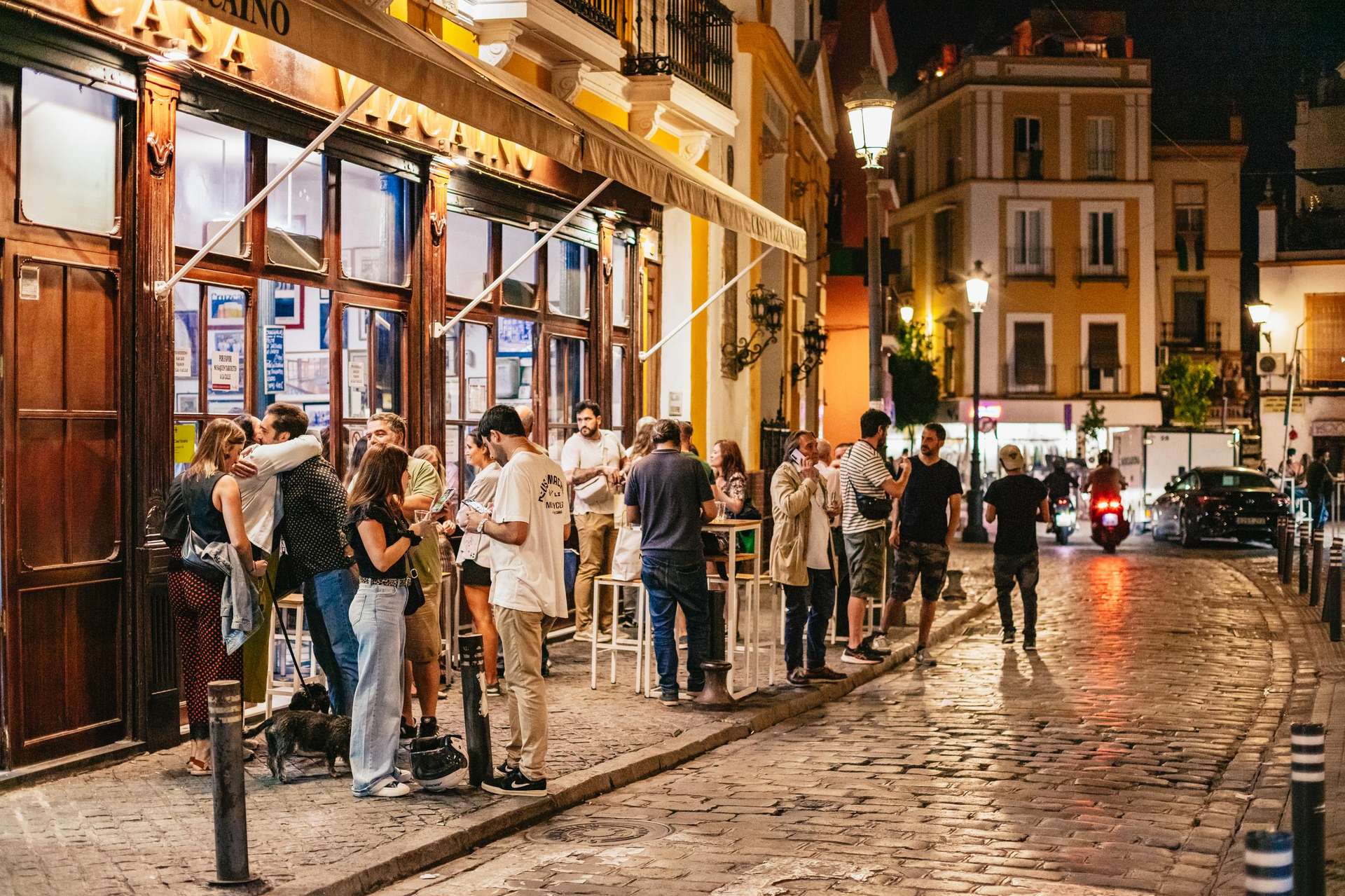
Tapas in Seville: Tapas bars in the side streets
I once spent an entire evening in Seville eating at a bar that had been open since 1870, convinced I’d cracked the code to authentic tapas seville. I hadn’t. I’d merely stumbled into a place where the orange wine flowed and the potato salad tasted like someone’s grandmother had been perfecting it for four generations.
That night taught me something no guidebook ever did: the real tapas experience isn’t about finding the “best” bar. It’s about understanding why that bar still exists.
The most memorable tapas experiences in Seville come from stepping away from the main tourist hubs and into the family-run taverns, hidden bodegas, and market stalls where locals have been eating for decades. Seville’s tapas culture reflects centuries of Moorish, Christian, and Jewish influences, and you taste that history in every bite of jamón ibérico, every sip of manzanilla sherry, and every spoonful of salmorejo.
I’ve eaten flaming chorizo with more fear than finesse. What I’ve learned since is that the best approach combines three things: a guided tapas crawl to orient yourself, a cooking class to understand the techniques, and the confidence to explore independently afterward.
Here’s what I cover in this article:
- Guided tapas crawls that take you to historic bars and hidden bodegas
- Food tours with 10 tastings, local wines, and insider stories
- Hands-on cooking classes for paella, tapas, and sangría in Triana
- Practical tips for ordering at the bar like a local
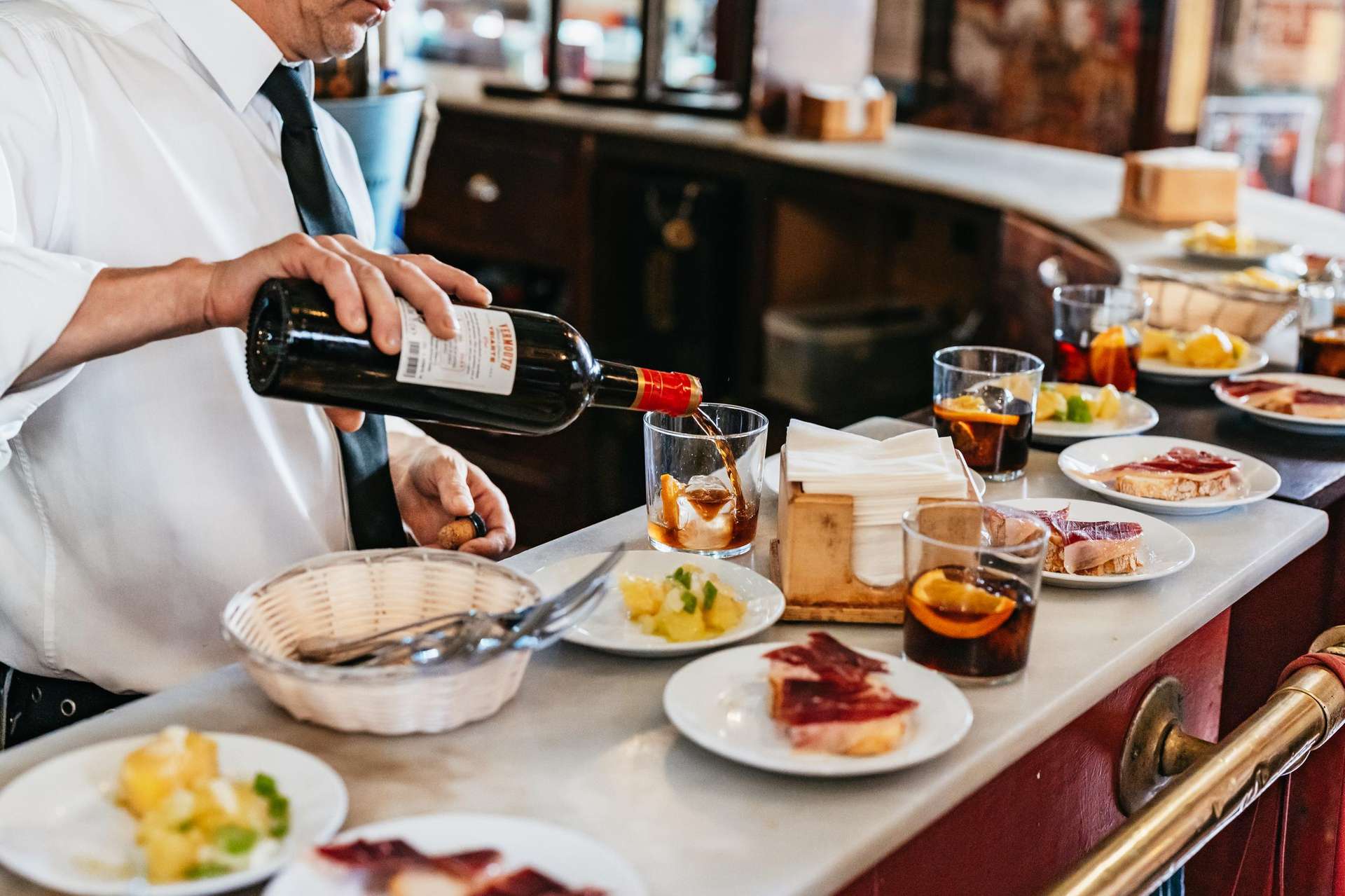
Tapas in Seville
Some of these bars have been trading since 1942. Others are run by third-generation families. All of them taught me something about Spanish food and Spanish culture that I couldn’t have learned by scrolling reviews. Whether you join a tapas tour or strike out on your own, the goal is the same: eat like a sevillano, not a tourist.
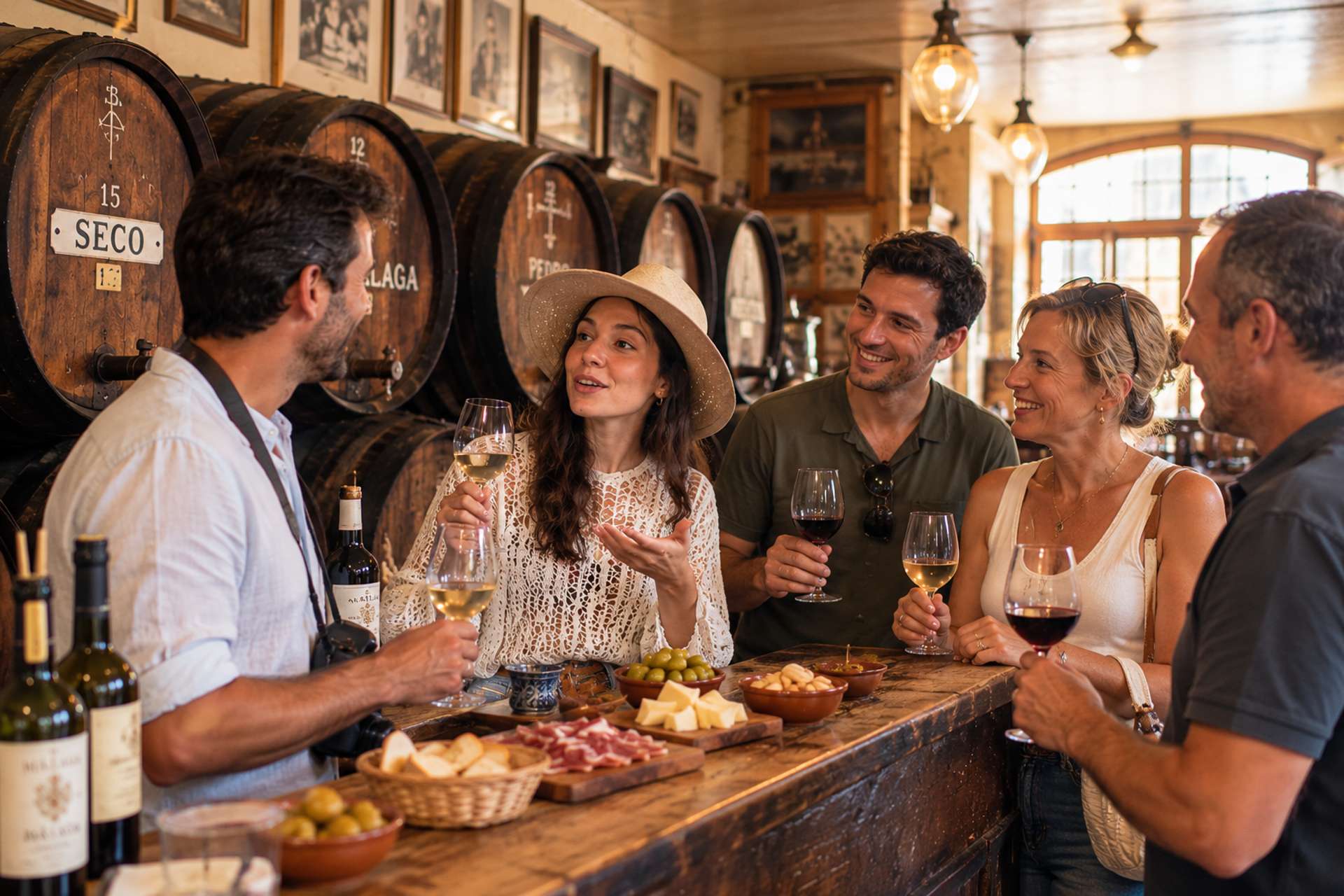
Tapas in Seville: Wine, cheese, ham and olives.
Guided Tapas Crawl
You can’t just wander into any bar with a laminated menu and expect the real thing. A guided tapas crawl solves that problem by taking you to five different tapas bars in one evening, each chosen because it still serves dishes the way locals actually eat them. The guide handles the ordering, the pacing, and the history, so you spend your energy tasting rather than second-guessing.
I learned this the hard way. My first solo attempt in Seville involved me standing at a crowded bar, pointing at whatever the person next to me was eating, and ending up with three plates of the same fried fish. Not a disaster, but not exactly cultural immersion either.
The difference with a well-chosen crawl is the guide’s knowledge of which bars have held their ground for generations. I once joined a crawl where the guide shared stories of a bar that had been open since the 1870s, making every bite feel like a step back in time. That’s not something you stumble into by accident.
What surprised me most was how quickly the group bonded. By the second stop, we were passing plates, arguing about sherry versus vermouth, and swapping travel stories. Food does that. A shared table of Spanish food turns strangers into temporary friends faster than any icebreaker exercise.
Here’s what a solid guided crawl should include:
- Five different tapas bars, not three rushed stops
- Dishes that reflect Seville’s history, not generic patatas bravas
- A guide who explains why certain ingredients dominate Andalusian cooking
- Time to linger at each stop rather than sprinting between venues
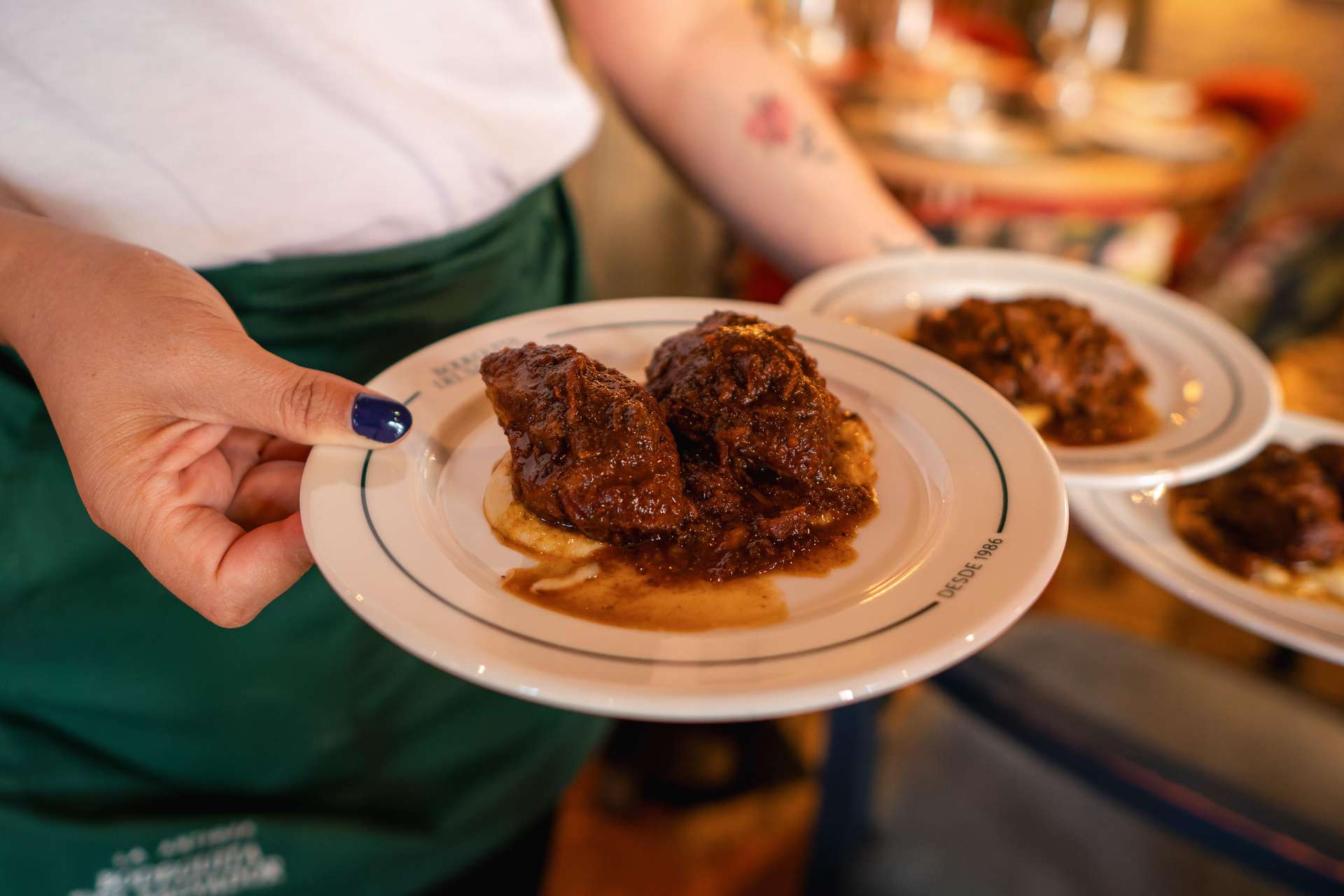
Tapas in Seville: Rabo de toro
Some tours now offer more extensive tastings and drink pairings, which I’ll get into shortly. For this section, the point is simpler: a guided crawl gives you access to places you’d walk right past.
Pro tip: Book a crawl for your first or second evening in Seville. The guide’s recommendations will shape where you eat independently for the rest of your trip.
The cultural layer matters more than the food itself. A good guide explains how Seville’s port history brought salted cod into the local repertoire, or why orange wine exists at all. That context turns a plate of espinacas con garbanzos into a story about Moorish agricultural roots.
I’ve done crawls in half a dozen Spanish cities. Seville’s stand out because the bars themselves feel like museums that happen to serve food. The guide simply unlocks what’s already there.
Tapas Crawl with 10 Tapas Servings & 4 Drinks
Decide early whether you want a tasting or a meal. This crawl is a tasting – ten plates across four bars, each paired with a drink, and it works because the pacing keeps you moving before fullness sets in.
I remember one evening where a tour guide introduced me to a local’s trick: ordering a media ración (half portion) to try even more dishes without getting too full, which really came in handy with 10 servings. That single piece of advice changed how I approach every tapas bar in Seville now.
Four carefully selected local bars means four different atmospheres. One stop might be a standing-room-only corner spot with cured ham hanging from the ceiling. The next could be a tiled dining room where families linger over vermouth. The variety isn’t accidental – it’s the point.
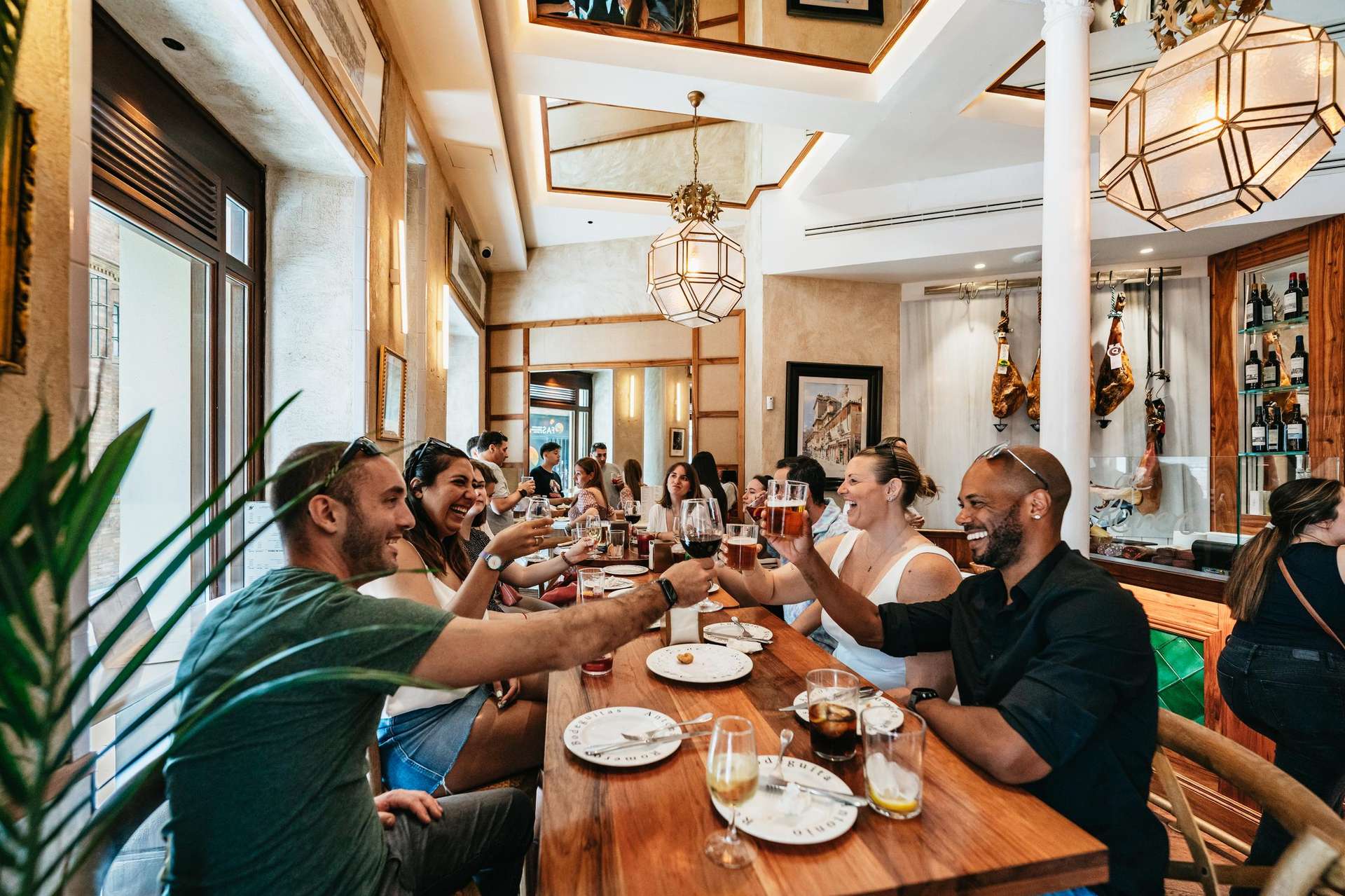
Tapas in Seville: brindis
The drink pairings do more than wash food down. A dry sherry cuts through fried seafood. A sweet red vermouth softens aged cheese. By the third stop, you start noticing how the pairings teach you about Andalusian drinking culture without a lecture.
What surprised me most was the social dynamic. Ten servings stretch over several hours, and that shared pacing turns strangers into a group. You pass plates, compare favorites, argue about which bar had the best croquetas. That relaxed, social evening around the table is harder to manufacture on a shorter tour.
Skip the tourist-area bars with laminated photo menus. The authentic neighborhood spots this crawl visits are away from the main tourist areas, and that’s where the stories live – the bar owner who still uses his grandfather’s recipe, the bodega that hasn’t changed its wine list in decades.
Some tours blend food with historical narratives and specific cultural landmarks. This one leans harder into the food itself, and for a first deep dive into tapas seville culture, that’s the right trade-off.
4-Stop Tapas, Taverns & History Walking Tour
Book a four-stop walking tour that pairs flaming chorizo with artisan vermouth, and you get more than a meal – you get a compressed history of Seville told through its most emblematic venues. The tour runs in a small group of up to 12 people, which keeps the pace conversational and the guide accessible. I found this format works best when you want the food to carry a narrative arc rather than just fill you up.
The route matters as much as the plates. Here’s the shape of it:
- Stop one: a charismatic tavern founded at the beginning of the 1900s, where flaming chorizo arrives exactly as it did a century ago, paired with vermouth drawn straight from the barrel.
- Stop two: a local bakery along the old Moorish souk, where traditional cakes are still made from old recipes by artisans.
- Stop three: a bar trading since 1942, where politicians, writers, and artists have congregated for decades – its owner received the Medal of the City in 2018.
- Stop four: a restaurant that fuses Andalusian tradition with international influences, a deliberate modern counterpoint to the earlier stops.
What separates this from a standard tapas seville crawl is the historical framing. The guide doesn’t just point at buildings; they explain how the old Moorish souk shaped the fragrance trade, how a bakery’s recipes survived generations, and why a 1942 bar became a political and literary institution. That context turns a slice of cake into a document.
Key Takeaway: The best historical food tours sequence their stops deliberately – old, older, oldest, then modern – so the meal itself becomes a timeline.
I’ll admit the flaming chorizo is theatrical. But the vermouth from the barrel is the real test of a tavern’s cellar, and the pairing works because both elements carry the same smoky, slightly bitter register. The bakery stop, by contrast, feels almost too quiet – until you realize you’re tasting recipes that predate most of the buildings around you.
The small-group cap of 12 is not incidental. A specialized local guide can answer questions about ordering etiquette, regional variations, and which dishes are seasonal without shouting over a crowd. That intimacy is what I look for now, and it’s a theme worth carrying into any food tour you consider next.
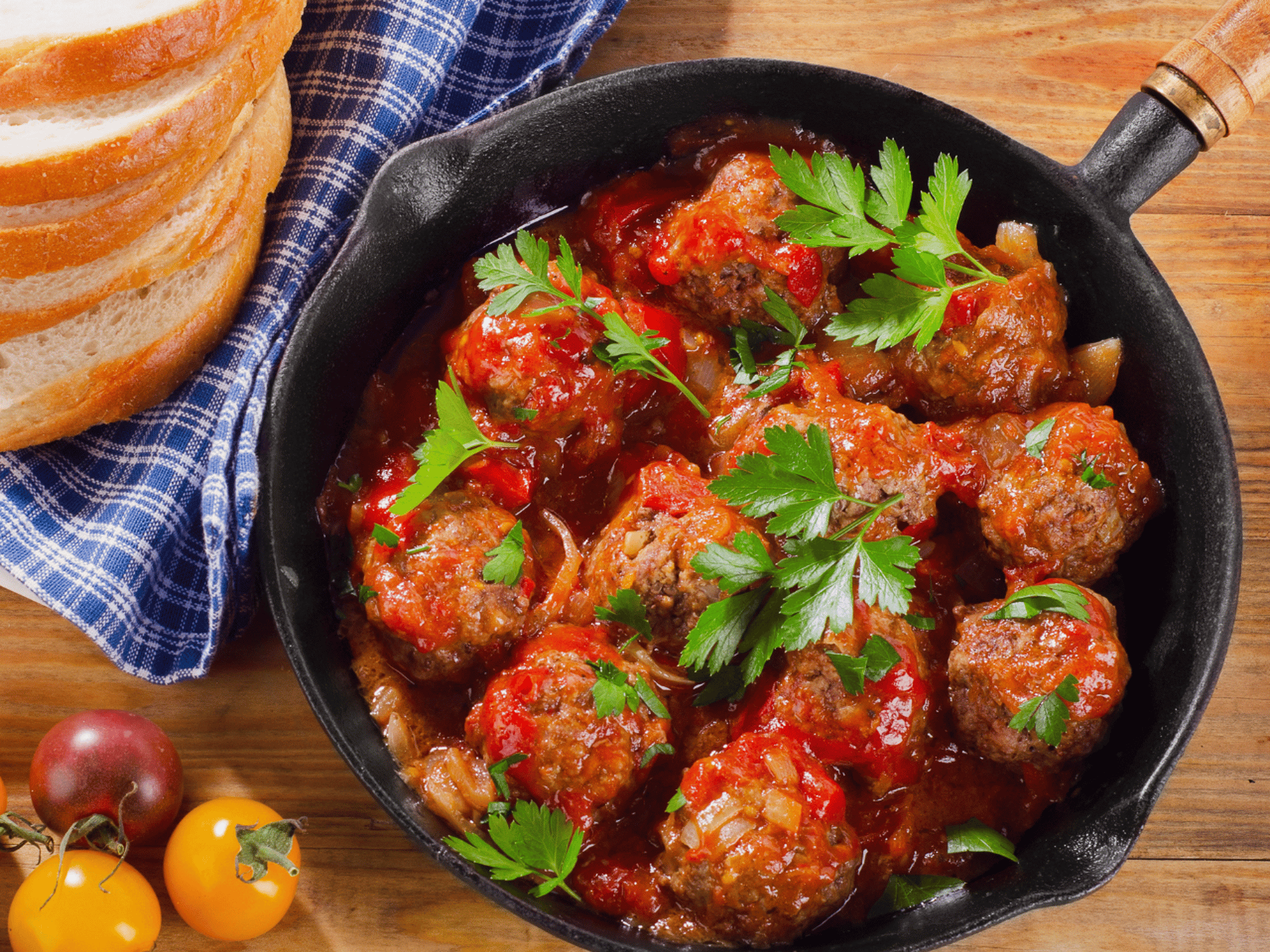
Tapas in Seville: Albondigas en salsa
The 2018 Medal of the City tells you something about how Seville treats its food institutions. It’s civic recognition, not culinary – a signal that a bar can matter to a city’s identity as much as its cathedral.
Food Tour with Tapas & Drinks with a Local
Three hours. Four stops. One local who knows which bar keeps the croquetas recipe locked in a family notebook.
That’s the difference between eating tapas in Seville and actually understanding why they matter. A local-led food tour with drinks included is the fastest shortcut past the tourist veneer and into the city’s edible memory.
I used to think I could replicate this by reading reviews and wandering. I was wrong. The guide doesn’t just point at plates – she narrates the city through them. A montadito de pringá stops being a sandwich and becomes a story about Sunday leftovers, slow-cooked pork, and a bar that has served the same corner for generations.
What You’ll Actually Eat
The tour spans 4+ stops and builds into a full meal, not a snack crawl. Expect a rolling sequence like this:
- Jamón ibérico and local cheeses – the opening argument for Andalusian patience
- Montaditos filled with slow-cooked meats – including that pringá, if your guide knows the right door
- Croquetas – crispy outside, molten inside, impossible to eat gracefully
- Seafood, gazpacho, or ensaladilla rusa – depending on the season and the bar’s specialty
- Buñuelos de bacalao – golden salt-cod fritters that vanish too fast
- Churros with hot chocolate in winter, or ice cream in warmer months
Drinks are included throughout, which changes the rhythm. You’re not calculating a bill at every counter. You’re listening, sipping, and letting the guide connect a sherry to a spring festival or a vermouth to a neighborhood rivalry.
Why the Local Part Matters More Than the Food
Any tour can feed you. A local guide decides which stories survive the walk between stops. On one tour, my guide led us into a tiny bar I’d walked past twice without noticing.
No English menu. No TripAdvisor sticker.
Just a third-generation owner slicing pringá onto warm bread and a guide translating both the ingredients and the family’s history.
That’s the part you can’t book independently. The group stays small – up to 12 people – so the guide can answer questions without a microphone. Three hours pass quickly because the narrative carries you, not just the food.
Skip the tour that promises “hidden gems” without naming a single neighborhood. The real signal is a guide who says which family runs the bar and why the recipe hasn’t changed. That specificity is the whole point.
And if you think this sounds passive, wait until you’re standing in a Triana kitchen later, knife in hand, trying to recreate what you tasted. The tour plants the context; the cooking class makes it yours.
A guided walking tour through Seville’s Jewish Quarter and Arenal gives you exactly that: historic taverns, specific regional pairings like orange wine and sweet red vermouth, and the etiquette cues that let you order at the bar without looking lost.
My guide once explained that the oldest bar in Seville’s Jewish Quarter, open since 1870, was a hub for flamenco artists. That single detail changed how I tasted the potato salad and Iberian ham in front of me – suddenly I wasn’t just eating, I was sitting where performers had argued, rehearsed, and celebrated.
Before You Start
- Wear comfortable shoes; the route winds through narrow streets and uneven cobblestones.
- Arrive hungry but not starving – the pacing is deliberate, with small plates spread across several stops.
- Tell the guide about any food restrictions before the tour begins, not at the first bar.
From there we slipped into a tiny tavern hidden near the Cathedral, the kind of place I’d have walked straight past on my own. Manchego cheese and slow-roasted pork belly arrived with a glass of orange wine from a family-run bar that made the drink famous in Seville. That’s the thing about this tour – it doesn’t just feed you, it teaches you how to eat here.
Ordering like a local means standing at the bar, pointing at what looks good, and not over-ordering. The guide’s insider tips covered when to push forward, how to signal for the bill, and why a media ración sometimes beats a full plate. Practical stuff I’d never have picked up from a menu translation.
The evening ended at a third-generation family-run eatery with four shared plates and a crisp manzanilla sherry tied to Seville’s spring festival. By then I’d stopped taking notes and started just eating. That’s the sign of a good tour – and a hint of the hands-on cooking classes that come later.
Booking the wrong food tour in Seville doesn’t just waste an afternoon. It wastes your appetite, your budget, and your one shot at understanding why this city’s food matters. A Secret Food Tour through the Old Town solves that by stacking more than eight tastings – tapas, Iberian ham, cheeses, seafood, and churros – into a single walking route that ties every bite to Seville’s Moorish, Christian, and Jewish past.
I’ve done enough generic crawls to know the difference. This one doesn’t just hand you a plate and point at a monument. The guide stops in front of baroque and gothic facades and explains why the spices in a particular tapa still carry Moorish fingerprints. That’s the moment the food stops being fuel and starts being evidence.
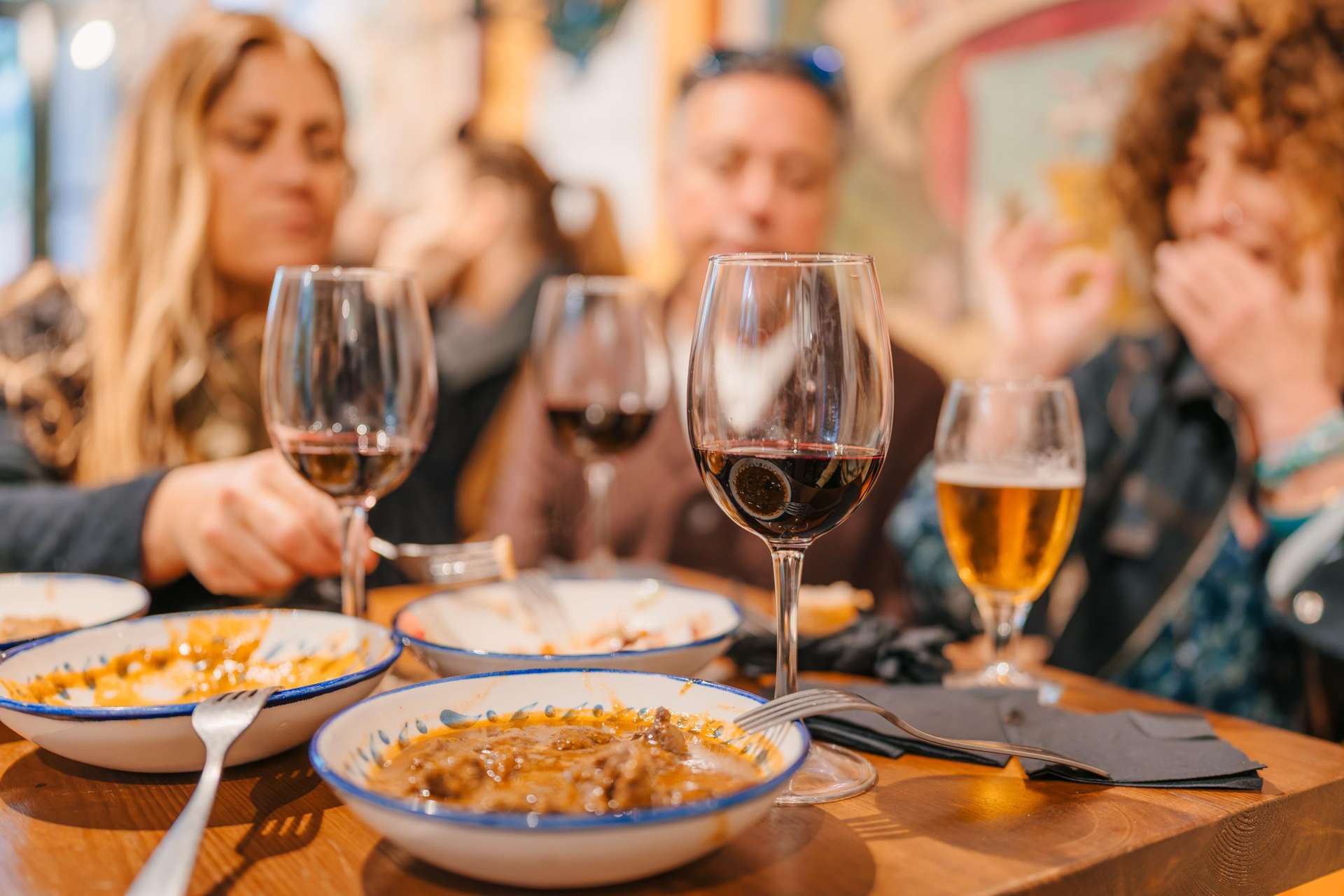
Tapas in Seville: Wine and sharing tapas
Before You Start
- Arrive hungry but not stuffed – you’ll face more than eight tastings, and pacing matters.
- Wear shoes that handle cobblestones; the Old Town’s hidden corners don’t forgive flimsy soles.
- Tell the tour about allergies or dietary limits in advance, because the Secret Dish is fixed and revealed only on the day.
- Bring a small water bottle. Local wine and sherry flow generously, and hydration keeps your palate sharp.
The route moves through lively streets and plazas that most visitors photograph but never actually taste. You’ll sample local cheeses, freshly baked breads, seasonal seafood, and traditional stews – each one chosen because it reflects a specific layer of Seville’s history. The guide doesn’t lecture; they connect.
A stew becomes a story about Jewish cooking traditions. A slice of cured ham becomes a lesson in Christian preservation techniques.
And then there’s the Secret Dish. I won’t spoil it, because the entire point is that you don’t know until it arrives. What I can say is that it’s the moment the tour earns its name – a dish that would never appear on a standard tapas menu, served with a bit of ceremony and a lot of local pride.
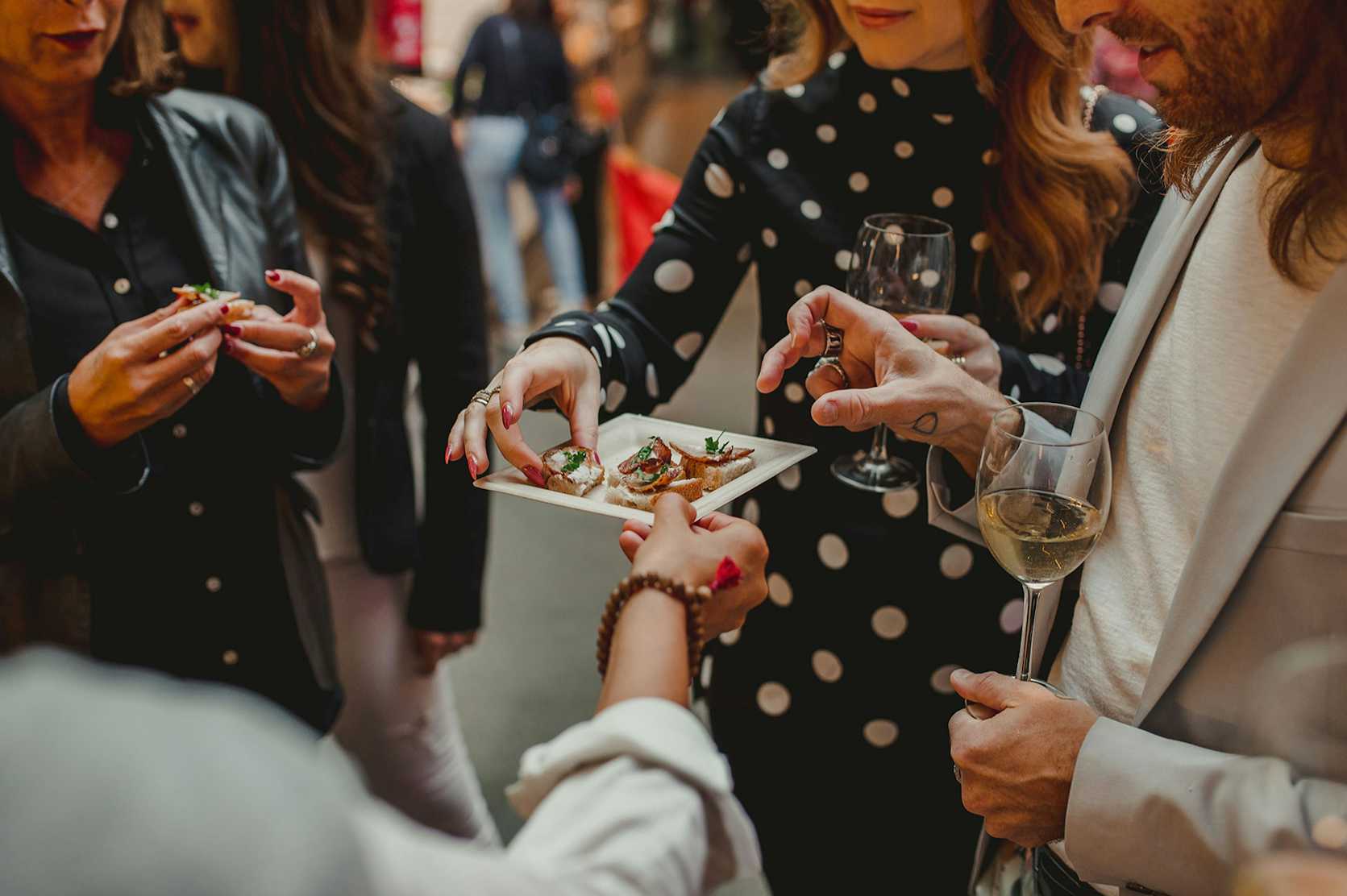
Tapas in Seville: To share
Watch Out: Don’t fill up on bread at the first two stops. The later tastings – especially the churros and the Secret Dish – are the ones you’ll regret missing.
By the time the churros appear, you’ve walked through centuries of culinary influence. The Moorish spices, the Christian feasts, the Jewish market traditions – they all land on the same plate eventually. That’s what separates this from a simple tapas seville crawl.
You’re not just eating. You’re decoding.
I left the tour full, but also aware of how little I could actually cook from what I’d tasted. That’s the unresolved part. Tasting ten things teaches you to recognize them. Making them is a different skill entirely.
Evening Cooking Class with Paella, Tapas & Sangría
In 2026, the best evening cooking class in Seville still runs out of a small school in Triana, and it solves a problem I didn’t know I had. After days of eating tapas, I wanted to make them. The class delivers exactly that: three hours, a professional chef, and a full meal you cook yourself – paella, Andalusian tapas, and sangría from scratch.
Here’s what you’ll prepare, then sit down to eat:
- Salmorejo or gazpacho – Andalusia’s cold soup, depending on the season
- Spinach with chickpeas – a Seville staple, or flamenco eggs, cod fritters, or garlic prawns
- Paella valenciana – the traditional chicken and vegetable version
- Lemon sorbet with cava – a light, fizzy finish
Homemade sangría flows while you cook. Two more drinks per person – white wine, red wine, local beer, or soft drink – come with the meal. That’s not a bad ratio for a Tuesday night in Triana.
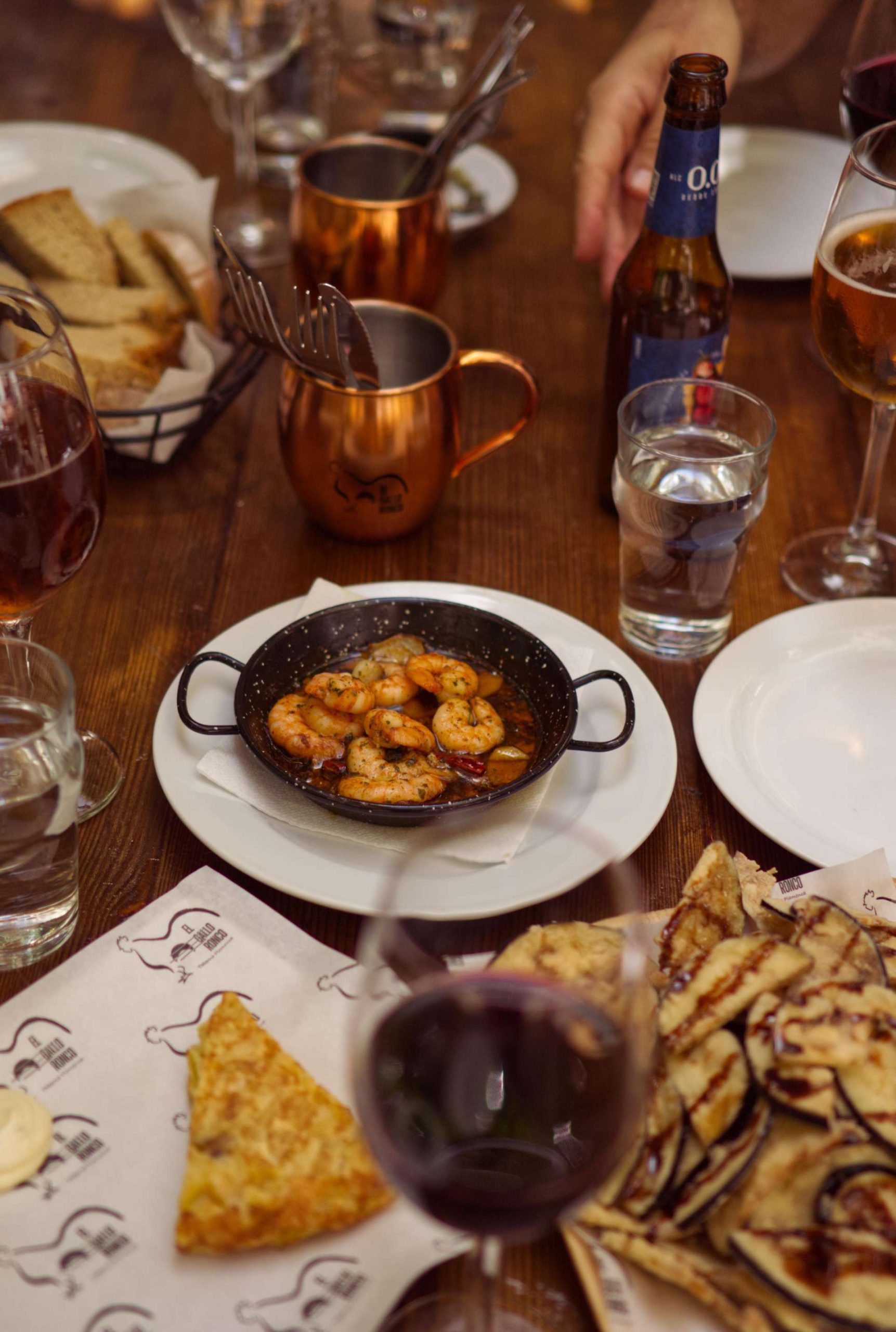
Tapas in Seville: Gambas pil-pil and tortilla española
The real lesson, though, is technique. During my class, I learned the secret to a perfect paella socarrat – the crispy rice bottom that separates a good paella from a great one. The chef showed us exactly when to stop stirring and let the rice caramelize against the pan. I’ve replicated it in my own kitchen ever since, with mixed but improving results.
What surprised me most was the collaborative rhythm. You’re not just watching a demonstration. You’re chopping, stirring, and tasting alongside strangers who become co-conspirators by the time the sorbet hits the table. The recipes come home with you, but the muscle memory is what sticks.
Skip this if you want a passive evening. Book it if you want to understand why sourcing good ingredients matters before you ever touch a pan – a lesson the morning market tour takes even further.
Paella and Tapas Class & Morning Triana Market Tour
Triana Market has anchored Seville’s food identity for generations, and pairing a morning walk through its stalls with a hands-on cooking session turns a standard class into something closer to an apprenticeship. The combined experience covers ingredient sourcing, technique, and the meal itself in one continuous arc. That’s the most complete culinary immersion you can book in the city.
I’ve done the evening-only version, and it’s good. But skipping the market means missing the moment when a guide points to a pile of pimentón and explains why the smoked variety from La Vera behaves differently in paella than the sweet stuff. That single detail changed how I season rice at home. The market tour isn’t a scenic add-on; it’s the foundation the cooking builds on.
The morning starts at Triana Market, one of Seville’s oldest food halls. A local guide walks you through stalls of fresh produce, local spices, and seasonal ingredients. You learn what’s on the table before it hits the pan. Then you move into a professional kitchen where a chef leads the group through the same dishes you’d make in the evening class: salmorejo or gazpacho, spinach with chickpeas, paella valenciana with chicken and vegetables, and lemon sorbet with cava.
Sangría flows while you cook. Two more drinks per person come with the meal. Vegetarian, vegan, and gluten-free diets are accommodated if you inform them in advance. Market tours are included in morning sessions only, which is exactly why I’d choose this over the evening slot every time.
- Book the morning session. The market tour only runs then, and it’s the differentiator.
- Ask about pimentón at the spice stall. The guide will explain the difference between sweet, bittersweet, and hot varieties.
- Cook the paella as a group. Everyone contributes, and the socarrat technique is easier to learn when you’re watching the rice closely.
- Eat what you made. The meal includes sangría while cooking and two additional drinks per person.
- Take the recipes home. They’re provided, and the techniques transfer to a home kitchen.
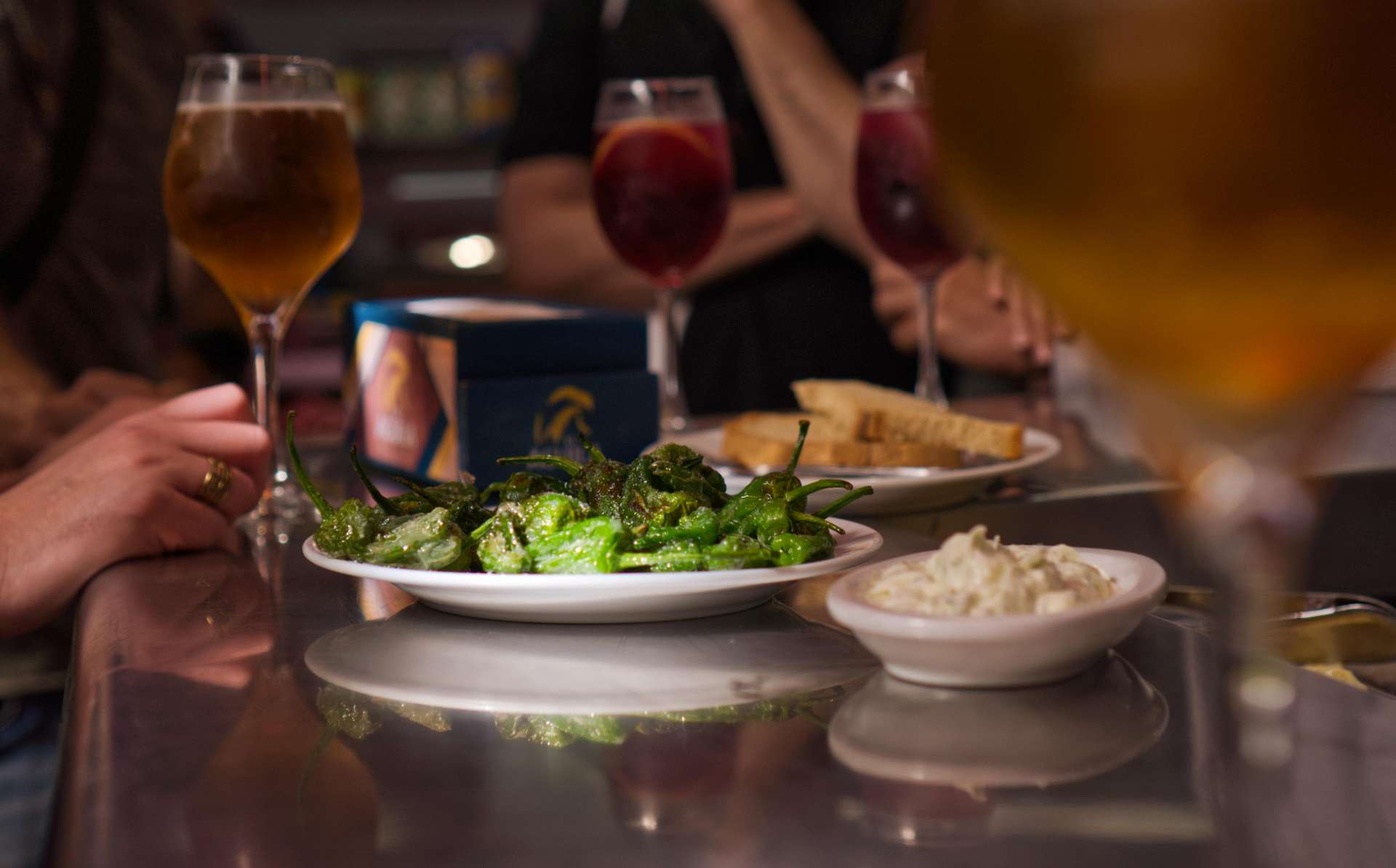
Tapas in Seville: Pimientos al padron
What separates this from a standard tapas tour is the retention. Tasting ten plates teaches you to recognize good food. Cooking four dishes from market ingredients teaches you to produce it. I’d recommend the market-and-class combination to anyone who wants more than a food memory.
The recipes are included, but the real takeaway is the sourcing knowledge. You leave knowing which stall in Triana sells the pimentón worth carrying home in your luggage.
25 Frequently Asked Questions About Tapas in Seville
After a decade of eating my way through Seville, I still get the same questions from first-time visitors. The most common one: do tapas tours include drinks? Most do – local wines, beer, or sangría are typically part of the package, which changes the value calculation entirely. A tour without drinks isn’t necessarily cheaper; it’s just incomplete.
I’ve compiled the questions I hear most often, answered with the same directness I’d give a friend over a caña. These aren’t hypotheticals. They’re the practical concerns that determine whether your evening works or falls flat.
Before You Start
- Decide whether you want a walking tour, a cooking class, or both – they answer different questions about Spanish food.
- Check dietary accommodations before booking; vegetarian, vegan, and gluten-free options exist but require advance notice.
- Confirm the group size. Most tours cap at 12 people, which keeps the experience personal.
- Wear comfortable shoes. Seville’s cobblestones punish poor footwear decisions.
Here are the 25 questions I answer most frequently, distilled from years of guiding friends and readers through Seville’s tapas scene.
- What exactly is a tapa? A small plate served with a drink, originally a slice of bread or ham placed over the glass to keep flies out. Today it’s a full culinary category.
- How many tapas should I order per person? Two to three per person for a light meal, four to five if you’re skipping dinner.
- Do I need to speak Spanish? No, but learning “la cuenta, por favor” earns you goodwill. Most tour guides speak English.
- Are tapas tours suitable for vegetarians? Yes, if you inform the operator in advance. Seville has excellent vegetable dishes like espinacas con garbanzos.
- What’s the difference between a tapa and a ración? A tapa is a small portion; a ración is a full plate meant for sharing.
- Do tours include drinks? Most include local wines, beer, or sangría. Always check the listing before booking.
- How long does a typical tapas tour last? Three to three and a half hours, depending on the number of stops.
- What should I wear? Smart casual. Seville is stylish but not formal, and you’ll be walking between bars.
- Are children allowed on tapas tours? Some are family-friendly, but evening tours skew adult. Check age policies.
- What’s the tipping etiquette? Not expected in Spain. Round up to the nearest euro if service was exceptional.
- Can I book a private tapas tour? Yes, most operators offer private options for groups, though they cost more per person.
- What’s the best time for a tapas tour? Evening, around 8:30 or 9:00 PM, when locals start their rounds.
- Do I need to book in advance? Yes, especially in peak season. Small groups fill quickly.
- What if I have food allergies? Inform the operator when booking. Serious allergies require careful communication.
- Is tapas culture the same across Spain? No. Seville’s version is more social and bar-based than Madrid’s or Barcelona’s.
- What’s the most overrated tapas dish? Patatas bravas, in my opinion. Good, but rarely the star of a Seville tour.
- What’s the most underrated? Espinacas con garbanzos. It’s humble, but done well, it’s unforgettable.
- Can I do a tapas tour solo? Absolutely. Small groups make solo travelers feel welcome, not awkward.
- How much should a good tapas tour cost? Expect to pay for quality. Cheap tours cut corners on food and guide expertise.
- What’s the difference between a food tour and a tapas crawl? A food tour is broader; a tapas crawl focuses specifically on bars and small plates.
- Do tours accommodate gluten-free diets? Many do, but confirm in advance. Cross-contamination is a real concern in small kitchens.
- What’s the best neighborhood for tapas? Triana and the Old Town, away from the main tourist drags.
- Should I eat before a tapas tour? No. You’ll leave full, and arriving hungry is part of the experience.
- What’s the one thing people forget to ask? Whether the tour ends near public transport. Late nights in Seville require planning.
- Is a tapas tour worth it if I’ve already eaten at tapas bars? Yes. A good guide adds context you can’t get from a menu, and the social element changes everything.
That last question matters more than people expect. I’ve done tapas bars alone, and I’ve done them with a guide who knows the owners. The difference isn’t the food – it’s the access.
A guide can answer questions about why a bar serves manzanilla in spring or why a particular dish only appears on Tuesdays. That’s the kind of detail that turns a meal into an education.
One more thing: don’t overthink the booking. Pick a tour that matches your pace, tell them about any dietary restrictions, and show up hungry. The rest takes care of itself.
Finally I would like to mention …
I learned the hard way that chasing the “best” tapas in Seville means nothing if you’re just ticking boxes on a list. The real magic happens when a local guide points to a bar that’s been trading since 1942 and tells you why politicians and artists still argue there. That context transforms a plate of flaming chorizo into something you’ll remember for years.
My approach now boils down to a few non-negotiables:
- Start with a guided crawl. A 4-stop or 5-bar tour with a local guide gets you past the tourist traps and into places like the tavern founded in the early 1900s. You’ll taste dishes served the same way for over a century.
- Learn to order like a local. The walking tours through the Jewish Quarter and Arenal teach you the bar etiquette – when to point, when to wait, how to pair orange wine with Manchego. That confidence changes everything.
- Cook something yourself. The evening paella and tapas class in Triana gave me more appreciation for salmorejo and espinacas con garbanzos than any restaurant meal ever could. I left with recipes I still use at home.
- Let history season every bite. Seville’s food carries Moorish, Christian, and Jewish influences. Understanding that made even a simple montadito feel significant.
Tapas in Seville: Tapas bars in the side streets
Book one tapas seville tour for your first evening. Then revisit your favorite stop the next day on your own. That second visit – unhurried, familiar, yours – is where the city truly lets you in.
Frequently asked questions
What kind of drinks are typically included in Seville tapas tours?
Most tapas tours in Seville include a selection of local beverages such as artisan vermouth, sweet red vermouth, local wines (including orange wine), manzanilla sherry, local beer, and soft drinks. Some cooking classes also feature homemade sangría or cava. The specific drinks vary by tour, often paired to complement the tapas servings.
Are Seville tapas tours suitable for vegetarians or those with dietary restrictions?
Many tapas tours and cooking classes in Seville are adaptable for various dietary needs, including vegetarian, vegan, and gluten-free diets. It's crucial to inform the tour operator or cooking school in advance when booking so they can adjust the menu and ensure a suitable culinary experience for you.
How many tapas dishes can I expect to taste on a typical Seville food tour?
The number of tapas dishes offered varies by tour. Some tours, like the 'Tapas Crawl with 10 Tapas Servings & 4 Drinks,' explicitly state around 10 traditional dishes. Others, such as the 'Food Tour with 10 Tastings of Tapas, Ham, Churros,' promise 8+ tastings, often including a 'Secret Dish' for an added surprise.
What's the typical group size for tapas tours in Seville?
Seville tapas tours generally prioritize an intimate and personal experience, often operating with small groups. Many tours specify a maximum of 12 people, ensuring that participants can easily interact with the guide and fellow food lovers, fostering a relaxed and social atmosphere.
Do Seville tapas tours include historical or cultural insights?
Yes, most tapas tours in Seville are designed to offer more than just food. Guides typically share insights into the city's rich history and culture, explaining how they've influenced local cuisine. Many tours also cover historical sites, hidden bodegas, and emblematic taverns, blending culinary exploration with cultural discovery.