
The best thing about Seville is that there are tapas bars and restaurants everywhere—and the prices are incredibly low.
Competition among restaurants and bars is so intense that visitors benefit from a huge variety of options and affordable prices.
In many other major cities, prices in the most popular districts are sky-high. Not so in Seville—here, there are cheap tapas for everyone.
This means you can make your way through the city, enjoying a tapa and a drink at every stop, without breaking the bank.
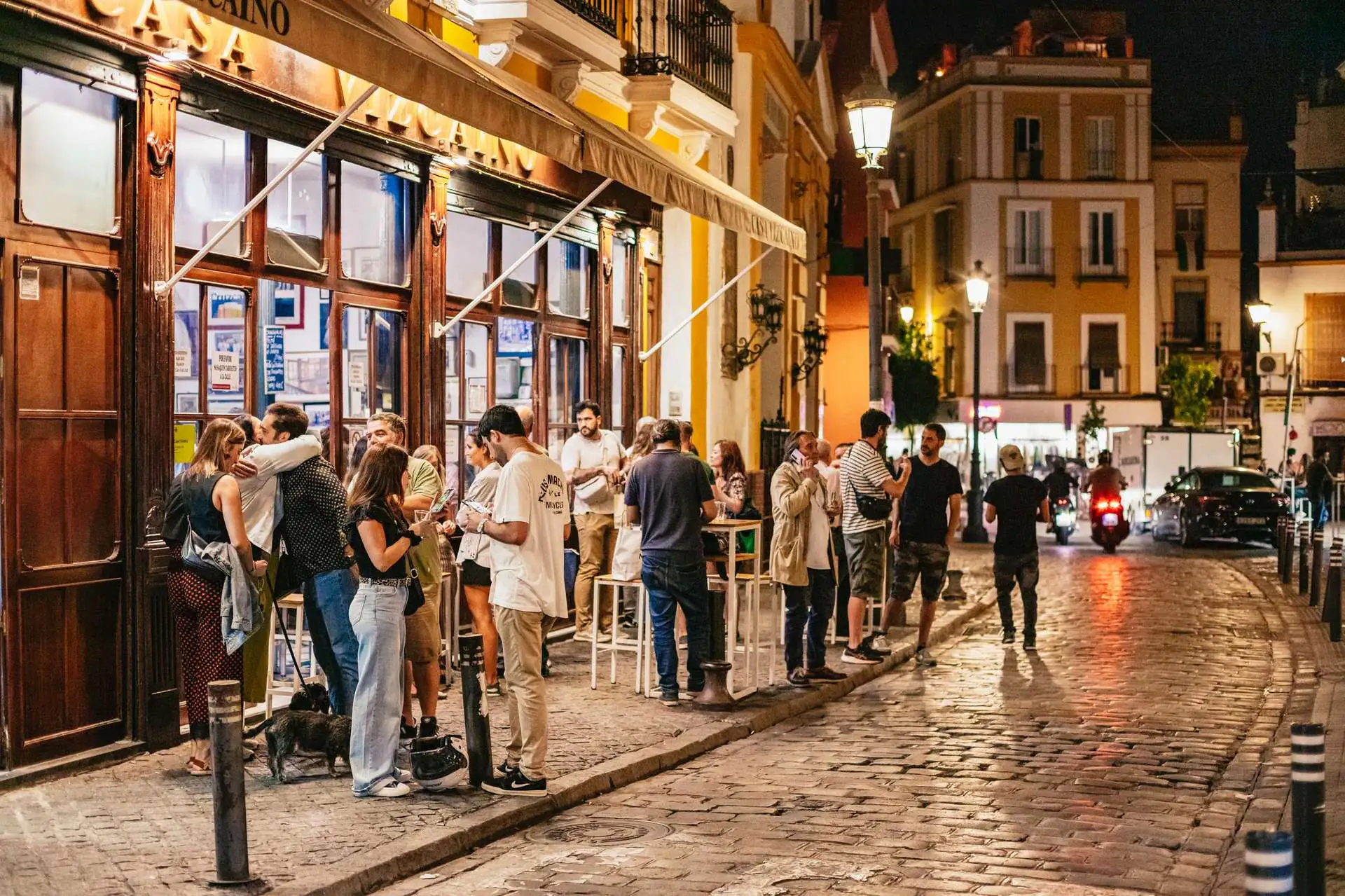
Tapas in Seville: Tapas bars in the side streets
However, there are quite a few mediocre or even poor establishments serving subpar tapas, which can lead to a disappointing experience. It can be tricky to steer clear of these places.
A great way to discover the best tapas spots is to take a guided tapas tour on your first day; afterwards, you can revisit the areas you enjoyed most during the tour.
Some of the greatest tapas experiences in Seville are when you leave the center of town and visit the many small family-owned taverns (bodegas) and street vendors (mercados), where people have been going there for decades. The tapas culture in Seville shows evidence of all the Moors, Christians and Jews who lived there over the past 800 years. You see those traditions in each piece of Jamon Iberico, each sip of Manzanilla Sherry, or each spoonful of Salmorejo.

Michael Madsen shares how to get the best tapas experiences in Seville
Since then I have also made mistakes by burning my tongue with Flaming Chorizo. I know now that it is better to take advantage of a tour of Tapas, so you will be familiar with the area, to take a Cooking Class so you can learn the basics of preparation, and then feel confident enough to go back and try your own way around the city.
This is what I am covering in this article:
- Guided tapas crawls that take you to historic bars and hidden bodegas
- Food tours with 10 tastings, local wines, and insider stories
- Hands-on cooking classes for paella, tapas, and sangría in Triana
- Practical tips for ordering at the bar like a local
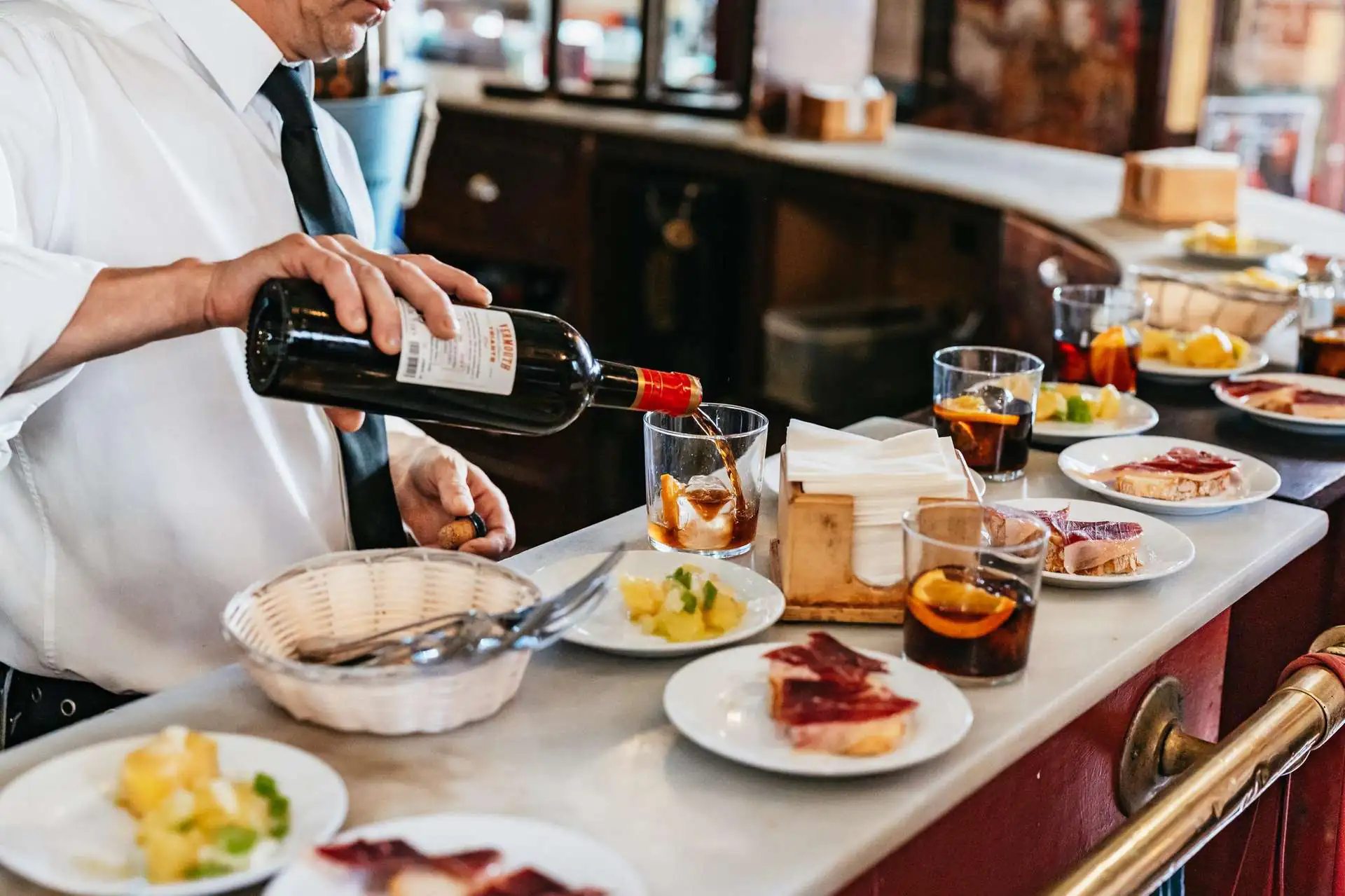
Tapas in Seville
Some of these bars have been trading since 1942. Others are run by third-generation families. All of them taught me something about Spanish food and Spanish culture that I couldn’t have learned by scrolling reviews. Whether you join a tapas tour or strike out on your own, the goal is the same: eat like a sevillano, not a tourist.
See also my article about Seville here.
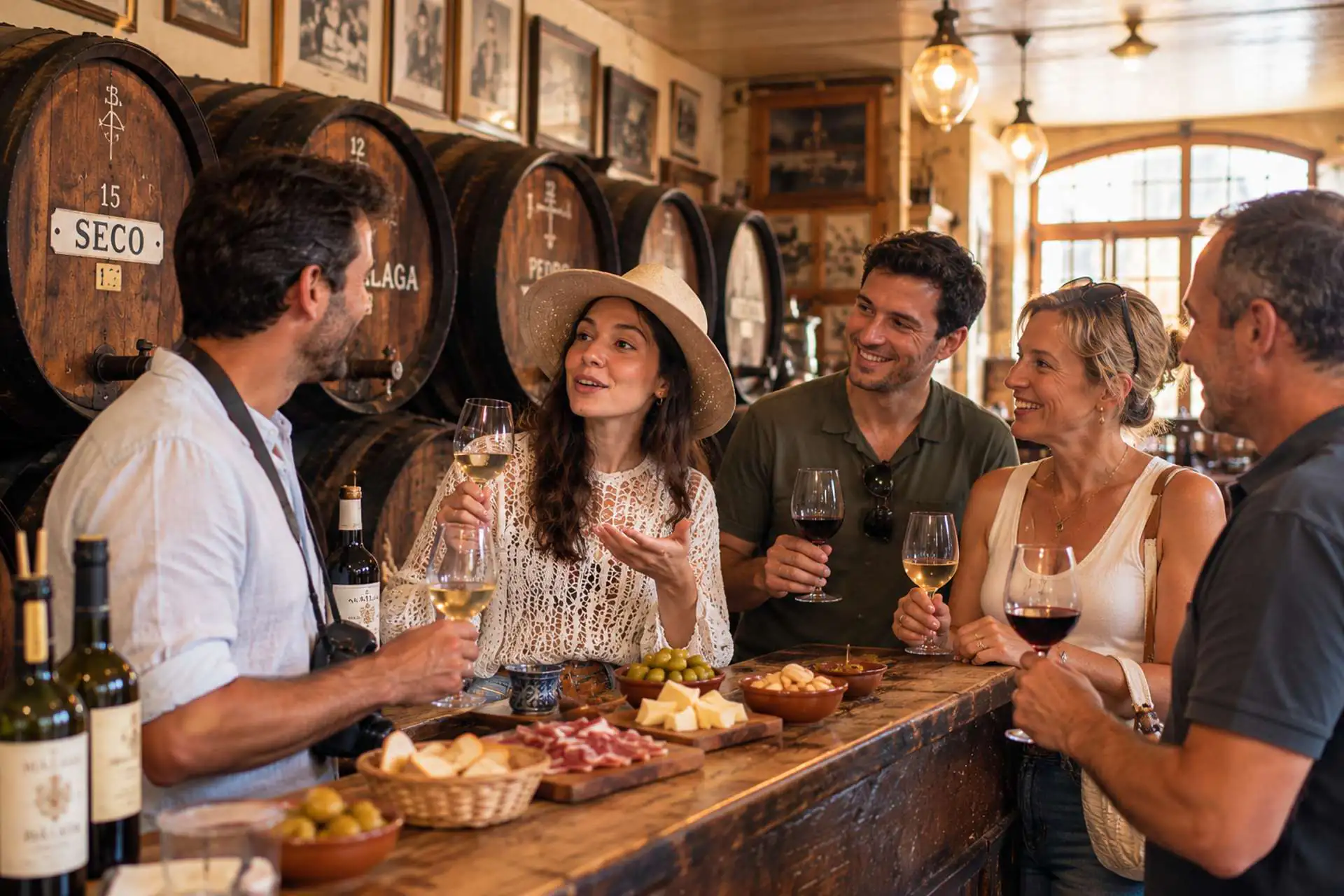
Tapas in Seville: Wine, cheese, ham and olives.
Guided Tapas Crawl
There are many ways to experience a city through its local cuisine, but wandering from random bar-to-bar with a laminated list is probably not going to give you the true experience. A guided tapas crawl will help you get to 5 different tapas bars in one night. Each of these locations has been selected based on serving dishes similar to those locals eat today. With the guide handling the ordering, the pace and history of the foods and places you visit, you will be able to taste your way around Spain as opposed to spending your time second guessing yourself.
For example, my first time attempting a solo tapas crawl in Seville, I found myself at a busy bar trying to figure out what people nearby were eating (pointing and gesturing) and ended up getting 3 plates of fried fish. This wasn’t terrible, but it was far from being immersed in Spanish culture.
A well-designed guided tapas crawl is designed with an understanding of how long some of the local bars have been in business. In fact, during one such crawl I experienced the stories behind a bar that dated back to 1877. Every single dish tasted like a trip through time.
One of the best parts of a good guided crawl is that strangers become fast friends over the course of the meal. At our second location on our last crawl we started passing platters, debating whether sherry or vermouth was better, and sharing travel experiences. Food brings people together quicker than most ice breaker exercises.
So here’s what to look for when selecting a well-planned guided tapas crawl:
- Five different tapas bars, not three rushed stops
- Dishes that reflect Seville’s history, not generic patatas bravas
- A guide who explains why certain ingredients dominate Andalusian cooking
- Time to linger at each stop rather than sprinting between venues
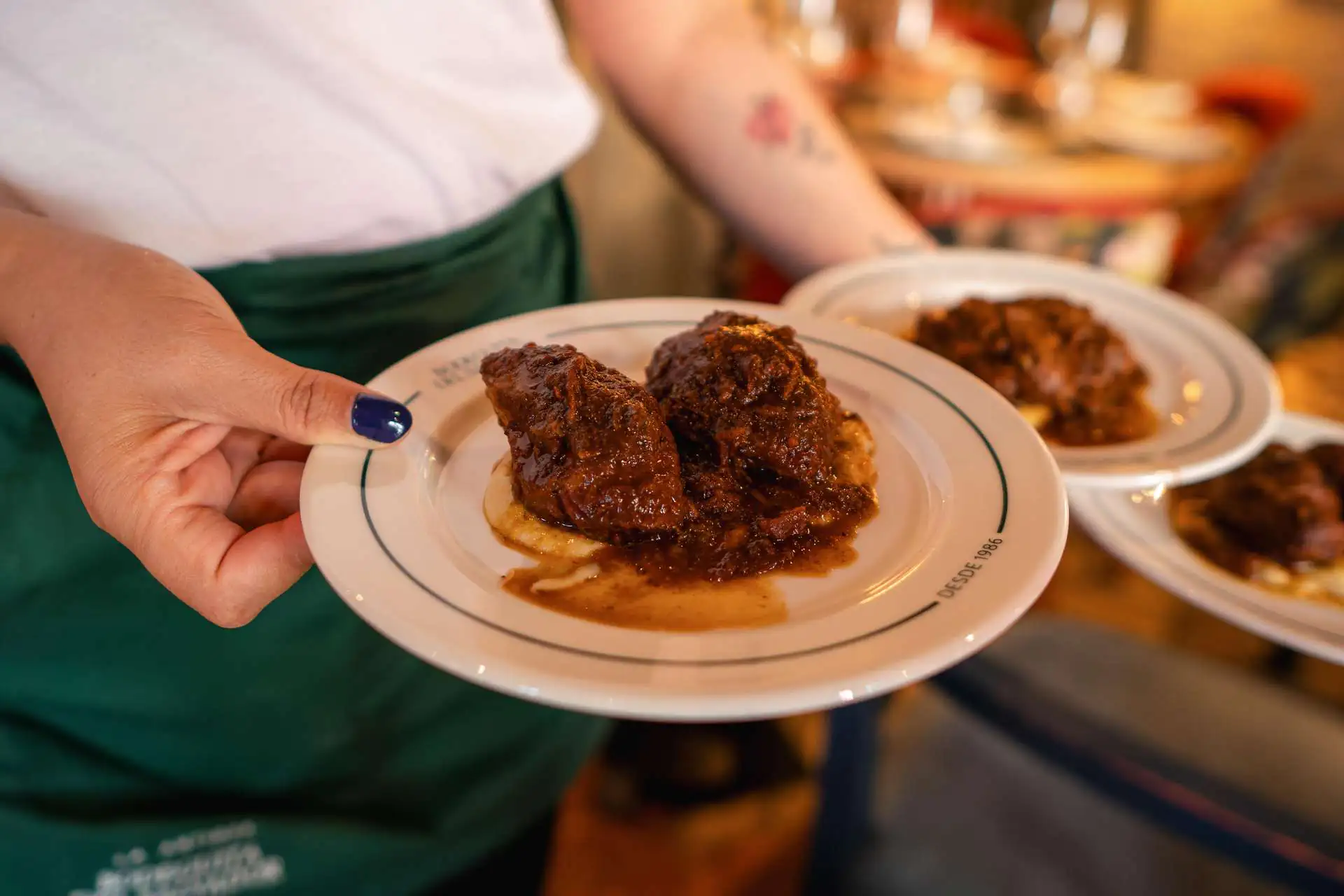
Tapas in Seville: Rabo de toro
Guided crawls are more likely to include full tastings and/or drink pairing options and I’ll discuss these later. The main point here is simple: with a guided crawl you have access to the locations you would never notice walking by.
Tip: book your crawl on either your first or second night in Seville. The guide’s suggestions as to where to dine will form the basis of where you choose to dine for the remainder of your visit to Seville.
While the food is an important part of your experience it is the culture surrounding it that truly adds value. When you understand how Seville’s sea trade influenced its acceptance of salted cod; when you understand why orange wine even exists, then eating a plate of spinach with chickpeas (espinacas con garbanzos) becomes an experience related to the Moorish agricultural traditions.
Tapas Crawl with 10 Tapas Servings & 4 Drinks
Decide at the beginning if you’re going for a tasting menu or an actual meal. This crawl is structured as a tasting menu – ten plates served across four bars, with drinks served at each station, and that is exactly what makes this work so well. As soon as your stomach starts to get full and you start to feel the need to sit down, you are already on to the next location.
One time while out in Seville, my tour guide introduced me to a trick locals use when eating at tapas bars – by asking for media raciones (half portions), you can order many more items and eat less overall. Since there were ten items included in this particular crawlspace, this was an especially great tip. Now, this has completely changed how I go about visiting all tapas bars in Seville.
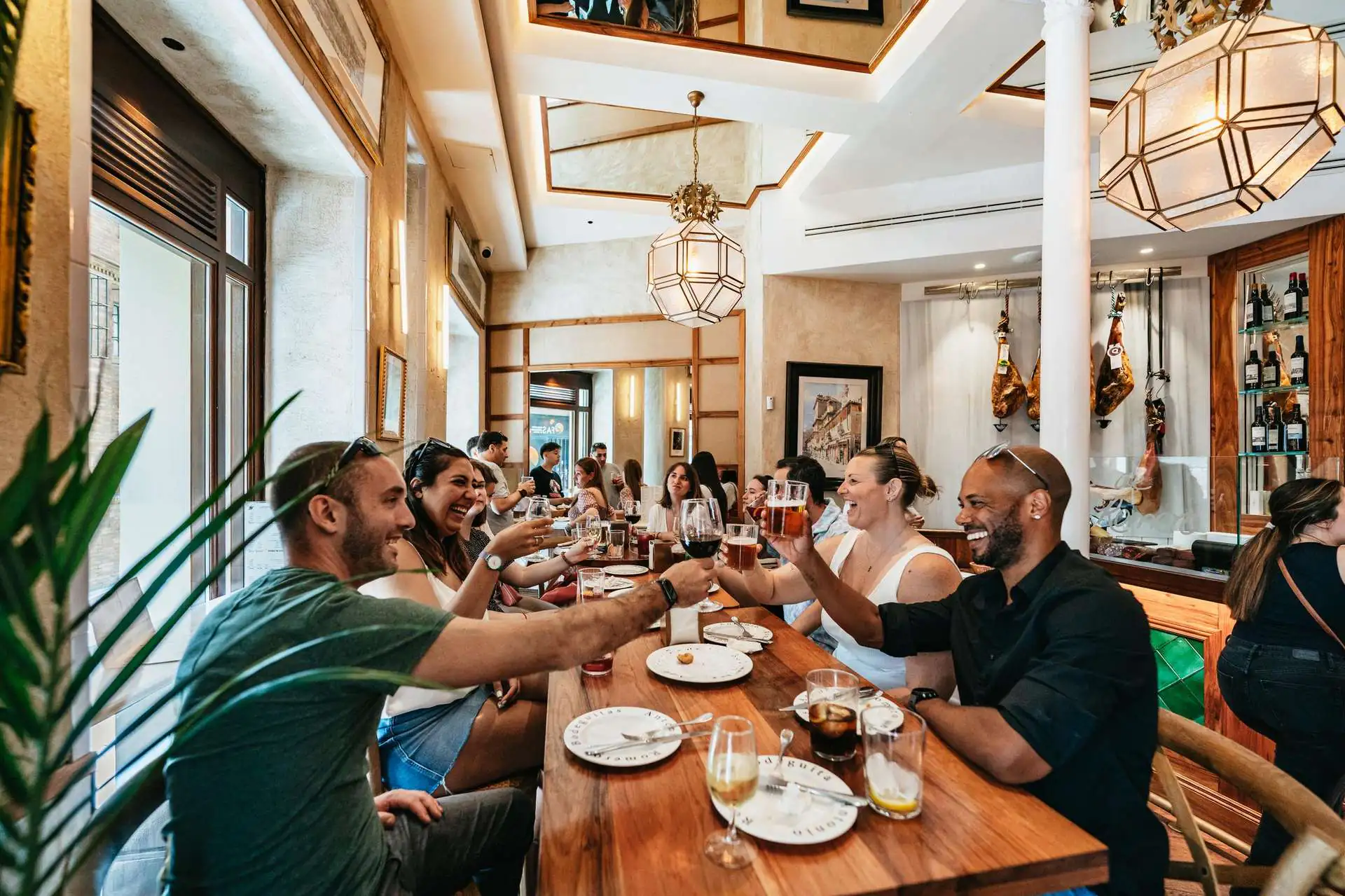
Tapas in Seville: brindis
Instead of just washing your meal down, each pairing does something unique to complement it. Sherry dries out greasy fried fish, while Red Vermouth sweetens the richness of aged cheeses. On our last visit (after stopping at three), we started to notice how these pairings provided an unspoken introduction to the spirit of Seville as a community drinking culture.
The most surprising thing I found however was the social aspect. With ten servings spread across many hours, that slow pace creates a feeling of camaraderie among people you don’t know. You’re passing platters of food and discussing your favorite items; debating which bar has the best Croquetas. While creating those feelings of relaxation, socialization and enjoying good food and drinks together can be difficult in a short tour format.
Tourists often go to the well-known tourist area bars that have picture menu’s printed on laminated cards. We avoid going to those bars and instead head to the authentic, local neighborhood bars that will provide us with more “story” as they are located outside of the major tourist areas. It’s there that you’ll meet a Bar Owner who still makes use of his Grandfather’s Recipe or Bodega owners who haven’t changed their wine list in years.
While some tours combine food with history lessons and highlight certain cultural icons, Tapas Sevilla leans more heavily towards focusing on the actual food experience. For a first time deep dive into Seville’s Tapas Culture, that focus is a fair trade off.
4-Stop Tapas, Taverns & History Walking Tour
When booking a four-stop walking tour that couples flame-grilled chorizo with handcrafted vermouth you will receive far more than just a meal — you will be receiving a concentrated version of Seville’s history in all of its most iconic settings. The tour is carried out in small groups no larger than twelve participants, which allows for an easily conversational experience with your guide. This format works well if you would like the food served on the tour to have a story-line or theme rather than being merely filling.
The route matters as much as the plates. This is the route:
- Stop one: a charismatic tavern founded at the beginning of the 1900s, where flaming chorizo arrives exactly as it did a century ago, paired with vermouth drawn straight from the barrel.
- Stop two: a local bakery along the old Moorish souk, where traditional cakes are still made from old recipes by artisans.
- Stop three: a bar trading since 1942, where politicians, writers, and artists have congregated for decades – its owner received the Medal of the City in 2018.
- Stop four: a restaurant that fuses Andalusian tradition with international influences, a deliberate modern counterpoint to the earlier stops.
A standard Seville tapas crawl would not be different with the history as a backdrop to all the places we go. As opposed to simply pointing out landmarks, our local guides will also tell us how the old Moorish souks in Seville influenced the perfume business, how families have kept bakery recipes alive through generations, or how one bar in 1942 became a center for politics and literature. This type of background information transforms eating cake into reading a history book.
Best Historical Food Tours organize their visits according to age (old, older, oldest) followed by current time. In doing so, your meal becomes a history lesson.
While I do agree that the chorizo was a bit theatrical, I did find that the vermouth from the barrel was much more impressive than I had anticipated. When paired together, both items carried the exact same smoky and slight bitterness. Unlike the pastry stop, however, the bakery felt somewhat too quiet. It wasn’t until I realized I was tasting recipes created before many of the surrounding structures were built that things started making sense again.
To ensure that questions regarding local etiquette when ordering, regional variations on each dish and whether or not certain dishes are available during a specific season can be answered quietly and not above a crowd, we limit each group to 12 people. While this may seem like an arbitrary number, it actually allows for a level of intimacy that I am looking for in my future food tours.
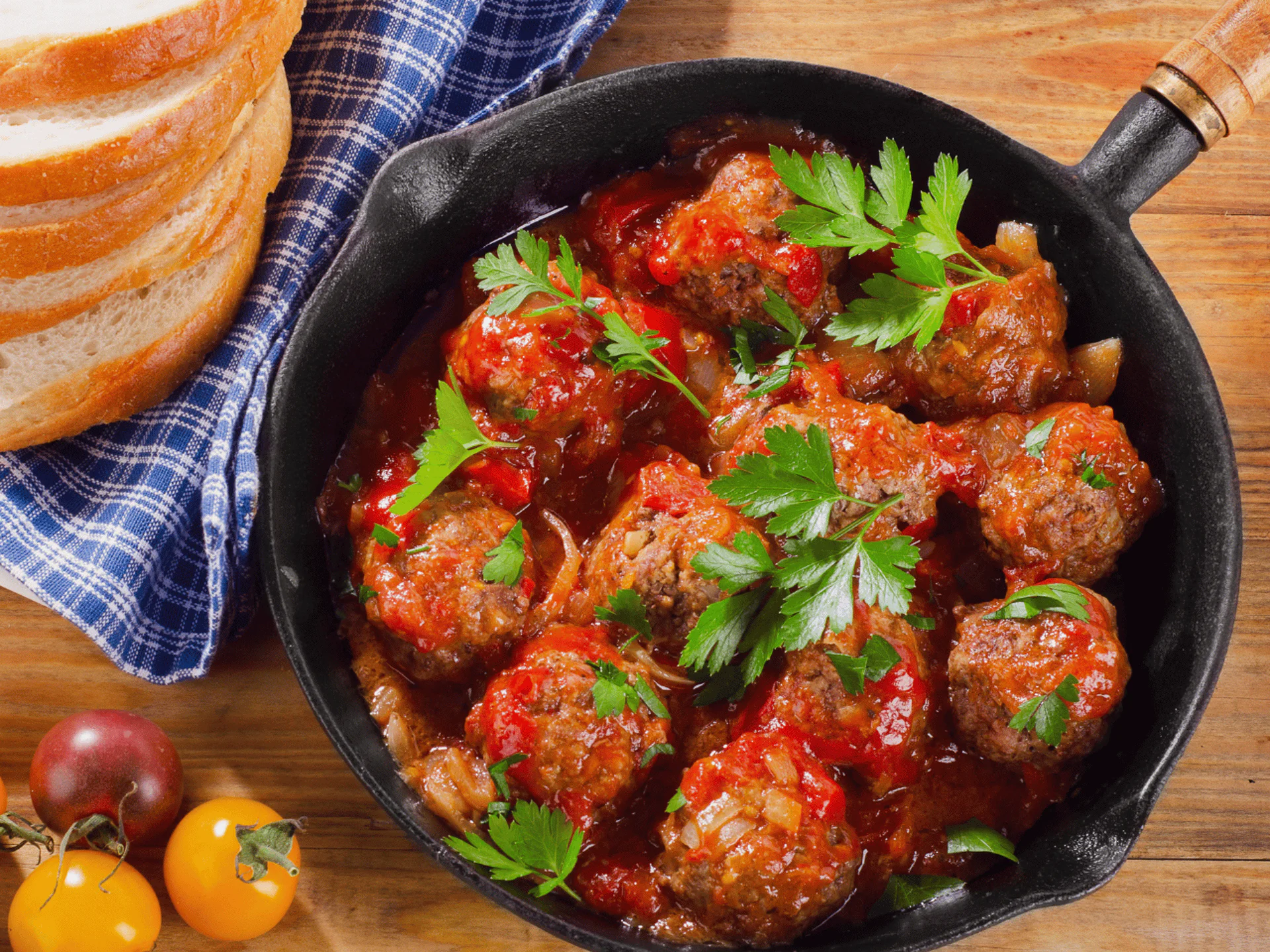
Tapas in Seville: Albondigas en salsa
The 2018 Medal of the City says quite a lot about Seville’s treatment of food-related businesses. This medal is an honor bestowed by the community; it is not an award based on the quality of the food – it simply indicates that a bar or restaurant is important enough to be part of Seville’s image as much as its Cathedral.
Food Tour with Tapas & Drinks with a Local
Four stops. Three hours. One local who knows which bar still holds the secret to their croquetas recipe in a family notebook.
This is the difference between eating tapas in Seville, and having some sort of idea of what makes those tapas so special. A locally-guided food tour with alcohol is the quickest way to get around the typical tourist view of things and into the heart of Seville’s edible memories.
Prior to this experience, I believed I could approximate this experience by reading reviews and walking around. I was incorrect. The guide does not simply show you the plates she speaks to them as if telling stories of the city. For example, a montadito de pringá goes from being a sandwich to a story about leftover meals on Sunday afternoons, and pork cooked low-and-slow over long periods of time, and a bar that has been serving up the same corner of the city for generations.
What You’ll Actually Eat
The tour spans 4+ stops and builds into a full meal, not a snack crawl. Expect a rolling sequence like this:
- Jamón ibérico and local cheeses – the opening argument for Andalusian patience
- Montaditos filled with slow-cooked meats – including that pringá, if your guide knows the right door
- Croquetas – crispy outside, molten inside, impossible to eat gracefully
- Seafood, gazpacho, or ensaladilla rusa – depending on the season and the bar’s specialty
- Buñuelos de bacalao – golden salt-cod fritters that vanish too fast
- Churros with hot chocolate in winter, or ice cream in warmer months
You’re going to be drinking on your way from place to place. So there’s an experience involved in each drink. You’ll listen, sip & allow the guide to tell you about a sherry at a spring festival, or a vermouth at a neighborhood rivalry.
The Local Part Makes a Difference Over the Food
All tours will feed you. It’s up to a local guide to decide which stories make it back to the tour bus (or train). One of my guides took me to a tiny little bar that I’d been by two times before and hadn’t even noticed.
No english menu. No TripAdvisor sticker.
But a third generation owner was slicing pringá onto warm bread. And a guide was explaining both the ingredients and the family’s story.
It’s the part you can’t get on your own. There is no microphone in these groups. They have a maximum of 12 people. And they last three hours. Because of the storytelling, not the food, the time goes fast.
Don’t take the “hidden gems” tour. There isn’t even a mention of any neighborhoods. When you hear a guide say, “that is run by the Smith Family,” and “the recipe has remained the same,” then you know that guide cares. That’s the whole point of taking a tour.
And if you feel as though this is too passive, try taking a cooking class in a Triana kitchen after standing around with knife in hand attempting to reproduce something you taste. This is when the context sets in from the tour. Then it becomes your own.
A guided walking tour in Seville’s Jewish Quarter and Arenal will give you that – bars and taverns from history; regional pairings such as orange wine and sweet red vermouth; and etiquette cues so that you may go to the bar and order without feeling out of place.
I remember when my guide told me that the oldest bar in Seville’s Jewish quarter, opened in 1870, was a meeting place for many flamenco artists. Just one detail, but now I’m tasting potato salad and Iberian ham differently than I would have otherwise. Now I’m sitting where artists were arguing, rehearsing and celebrating.
Before You Start
- Wear comfortable shoes; the route winds through narrow streets and uneven cobblestones.
- Arrive hungry but not starving – the pacing is deliberate, with small plates spread across several stops.
- Tell the guide about any food restrictions before the tour begins, not at the first bar.
From the cathedral, we went into a small little cafe near the cathedral which is the type of place I would walk right past if I was alone.
We were served Manchego Cheese and slow roasted pork belly along with a glass of orange wine from a family run wine bar where they made orange wine (and many other things) famous in Sevilla.
That is really what makes this tour so unique. Not only will you be fed but also you’ll learn how to eat like locals.
When ordering as a local, you are going to want to stand at the bar and point out to your bartender what you see that you think is appetizing. When it comes time to order do not overorder.
Your guides insider knowledge will help teach you when to take a step back, how to get the attention of your server for the check, and why in some cases a media ración can be better than a whole plate.
Practical information such as those items above would never be found in a menu translation.
After dinner at a three generation old family run restaurant with four shared plates and a crisp Manzanilla Sherry connected to Sevillas Spring Festival; I had eaten all my meals.
At that point I stopped writing down notes and began eating. And that is the sign of a good tour…and a taste of the hands-on cooking classes that come later.
If you book the wrong food tour in Sevilla, not only did you lose afternoons worth of time but you lost money too. But most importantly you wasted your appetite, and your last opportunity to understand why this cities food matters.
A Secret Food Tour through the old town of Sevilla does that by providing more than 8 different samples of foods, (tapas, Iberian ham, cheeses, seafood, churros), all related to eachother in a singular walking route throughout the old town. All of these samples relate to Sevillas history of Moors, Christians, and Jews.
As someone who has been on several generic tours before I know that there is a big difference. As opposed to simply handing you a plate and pointing out a landmark; your guide will stop in front of a Baroque or Gothic facade and explain why the flavors used in a specific dish are still carrying the influences of the Moors.
And thats when the food goes from just something to fill your stomach to actually evidence of history.
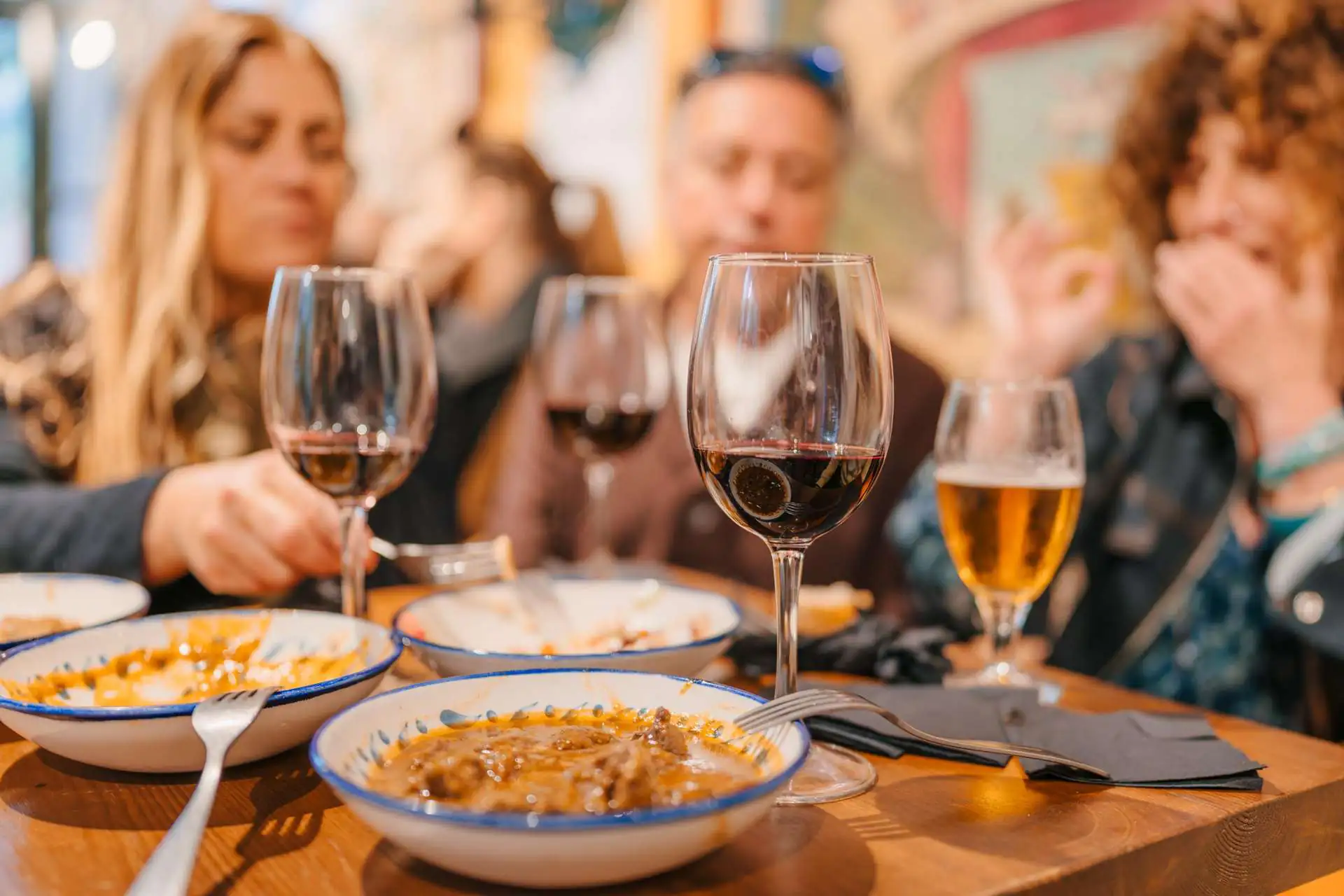
Tapas in Seville: Wine and sharing tapas
Before You Start
- Arrive hungry but not starving – you’ll face more than eight tastings, and pacing matters.
- Wear shoes that handle cobblestones; the Old Town’s hidden corners don’t forgive flimsy soles.
- Tell the tour about allergies or dietary limits in advance, because the Secret Dish is fixed and revealed only on the day.
- Bring a small water bottle. Local wine and sherry flow generously, and hydration keeps your palate sharp.
START_TEXT
The walkway will go along the way of some of the liveliest areas of town and many of the public squares where tourists visit and take photos, however they never get to experience the food. Each stop will be for samples of cheese made from milk produced by local farms, freshly baked breads from bakers in Seville, fresh fish/seafood prepared at local markets (dependent upon season), and a variety of traditional stews. All are selected as representative of an aspect of Seville’s history.
Your guide does not give a speech or lecture – he/she connects you to what you eat.
A stew is a connection to the Jewish tradition of cooking.
A piece of cured ham is a demonstration of how Christians preserved meat.
Then there is “the secret dish” – I do not want to tell you what this dish is because the purpose of this dish is that when you receive it, you have no idea what it is. When it arrives at your table with a small amount of ceremony, you will realize why this dish has earned the name “secret”.
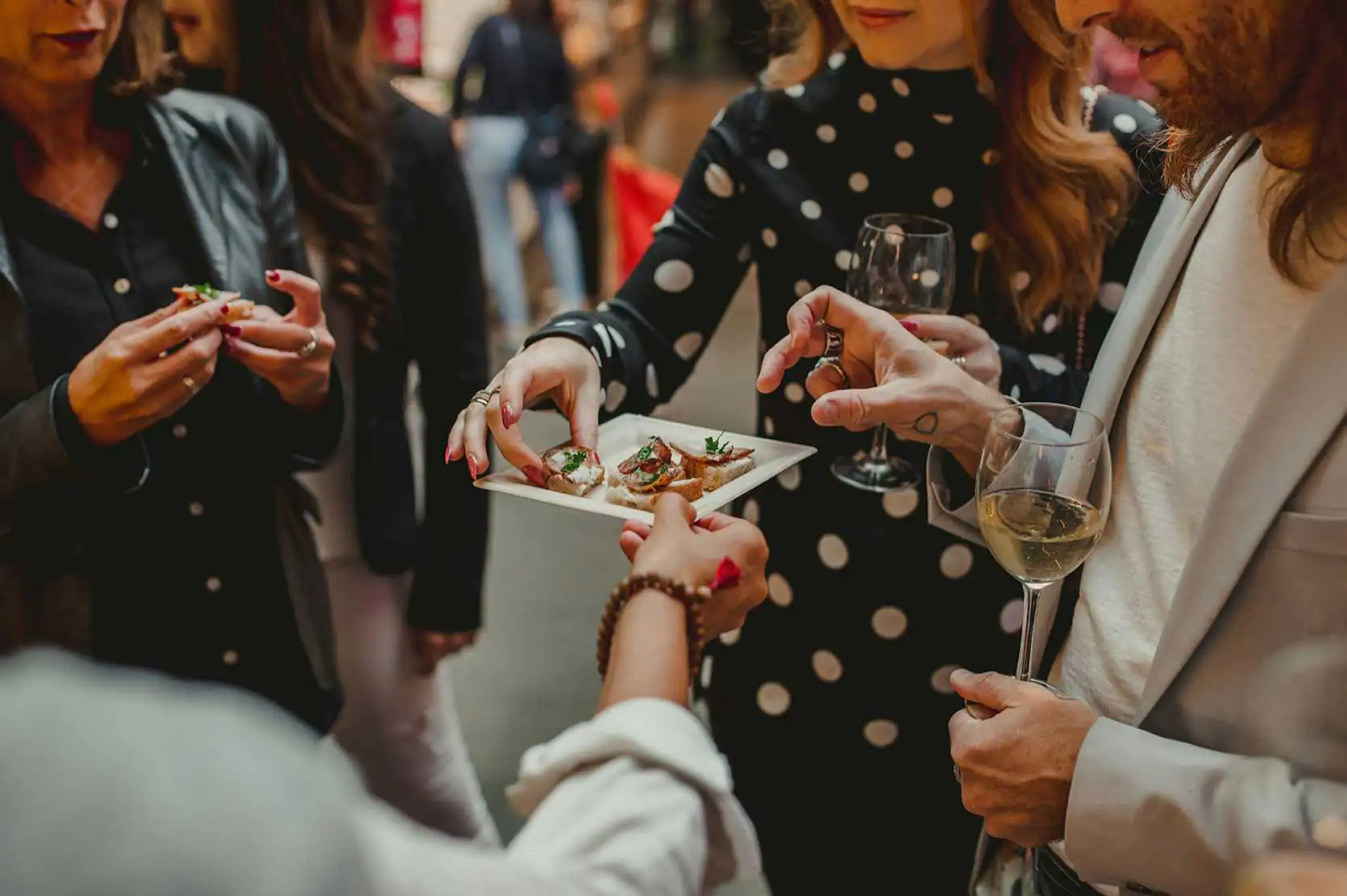
Tapas in Seville: To share
Warning: Be careful with your bread consumption during the first two stops. Your regret will be much greater for skipping the churros and the secret dish than it would have been for skipping those first two.
The influences of food by century come together in an explosion of flavors when you reach the end of this tasting experience. And by that point, it doesn’t matter whether it was the Moors who added the spice or the Christians who added the feast. All of these foods have their roots in the same place. This makes it so much more than a simple Tapas Seville Crawl.
This is not just about eating. It is about deciphering.
After taking the tour I felt as though I had eaten enough. However, after the experience, I realized there was still so much I didn’t know. After tasting ten different dishes, I learned to identify each one. Learning to make them (the art) was something entirely new.
Evening Cooking Class with Paella, Tapas & Sangría
The most popular evening cooking class for visitors of Seville is offered again in 2026 at a small school in the historic neighborhood of Triana. This is a solution to a problem I did not realize I was having when after several days of just going to bars for “tapas”, I really wanted to prepare my own. The course offers this exact solution; 3 hours with a professional chef, and you will be preparing your own complete meal – Paella, Tapas from Andalusia (from start), and Sangria.
Here’s what you’ll prepare, then sit down to eat:
- Salmorejo or gazpacho – Andalusia’s cold soup, depending on the season
- Spinach with chickpeas – a Seville staple, or flamenco eggs, cod fritters, or garlic prawns
- Paella valenciana – the traditional chicken and vegetable version
- Lemon sorbet with cava – a light, fizzy finish
Homemade sangria flows during cooking. Two additional beverages per person (white wine, red wine, local beer, or soft drink) will be served with dinner. Not a bad ratio for a Tuesday night in Triana.
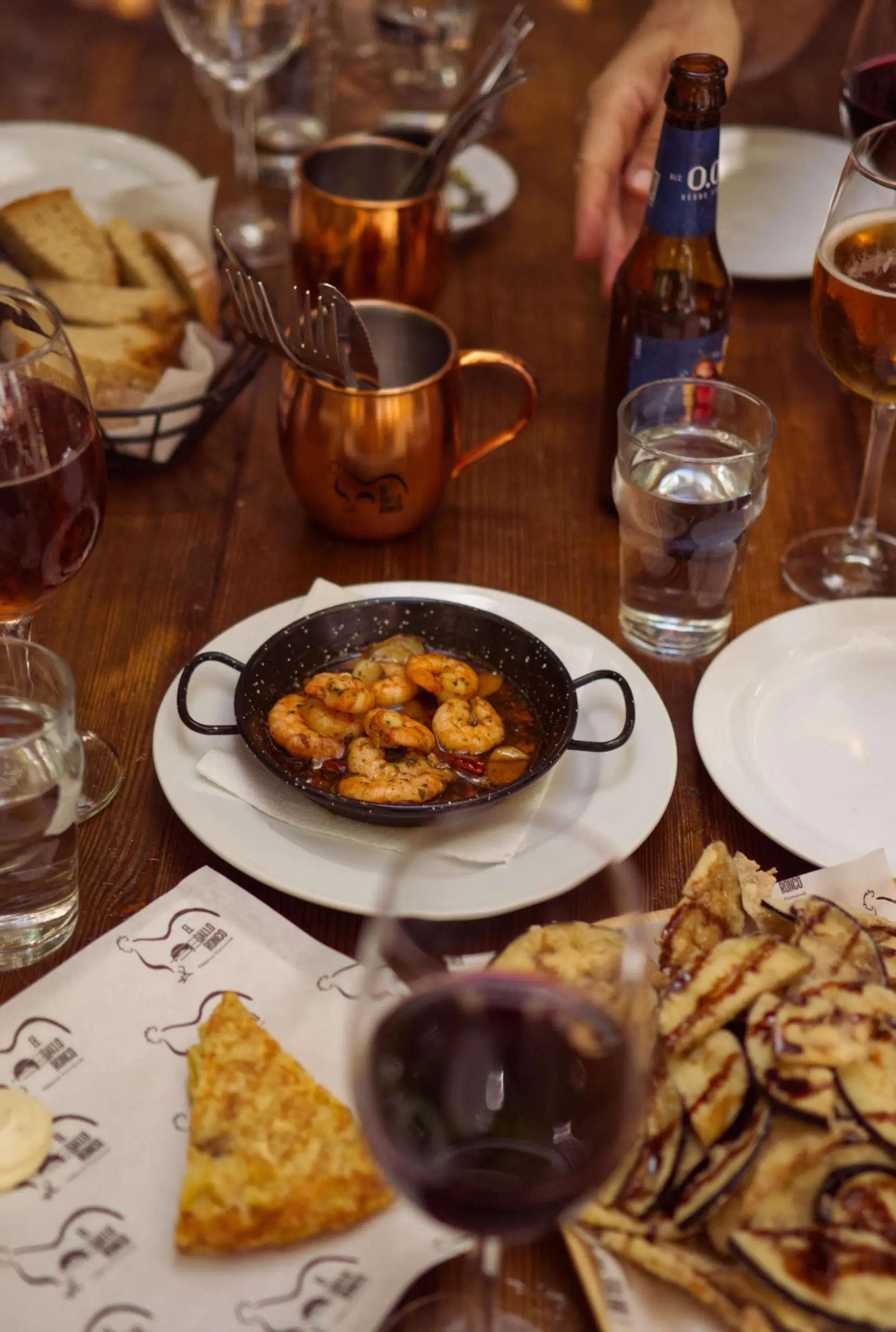
Tapas in Seville: Gambas pil-pil and tortilla española
Technique is where the real learning occurred. In my class, I learned how to create the ultimate paella socarrat – the crispy rice bottom at the base of the paella which makes all the difference in whether your paella is average or exceptional. Chef told us exactly when to stop mixing the rice so it can brown/caramelize on the pan. Since then, I have been able to replicate the process in my kitchen with various degrees of success.
I was surprised by the collective rhythm. This isn’t simply viewing a demonstration. You are cutting, sautéing & sampling with fellow travelers who quickly become conspirators as soon as the sorbet reaches the table. Recipes may go home with you, but its the muscle memory that lingers.
Don’t book this event if you plan a passive evening. Book this event if you wish to learn about sourcing quality ingredients prior to touching a pan – an additional lesson to learn from the morning market tour.
Paella and Tapas Class & Morning Triana Market Tour
Triana Market has been synonymous with food in Seville for centuries, and combining a stroll through the stalls in the morning (to view ingredients, etc.) with a hands-on cooking class will take your standard classroom experience and turn it into an apprenticeship. This format combines shopping for ingredients, cooking techniques, as well as the final meal into one cohesive unit. It’s the most immersive culinary experience you’ll be able to find in Seville.
I’ve taken the evening portion of this program alone, but by skipping the market walk I missed out on having my guide point out a stack of pimenton and explain that the smoky pimenton from La Vera behaves differently in paella than the sweet type. That singular comment changed how I season my rice at home. The market walk is not simply a pleasant addition to the cooking portion, it is the base that the cooking portion builds upon.
In the morning, we begin at Triana Market, one of Seville’s oldest food markets.
There we meet our local guide who takes us through the many stalls offering fresh produce, local spices, and seasonal ingredients. We see and learn about all of these ingredients prior to them being used in the recipes we prepare.
After the market walk, we enter into a professional kitchen where a chef instructs us in preparing several different dishes similar to those prepared during the evening class.
These include salmorejo or gazpacho, spinach with chickpeas, paella valenciana with chicken and vegetables, and lemon sorbet with cava. Sangria is served while we cook. In addition to sangria, there are two additional drinks provided per guest.
They also offer vegetarian, vegan, and gluten free options if you provide them advance notice. Market walks are only available during the morning classes, which is why I would always opt for the morning over the evening.
- Book the morning session. The market tour only runs then, and it’s the differentiator.
- Ask about pimentón at the spice stall. The guide will explain the difference between sweet, bittersweet, and hot varieties.
- Cook the paella as a group. Everyone contributes, and the socarrat technique is easier to learn when you’re watching the rice closely.
- Eat what you made. The meal includes sangría while cooking and two additional drinks per person.
- Take the recipes home. They’re provided, and the techniques transfer to a home kitchen.
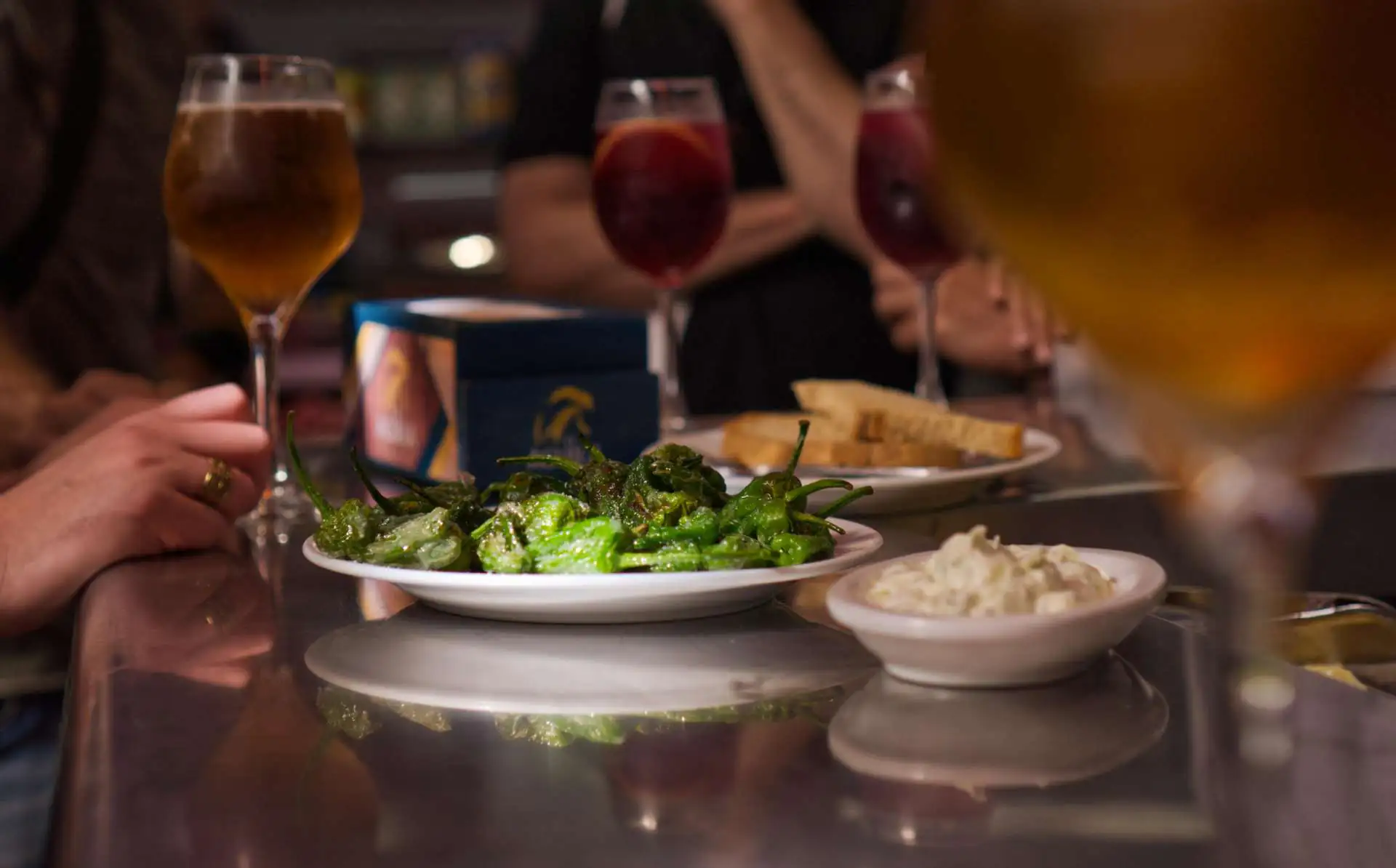
Tapas in Seville: Pimientos al padron
What differentiates this experience from your typical Tapas Tour is the ‘retention’.
The learning of how to identify quality food through tasting ten plates, and the ability to prepare four market-based dishes will give you both the understanding and skill to create that same high-quality product at home.
This is why I would highly recommend combining the cooking class with the visit to the local market for those looking to obtain more than just memories from their culinary vacation.
25 Frequently Asked Questions About Tapas in Seville
It has been ten years since i have eaten my way around Seville. Every time i have a new group visit, there is always one question they ask me (the first). “do tapas tours include drinks?” Yes, most tapas tours include some type of drink as well. Local wine, beer, or sangria usually come along with the tapas tour cost. Therefore, if you plan to take a tapas tour, be prepared for this to significantly affect how much money you will spend on your evening out.
A tapas tour that does not include drinks may actually cost less than one that includes drinks. However, in many cases, it is simply not worth going on a tapas tour that does not offer any free drinks.
Below are all of the questions that i receive about planning a tapas tour in Seville. Each of these questions is answered directly. While each of them can be thought of as hypothetical scenarios, they represent the actual things that will either make your evening successful or unsuccessful.
Before You Start
- Decide whether you want a walking tour, a cooking class, or both – they answer different questions about Spanish food.
- Check dietary accommodations before booking; vegetarian, vegan, and gluten-free options exist but require advance notice.
- Confirm the group size. Most tours cap at 12 people, which keeps the experience personal.
- Wear comfortable shoes. Seville’s cobblestones punish poor footwear decisions.
Here are the 25 questions I answer most frequently, distilled from years of guiding friends and readers through Seville’s tapas scene.
- What exactly is a tapa? A small plate served with a drink, originally a slice of bread or ham placed over the glass to keep flies out. Today it’s a full culinary category.
- How many tapas should I order per person? Two to three per person for a light meal, four to five if you’re skipping dinner.
- Do I need to speak Spanish? No, but learning “la cuenta, por favor” earns you goodwill. Most tour guides speak English.
- Are tapas tours suitable for vegetarians? Yes, if you inform the operator in advance. Seville has excellent vegetable dishes like espinacas con garbanzos.
- What’s the difference between a tapa and a ración? A tapa is a small portion; a ración is a full plate meant for sharing.
- Do tours include drinks? Most include local wines, beer, or sangría. Always check the listing before booking.
- How long does a typical tapas tour last? Three to three and a half hours, depending on the number of stops.
- What should I wear? Smart casual. Seville is stylish but not formal, and you’ll be walking between bars.
- Are children allowed on tapas tours? Some are family-friendly, but evening tours skew adult. Check age policies.
- What’s the tipping etiquette? Not expected in Spain. Round up to the nearest euro if service was exceptional.
- Can I book a private tapas tour? Yes, most operators offer private options for groups, though they cost more per person.
- What’s the best time for a tapas tour? Evening, around 8:30 or 9:00 PM, when locals start their rounds.
- Do I need to book in advance? Yes, especially in peak season. Small groups fill quickly.
- What if I have food allergies? Inform the operator when booking. Serious allergies require careful communication.
- Is tapas culture the same across Spain? No. Seville’s version is more social and bar-based than Madrid’s or Barcelona’s.
- What’s the most overrated tapas dish? Patatas bravas, in my opinion. Good, but rarely the star of a Seville tour.
- What’s the most underrated? Espinacas con garbanzos. It’s humble, but done well, it’s unforgettable.
- Can I do a tapas tour solo? Absolutely. Small groups make solo travelers feel welcome, not awkward.
- How much should a good tapas tour cost? Expect to pay for quality. Cheap tours cut corners on food and guide expertise.
- What’s the difference between a food tour and a tapas crawl? A food tour is broader; a tapas crawl focuses specifically on bars and small plates.
- Do tours accommodate gluten-free diets? Many do, but confirm in advance. Cross-contamination is a real concern in small kitchens.
- What’s the best neighborhood for tapas? Triana and the Old Town, away from the main tourist drags.
- Should I eat before a tapas tour? No. You’ll leave full, and arriving hungry is part of the experience.
- What’s the one thing people forget to ask? Whether the tour ends near public transport. Late nights in Seville require planning.
- Is a tapas tour worth it if I’ve already eaten at tapas bars? Yes. A good guide adds context you can’t get from a menu, and the social element changes everything.
That last question has more significance to people than they think. I have had tapas bars for myself while others have been with me to tapas bars as part of a guided experience. While both experiences will give you the same delicious food there is a large difference in access.
The primary difference is the ability for a guide to explain “why” some items are being served at this time (such as Manzanilla in Spring) and “when” they will be available again. This type of information makes the meal become an educational experience.
One final tip; do not overthink the process of making a reservation. Choose a tour that suits your speed. Tell the company about any dietary restrictions you may have. Arrive hungry. Everything else will take care of itself.
Finally I would like to mention …
I found out the hard way that finding the “best” tapas in Seville doesn’t mean anything at all unless the locals show you why it is the best. When a local guide points out an old bar (which has been around since 1942) and explains to you why politicians and artists are still arguing about it, then you know how to transform a plate of flamed chorizo into something you will always remember.
Now my strategy can be boiled down to a number of non negotiables:
- Start with a guided crawl. A 4-stop or 5-bar tour with a local guide gets you past the tourist traps and into places like the tavern founded in the early 1900s. You’ll taste dishes served the same way for over a century.
- Learn to order like a local. The walking tours through the Jewish Quarter and Arenal teach you the bar etiquette – when to point, when to wait, how to pair orange wine with Manchego. That confidence changes everything.
- Cook something yourself. The evening paella and tapas class in Triana gave me more appreciation for salmorejo and espinacas con garbanzos than any restaurant meal ever could. I left with recipes I still use at home.
- Let history season every bite. Seville’s food carries Moorish, Christian, and Jewish influences. Understanding that made even a simple montadito feel significant.
Tapas in Seville: Tapas bars in the side streets
Book one tapas seville tour for your first evening. Then revisit your favorite stop the next day on your own. That second visit – unhurried, familiar, yours – is where the city truly lets you in.
Frequently asked questions
What kind of drinks are typically included in Seville tapas tours?
Most tapas tours in Seville include a selection of local beverages such as artisan vermouth, sweet red vermouth, local wines (including orange wine), manzanilla sherry, local beer, and soft drinks. Some cooking classes also feature homemade sangría or cava. The specific drinks vary by tour, often paired to complement the tapas servings.
Are Seville tapas tours suitable for vegetarians or those with dietary restrictions?
Many tapas tours and cooking classes in Seville are adaptable for various dietary needs, including vegetarian, vegan, and gluten-free diets. It's crucial to inform the tour operator or cooking school in advance when booking so they can adjust the menu and ensure a suitable culinary experience for you.
How many tapas dishes can I expect to taste on a typical Seville food tour?
The number of tapas dishes offered varies by tour. Some tours, like the 'Tapas Crawl with 10 Tapas Servings & 4 Drinks,' explicitly state around 10 traditional dishes. Others, such as the 'Food Tour with 10 Tastings of Tapas, Ham, Churros,' promise 8+ tastings, often including a 'Secret Dish' for an added surprise.
What's the typical group size for tapas tours in Seville?
Seville tapas tours generally prioritize an intimate and personal experience, often operating with small groups. Many tours specify a maximum of 12 people, ensuring that participants can easily interact with the guide and fellow food lovers, fostering a relaxed and social atmosphere.
Do Seville tapas tours include historical or cultural insights?
Yes, most tapas tours in Seville are designed to offer more than just food. Guides typically share insights into the city's rich history and culture, explaining how they've influenced local cuisine. Many tours also cover historical sites, hidden bodegas, and emblematic taverns, blending culinary exploration with cultural discovery.