
To begin, many tourists don’t even get to see the diversity of tapas that exists in Madrid. While there is a royal pastry shop from 1855 serving pastries around the corner from Plaza Mayor, just a block or two further west, you can find chefs pairing Asturian-style chorizo with cider and Iberian pork cheeks with red wine. However, finding those authentic bars will take far longer if you’re trying to figure it out as you go rather than taking a more structured approach.
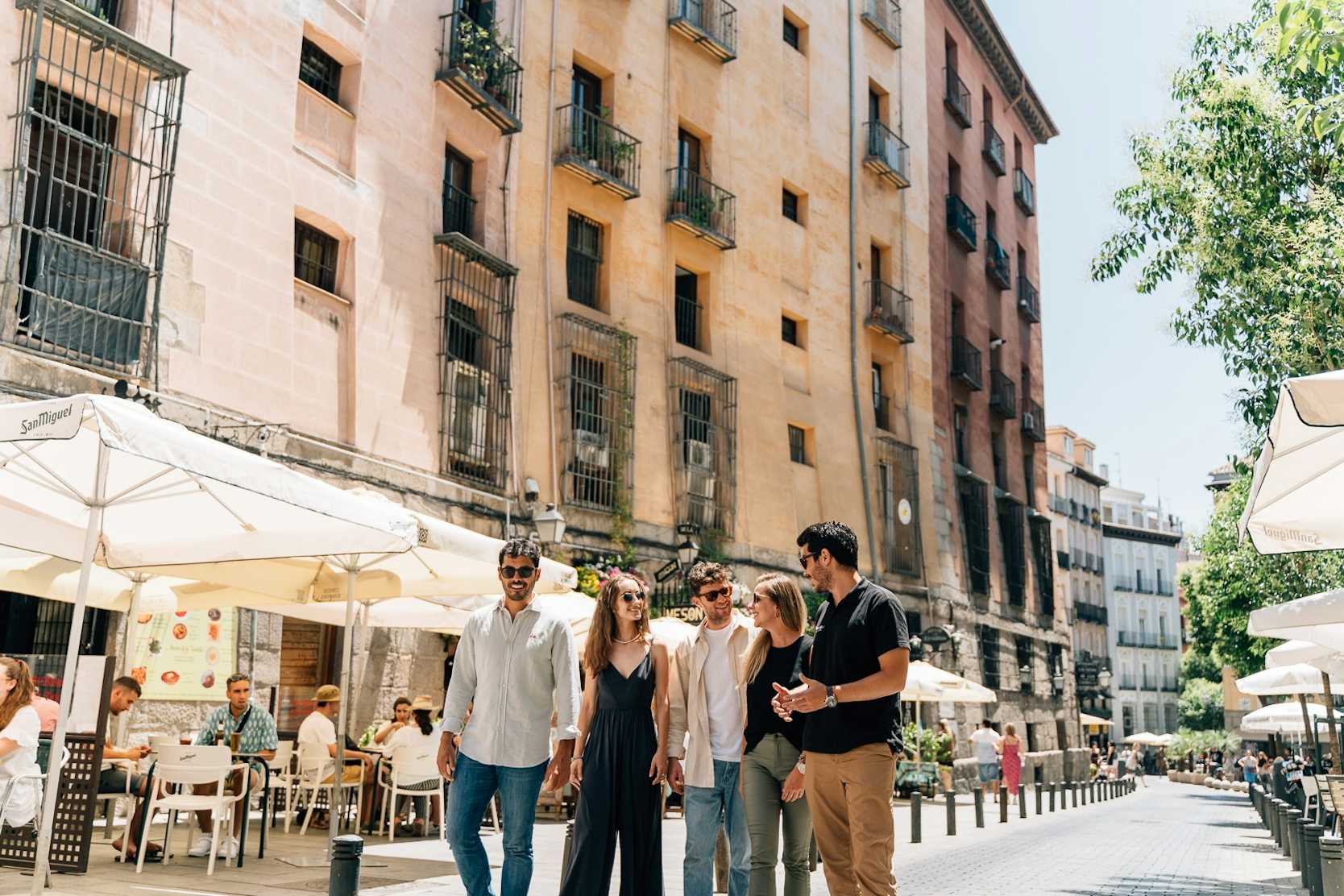
Tapas in Madrid: Small group tapas tour
There are several approaches, such as joining an expert-led bar-hopping tour of La Latina and Cava Baja, or simply using an app that provides a pre-planned route connecting famous monuments with authentic bars. This article will provide you with information regarding your best bets to enjoy good food in the Spanish capital. Expert-led bar-hopping tours cover four restaurants in one night (traditional bars + modern kitchens) while providing cultural insight and a meal. Small-group tours also allow guests to learn about the history and culture of Spain as they pass by historical sites (such as Restaurante Botin and Plaza Mayor), sampling dishes (such as gambas al ajillo) along the way. Cultural combinations include museum visits (Prado Museum) followed by tapas tastings, while cooking classes allow participants to prepare their own croquetas and paellas from scratch.

Michael Madsen shares how to get the best tapas experiences in Madrid
- Guided Tapas Bar Crawls
- Self-Guided Routes
- Cultural Pairing Options
- Tapas Cooking Classes
Each of these options will give you a different perspective on Spanish food culture. Your choices depend on how much time you have available to eat, your budget, and how much structure you want. Below is a practical comparison of all possible tapas experiences in Madrid, along with 25 answers to common questions asked by travelers.
Visiting four carefully selected bars will educate you more about Spanish food culture than visiting twelve randomly selected bars. An evening guided bar-hop will visit four different bars-three traditional and one modern-each offering a tapa and a drink.
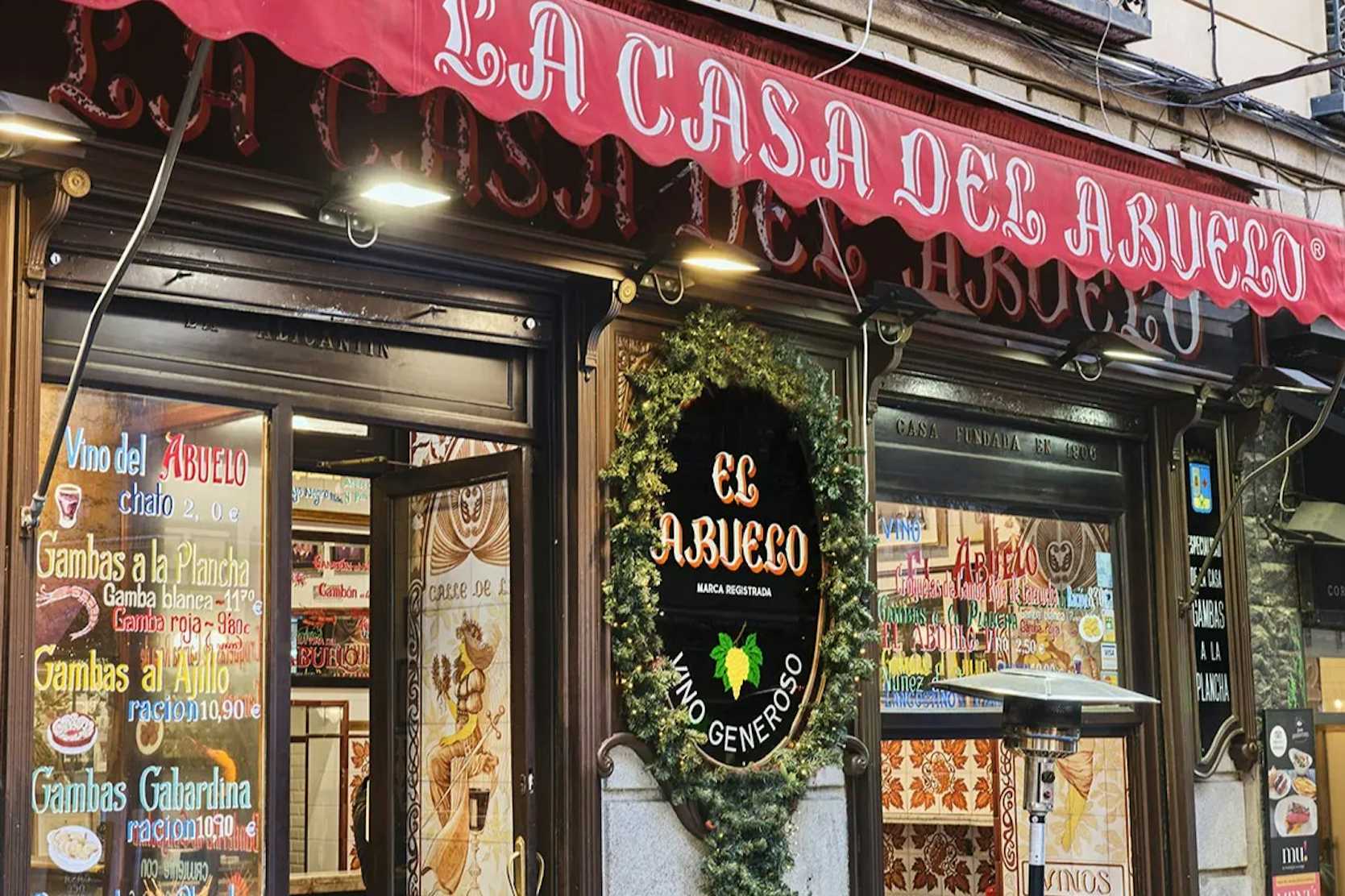
Tapas tour in Madrid
Bar-Hop Neighborhoods Are Foodie Districts
As mentioned earlier, the neighborhood where the crawl takes place is a great foodie district; therefore, the walk between each stop remains relatively short and the number of bars per square mile is extremely high.
I watched a group of friends enjoy croquetas at a wood-paneled bar. Following this stop, the group enjoyed fusion tapas at a modern trendy restaurant. The experience was not confusing-the combination of old-school flavors in one establishment and new school riffs in another provided for a unique dinner experience with a relaxed pace.
What Does an Evening Bar-Crawl Include?
The format rarely varies and having an idea of what to expect is helpful for first-time visitors. At each stop, both a tapa and a drink (wine, beer, or soft drink) are offered. In addition, a local guide orders the items on behalf of his/her group to help keep everyone on track.
- Traditional Bars Offer Classic Preparations
- Modern Bars Feature Innovative Flavors
- Drinks & Tapa Are Included
- Guide Will Order for Group
Don´t eat too much beforehand. Portions appear to be small; however, due to the amount of food being consumed at four stops, guests may be surprised at how quickly they fill up.
The other tours are usually done during the daytime and often include a visit to a museum, etc. This tour is the “social” one as you get to experience how the people of Madrid dine late at night.
This tour has gone off track because the tour guide treated it as if it was a lecture instead of showing them where to go and what to do. To correct the problem, the group will be led by an expert that is familiar with the areas they will be visiting so he/she can provide information when needed but also allow time for the guests to enjoy their food and drinks.
Most small group guided tapas tours in Madrid last anywhere from three (3) to four (4) hours and have around four (4) to five (5) different food stops. Because of the size of these groups, they are able to comfortably enter the smaller establishments throughout Madrid.
The tour begins at San Miguel Square. The group will then travel through La Latina, Cava Baja and Cuchilleros Street. At the first stop the group will receive all of the tapas. There are several types of tapas available such as mushrooms, Asturian-style chorizo cooked in cider, Padrón peppers for those that choose not to have meat, etc. Each type of tapa will be served with wine, beer or a soft drink. What seems to be insignificant regarding the selection of your first tapa could determine whether your guide understands that there are some individuals in the group that may require a milder start versus others that are more adventurous.
Unlike a larger group crawl the unique aspect of this style of tour is the route that is traveled. The group will walk through Madrid de los Austrias and pass many of its historical sites including Mercado de San Miguel, Plaza Mayor, Restaurante Botín, Puerta Cerrada and Calle Huertas. As the group travels through this area they will learn about the historical significance of Plaza Mayor while enjoying Iberian pork cheeks in a traditional bar. They will be served mashed potatoes along with their pork cheeks and a glass of red wine.
- First stop: mushrooms, chorizo in cider, or Padrón peppers
- Second stop: Iberian pork cheeks with mashed potatoes and red wine
- Third stop: gambas al ajillo near Plaza de Santa Ana and Teatro Español
- Final stop: cava on a rooftop terrace with city views
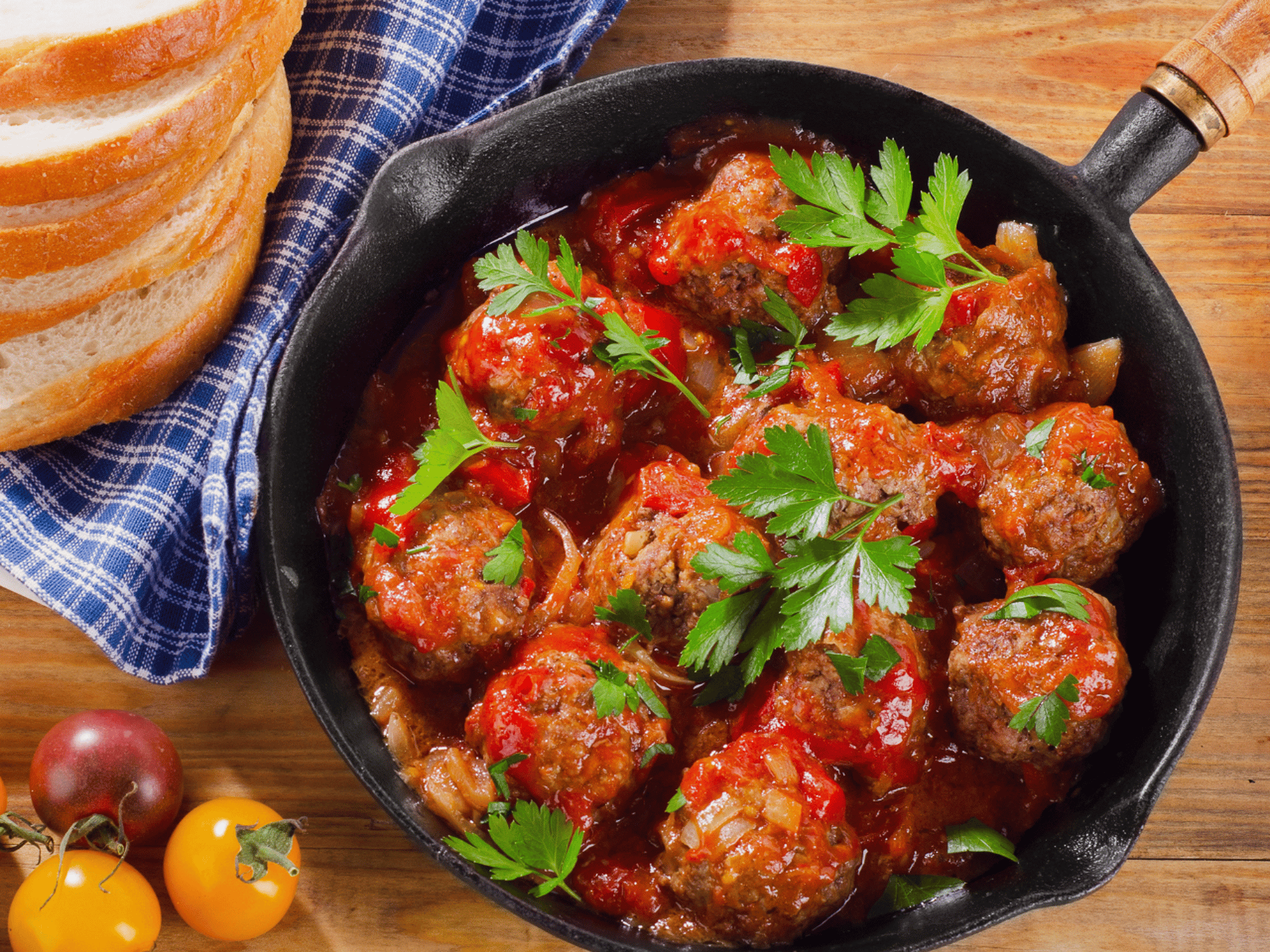
Tapas in Madrid: Albondigas en salsa
At the third stop many remember walking through the Plaza de Santa Ana and passed by Teatro Español, then had gambas al ajillo (garlic shrimp) sizzling in hot oil. This provides the connection between the area that made this dish famous. This is the case for a smaller group verses a larger one. The guide can control the speed of the tour and ask questions concerning the preparation of the shrimp and why this bar’s version works.
The final destination for the tour is a rooftop terrance with a glass of cava and views over the entire city. This is the purposeful end of the tour, not an after thought. The cava cleanses the palate after the garlic and pork and the view allows for a longer time for the group to sit and stay.
There are Morning focus tours and tours that cover all Spanish cuisine but these give up this ending point.
Do not take the large-group version of this tour. The bars along Cava Baja are very narrow, and a group of twenty creates a logistical challenge instead of an intimate experience. Six to eight persons create a good experience for everyone on the tour.
See also my article about the Santiago Bernabeu stadion of Real Madrid here.
Self-guided tapas tour through madrid
The self-guided tapas tour, which was introduced in 2026, is now the best way to explore the Central Madrid region. Travelers who have never been part of a “herd” now have access to a self-guided tapas tour using an application on their phone or tablet. The application provides directions to visit some of madrid’s known spots while sampling traditional and new forms of Spanish tapas at their own leisurely pace. The application determines the path that visitors will follow while the visitor controls his/her own appetite.
This difference makes more sense than it appears. While a guided tapas tour forces groups into visiting certain areas at specific times and in a predetermined order, a self-directed tapas tour allows visitors to go wherever they want and whenever they feel like going there.
A person could spend as much time as they want eating gambas al ajillo near plaza mayor, reading a brief historical summary about plaza mayor, and completely miss the next location if they find the atmosphere to be too noisy. There is no guide waiting.
No group is delayed.
The use of applications based upon location also addresses a true concern when traveling in madrid – identifying what street to turn down next. Narrow streets throughout Central Madrid fill with tapas bars so quickly that within two glasses of wine it becomes difficult to know what direction to head. The application maintains organization in providing directions among local landmarks such as Puerta del Sol, plaza mayor, and Mercado de San Miguel. In addition, each bite of food relates to spain’s culture and history however the timing is determined solely by the consumer.
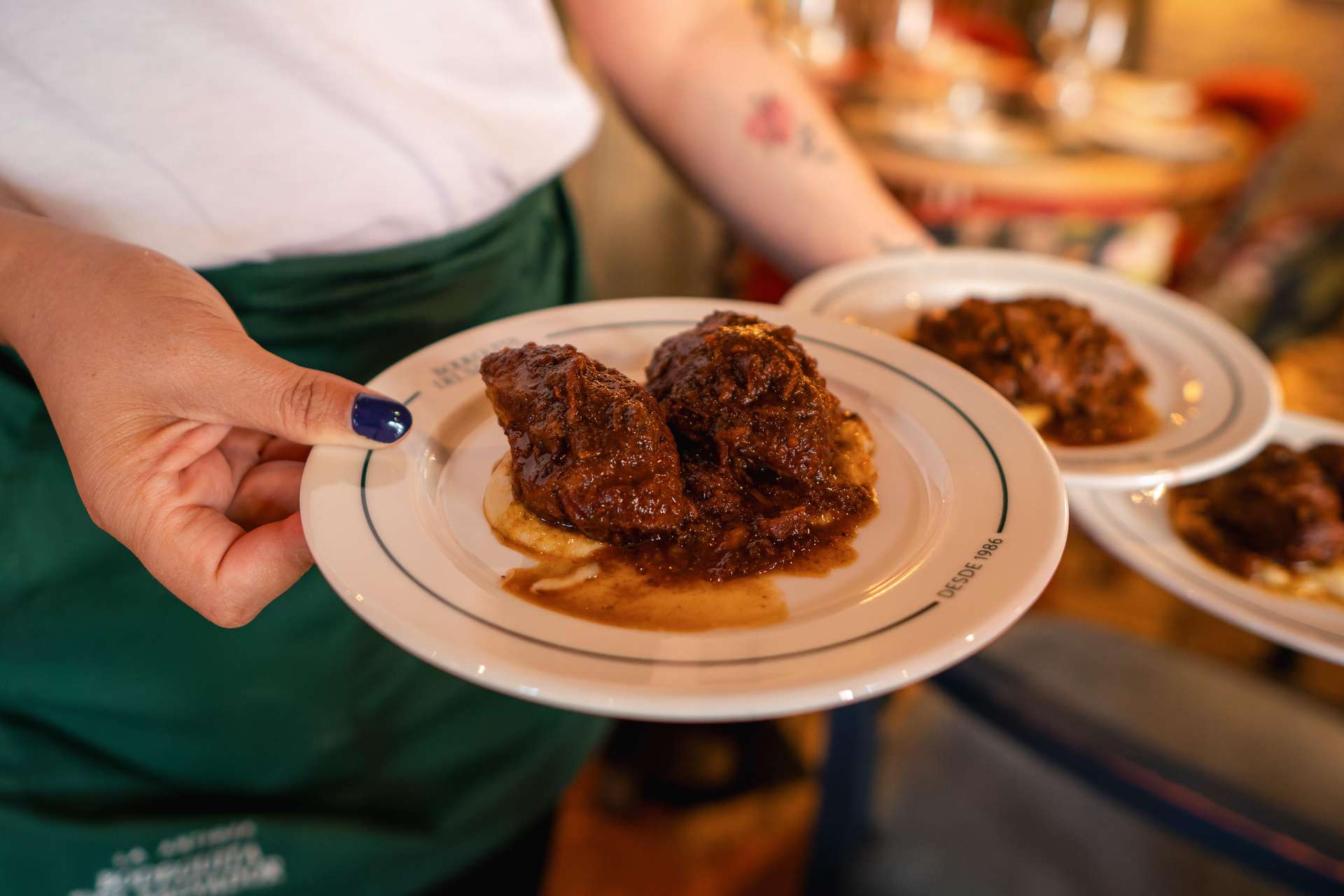
Tapas in Madrid: Rabo de toro
How the Self-Guided Format Works in Practice
Beginning with the download of the tour application from a mobile device, a solo traveler begins the guided tour in close proximity to the historical center of Madrid. From there, he/she follows the sequence suggested by the tour application. Along this route, for example, a solo traveler stops at a hidden tapas bar located nearby Plaza Mayor. There, he/she receives garlic shrimp, while the application provides a description of Plaza Mayor’s Habsburg era architecture. Similarly, a solo traveler may also choose to visit a contemporary bar where he/she will be served a “de-constructed” tortilla. This is the essence of the experience — a contrast that creates an experience.
The applications do not replace a knowledgeable guide’s palate; they simply replace their ability to monitor the time of day (and other events). For those interested in learning about culture, but are not willing to spend their evening with another person’s itinerary, this trade off works well. What this self-guided tour is not: a curated tasting menu. No food is reserved in advance at any of the bars visited along this route. Instead, travelers decide which items on the menus they wish to order, pay for, and sometimes incorrectly prepare. This too is part of the experience.
With the application downloaded, now you can experience Madrid’s culinary scene. The route takes visitors through many of the most popular tourist areas of central Madrid, however it appears as though many of the experiences are happening personally. A wrong turn down a side street near Cava Baja can lead to a local bar filled with patrons enjoying bravas prior to dinner. This is not a glitch in the system. Rather, it is evidence that the format is working as planned.
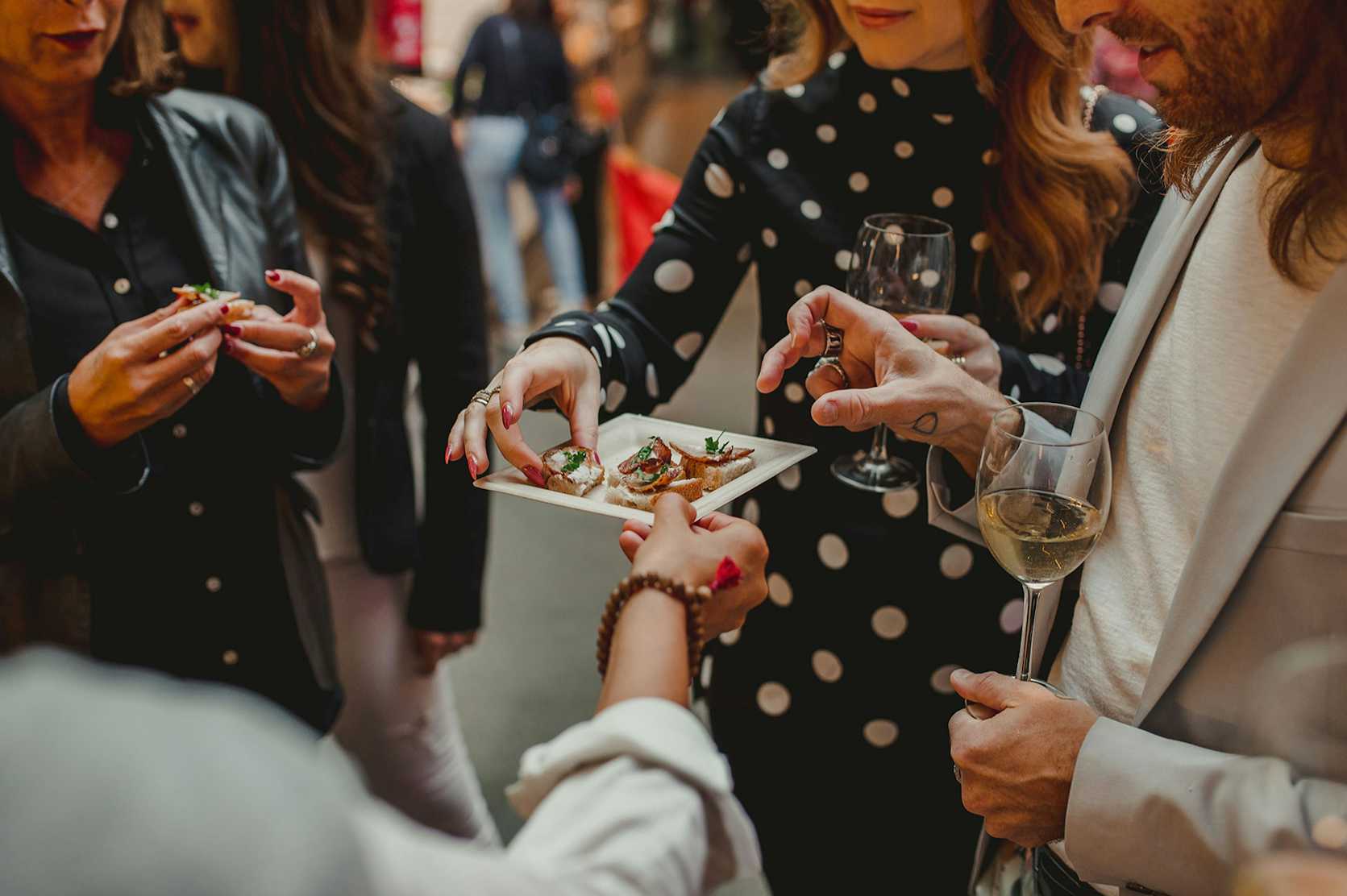
Tapas in Madrid: To share
Prado Museum Tour with Tapas
You cannot have a Prado Museum Tapas Tour which combines Spain’s leading art collection, with a meal at one of Madrid’s popular bars to create a unique cultural day that incorporates both Goya and Gambas. The Prado houses European Art (from the 12th Century through the Early 20th) as part of the Spanish Royal Collection.
Although the Prado does not represent a haphazard collection of paintings, it represents a collection of art that was created and collected by Spanish Monarchs over several hundred years. As such, the Prado has a heavy focus on artists that were favored by these rulers; i.e., Velazquez, Goya, El Greco, Titian, Rubens and Bosch.
Visitors may view Las Meninas and within a few minutes witness the dark psychological weight of Goya’s Black Paintings. Visitors will experience an overwhelming amount of variety in this manner.
What makes the tapas pairing effective is time. The Prado is a museum where you need to concentrate for two to three hours. When you leave the museum most people are mentally exhausted and hungry.
A couple who spend their morning viewing Goya’s late works, walk to a traditional nearby bar for some patatas bravas and a glass of wine, get a much needed break. This food is not an afterthought to your museum visit.
There are many ways to do this experience practically. Many people choose to eat before visiting the Prado, using a small tapas lunch to help them enjoy their visit to the museum. While others choose to wait until after the museum visit to consume their meal, as their appetite has developed by this point. Both methods are acceptable however the bars near the Prado typically fill up rapidly during peak lunch hours. If you plan on visiting the Prado in the afternoon and then stopping for an early evening tapas meal you should avoid the largest crowds.
While there are other combinations available in Madrid including walking tours and flamenco pairings, the Prado version appeals to a very distinct group. This group includes individuals who want their art to be the focal point of their tour and their food to provide relief.
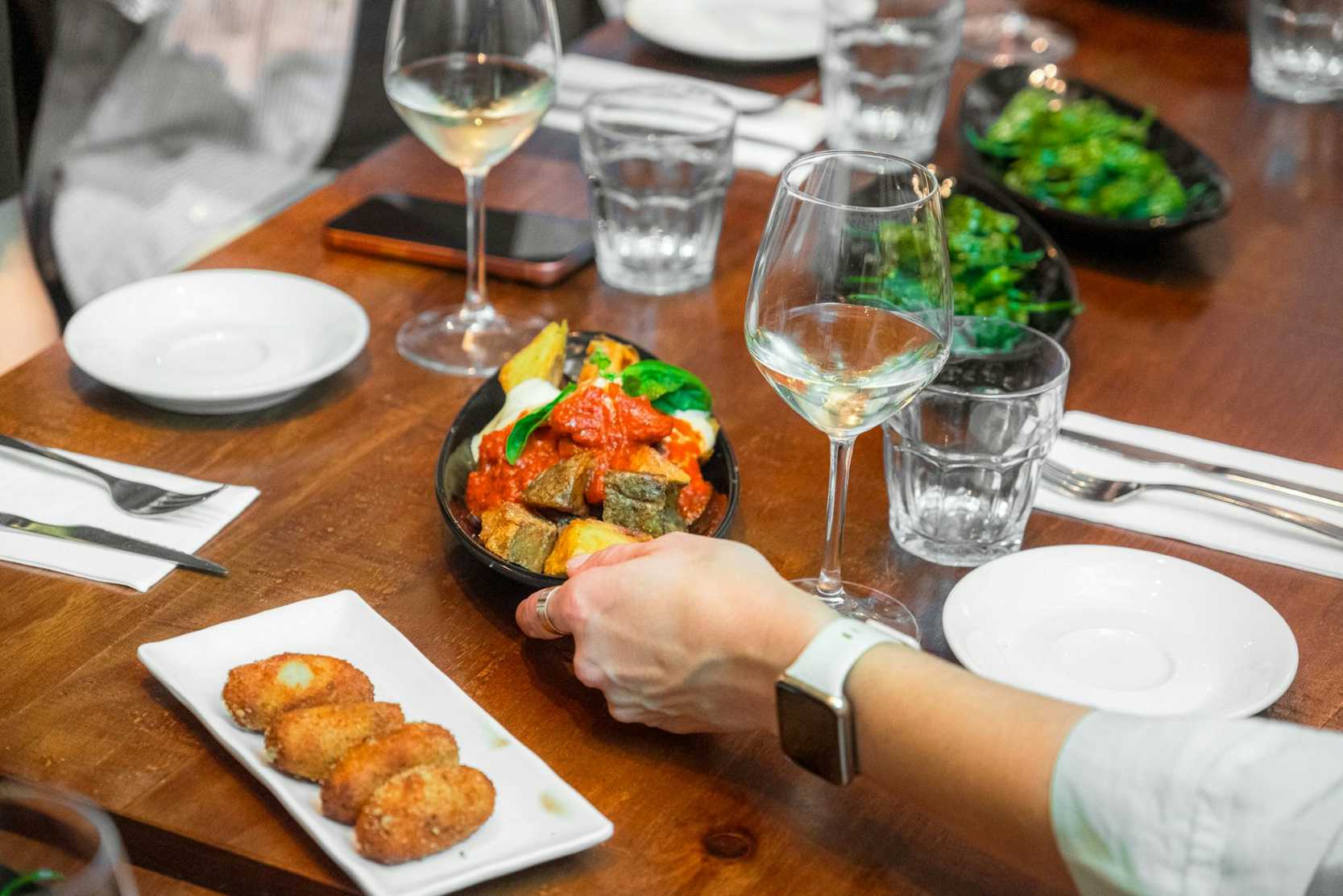
Tapas in Madrid: carne in salsa, pimientos al padron and croquetas
The origin of this collection also plays a role. Since the works of art come from the Spanish Royal Collection, the museum provides a visual narrative of power, taste and national identity.
On the other hand, a tapas bar has no such history. It is a casual, fast, democratic experience.
To see both during a single day is not multitasking. Rather, it gives you a full view of Madrid.
Velazquez depicted life at court; Goya depicted war and madness. A plate of jamon costs but a few euros and is gone in a matter of minutes. That is what the contrasting experiences are all about.
Paella & Tapas Cooking Class + Market Visit
There are many ways to do a paella and tapas cooking class in Madrid. If the class does nothing more than serve as a spectator event, then the entire idea of doing a cooking class is lost. To be worthy of your time, classes should start by providing a historical market visit to find out where the ingredients used in the dishes being prepared came from. This should be done with a local guide who brings a small number of participants through various vendor’s stalls to talk to the vendors and choose the produce that will be cooked into the paella pan within an hour or so.
The key element of this approach is to provide the participant with an opportunity to interact with the ingredients prior to preparing them. This allows the participant to learn how to purchase Spanish foods (shopping), rather than simply learning how to prepare recipes.
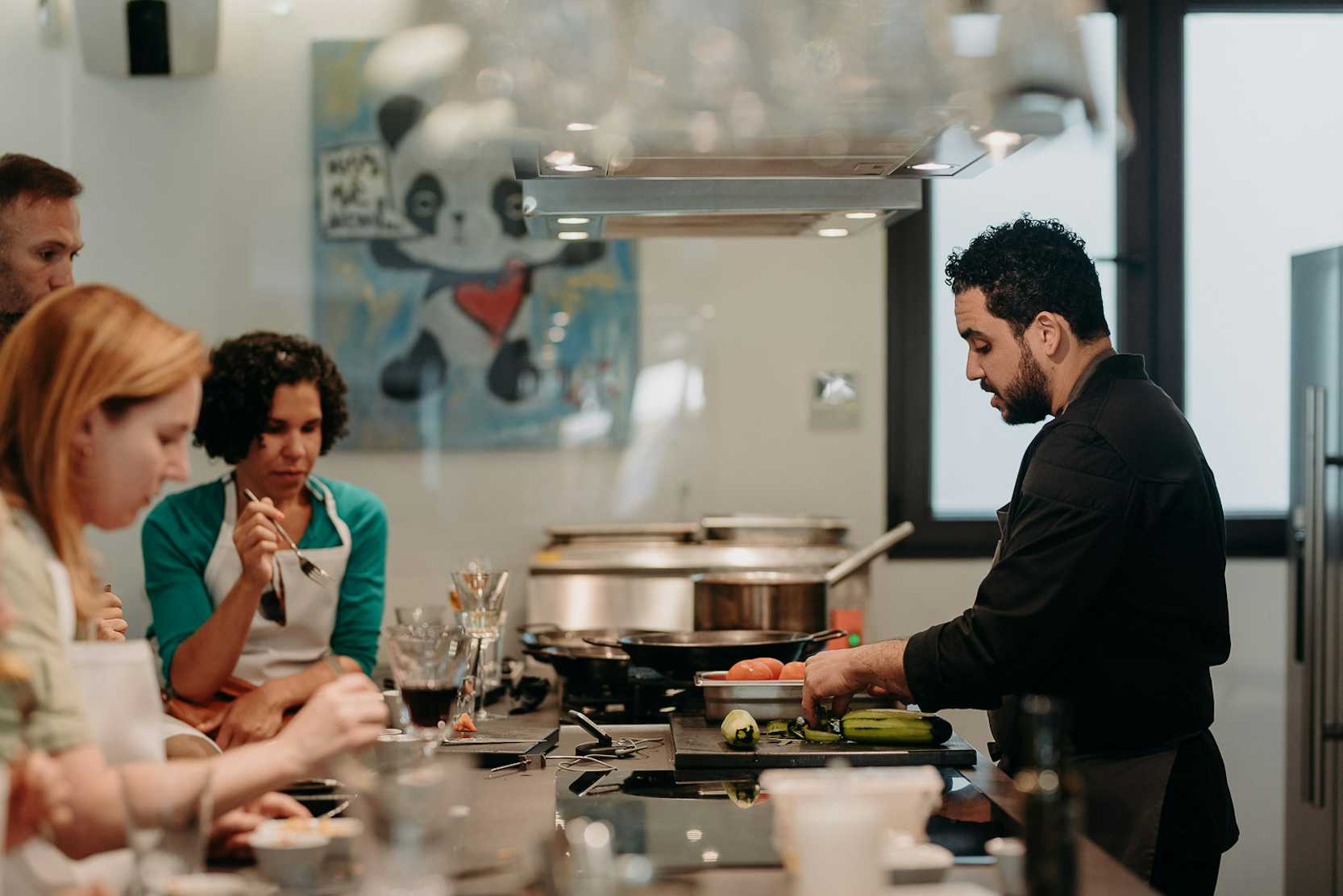
Tapas in Madrid: Paella and tapas cooking class
What the Class Actually Covers
- Market Ingredient Selection – The guide introduces vendors and explains what to look for in fresh produce, seafood, and spices. This is where the dish’s story begins.
- Classic Tapas Preparation – The group makes croquetas and patatas bravas with homemade sauces, plus a cheese plate. A sherry aperitif keeps the work social.
- Valencian-Style Paella – The chef demonstrates the technique, then participants cook their own. Practical tips cover heat control, rice ratios, and the socarrat crust.
- The Meal – Everyone sits down to eat what they cooked, paired with beer or wine and finished with seasonal fruit.
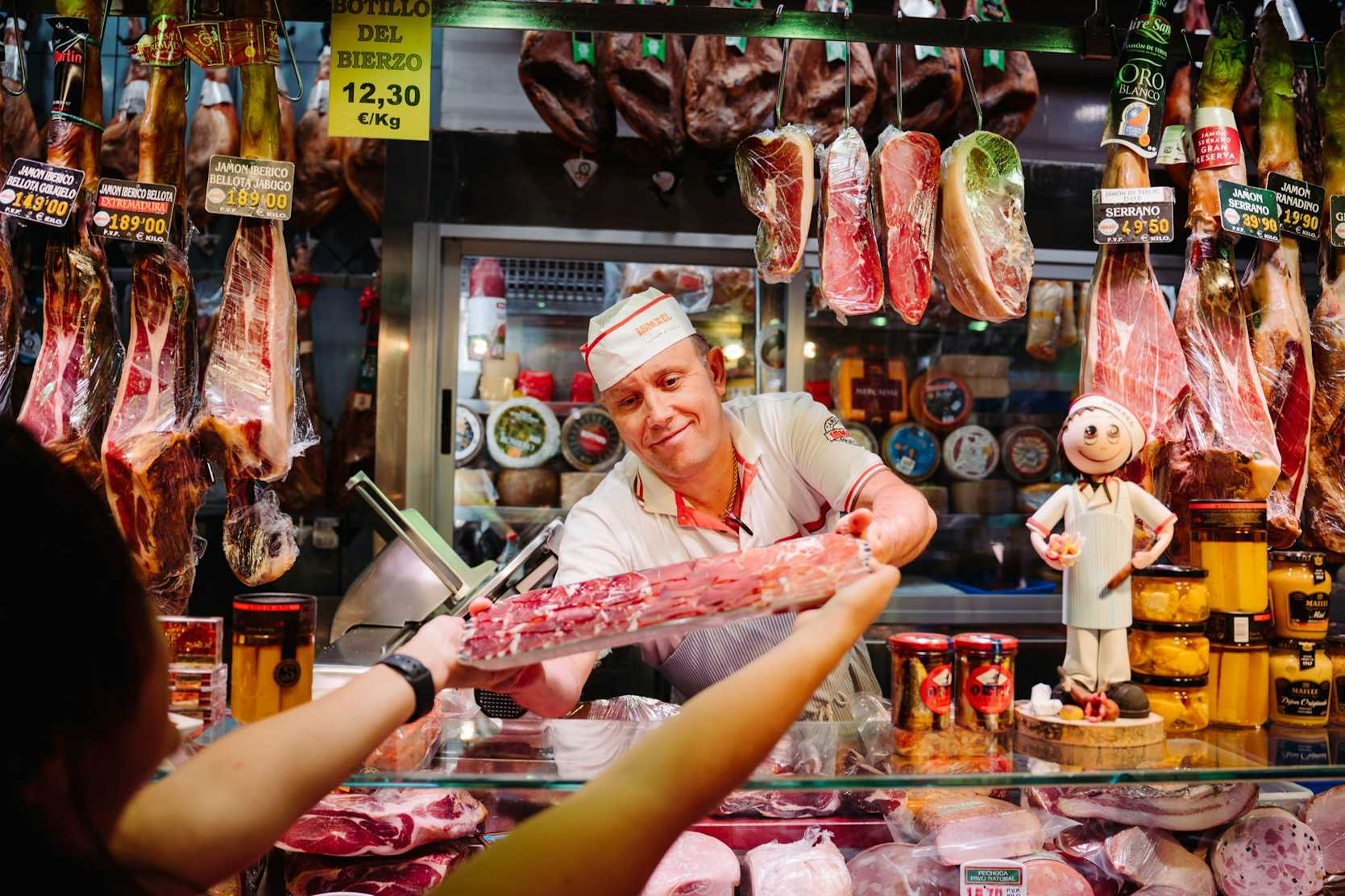
Tapas in Madrid: Guided Spanish Cuisine Tour
The patatas bravas sauce is the silent test of all that has been learned during this session. Local chef demonstrates how an adequate ratio of smoked paprika, tomatoes and vinegar gives the best taste and why a large amount of heat will overpower the potato and too little will make this tapa completely unmemorable. One adjustment in ratios is worth paying for classes.
Students leave with simple recipes; however, what they take away from this experience is their self-confidence. Students have prepared paella valenciana (Valencia-style paella) once, under supervision. This memory stays longer than any souvenir or memento.
Do not get confused with providing students with printed recipe cards as well as calling it an “interactive” experience. The only way to add value to your program is through the visits to markets.
Almost all tapas related questions provide one correct answer, and if you give incorrect answers, you lose time and money. The difference between a tapa and a ration is the portion size. A tapa is a small plate usually provided complimentary with the purchase of a drink at many traditional Spanish bars. A ration on the other hand is a larger serving that is shared among several people. If you know the definition of these two terms prior to ordering, you will not end up overordering food and having an awkward moment at the bar.
Hours of operation for Tapas in Madrid vary greatly. In general lunch service does not start until approximately 1:30 p.m., and dinner service generally does not begin until after 9 p.m. Tapas hour runs from 8 p.m. until 11 p.m. where you can see locals standing at the counter and moving from bar-to-bar. Visitors arriving at 6 p.m. to enjoy the full range of tapas will be disappointed to see mostly empty seats at bars and limited menus.
Dietary restrictions are easier to accommodate than most visitors realize. Vegetarians can easily order Tortilla de Patata (potato omelet), Padrón peppers, Croquetas de Setas (mushroom fritters), and cheese platters. Gluten-free patrons should ask for Sin Glutten, although cross contamination in small kitchens may be a serious issue. Although most bars are required to post ingredients containing common allergens due to law, it’s always advisable to verify verbally with the bartender or server.
25 Frequently Asked Questions about tapas in Madrid
- What is a tapa? A small plate of food served with a drink, ranging from olives to stewed meats.
- What is a ración? A larger portion meant for sharing, usually double or triple the size of a tapa.
- Are tapas free in Madrid? Rarely. Free tapas are common in Granada and León, but Madrid bars typically charge per plate.
- What time do Madrileños eat tapas? Between 1:30 pm and 4 pm for lunch, and 8 pm to 11 pm for the evening crawl.
- How much does a tapa cost? Most tapas run €3 to €6, while raciones cost €8 to €15 depending on the bar and neighborhood.
- What drink pairs best with tapas? sherry before a meal, red wine with pork dishes, and beer or cider with fried tapas.
- Which neighborhoods are best for tapas? La Latina, Cava Baja, Huertas, and the streets around Mercado de San Miguel.
- Is it safe to eat tapas while pregnant? Avoid raw or undercooked items like jamón ibérico and unpasteurized cheese; cooked tapas are generally fine.
- Can vegetarians eat well in Madrid tapas bars? Yes, with tortilla, Padrón peppers, fried eggplant, and cheese plates widely available.
- Do tapas bars accommodate gluten-free diets? Many do, but cross-contamination is common in small kitchens, so ask before ordering.
- How many tapas should one person order? Two to three tapas per person, or one ración shared between two, makes a light meal.
- Do I need a reservation for tapas bars? Most bars are walk-in only, but popular sit-down spots in Cava Baja fill up after 9 pm.
- What is the difference between tapas and pintxos? Pintxos are Basque-style bites, often skewered to bread, while tapas are served on small plates.
- Is tipping expected in Madrid tapas bars? Not required. Locals leave small change or nothing at all.
- Can children go to tapas bars? Yes, earlier in the evening. Many bars are family-friendly before 9 pm.
- What is the most traditional Madrid tapa? The fried calamari sandwich, bocadillo de calamares, served at bars near Plaza Mayor.
- How do I order tapas in Spanish? Say una tapa de followed by the dish name, or point and say esto, por favor.
- Are tapas tours worth the money? For first-time visitors, yes. A guide unlocks bars that are hard to find and explains what to order.
- What is the best time to visit Mercado de San Miguel? Weekday mornings for fewer crowds, or late afternoon for the full atmosphere.
- Do tapas bars serve breakfast? Some do, with churros, porras, and coffee, but most open for lunch service.
- What is sherry hour? La hora del vermut, around noon to 1 pm, when locals sip red sherry with olives and anchovies.
- Can I pay by card at tapas bars? Most accept cards, but small bars may have a minimum spend or cash-only policy.
- What should I avoid ordering in touristy areas? Pre-made paella and oversized sangria pitchers, which are often overpriced and low quality.
- How do I know if a tapas bar is good? Look for a crowded counter, Spanish voices, and a short menu written on a chalkboard.
- Is it rude to share tapas? No. Sharing is the entire point of the format.
A visitor who learns the tapa-versus-ración distinction before ordering avoids the most common mistake in Madrid. The second most common mistake is eating dinner too early and missing the city’s actual rhythm.
That rhythm is not a suggestion. It is the operating system of every tapas bar in the city.
Finally I would like to say a few words…
I could have found a way to make my research more fun by using a variety of different formats such as guided or self-guided tours. I was able to find some general trends while researching this guide that may be helpful for travelers:
- Guided tours are convenient but time-consuming. An example would be a group dinner crawl in La Latina where you visit 4 different bars (3 old-school; 1 new school) for a tapa and drink. This gives visitors an opportunity to learn about a lot of Spain’s food culture quickly.
- Tours that offer multiple experiences (the art museum and/or palace combined with tapas) add a lot of value. For example, a full day trip to the Royal Palace and Retiro Park can include an aperitif followed by several tapas at a local bar.
- The free-form self-guided app-based tour allows visitors to move at their own pace. While visiting Plaza Mayor and Puerta del Sol, users can take breaks at Mercado de San Miguel and decide what tapas they want to try next. Visitors will also get the opportunity to develop connections from each tapas choice to Spanish history/culture at their own speed.
- A cooking class allows visitors to take home the memories of the experience. In a relatively small group setting (i.e., around 8 people), visitors can cook classic Spanish dishes such as croquetas, patatas bravas, and Valencian-style paella. At the end of the session, participants will receive a recipe book so that the experience can be repeated upon returning home.
First: Choose a format and then book your activity prior to arrival. Visit a booking platform, select “tapas madrid tours” and enter “small groups.” Book your activity for the first night you arrive. Next, plan to spend part of one afternoon wandering Cava Baja in whatever direction inspires you.