
Ten tapas. Three drinks. Five stops.
That is the math behind a proper Barcelona tapas crawl, and I have walked enough of these routes to know the difference between a tourist conveyor belt and the real thing. Getting great tapas in Barcelona is not about finding the most famous bar; it is about knowing which neighborhoods to walk, which guides to trust, and which dishes tell you something about Catalan culture.
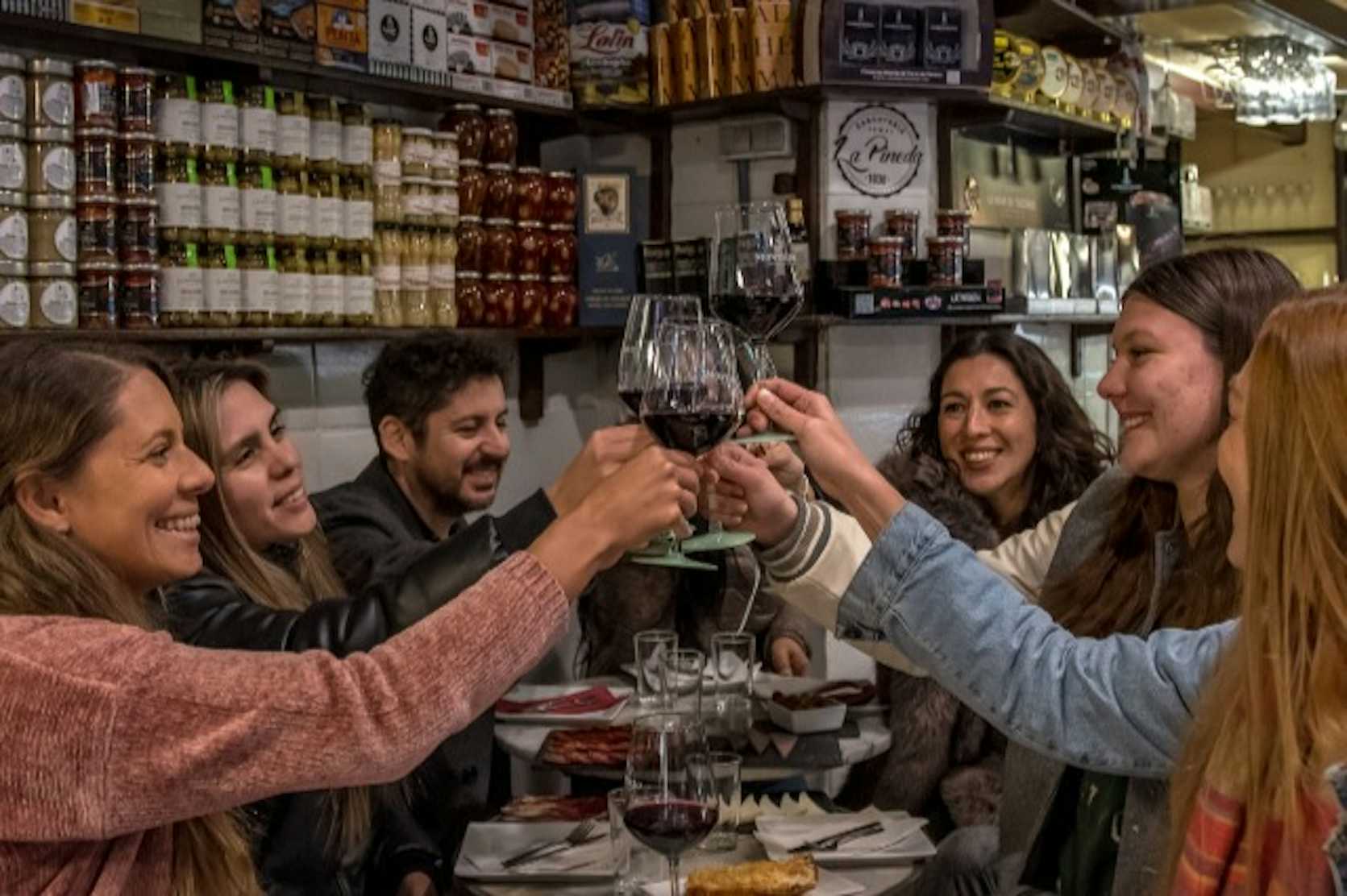
Great tapas tour in Barcelona
My answer is simple: skip the Rambla crowds and book a small-group experience led by a local. The best tours cap at ten people, run two and a half to three hours, and never leave you marching more than ten minutes between stops. That is the sweet spot. You eat constantly, you learn something, and you do not feel herded.

Michael Madsen shares how to get the best tapas experiences in Barcelona
I have spent years poking around Sant Antoni and Poble Sec, the neighborhoods where locals actually eat. These areas sit just outside the tourist core, and they are where Spanish and Catalan specialties still feel honest. Iberian ham, pinchos, patatas bravas with sherry or a cold local beer.
The food is not fancy. It is better than fancy.
What I look for in a tapas experience comes down to a few things:
- Small groups – ten people maximum, so the guide actually talks to you
- Eight to twelve tapas servings, not a sad plate of olives
- Three or more drinks paired with the food, not an afterthought
- Neighborhoods like Sant Antoni, Poble Sec, El Born, and the Gothic Quarter
- Guides who explain the history and food culture without lecturing
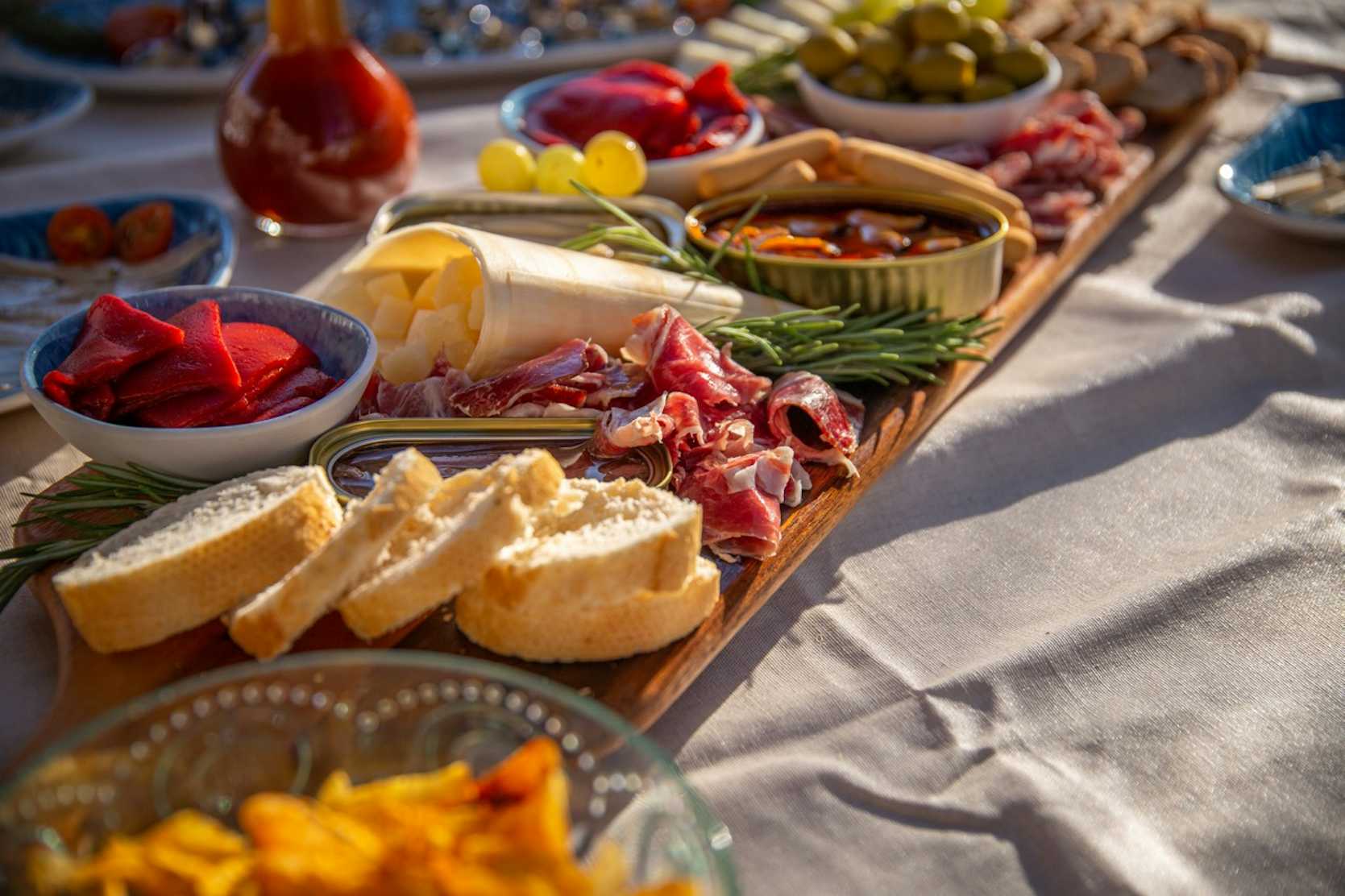
Great variety of tapas in Barcelona
This article covers the full range: walking tours, cooking classes, e-bike routes, even a sailing trip with tapas on board. I have organized them by experience type so you can match a tour to your travel style. The goal is not to eat everywhere. The goal is to eat well, in the right places, with people who know why it matters.
Around 10 to 12 tapas servings. That is what a guided tapas tour in Barcelona actually puts in front of you, spread across a small group of no more than ten people. A guided tapas tour is a structured walking experience that pairs generous tastings with deep cultural context, all within a comfortable 2.5 to 3-hour pace.
I have joined enough of these to know the rhythm. Less than ten minutes of walking between stops means the tour never turns into a forced march. You eat, you listen, you walk a little, you eat again. The guide fills the gaps with information about Spanish food, history, local culture, and lifestyle – not as a lecture, but as the kind of detail that makes a dish make sense.
What separates a good guide from a script-reader is the third stop. That is where the group loosens up and the real questions start. Imagine me joining a group of eight, standing at a bar in a neighborhood I would not have found alone, and learning that the pincho in my hand comes from a specific Basque tradition, not just “northern Spain.” That regional origin changes how I taste it. The guide knows the difference, and now I do too.
See also my article about Barcelona here.
What to Expect on a Guided Tapas Tour
The structure is consistent across most reputable operators. A small group, a defined route, and a steady stream of food. Here is the core format:
- 10 to 12 tapas servings – enough for a full meal, not a snack.
- Maximum group size of 10 – small enough to hear the guide and ask questions.
- 2.5 to 3 hours – long enough to settle in, short enough to keep energy up.
- Less than ten minutes between stops – the walking is a palate reset, not a commute.
- Cultural commentary – Spanish food, history, local culture, and lifestyle woven into every stop.
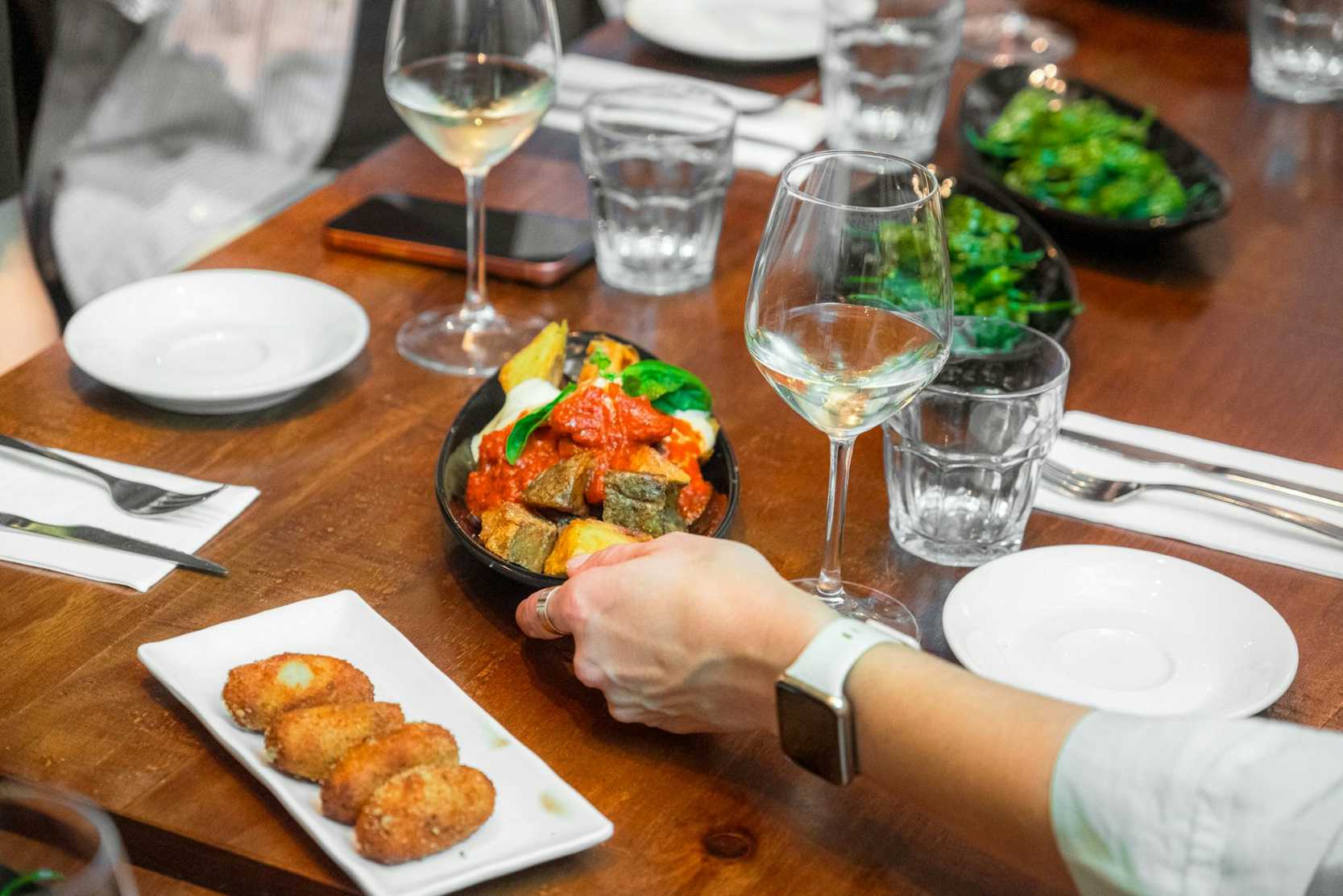
Tapas in Barcelona: carne in salsa, pimientos al padron and croquetas
That pacing matters more than most people expect. A tour that crams six stops into ninety minutes feels like a race. A tour that drags three stops across four hours feels like a hostage situation. The guided tapas tour format sits in the middle, and that is why it works for first-timers and repeat visitors alike.
Some variations lean harder into cooking or wine pairings, and those exist for a reason. But the baseline guided tapas tour is the clearest entry point into tapas Barcelona culture. You get the food, the context, and the pace without having to plan a single stop yourself.
I have watched people arrive hungry and skeptical, then leave three hours later asking the guide for restaurant recommendations for tomorrow. That is the tell.
The neighborhood-first principle changes everything about how a tapas crawl should be built. A group tapas tasting tour in Barcelona works best when it anchors itself in Sant Antoni and Poble Sec, two districts where locals actually eat, rather than chasing the crowds around Las Ramblas.
Eight tapas and three drinks across five carefully chosen restaurants. That is the core of it. Iberian ham, pinchos, patatas bravas – paired with sherry or local beer, not whatever the tourist menu pushes. The food does the talking, but the guide’s job is to explain why a particular pincho belongs to that specific bar, on that specific street.
I have stood in a Poble Sec bar nursing my third sherry, watching a group of neighbors argue about football while the owner slides a fresh pincho onto my plate. That is the feeling a well-run group tasting tour manufactures. It is not a performance. It is proximity.
What the Guide Actually Adds
A local expert leading the group does not just point at buildings. They translate the neighborhood’s rhythm – why Sant Antoni’s market renovation changed the surrounding bars, why Poble Sec’s theater crowd eats late, why certain sherrys are served with an olive and a slice of orange. That context turns eight tapas into a short course in Spanish food culture.
Skip the version of this tour that rushes you through five stops in ninety minutes. The good ones let the neighborhood breathe.
What you get, in order of importance:
- Five restaurants chosen for consistency, not convenience
- Eight tapas that cover the range from cured ham to fried potato
- Three drinks that match the food rather than drown it
- A guide who lives nearby, not a script-reader
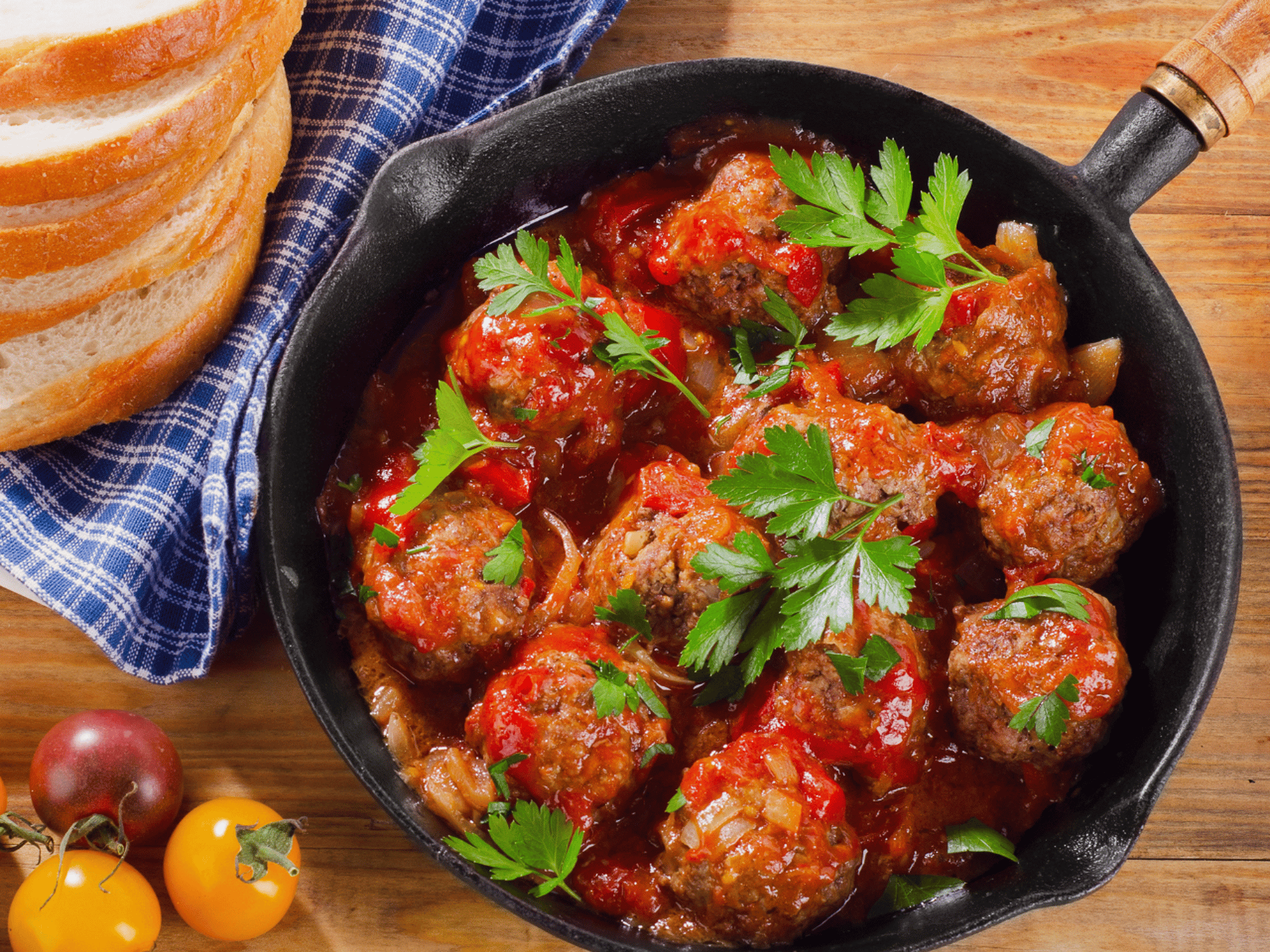
Tapas in Barcelona: Albondigas en salsa
Some tours in this category lean toward active exploration – e-bikes, cooking classes, sailing. Those have their place. But a group tapas tasting tour is the purest form of the idea: walk a little, eat a lot, listen closely.
I would pick this over a sightseeing tour with a food stop bolted on. Every time.
Premium Tapas & Paella Cooking Class
A premium cooking class in Barcelona is a hands-on, five-course culinary session where you prepare tapas and paella from scratch using fresh La Boqueria market ingredients, guided by master chefs and paired with unlimited Spanish wines. It starts with a glass of Catalan cava and ends with a full feast you cooked yourself.
What goes wrong with most cooking classes is the pacing. Too much watching, too little doing. I have sat through sessions where the chef performs for ninety minutes while participants nurse a single glass of wine and wait for a tasting spoon.
That is not learning. That is dinner theater with extra steps.
This class inverts that ratio. You are at the cutting board within minutes, chopping vegetables for a paella that will later land on your plate next to a Ribeira Sacra wine chosen from the family’s private vineyards. The chef corrects your knife grip, adjusts your heat, and explains why the sofrito needs patience rather than a higher flame. The instruction is specific, not performative.
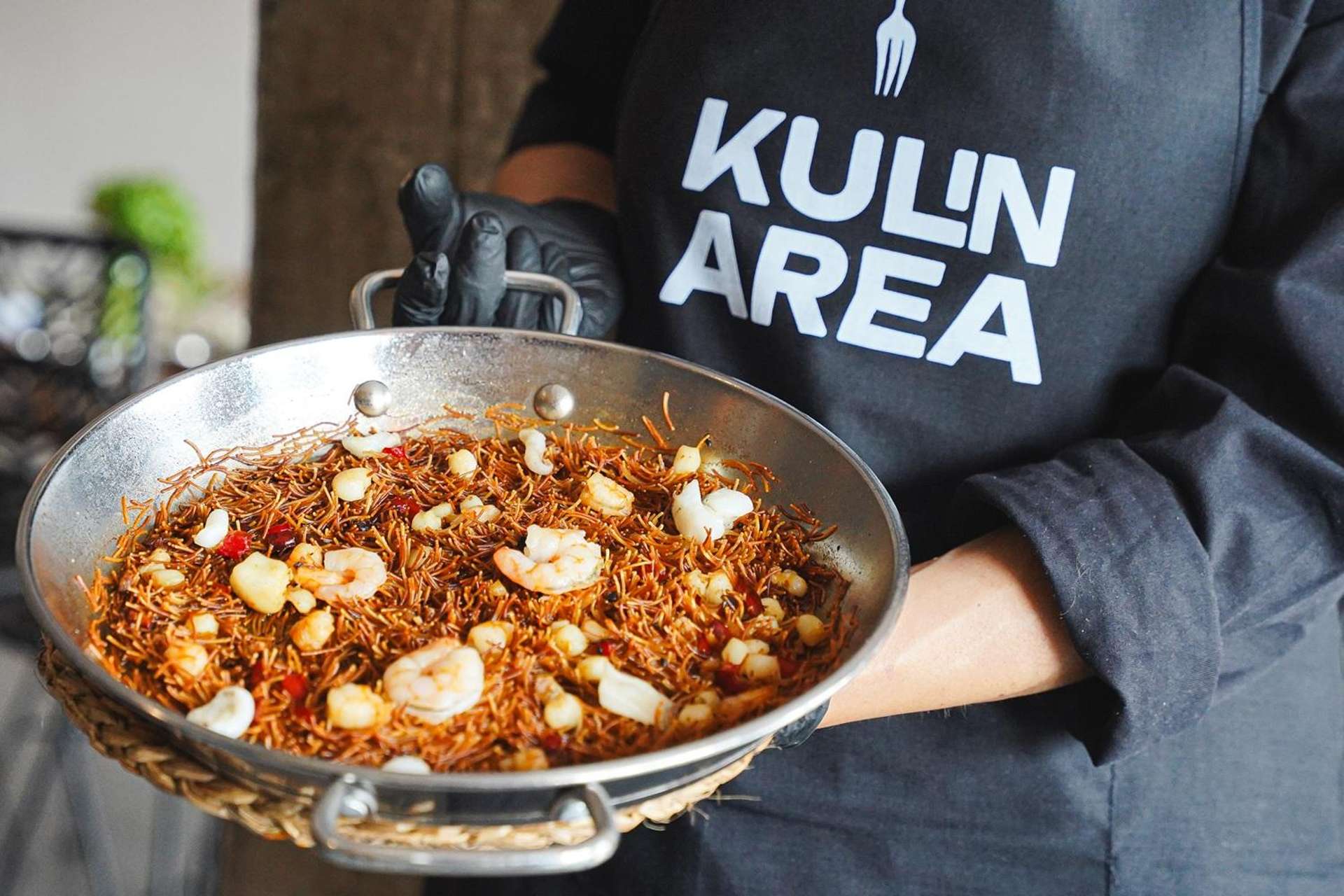
Tapas in Barcelona: Tapas & Paella Cooking Class
Ingredient sourcing matters here. Everything comes from La Boqueria market, which means the tomatoes still smell like tomatoes and the seafood was swimming that morning. Dietary restrictions are accommodated without turning the menu into a compromise. Vegetarians get a version that respects the dish’s structure instead of a sad afterthought.
Before the main cooking begins, there is a Catalonian pica-pica spread: Manchego cheese, Fuet, Spanish olives. It is not a filler course. It is a calibration – your palate learns the baseline flavors before you start building them yourself.
The wine list deserves a measured assessment. Unlimited pours from Rioja and Ribeira Sacra sounds like a gimmick, but the selection is narrow and intentional. These are not bulk labels. They come from the family’s own vineyards, which means the pairing logic is personal rather than commercial.
The five-course structure breaks down like this:
- Welcome & Cava – A glass of Catalan cava and a brief orientation with the chefs. You learn the menu and your station.
- Pica-Pica – Manchego, Fuet, and olives set the flavor baseline while the chefs explain regional sourcing.
- Tapas Preparation – Hands-on work on two to three tapas dishes, with direct chef guidance on technique.
- Paella Mastery – The centerpiece. You build the sofrito, manage the rice, and control the socarrat.
- Feast & Wine – You eat the full five-course meal with unlimited Rioja and Ribeira Sacra pairings.
One honest caveat: this is not a passive experience. If you want to sit back and be served, a tapas tour through Sant Antoni or Poble Sec fits better. But if you want to understand why a paella’s socarrat matters, or how Fuet differs from chorizo, this class delivers something a walking tour cannot. It puts the technique in your hands.
The skill transfer is the quiet payoff. I have recreated the sofrito method at home three times since taking this class. That is a better souvenir than any bottle of wine.
In 2026, the small group tapas and wine tour through Barcelona’s Gothic Quarter still works because it refuses to separate the food from the stone it’s served on. A local guide leads you through centuries-old streets and hidden squares, stopping for authentic Catalan dishes paired with regional wines, sherry, and cava. The group stays small enough that the whole thing feels like exploring with friends rather than trailing a flag.
I’ve done this route twice. The first time, I expected the history to be a polite backdrop for the drinking. It isn’t.
The guide pointed to a Roman wall fragment, then handed me a glass of sherry and a plate of esqueixada – salt cod, tomato, onion, olives – and suddenly the dish made sense. Cold, sharp, built on preservation.
That’s the Gothic Quarter on a plate.
The hidden squares matter more than the famous ones. Plaça Reial gets the postcards, but the guide turned us down an alley I’d walked past a dozen times and into a courtyard with a single bar, no sign, and a cava list longer than the food menu. We sat for twenty minutes. Nobody checked a phone.
What the guide actually does is read the group. If you’re curious about medieval trade routes, you get that. If you just want to know why this particular sherry works with this particular sausage, you get that instead. The wine pairings aren’t decorative – they’re chosen to match the dish in front of you, not the region’s export statistics.
One thing I’d skip: any version of this tour that promises “priority access” to a dessert spot. That’s a different tour’s trick. This one earns its pace by walking, tasting, and letting the neighborhood set the rhythm.
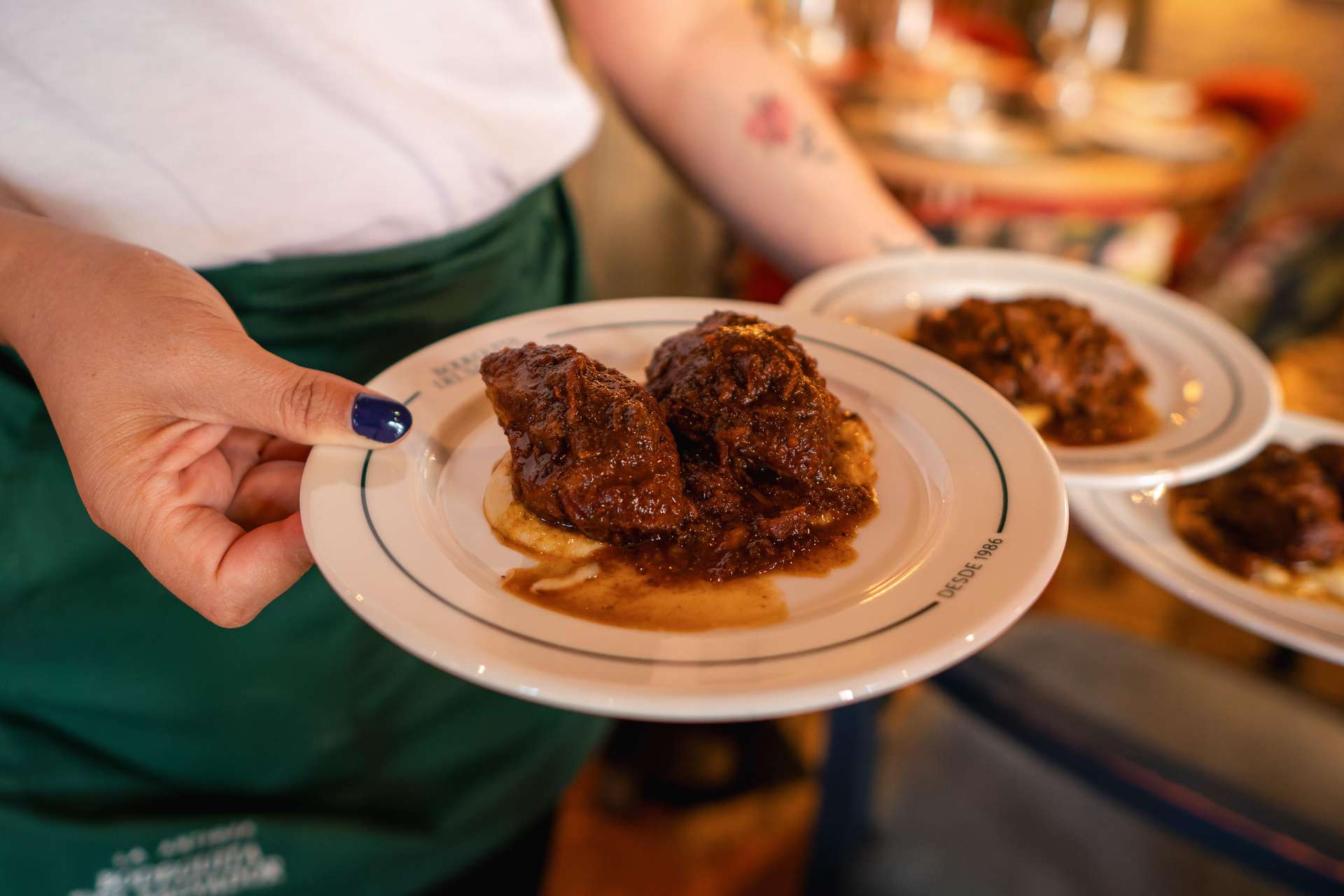
Tapas in Barcelona: Rabo de toro
The small group size is the quiet engine. With eight or fewer people, you can ask the guide to repeat a wine name, linger at a counter, or detour toward a plaza someone mentioned. The format bends. A large group can’t do that without turning into a queue.
Here’s what the tour includes, in the order it tends to unfold:
- Centuries-old streets and hidden squares in the Gothic Quarter
- Authentic Catalan dishes, not generic tapas-bar staples
- Regional wines, sherry, and cava paired per stop
- A local guide who navigates the area without a map
- Small group size for a personal, unhurried experience
I’ve also pedaled through these same alleys on an e-bike tour, which adds a physical dimension to the food and wine. That’s a different energy entirely – more ground covered, less time at each counter. For pure immersion, the walking version wins.
The sherry moment stays with me. A hidden square, a local pour, a dish I couldn’t name until the guide said it. That’s the whole point of doing this with someone who knows the neighborhood.
Wine & Tapas Guided e-Bike Tour
An e-bike tour covers the Gothic and Born quarters, Park de la Ciutadella, Barceloneta beach, and the Old Port before finishing with Spanish wines and tapas at Els 4 Gats. That is the direct answer. But the real question is whether pedaling changes how you taste the city.
I think it does. Walking tours force you into a narrow radius. An e-bike flattens Barcelona’s geography and lets you string together neighborhoods that would otherwise feel disconnected.
You start in the Gothic and Born quarters, following Picasso’s footsteps through alleys that haven’t changed much since he sketched them. Then you pass the 19th-century Park de la Ciutadella, which most food tours never reach.
The route then breaks toward the Mediterranean. You bike straight to Barceloneta beach and take the scenic bike lane beneath the palm trees. That stretch is the contrarian move.
Most tapas tours stay inland, anchored to bar counters and plazas. This one makes you earn the meal with sea air and open sky.
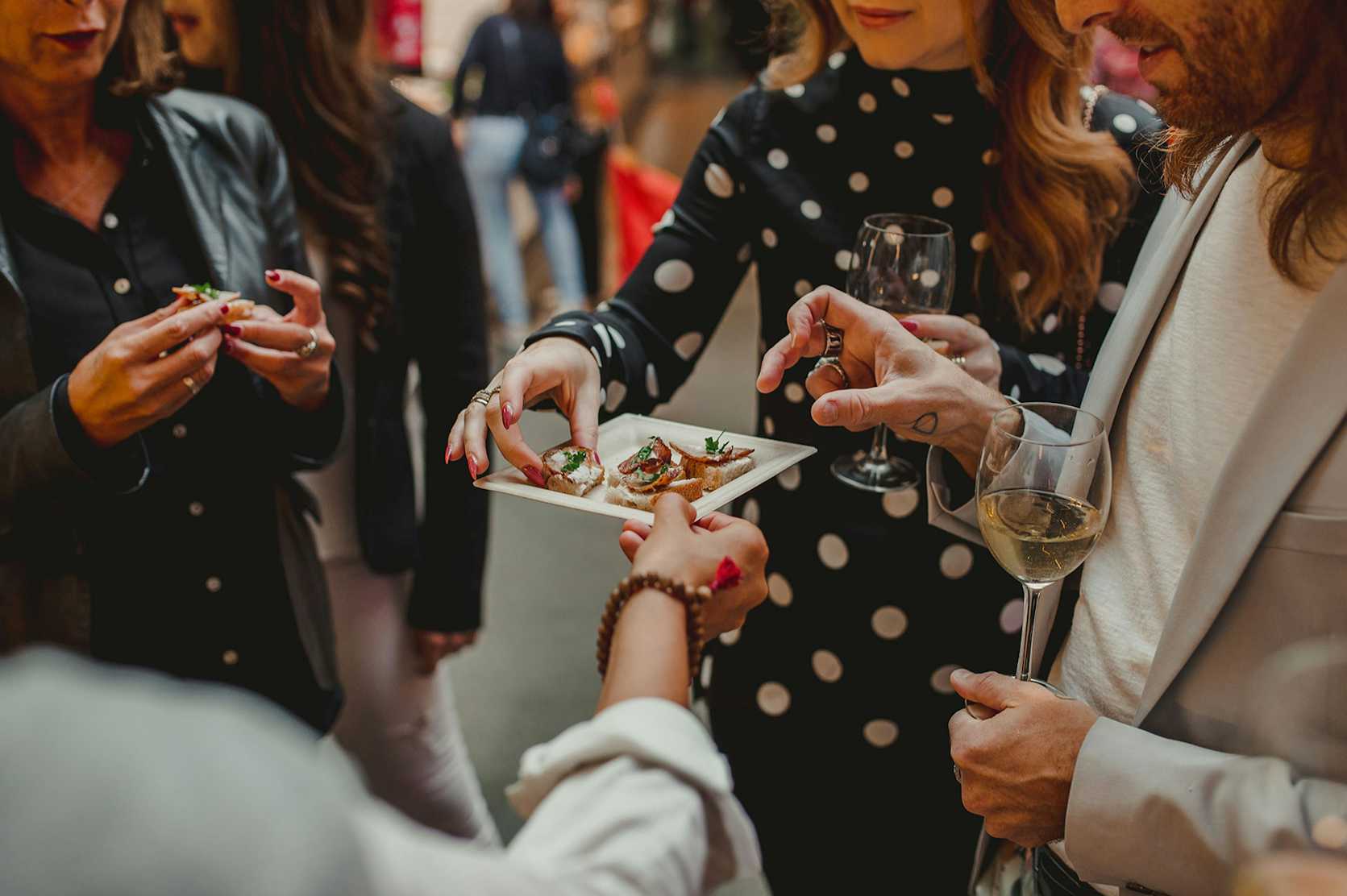
Tapas in Barcelona: To share
Crossing the Old Port back to the Old Town is where the tour’s argument clicks. You see modern Barcelona – the marina, the redeveloped waterfront, the city’s constant reinvention – then you return to the medieval core. The contrast is the point.
Picasso knew the old city. You get both versions in one ride.
The finish is not a random tapas bar. It is Els 4 Gats, the Art nouveau bistro where Picasso used to gather with his bohemian friends. I have sat in that room and thought about how many arguments about art and politics happened over wine at those tables.
The tour concludes there with a selection of Spanish wines paired with a variety of tapas. Croquetas, if you’re lucky.
Here is the sequence that matters:
- Gothic and Born quarters – Pedal through the oldest streets, following Picasso’s early Barcelona life.
- Park de la Ciutadella – Pass the 19th-century park that most food-focused tours skip entirely.
- Barceloneta beach – Ride the palm-lined bike lane with the Mediterranean on one side.
- Old Port crossing – Loop back toward the Old Town through the modern marina district.
- Els 4 Gats – End at the Art nouveau bistro with Spanish wines and tapas.
I would pick this over a walking tour if I had already spent a day on foot. The e-bike does the heavy lifting, so the pace feels generous without being slow. And the final tasting lands differently after an hour of movement.
Hunger sharpens. The first sip of crisp local white wine tastes like a reward, not a formality.
Not every tapas experience needs to be sedentary. Some need wind, distance, and a route that forces you to see the city before you taste it. Sailing tours make a similar argument from the water.
I once joined a walking tour that started near a Roman wall fragment and ended three hours later with a glass of sherry I still think about. A guided walking tour with tapas tastings and drinks is a small-group route through historic streets, stopping at three carefully selected tapas bars for Catalan bites, sherry, and regional wines. The guide ties each plate to the neighborhood around it.
Three stops sounds modest until you realize each one is a full spread, not a single skewer. The pace is deliberately slow. You walk, you eat, you listen, you repeat. A fourth stop is available if the group wants to stretch the evening, which most do.
The guide’s role is the quiet engine here. Mine pointed out a plaza I had walked through twice without noticing, then explained why the bar on the corner still serves a dish its founder made in the 1940s. That kind of detail doesn’t come from a menu.
What the walking route actually covers
Historic neighborhoods, streets, and plazas form the route, but the food traditions carry the narrative. Catalan bites appear next to sherry, then a regional wine shows up at the next stop and suddenly the pairing logic clicks. I stopped thinking of it as a tasting and started reading it as a map of local habit.
Group size stays small, so the guide can adjust. One person in my group didn’t eat pork; the guide swapped a bite without breaking the flow. That flexibility is the difference between a scripted crawl and a personalized journey.
Some practical questions about timing, pricing, and booking will come up later in the FAQ. For now, the point is simpler: this format rewards people who want context with their calories.
- Three tapas bars, each with multiple food and drink specialties
- Catalan bites, sherry, and regional wines at the stops
- Optional fourth stop for an extended experience
- Historic neighborhoods, streets, and plazas between bars
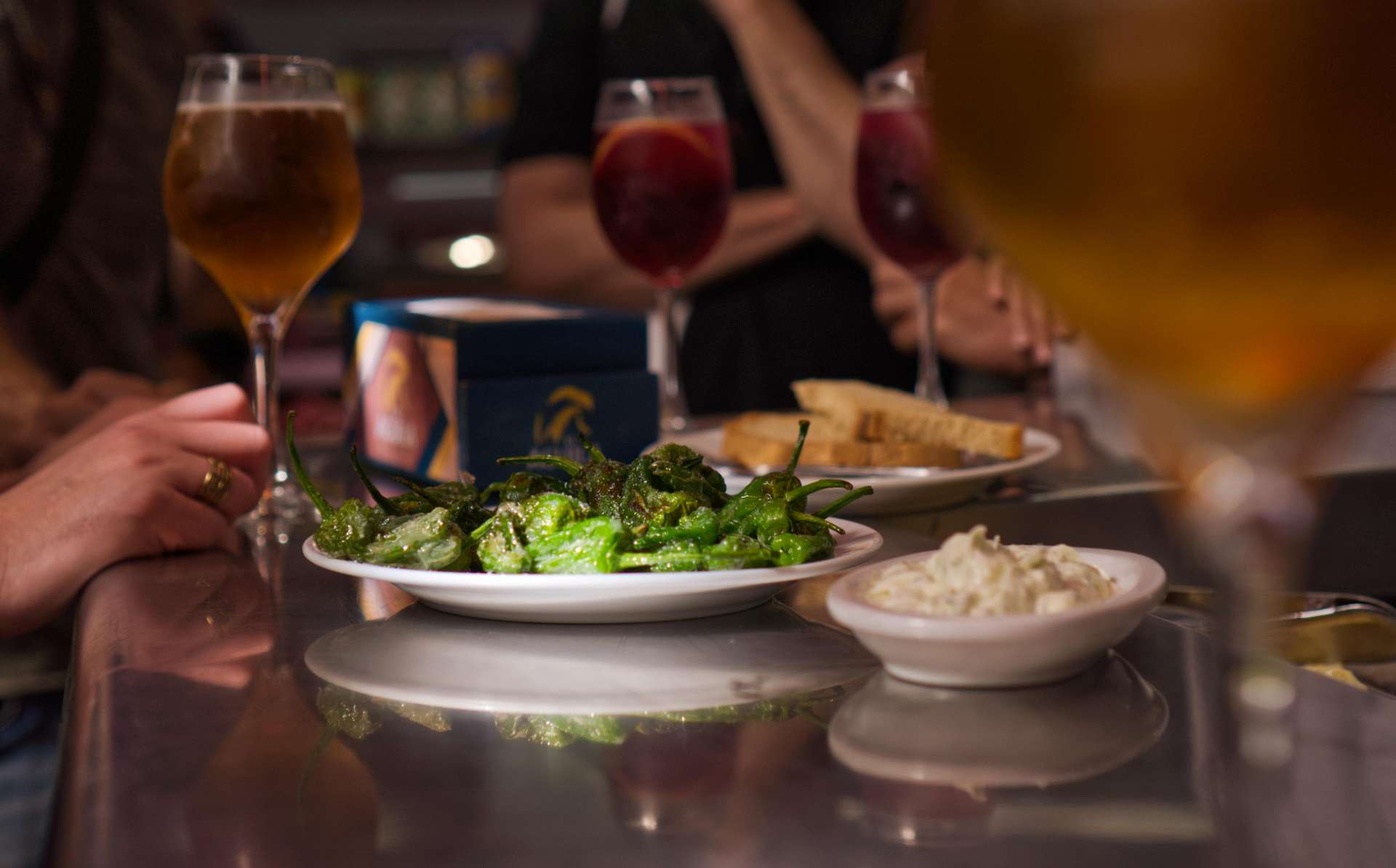
Tapas in Barcelona: Pimientos al padron
I have done tapas crawls where the guide disappears into their phone and the group drifts. This is not that. The walking tour format keeps everyone together, and the guide’s commentary fills the gaps between bites with something worth remembering.
The last stop on my tour was a bar so small the group had to split across two tables. The guide poured a regional wine and told us the dish in front of us was once a fisherman’s breakfast. That specific, grounded detail is what a generic tapas barcelona search won’t give you.
2-Hr Small-Group Sailing Tour + Tapas
A 2-hour small-group sailing tour pairs gourmet seafood conserves, premium charcuterie, and regional wines with Barcelona’s Mediterranean coastline – no restaurant reservation required. The boat leaves the marina with a multilingual guide who narrates local stories while you eat. It is the fastest way to trade crowded tapas bars for open water and a breeze.
Most tapas barcelona experiences keep you on foot, weaving through alleys and waiting for a table. This one inverts the entire premise. The Mediterranean becomes the dining room. The small group means you are not elbowing strangers for the last slice of fuet, and the two-hour window keeps the pace sharp without dragging into a half-day commitment.
The food itself leans high-end. Gourmet seafood conserves – think razor clams, mussels, and tuna belly packed in olive oil – sit alongside premium charcuterie. These are not fried bar snacks.
They are the kind of preserved seafood that coastal Catalans treat as a point of pride, and they hold up beautifully on a moving deck. Paired with regional wines and cava, the spread feels closer to a private tasting than a standard tour.
I have watched people board this tour expecting a booze cruise and leave genuinely surprised by the quality of the conserves. That gap between expectation and delivery is the whole point.
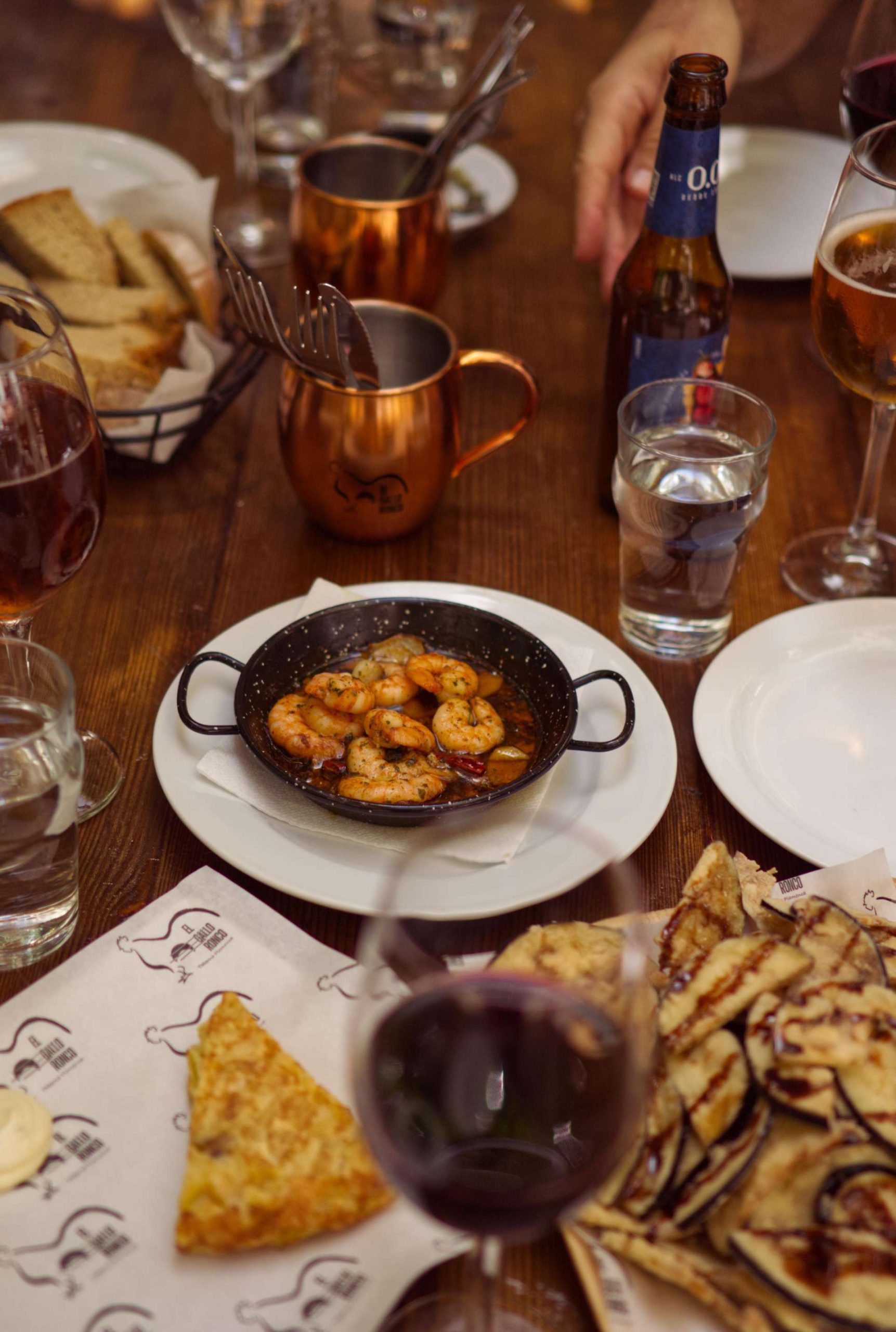
Tapas in Barcelona: Gambas pil-pil and tortilla española
The guide’s local stories do the heavy lifting for context. Barcelona’s coastline has centuries of shipbuilding, smuggling, and fishing lore that never makes it into guidebooks. Hearing those tales while anchored off the very shore they describe changes how the food tastes. The guide speaks multiple languages, which keeps the group from fracturing into translation silos.
Weather permitting, the captain offers optional paddleboarding or swimming. That is the wildcard. A quick dip in the Mediterranean between courses resets the palate and turns a tasting into an event. If the water is rough, you stay dry and keep eating – no loss either way.
What this tour is not: a cooking class, a neighborhood crawl, or a history lecture with snacks bolted on. It is a luxury escape with a time limit. The two-hour cap forces efficiency, which means every course and every story has to earn its place.
- 2-hour journey on a small-group sailboat
- Gourmet seafood conserves and premium charcuterie
- Regional wines and cava poured throughout
- Multilingual guide sharing local Barcelona stories
- Optional paddleboarding or swimming if weather permits
I would not recommend this as your first tapas experience in Barcelona. It works better as a second or third act – after you have done a land-based tour and learned the classics, the sailing version reframes everything. The contrast is what makes it memorable.
The real consequence of choosing this tour is that it spoils you. After eating conserves with a sea breeze and a glass of cava, a crowded bar stool feels like a downgrade. That is not a complaint. It is a standard you will carry into every other tapas decision on the trip.
This tour is the fastest way to connect Barcelona’s Modernist landmarks with a real tapas stop that locals still use.
It starts at Plaça de Catalunya and walks down Passeig de Gràcia, past Casa Amatller, Casa Batlló, and La Pedrera – Casa Milà. The guide explains Antoni Gaudí’s life while you look at the facades, not a slideshow. Then you ride the metro to Sagrada Familia. That sequence matters: the architecture gives you context, but the food stop gives you the city’s pulse.
- Start at Plaça de Catalunya
- Walk Passeig de Gràcia and see three Modernist icons
- Hear about Gaudí’s life and Barcelona’s architectural history
- Ride the metro to Sagrada Familia
- Taste tapas and a drink at a family-run bar
- Relax in the Rambla district
- End at Hospital de Sant Pau, a Modernist design
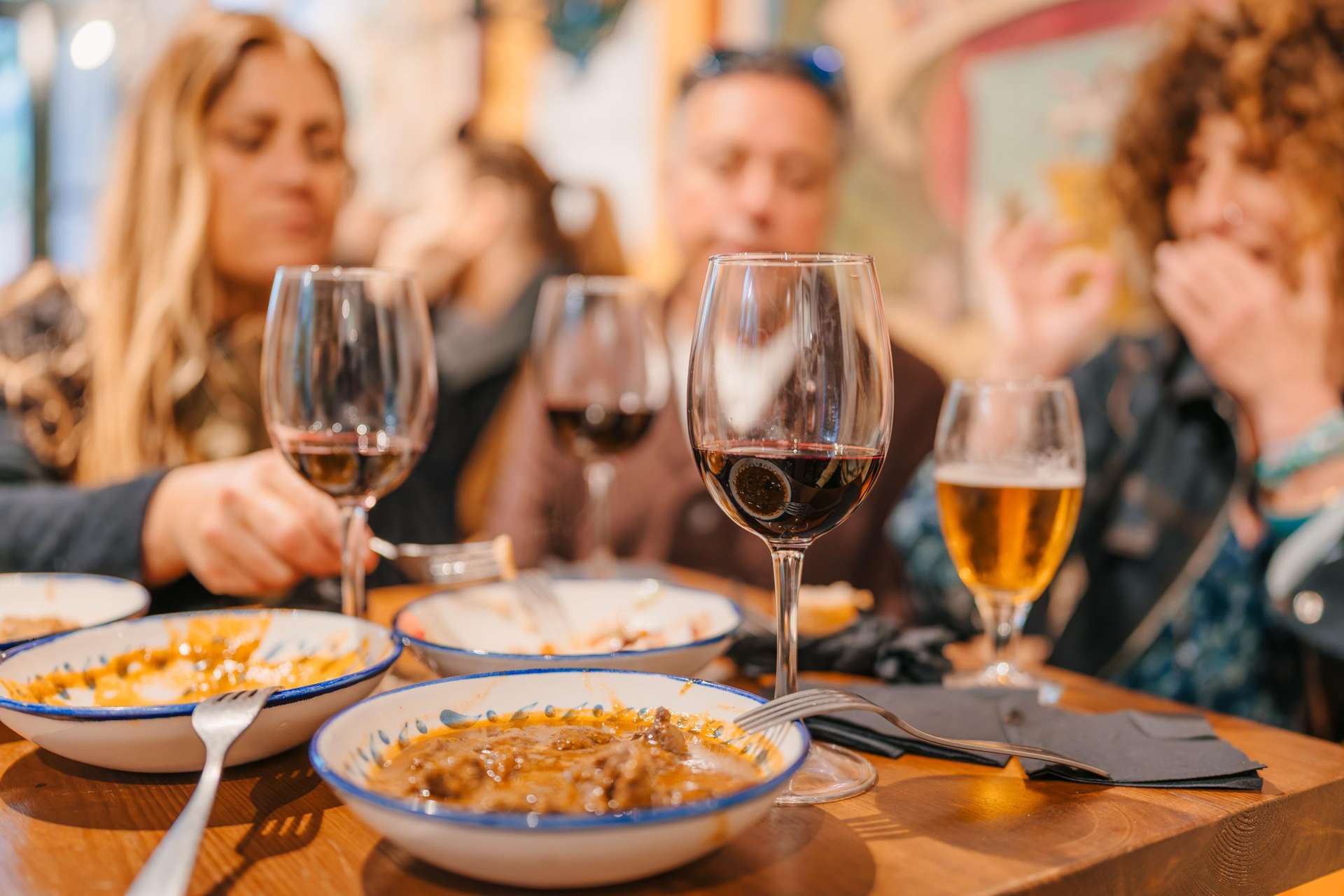
Tapas in Barcelona: Wine and sharing tapas
I’ve done this route twice. The tapas stop is not a tourist assembly line. It’s a family-run bar near the Rambla where the pan con tomate is made the way it should be: bread rubbed with garlic and tomato, good olive oil, salt.
A cold beer next to it. That’s the whole meal, and it works.
The tour covers the city’s history, architecture, and local culture in one continuous thread. You’re not just checking off Gaudí buildings. You’re seeing how the Modernist obsession with detail shows up in the food too – simple ingredients treated with precision.
Hospital de Sant Pau is the quiet payoff. Most visitors skip it. It’s a Modernist complex that feels like a hidden city, and ending there after a tapas stop gives the afternoon a slower, more local rhythm.
This is not a food tour. It’s a walking tour that respects the fact that you’ll get hungry. The tapas stop is short, unpretentious, and exactly what you need before the final architectural stretch.
What stays with me is the contrast: standing under Sagrada Familia’s towers, then sitting on a plastic chair in a bar where the owner knows the regulars by name. That’s Barcelona tapas culture in one afternoon.
El Born Small Group Tour + Gourmet Tapas & Wine
An El Born small group tour pairs curated gourmet tapas and fine wines with medieval streets, ending in VIP access to JONCAKE for cheesecake with no queue. I’ve done this route when I wanted something more polished than a standard tapas crawl but still rooted in a specific neighborhood’s character.
The tour starts in a local bar with a refreshing beer. That opening matters. It grounds the whole experience in El Born’s everyday rhythm before the food becomes more ambitious.
From there, the group walks toward Santa Maria del Mar Basilica, and the guide lets the Gothic architecture do some of the talking. I’ve stood outside that church more times than I can count, and it still stops me.
Then comes the part I won’t spoil with an address. The tour heads to one of the city’s best-kept dining secrets for a tasting menu. I respect that discretion.
Some places in Barcelona survive precisely because they don’t broadcast themselves. The dishes here include fideua, crispy squid, and Catalan canelons.
Fideua is the noodle-based cousin of paella, and the version I had was short, toasted, and deeply savory. The squid was crisp without being greasy. The canelons carried that slow-cooked, almost holiday-meal weight that Catalan home cooking does so well.
Wine flows through the meal, matched to each course rather than poured as an afterthought. That’s the difference between a curated tasting and a bar hop. I noticed the guide didn’t rush anyone. Small group pacing in El Born’s narrow streets feels natural, not scheduled.
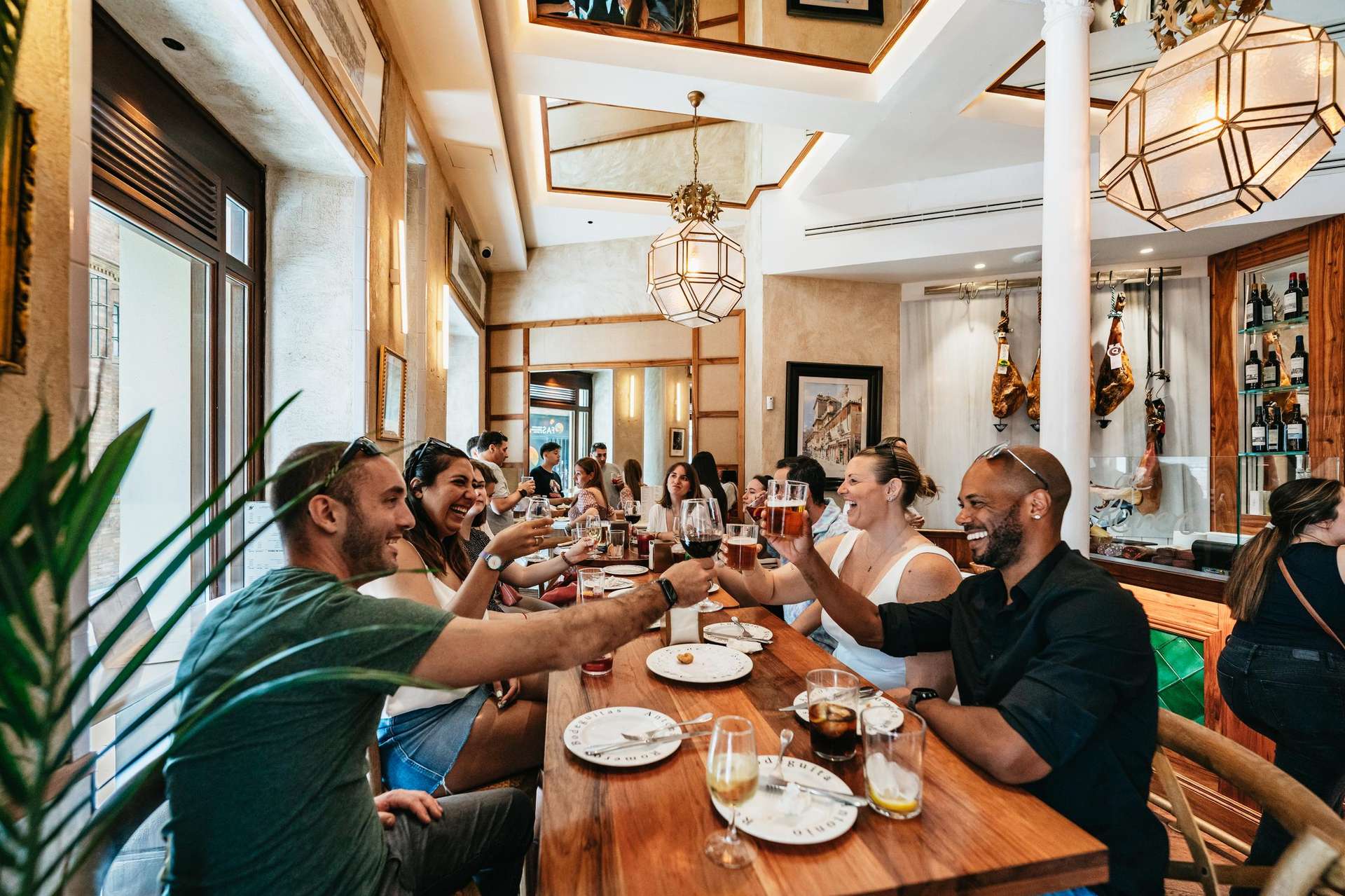
Tapas in Barcelona: brindis
The final stop is JONCAKE. Normally, that means a line. On this tour, it means VIP access and a cheesecake experience with no waiting required.
I’ve walked past that queue before and kept going. Skipping it changes the whole ending.
This tour is the elevated version of neighborhood-specific tapas exploration. A broader Gothic Quarter and El Born tour exists for comparison, but this one trades breadth for depth and exclusivity. The medieval setting isn’t backdrop; it’s part of why the food tastes the way it does.
Gothic Quarter & El Born Guided Tapas Tour with Drinks
A guided tapas tour through both the Gothic Quarter and El Born combines nine dishes, four local eateries, and priority seating into one seamless evening of Catalan food and history. I’ve done the individual neighborhood versions, and this combined route solves the problem of choosing between them.
The tour visits four local eateries with priority seating at each stop. That detail matters more than it sounds. In El Born especially, the better bars fill up fast, and standing at a counter while a guide negotiates for space kills the rhythm. Priority seating means the group sits, eats, and moves without friction.
Nine tapas dishes sounds like a lot until you realize they’re paced across two neighborhoods. Patatas bravas and croquettes come early, paella arrives mid-route, and dessert closes the night. Regional drinks rotate through cava, sherry, and wine, with non-alcoholic options available for anyone who wants them.
Between stops, the guide walks you past Roman ruins and the Basilica de Santa Maria del Mar. I’ve stood in that square at dusk while a guide explained how the church’s construction shaped the surrounding streets. The history doesn’t interrupt the food. It gives the food a reason to exist where it does.
What I’d flag as the real trade-off: this tour covers more ground than the single-neighborhood versions, so you get less time in any one bar. That’s the cost of breadth. For a first-time visitor, the trade is worth it. For someone who already knows El Born’s back streets, the Gothic Quarter half will feel more useful.
The food market lunch tour offers a different angle entirely – daytime, market-first, built around fresh produce rather than evening bar culture. I’d pick this combined tour for dinner and save the market for a midday slot.
My ninth dish that night was paella in a crowded El Born eatery, after walking past Roman walls and through the basilica’s shadow. The sequence worked because the guide built it that way. That’s the difference between a route and a plan.
Food Market Lunch Tour with Wine Pairing
A food market lunch tour turns five market stops into a full midday meal with wine pairings, so you leave genuinely full and understand why Catalan cooking starts with what’s fresh that morning.
Skip breakfast. I mean that literally. The first time I joined one of these, I’d had a coffee and a pastry an hour before, and by the third stop I was quietly regretting every bite of that croissant. Five stops building into a lunch and dessert itinerary means the pacing is deliberate – you’re not grazing, you’re assembling a meal across a market’s stalls, then sitting down to eat it properly.
What changes the experience is the market itself. Catalan markets aren’t tourist set pieces; they supply homes and restaurants with the seasonal produce that anchors the region’s cooking. You see a vendor hand a chef a box of tomatoes, then twenty minutes later a version of those tomatoes lands on your plate. That connection is the whole point, and it’s harder to fake than any restaurant dining room.
The wine pairing matters more than the label. Each pour is chosen to sit against a specific dish, not to impress anyone with a vineyard name. A crisp white next to seafood, something earthier beside cured meat. I’ve watched people who claimed they didn’t like wine finish every glass because the pairing made sense in context.
This is a midday activity, which makes it easier to schedule around other plans. It’s also suitable for the whole family – the market’s noise and color keep kids engaged, and the food comes in manageable portions. You won’t need feeding again until well into the night, which is a practical detail that saves you money later.
The market selection is deliberate: an authentic local market known for high standards and quality products. Not the one with the souvenir stalls at the entrance. Where the locals go, the tour goes.
One thing I’d flag before you book: check whether the tour visits the market first or last. If it’s last, you’ll be too full to browse properly. If it’s first, you get to see the ingredients before they become your lunch. That order changes the whole afternoon.
Most tapas questions in Barcelona boil down to one thing: how do I order without looking lost? The answer is simpler than people fear. Walk up to the bar, point at what looks good, and say the dish name. No ceremony required.
Pinchos are not tapas. A pincho is a small portion speared with a toothpick, usually sitting on bread, and you pay by the toothpick at the end. A tapa is a small plate served to accompany a drink. In Barcelona, tapas lean Catalan: escalivada, bombas, fuet, and pan con tomate appear more often than Andalusian classics.
Portion sizes run small by design. Two people should order four to six plates and share. Ordering everything at once is a mistake – start with two dishes, see the pace, then add more. Bars expect this rhythm.
Drinks matter as much as food. sherry before the meal, cava with fried dishes, and a caña of local beer with anything salty. Skip sangria at a serious tapas bar; it marks you as a tourist faster than a map.
Timing, cost, and dietary reality
Lunch tapas start around 1:30 p.m. Dinner tapas don’t begin until 8:30 p.m. at the earliest. Showing up at 6 p.m. means empty bars and reheated croquettes. I’d rather eat a late lunch and skip dinner than fight that schedule.
Expect to pay €3–5 per tapa in a mid-range bar. A full meal for two with drinks lands around €40–60. Tourist-zone prices run double that for half the quality.
Dietary restrictions are manageable but not effortless. Vegetarians will find patatas bravas, pimientos de padrón, escalivada, and cheese plates. Vegans should ask about anchovies in the bravas sauce – many recipes include them. Gluten-free eaters need to avoid croquettes and most fried items unless the bar confirms otherwise.
The 25 questions, answered fast
- What is a tapa? A small plate served with a drink, meant for sharing.
- Are pinchos the same as tapas? No. Pinchos are skewered, bread-based, and priced per toothpick.
- How many tapas per person? Three to four plates per person makes a full meal.
- Do I order all at once? No. Order in waves of two or three.
- What time do locals eat tapas? 1:30–3:30 p.m. and 8:30–11 p.m.
- What should I drink? sherry, cava, or local beer. Not sangria.
- How much does a tapa cost? €3–5 in a normal bar.
- Is tipping expected? No. Leave small change if service was exceptional.
- Can I eat tapas alone? Yes. Sit at the bar and order two or three plates.
- Are tapas gluten-free? Some are. Croquettes and fried items usually aren’t.
- What’s the best neighborhood for tapas? Poble Sec and Sant Antoni for locals; El Born for atmosphere.
- Do I need reservations? For popular bars at peak times, yes.
- What’s a bomba? A fried potato ball filled with meat, topped with bravas sauce and aioli.
- What are pimientos de padrón? Fried green peppers, mostly mild, occasionally hot.
- Is paella a tapa? No. It’s a rice dish, though some bars serve small portions.
- What’s pan con tomate? Bread rubbed with tomato, olive oil, and salt. It accompanies everything.
- Can vegetarians eat well? Yes, if they ask about hidden anchovies and meat stocks.
- What’s the difference between a tapa and a ración? A ración is a larger, full-size plate.
- Do bars serve tapas all day? No. Kitchens close between 4 p.m. and 8 p.m.
- What’s escalivada? Smoky roasted eggplant, peppers, and onions in olive oil.
- Is it rude to share? No. Sharing is the entire point.
- What’s fuet? A thin Catalan cured sausage, milder than chorizo.
- How do I spot a tourist trap? Photos of food on the menu and staff waving you inside.
- Can I pay by card? Most bars accept cards, but carry €20 in cash for small places.
- What’s the one dish I must try? Patatas bravas, but only from a bar that makes the sauce in-house.
That last point separates the real bars from the lazy ones. A bravas sauce from a jar tastes like ketchup with anger issues. The good version is silky, smoky, and worth the trip alone.
At the end I would like to add a few things…
Barcelona hands you a dozen different doors into the same truth: the food is the culture, and the culture is best met on foot, in small groups, with someone who knows which bar keeps the good sherry cold.
I’ve walked the Gothic Quarter at dusk, eaten croquettes in Sant Antoni while the neighborhood argued about football, and sat on a sailboat off Barceloneta with a tin of razor clams and a glass of cava. The setting changes. The principle doesn’t.
What I actually learned after all those tours, classes, and market lunches:
- Guided tours beat guessing. A local guide gets you into four or five family-run spots in one evening – places you’d walk past without a second glance. The Gothic Quarter & El Born tour alone covers nine tapas and four eateries with priority seating.
- Neighborhoods matter more than landmarks. Sant Antoni and Poble Sec deliver the real Spanish food culture. El Born gives you medieval streets and fideua. The Rambla gives you overpriced patatas bravas and a photo of a statue.
- Hands-on beats passive. A cooking class with ingredients from La Boqueria teaches you more about Spanish culture in two hours than a week of restaurant hopping. You leave with a five-course meal and the ability to make paella at home.
- Pairing food with movement works. The e-bike tour to Els 4 Gats, the sailing trip with seafood conserves – combining tapas with a physical journey through the city makes both the food and the place stick harder in memory.
Pick one experience that matches how you like to travel. If you want maximum variety in minimum time, book the small-group walking tour with nine tastings. If you want to cook, book the paella class. If you want the sea, book the sailboat.
Open a booking tab, check availability for next week, and lock in one tapas barcelona experience before your trip. The good small-group tours fill up fast.
Barcelona won’t wait. Neither should you.