
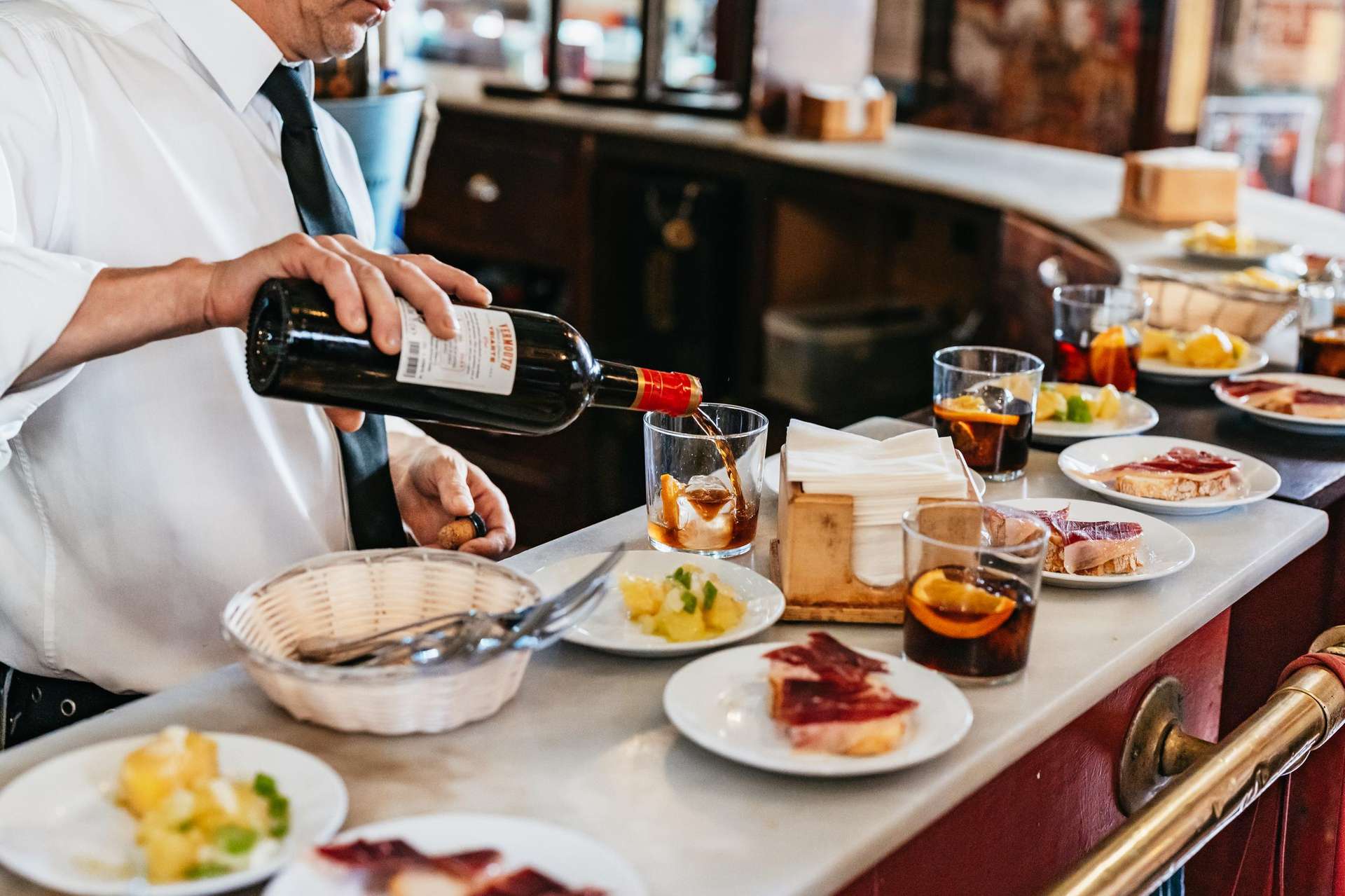
I tasted the tapas in many Spanish cities. Nothing could have got me ready for Granada. Just order a beer or a glass of wine and you have one plate of food on the bar in front of you.
There is no cost. This is the original tapas Granada style and it is still used everywhere in the city and the entire Granada province.
Not that the free tapa is the only part.
It is also part of the process to find the right place to order it. I have ordered a poorly made tapa for a high price while enjoying a postcard view of La Alhambra.
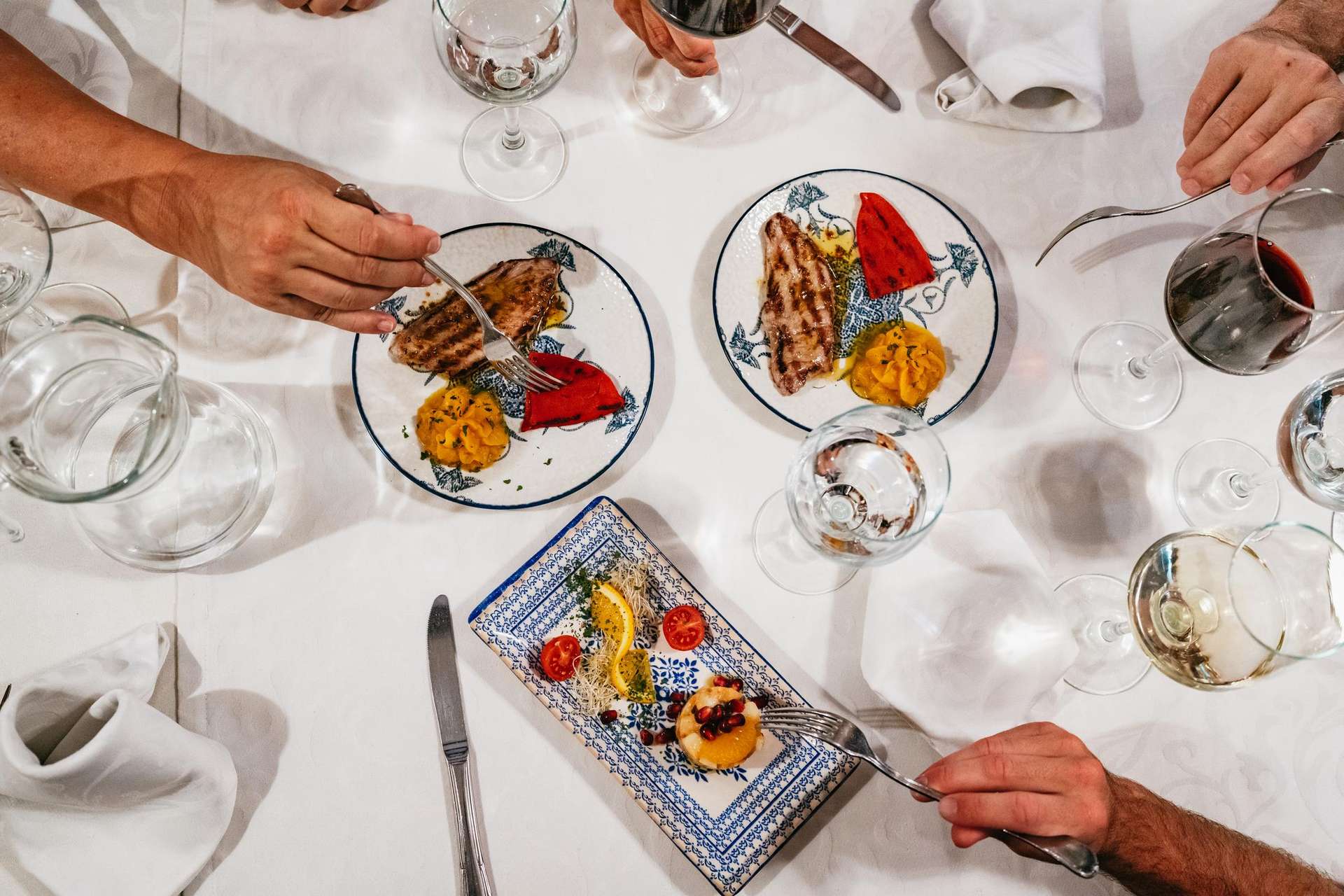
Sharing tapas in Granada
I once made my way to a really tight and small inside bar without any signage and I ended up having the best tapa in my entire life for the cost of a caña. The difference is not due to luck.
It is recognition of what to search for.
The problem of Granada is its abundance of tapas bars. You can stroll for hours and still not find some of the bars that the locals really care about.

Michael Madsen shares how to get the best tapas experiences in Granada
My strategy is straightforward. I avoid the menus having pictures.
The noise will be your guide.
Try to find a bar where all the customers are standing instead of sitting. That is the place where the kitchen is under maximum pressure.
My article is about the places I would return with my experiences, and these activities are going for a guided food tour through the old town and a tapas crawl to four different bars in one night.
A cooking lesson in a 16th-century royal residence where you will be taught salmorejo and tortilla by a professional. Also, the utensils have the same effect on tourists guilty of sightseeing but here you will not experience learning the authentic Spanish food culture of the city.
The local style of eating in Granada is described as follows.
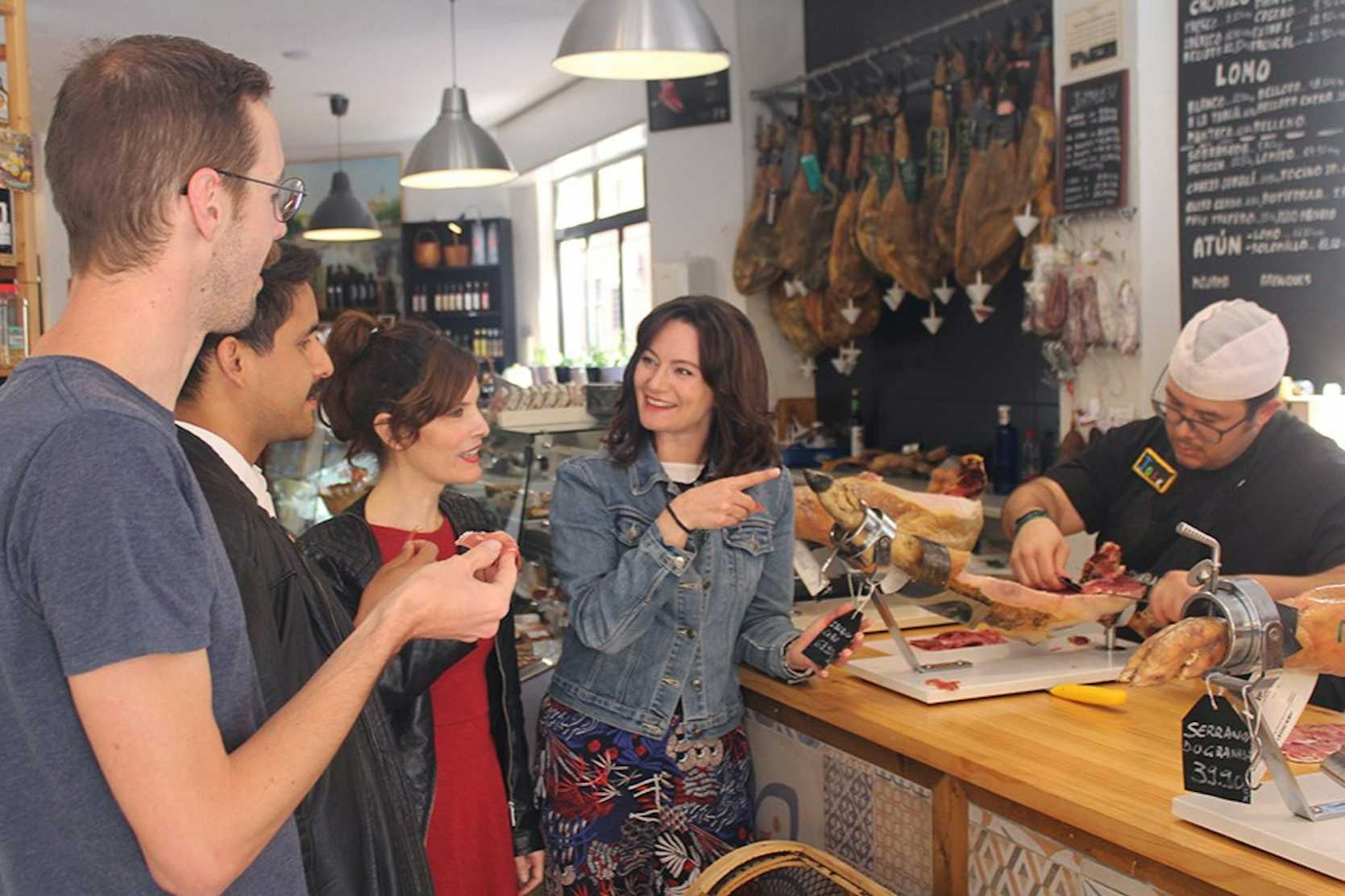
The Guided Food Tour in Granada
See also my article about the Alhambra and Granada here.
The Guided Food Tour
A food tour led by an expert is a great experience.
It is a tour where you visit different unique places and try out various dishes.
Eating is one of the favorite things to do while traveling, and nothing is better than to taste a local dish that you cannot find in your country.
For a food tour, you can rent a local tour guide from the city. Well, you can look for the guides on the website Viator or Airbnb experiences.
On such a food tour, one will learn about Granada not just through the food but also the family-run shops and traditional bars over a walking experience.
A few hours of focused exploration encompasses days of traversing the wilderness.
I’ve always had this belief that I could easily navigate myself everywhere.
However, it was quite surprising to find out that I had walked past a delicacy shop for three consecutive days without realizing it. It was my very first guided tour that walked me into it.
The manager started off our relationship with a slice of sheep cheese, which was so good that it made me feel like I was actually in the Sierra Nevada. I could never have discovered that place by myself.
A standard tour includes a second breakfast at a busy café-bar. That is an important detail.
Locals eat more than once in the morning, and a good guide builds the route according to that rhythm.
From there, you go to a Spanish deli to taste Ibérian ham, and into family-run businesses selling cheeses, jams, fruit, and biscuits. This is not a souvenir shop by any means.
This is where the Granadinos do their weekly shopping. The meal is the main attraction.
You are served local wine or beer witha modern tapa, something to show the evolution of Granada’s food scene.
After that, the guide leads you to a bar that has been around for a century, where you can have vermouth or sherry and another tapa.
The difference between the new and the old is summarized in one meal, tapas granada.
The visit has a sugar-coat to it. There are local delights like churros and the wonderful thick drinking chocolate to have.
Plus, you also get a goodie bag from the food tour guide, which may sound like a cheap trick but when you see that it has exactly the items you tried before, it makes sense. I still have the fig jam jar that was a part of my goodie bag.
Every tour does not match with all travelers, which is the case for some who want a more luxurious version with reserved tables and a guide-sommelier, while others would rather have a historical walking tour.
Compared to other tours, a guided food tour is slightly more formal. It’s organized enough to take away any decision-making stress but casual enough that you feel like you’re hanging out with a knowledgeable friend.
After the tour, you embody a mental map with the local eatery options that you are to visit next.
This is the essential thing. The tour is not just about providing food for you for four hours. It is imparting the knowledge on how to fend for yourself for the rest of your vacation.
The Guided Luxury Food Tour
In Granada, guided luxury food exploration brings a fresh twist to the traditional bar-hopping by allowing you to visit five handpicked venues, each of which has a table reserved just for you, and be accompanied by a guide-sommelier who tells you about the history and the drinks and the typical food that you eat along the way.
I have already completed the standard version.
I have also accomplished the luxury version. The difference is not only the price. It is the pacing, the access, and the person pouring your wine.
On a high-end vacation, you do not stand in a queue for a space at the counter with other customers.
The table is ready for you, and with that, it is enough to modify everything about your tasting.
The drinks and food items in each outlet are given to one customer only, but this sounds quite a few until you realize that pairings are the main idea.
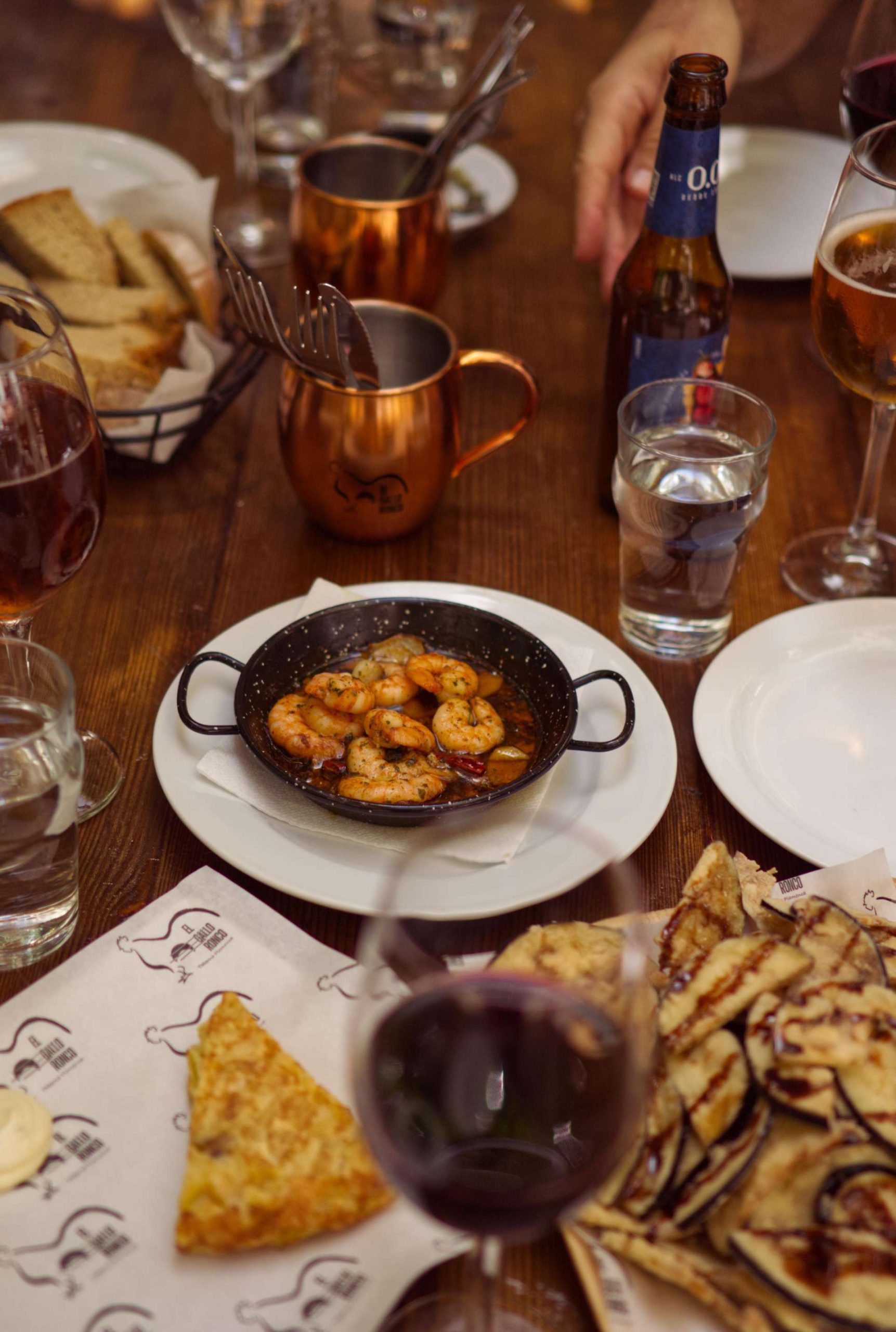
Tapas in Granada: Gambas pil-pil and tortilla española
One time, my mouth hung open as a sommelier paired this extremely rare wine from the region to one delicious tapa.
A usual tour would have given me a beer and continued.
My understanding of the importance of the guide-sommelier role has shifted dramatically, and it now signifies much more than I had expected.
A figure such as this is not to be confused with a person who delivers a written speech.
They show the connection of a specific sherry with a specific cured ham, why the Alpujarra mountains affect the drying process, and that the way of drinking in Granada has shaped the food itself.
You learn the story, but not in a boring way – you learn it through a glass.
Five stops feel like a short distance. However, it is not the case. The excursion finishes with sweets, cava, and cocktails.
At that point, you have consumed more variety of food than you would in an entire casual tapas granada crawling time.
This is not a casual walking tour. That one will be more extensive and will probably cover more hidden corners than this one.
The luxury version is all about depth and comfort as it abandons the breadth.
Well, I wouldn’t suggest it for the first night in the city, but hold it for the time you want the food to slow down and want the service to maintain the pace.
The Walking Food Tour
A walking food tour is totally feasible only with the acceptance of one constraint. The whole city will not be covered. You will cover some streets thoroughly and that is the exact aim.
I was able to find out how interesting it is to go on a food tour in Granada and discover the history of local food thanks to that. The guide was not only pointing at the dishes.
She also made me familiar with the Sefardic, Berber, Nasrid, and Romain influences on the food.
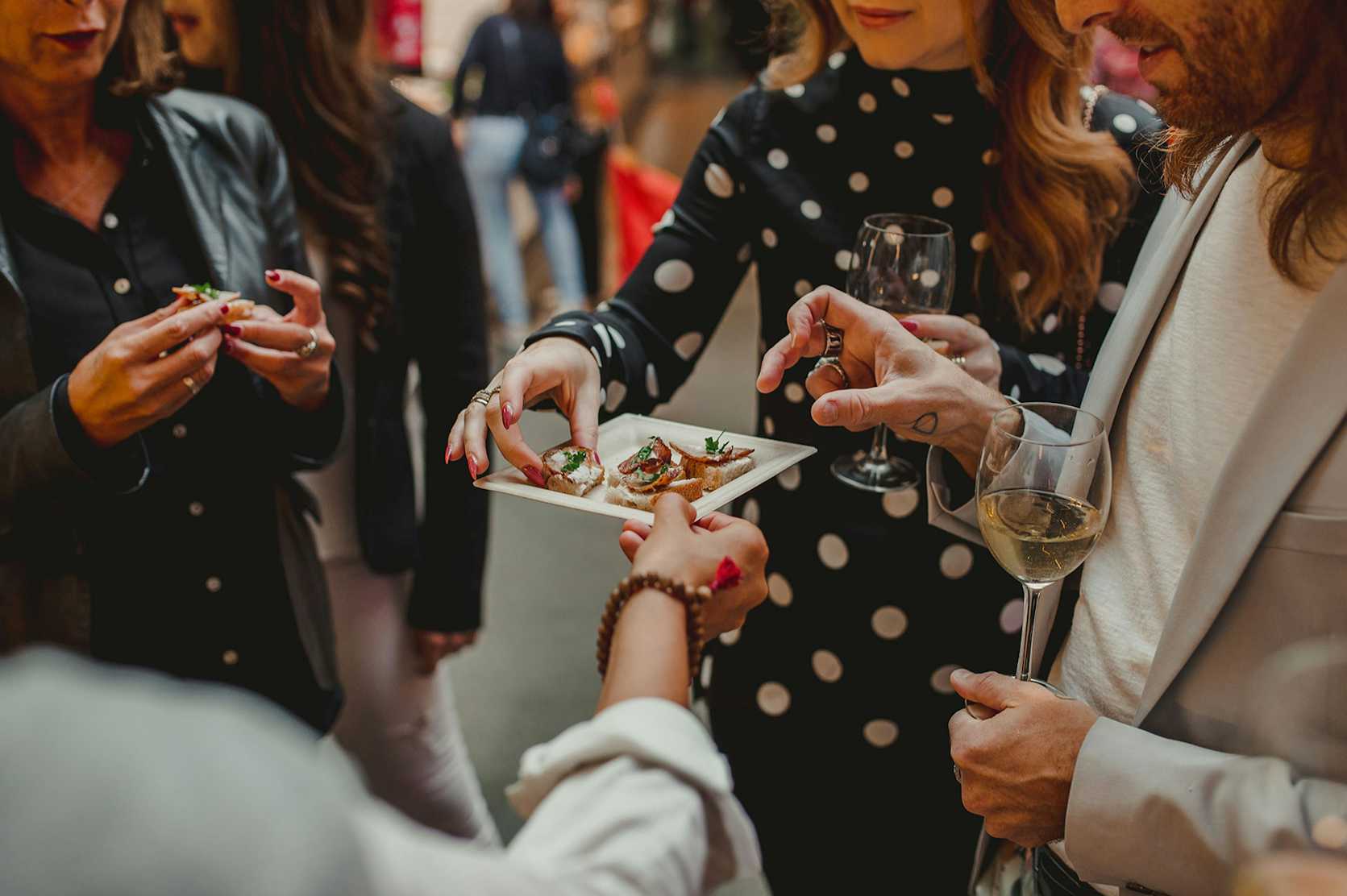
Tapas in Granada: To share
That particular context completely transformed the taste of everything. A piece of Serrano Ham ham has not been only ham anymore.
It began its journey as an authentic mojo product from a mountain village of the Alpujarras, which was dried in the snowy air of the Sierra Nevada. From that moment on, every morsel seemed to have a more intense flavor.
Taking a walking food tour provides you with a unique experience of local products connected to the area. I remember the following things the most:
- The small mom-and-pop shops, tapas bars, and other businesses that are located far away from the normal path of tourists are indeed a big help to their owners in meeting their financial targets.
- The beverages and wines that come from the Granada region are made using local ingredients. Local drinks and wines of the Granada region consist of products that are made in the area of Granada with local raw materials. Local drinks and wines of the Granada region consist of products that are made in the area of Granada with local raw materials.
- Tavern which is about the oldest one in town.
- Prepare local food in the historical Chikito restaurant
Visiting the last stop has been a cherished experience for me.
Dining in the very room where the poets fought their battles not only felt like enjoying a meal but it was rather sitting inside the cultural memory of Granada.
That feeling is effectively cultivated by the tour.
I wouldn’t characterize it as a luxurious stay.
Apart from enjoying the food and drink at casual tapas crawl, which would be a much more exciting and fun-filled experience, the walk in this route is mostly standing and moving from one tiny place to nearby others. This is the downside.
You give up the broad range of experiences for a more in-depth one.
Rather some travelers prefer a lively bar-hopping spirit rather than a more social one.
Well, we will get into that later.
This tour is for those occasions when you want to understand what influences the taste of Granada’s food, not just eat it more.
Even if I were to exclusively focus on the ham lesson, it would still cover my investment in full.
The All-Inclusive Tapas Crawl
It is a unique experience that combines the two elements of a tour and a typical Spanish custom of getting to know the local cuisine.
During such an event, you will be taken to several different local bars where you will be able to taste a variety of tapas that come for free with the drinks. Simultaneously, a local guide will reveal interesting stories or facts about each bar and also about the town.
A guided evening of tapas crawling through four contrasting bars is an all-inclusive package of three hours of the tour, 10 dishes, and 4 drinks included in one cost.
This is a unique opportunity to explore the varied offerings of each bar and also learn about the local tapas culture over your drinks.
This is a great way to meet other travelers and at the same time you will be discussing the differences between the tapas customs in Granada and other places in Spain.
Since I had signed up for one of these crawls, I thought it was going to be a normal bar hopping experience. However, it turned out to be more like a moving dinner party.
The guide started our journey at a quaint tavern, then moved us to a local community bar, and finally guided us into the small bodega where I would never have found it alone. At each point, the places had their distinctive beats, individual specialties, and the true locals observing us with a grin.
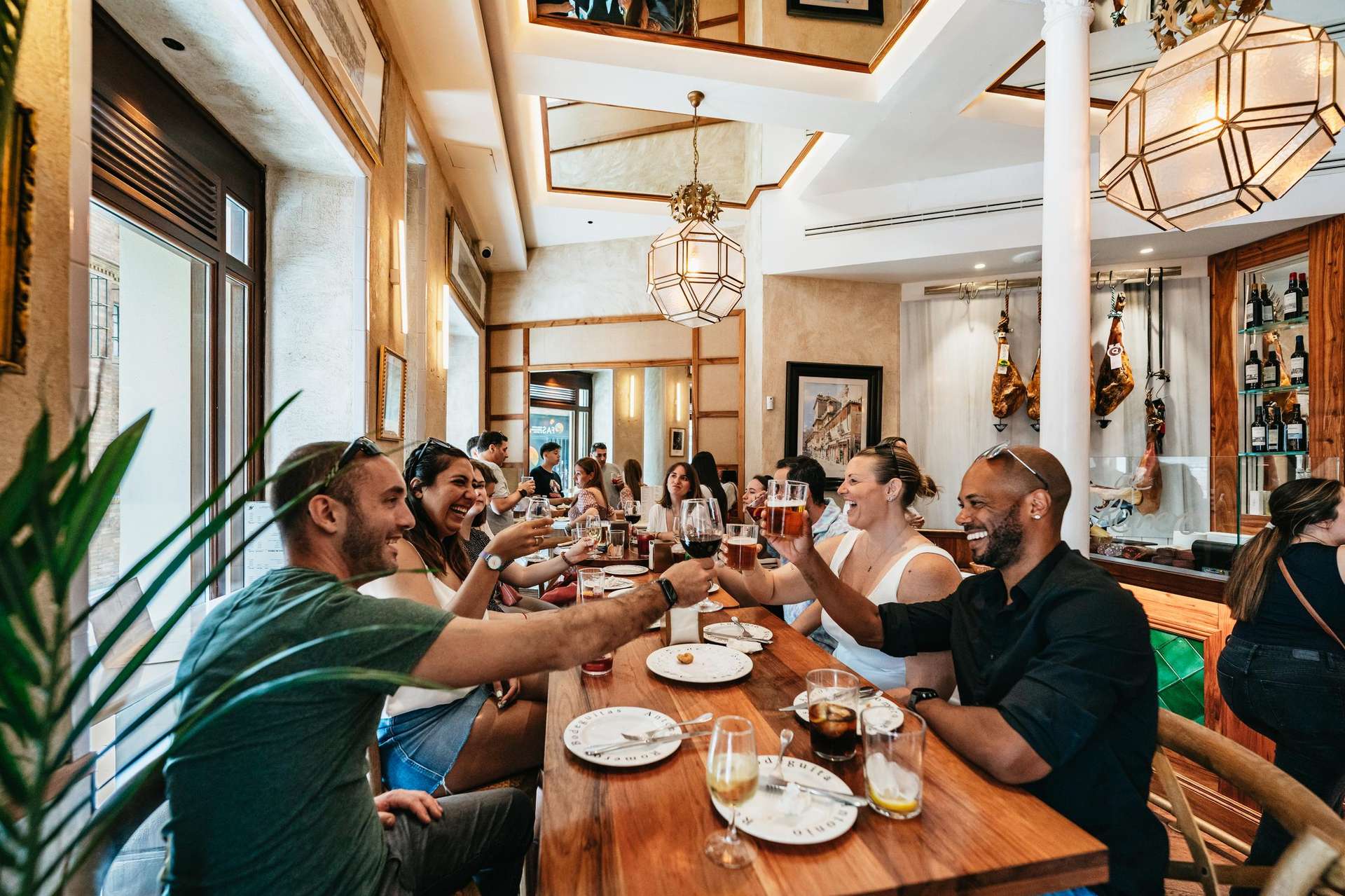
Tapas in Granada: brindis
The calculation benefits you. Since you have ten food items available along with 4 drinks in the 4 different places it means you do not stay at any one of them for a long time.
You savor, you converse, you walk.
During that crawl, I met fellow voyagers from three different nations, sharing their stories while eating patatas bravas and drinking local wine. The social aspect is the key point.
Having lunch alone in Granada is just okay. Having a meal with people who are not familiar to you but become your food friends is much better.
The most remarkable experience for me was the integration of cultural lessons amidst the evening.
The tour leader told us the interesting reason behind the tradition of giving free tapas along with drinks in many restaurants in Granada that is still being practiced.
That one piece of information was enough to change the way I ordered throughout the rest of my trip.
You roughly understand the mission of this crawl as it aims to introduce you to the way of life of the people of Granada by providing you with a snack and a drink at each bar visited. This crawl is not a history lecture.
It is not a luxury tasting. It is the casual, loud, slightly chaotic version of Granada’s food scene.
The kind where someone spills wine, someone tells a bad joke, and everyone ends up sharing phone numbers.
It even sows a seed for a bigger project. When you notice the four bars melding into each other in one evening, then you naturally start thinking what a full-fledged city food tour would unfold. Not only with the tapas bars.
Grocery stores, butcheries, and bakeries. That is however a separate topic.
At this point in time, the exclusive crawl deals with one question – do you feel like eating good food and making new friends while doing it? I felt the same. I would love to do it once again.
Kick off this tour by the Aguador Monument in Plaza de la Romanilla and immediately order a Pionono even before paying attention to your phone.
This small fluffy syrup soaked pastry with a dollop of toasted cream on top is the first item of the 8+ tasting courses on this panoramic view of the traditional Granada food tour that runs around the Mediterranean and Christian style of living.
As a matter of fact, you will have Alhambra beer, sherry, Andalusian red wine and a mystery dish which will be revealed to you by the guide when it is already on the table.
There are some walking tours I have been to where history is merely treated like a lecture. However, this one is different as it goes about it like a menu.
The way that the tour goes is beside the magnificent Granada Cathedral, which is really constructed in place of the former big mosque of the city.
It is not just a decorative element.
This detail is telling you the reason why the food is served by different chefs who are able to work simultaneously in the kitchen: a cold Salmorejo and a slow-cooked Rabo de Toro.
The Old Town Food Tour
The old town tour not only includes more stops but also creatively uses the Alcaicería and lower Albaicín as edible contexts.
Alcaicería which is the Nasrid silk market, and its narrow lanes filled with souk vibes, od aljechain street was also known as the market street where the aljaferia craftsmen did sell to the aljafies.
Tasting the products of the Arab influence amidst the whitewashed Albaicín is like truly establishing the Moorish connection.
Then facing the Alhambra white Albaicín, which is full of whitewashed houses, reorients you to the Christian part of the history.
What you can expect at the tastings
Eight or more tastings sound like a lot. Absolutely, but the tempo is high, making them appropriate. The guide sends the plates out across the historical neighborhoods, so you’re walking off one bite while the next one appears.
- Pionono is a type of rolled sponge cake that is often filled with cream and fruit. It is named after the famous Pío Nono, a monastery located in the central part of Santiago de Chile. This cake is popular not only in Chile but also in many other countries, especially in Latin America. The process of making a pionono is quite similar to that of making a regular sponge cake. The only difference is that a pioneer is usually baked in a specific tin and is later rolled while still hot. First of all, it is located in a very central and attractive place right next to the Cathedral.
- Jamón de Alpujarra The sherry goes well with the thinly sliced pieces of air dryed ham.
- It’s a Spanish dish that’s really original: Salmorejo is a kind of cold tomato soup made with just a few ingredients and is very common in many parts of the country, especially in Andalusia. Salmorejo generally contains tomatoes, bread, olive oil, vinegar, and garlic, which are blended until smooth. It is healthy, light, and very refreshing. The addition of toppings such as boiled eggs, and jamón ibérico give it a special touch.This is a creamy tomato and bread chilled soup accompanied by Alhambra beer.
- Rabo de Toro is a delicious dish widely consumed in Spanish-speaking countries. It is a typical stew of cow or bull tail that is widely consumed in different countries, especially in Latin America and Spain. Traditionally, it is made with the tail of the bull or cow, but in some places, it is made with other meats such as pork or chicken. The meat is usually slow-cooked with vegetables and seasonings such as paprika, garlic, and onion until tender and flavorful. It is a popular dish in winter, especially during festivities.Oxtail finished in slow-cooked red wine, with the addition of Andalusian red.
- Frittata de bacalao Special dish with cod fish
- Hidden recipe, which can be seen only after its arrival
A tapa is still included with the drink in Granada, so expect to have additional bites among the listed stops.
The tour is primarily based on official tastings, but the free tapas add a slight rhythmic loosening.
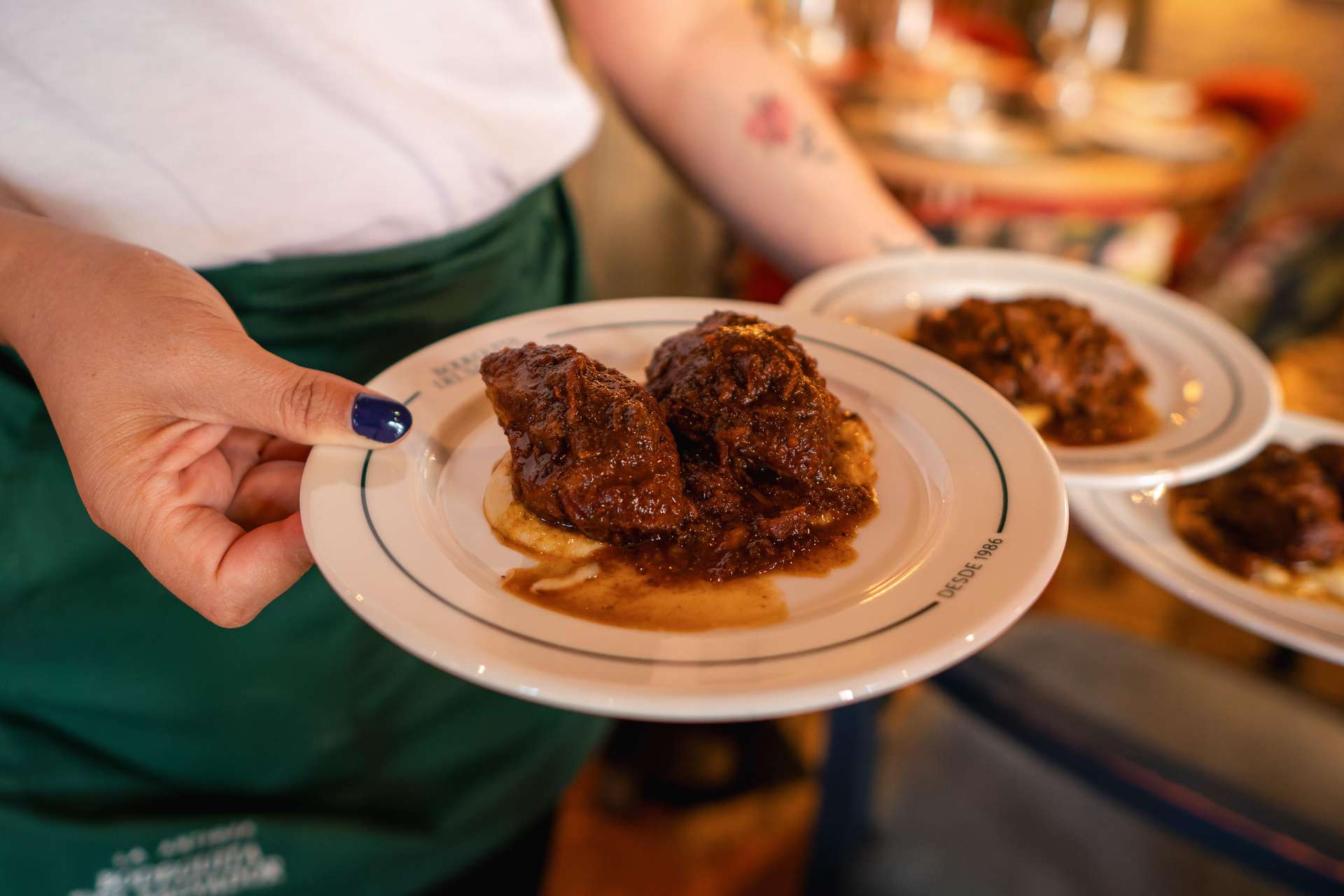
Tapas in Granada: Rabo de toro
The location is of greater importance than the food count
The guides are local residents who know places where Granadinos go eat. They talk about inhabitants of the city, recipes, and traditions instead of simply listing the years.
This is important because the food scene of the old town is prone to be misunderstood if seen from the outside.
A cooking class later should teach you the recipe of Salmorejo. This tour shows you the importance of Salmorejo in Granada in the first place.
The secret dish is the one variable I will not spoil. It is worth the wait.
The Spanish Cooking Class in Granada
A Spanish cooking class in Granada is a 2.5 to 3-hour hands-on session where you prepare salmorejo, tortilla, paella, and crema catalana inside a 16th-century palace, then eat what you made with wine and sangría.
I think I’ve tried almost all the tapas bars around the city.
The cooking class was the first time I had to shift from consuming to making. That transition completely modifies your perception of food.
When I made salmorejo from scratch with the backdrop of a 16th-century palace, it really felt like I had traveled back in time, way more personal than just ordering it. This structure alone provides half of the education.
The stone walls, high ceilings, and a kitchen that has fed people for five centuries just wouldn’t let you forget that.
It’s not a laboratory, and you’re not in a sterile culinary school. Instead, you’re in Granada.
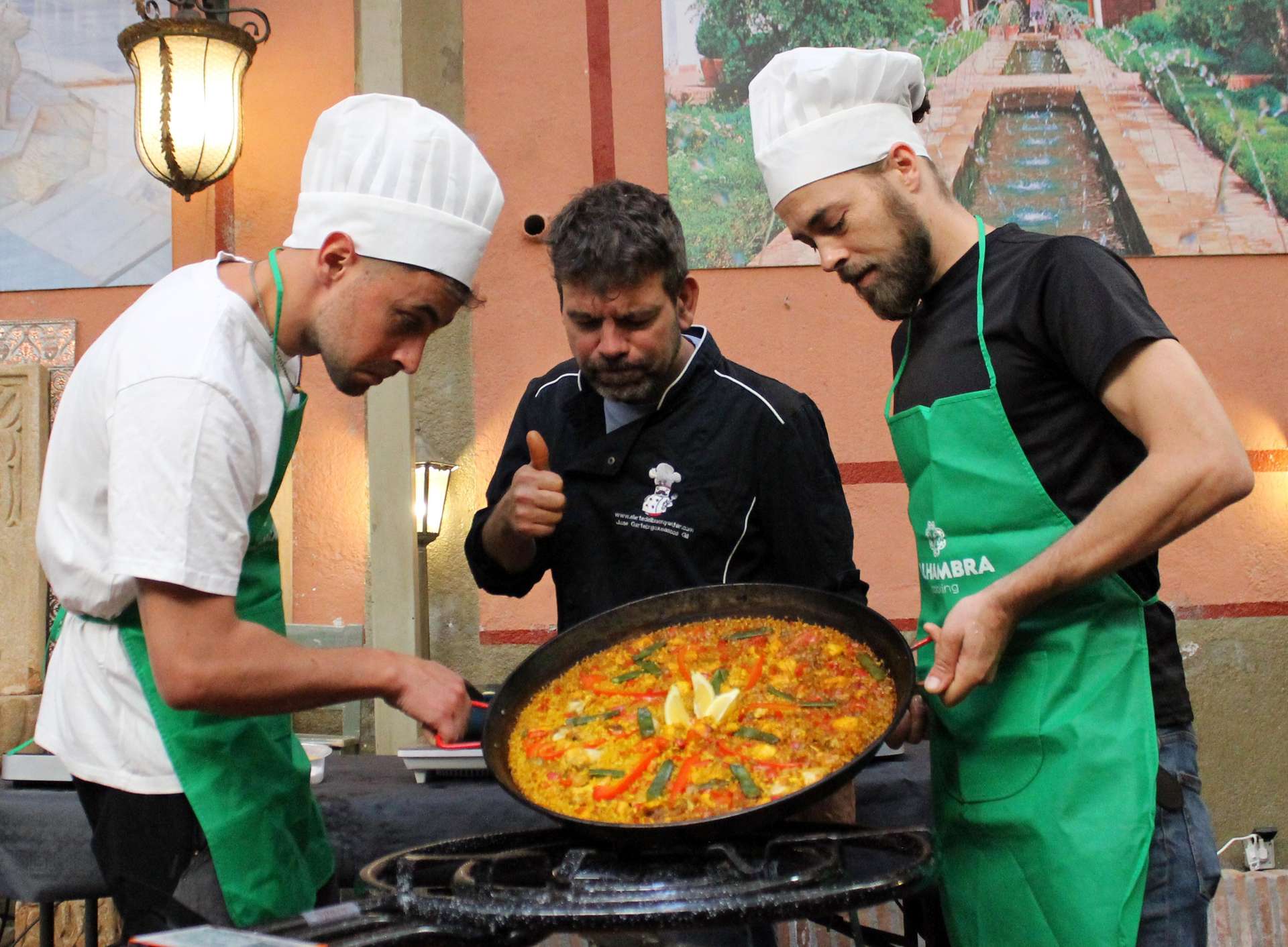
Spanish Cooking Class in Granada
What You Actually Cook
The class is set with a fixed menu, which is a good thing. Far from choosing dishes, you are acquiring the lessons of the important ones.
- Salmorejo – This is the cold tomato and bread cream you have been eating all week. Now you can see just how much olive oil it really takes.
- Tortilla de patatas – The famous Spanish omelet. Everybody is looking forward to the moment the flip is just right.
- Chicken paella – Of course not seafood paella, this is the inland version, and this is the one Granadinos actually cook at home.
- Crema catalana – The burnt sugar finish. You will want a blowtorch after this.
The session has professional chefs conducting it. They rectify your knife grip, your pan heat, your salt.
They do it in a way that is not employee but makes you notice that you have done three things wrong for many years.
You sip wine while you cook. Then sangria with the meal. The recipes come home with you.
This is the part that people do not mention enough. You walk away with a talent not just a commemoration.
The next time you prepare salmorejo in your own kitchen, Granada is in the bowl.
25 Common Queries Regarding Tapas in Granada
Granada is still one of the few cities in Spain where with any drink you order a tapa is included.
This single fact is the answer to most practical questions before they are even raised.
The remaining ones are timing, etiquette and knowing where to search.
Whenever I write about dining here, I receive the same set of questions. Therefore, I have gathered the ones that are most significant. No unnecessary content.
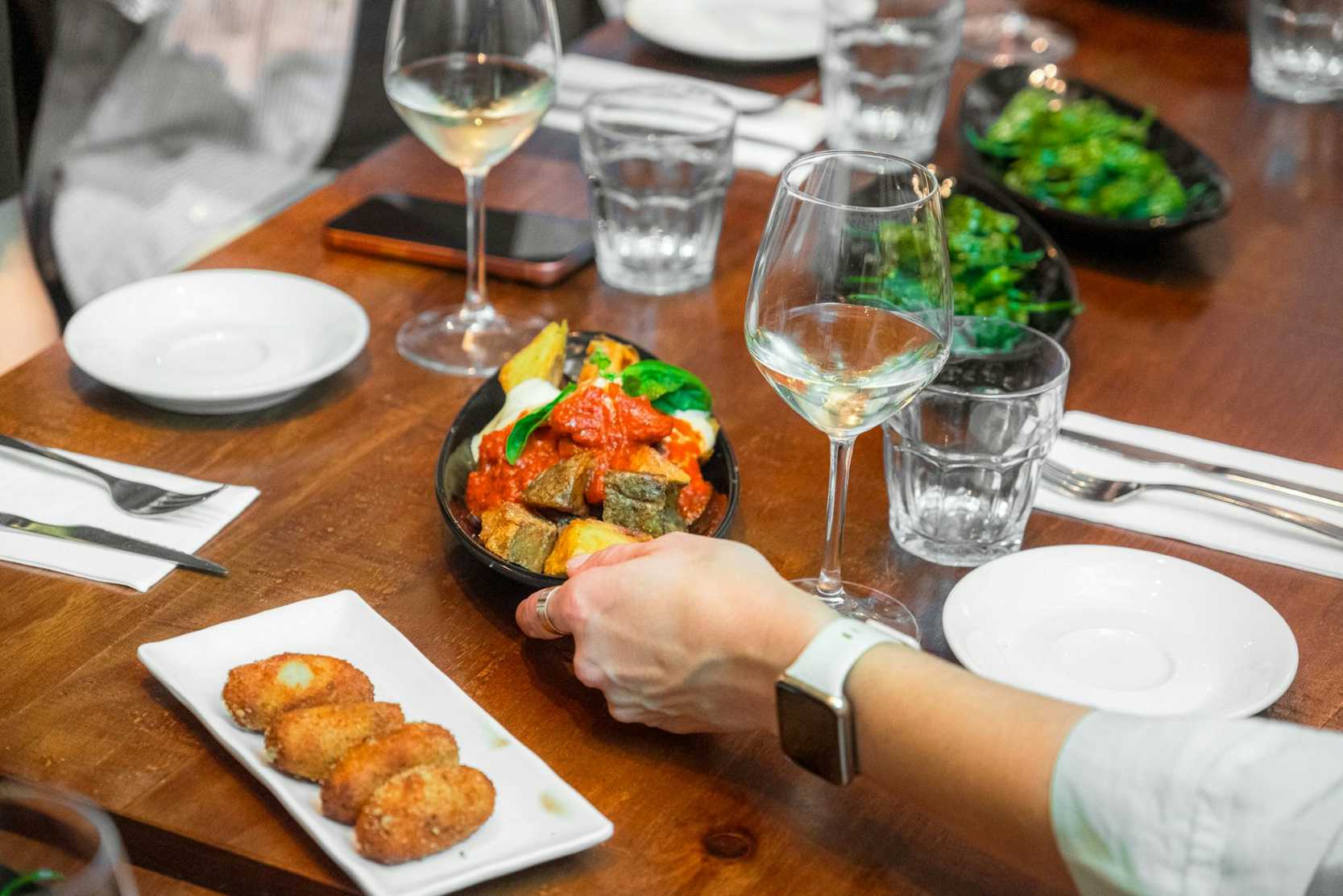
Tapas in Granada: carne in salsa, pimientos al padron and croquetas
Only the responses I would have liked someone to give me before my initial visit.
Are the tapas free? No, it comes along with the drink you order.
Is it possible for you to choose it? On some occasions yes, but not all.
“The typical small eateries serve whatever the kitchen made that hour. The fact that it is so isn’t the flaw, but rather, the system is working.”
Is tipping expected for the free tapa? Not strictly necessary, but it has been a tradition for a long time to add a little extra if the service is really good. Leaving a euro or two on the bar level after a few rounds can be really significant.
If you want to go for lunch, you should plan to go there before 1:00 pm, since lunch tapas are served starting from 1:00 pm. Evening tapas are available for serving only after 8:30 pm.
You will only have the opportunity to eat by yourself in a deserted area of the room if you come early. You will be forced to stand if you come late.
Of course, there are vegetarian alternatives but you need to specifically request them. Most bars offer meat or fish as the standard options. I’m a vegetarian. Typically, “or” suggests that the respective statement is true if either both or only one of them is in this case. I am a vegetarian. Tortilla, fried eggplant, or cheese can be substituted in most of the places.
Where do residents actually dine? Not very near to Plaza Nueva or the streets directly below the Alhambra, those are the places that charge for the view.
It would be better to avoid the really expensive tapas and drinks bars with sights to La Alhambra, and I, for one, would not consider them. Instead, you could take a ten-minute walk to the Realejo or the lower Albaicín district.
But what if I need to eat something other than just tapetas? There are plenty of tea houses and Arabic or Moroccan restaurants in Granada. The teterías (tea houses) in the Albaicín offer mint tea and pastries that would be a great mid-break from the bar crawl.
How do you spot a good bar without using a guide? A sure clue is a bar that has many locals sandwiching in the standing area at the counter and napkins on the floor. The tapas bars that depend on their loyal customers only are not found besides the others. They are distributed across the city center area.
Are the free tapas safe to eat? Yes. The pace is quick and they prepare it in small kitchens. Fulfilling my stomach is a promise after trying numerous bars without facing one single problem.
Do you have the option of ordering more tapas after the free one? Sure, just ask for la carta or indicate the dish that the table next to you is consuming. The complimentary tapa is just the first step, not the entire dinner.
Is it going to be necessary for you to speak Spanish? Some words would be advantageous. An alembic Please allow me to get you a small beer and a tapa.
A red wine. However, the act of pointing is also an option, but the effort to do it will change the atmosphere of the room.
What is the one thing people get wrong? They think the free tapa is a bonus. It is not.
This is basically the main reason for going out in Granada. You order a drink, eat what you have and then you go to another place and order another drink.
Avoid the places that have photo menus and English signs at the entrance. The most authentic tapas granada have is found at bars that do not have to introduce themselves.
Tapas in Granada
I want to say this above all…
My experience in Granada with tapas has made it almost impossible for me to enjoy them anywhere else.
I just sit back, order a drink, and boom- a little plate of food next to it, which reminds me of the fact that this city does not charge for that.
A free tapa every time you order a drink is the main concept. The moment I grasped that, I turned every bar crawl into a tactical discussion.
Mixing both approaches was the key to my wonderful nights. A guided tour was the first step of the journey where I learned both the history and the less-known places. After that, I returned alone to the places where I felt it was right.
I’d like to share the points that made a deep impression on me:
- The tours that are facilitated by guides are time savers. The walking tours that last for 3 to 3.5 h/ include family-run bars, old taverns, and Chikito restorateur where local artists had gathered in the past. On my own, I would have walked past them half of the time.
- A luxury tour should at least be tried once. I was kind of surprised to see a reserved table, a guide-sommelier, and a dessert of cava. This is not the way I usually do things. However, I ended up learning about the ordering process alone.
- Crawls that cover everything provide a multitude. Enjoyed the food tour at four locations where I tried about 10 dishes and had 4 drinks. I made some friends with other travelers and I was full after that.
- Cooking classes are memorable. I was cooking salmorejo and tortilla in a 16th-century palace. The recipes have returned home with me.
While I am on my solo tapas expedition, I stick to one rule. I Should avoid any bar that has a view of the Alhambra and a laminated photo menu.
The best bites in Granada are found in the small bars where the bartender chooses the food that comes with your drink.
Do not forget to book a tour on your first day. It will be a good guide for your further adventures all by yourselves.
The city has a lot to offer in both fun activities and who you can enjoy them with.