
You don´t want your port wine experience to be any port wine served in the first place you find!
Port wine come in many variations and there are some really bad ones in-between…
Don´t settle for a cheap, lousy port wine. Search and find the good ones – served in the good places.
That is what I am going to help you do with this article.
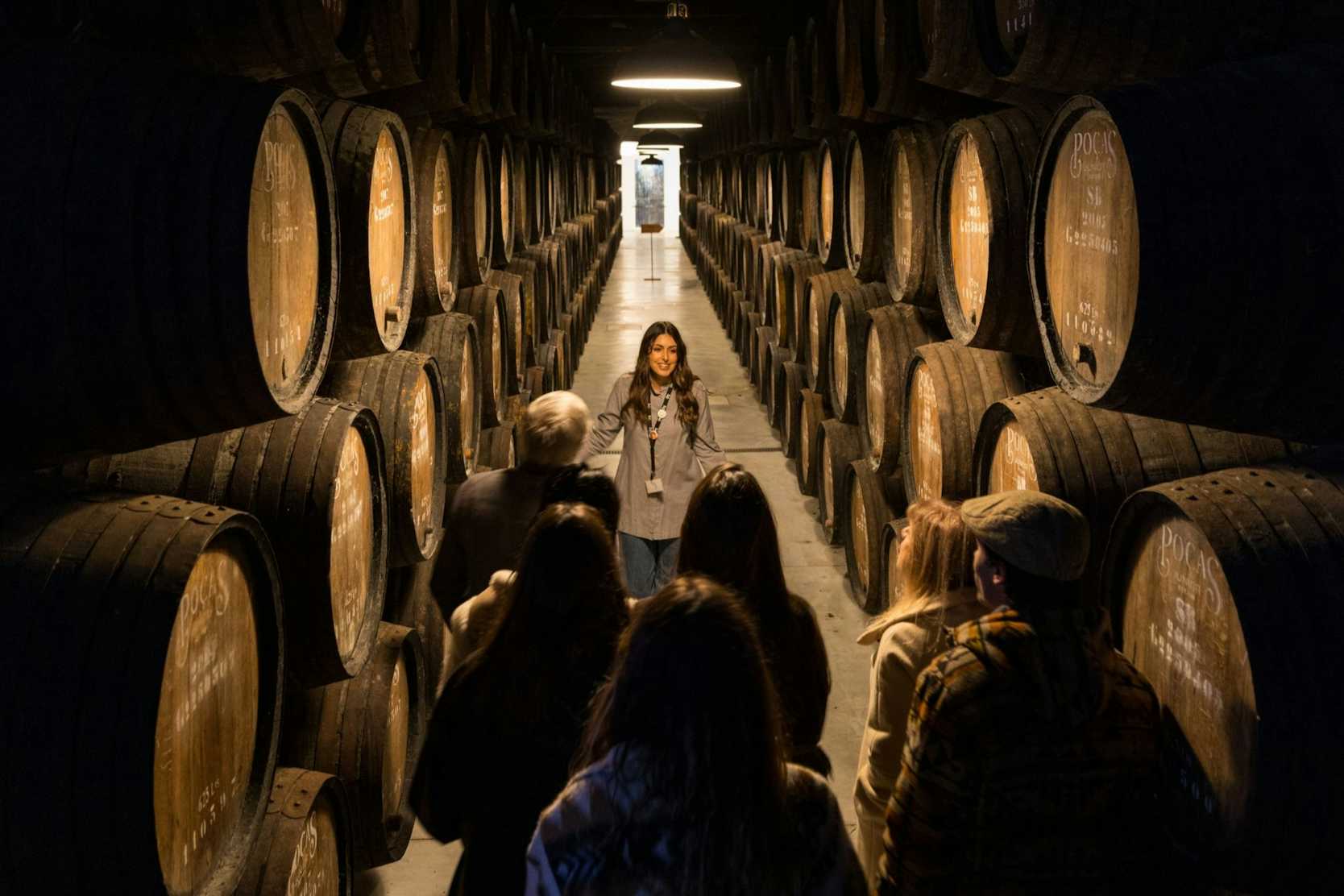
Caves Poças: Guided Tour + Tasting of 3 Port Wines
I will never forget my first disappointing glass, bought in a bar catering for tourists on the Ribeira, priced at 9 euros.
There are well over 100 different cellars and places where wine can be tasted, but most will be confined to these 5 popular, busy establishments.

Michael Madsen shares how to get the best port wine experiences
To find good examples of this famous wine, avoid mass-produced tours. Go to small family businesses and down to the Douro.
Well, that’s obvious isn’t it? Try book tastings at some of the smaller properties such as Caves Poças, established by a family producing wines for more than 100 years. Then head further afield.
All of the wine grapes are grown around the Douro, and taking a day to visit will completely change the way you drink wine afterwards. As I’ve been around the area a fair bit I thought I’d share a few things to avoid.
The first time I went down into the cellars of a winery I fell asleep. I don’t mean metaphorically, but actually fell asleep in one of the cold, damp rooms. All I remember is the guide going on and on about various sizes of barrels.
So I began to appreciate that the whole experience can be just as enjoyable as the port. It seems to me that the best tastings have an interesting narrative, an enthusiastic and informative host, and a few ports not readily available on the shelves of your average store.
The Cellars of Cockburn’s offer an excellent opportunity to taste 3 different styles, backed by 200+ years of history. At the Port Lodge of Graham’s you are taken behind the scenes into the family’s own stores.
All I ask nowadays is a lodge with personality, and a generous pour from my guide.
Looking out over the river and enjoying a glass of 10-year-old tawny. Many of these places are regular haunts of mine, with one particular day’s excursion not to be missed by any connoisseur.
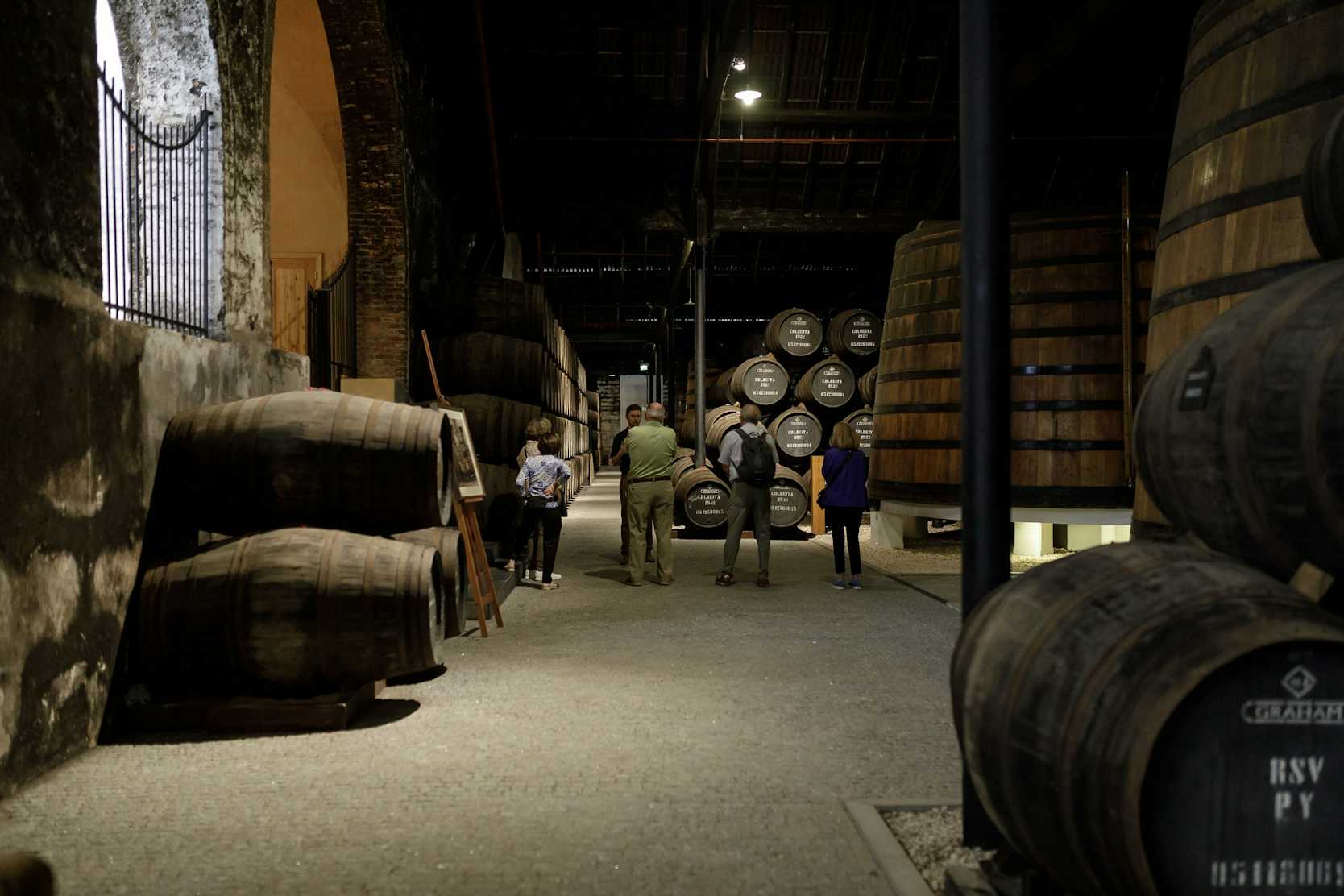
Graham’s Port Lodge
- Experience a family-run introduction to Port and DOC Douro Wines at Caves Poças
- We did a very pleasant walk, accompanied and explained by a local guide, to 3 of the wine houses located on the other side of the river, Vila Nova de Gaia.
- Cockburn’s Cellars, history and an excellent three port tasting.
- Graham’s Port Lodge gives privileged access to a working Cellar.
- All aspects of the valley (landscape), a boat trip on the river and visits to wine estates with tasting.
I learned about the many types of port while living in Porto. After drinking one ruby and a 20 year old tawny side by side at a local wine house, I could never settle for drinking inferior versions at the bars catering to tourists. I’ll point you in the direction of some great places.
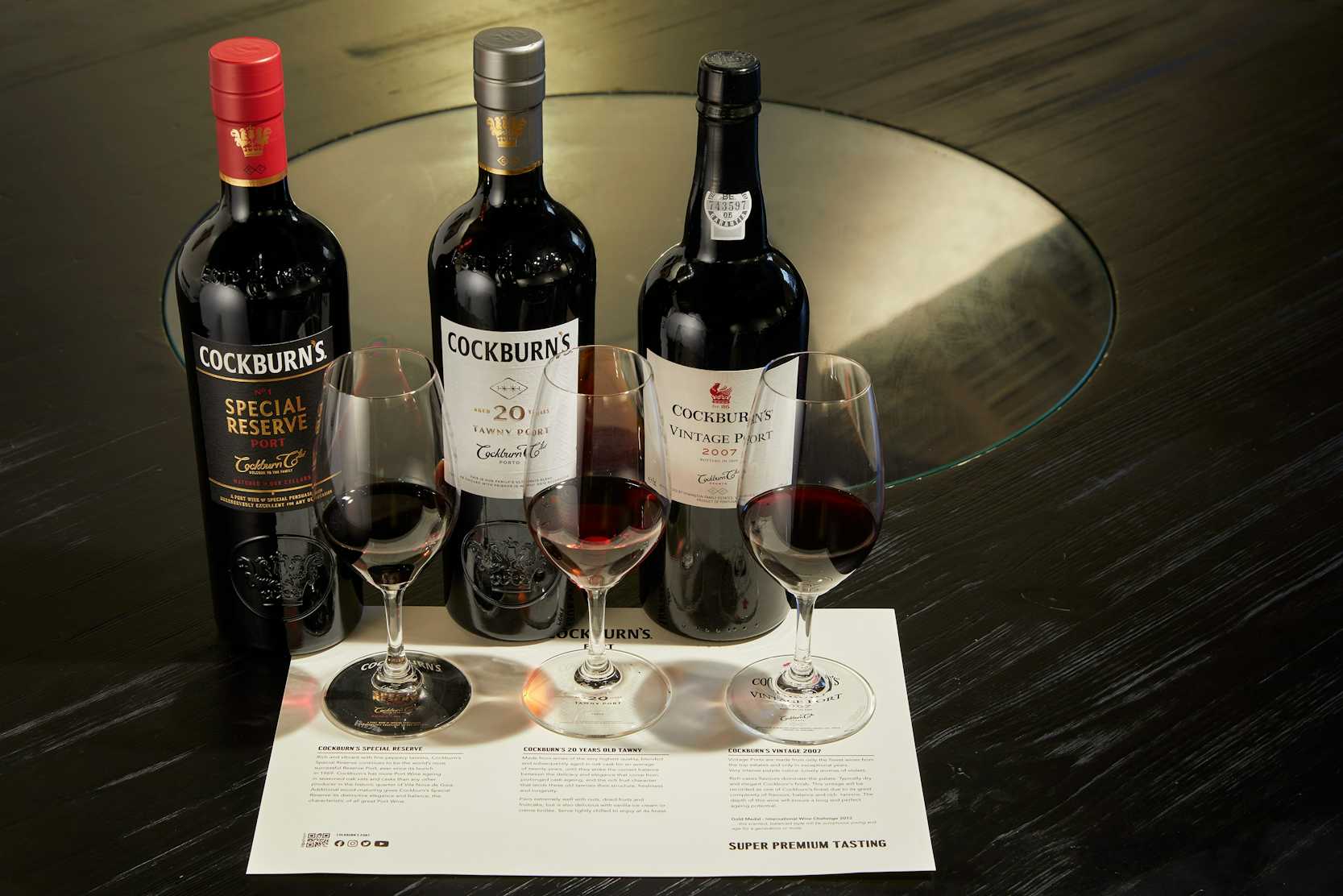
Cockburn’s Cellars: Wine Tasting
Caves Poças: Guided Tour + Tasting of 3 Port Wines
Douro Valley Full Day Tour, Cruise and Lunch
All of these have excellent reviews on Trip Advisor.
Caves Poças has been owned and operated by the same family since 1890. They will give you a tour of the cellars as well as tasting 3 different ports and some Douro DOC wines. It’s great to see first hand how different styles can be produced by a relatively small family business, with no need for large amounts of equipment.
I assumed it would be another standard cellar tour, but was happily surprised. I drank my tawny almost last glass of the night, as it was unlike any I had tasted.
You’ll pass through several areas of the working cellars, with no attempt to ‘beautify’ the place. All the casks are in their usual positions and there is much to learn about the various ages, blends and bottlings. Of course this differs with each Producer.
So there will be differences, and at Caves Poças they have opted to produce a particular style, which I find very appealing.
I was very impressed with the Tawny on offer last time I went, with very pronounced dry fruit characteristics, mellow and with a very long finish. I drank the lot!
As mentioned you’ll also sample some fine and table wines, so have the opportunity to try both types of wine. I don’t think there are many other cellars which offer this combination.
I think one of the biggest advantages of Caves Poças over many others is that it is run as a family business. There’s none of the ‘tourist’ element about it. So many years of experience and fine tuning, all down to this one family.
So, you’ll find a livelier ruby and richer tawny. But I think it’s more subtle than this.
It’s all quite easy. All tours will include a tour of the premises and tasting. There’s no requirement to be knowledgeable about wine.
Just be interested and willing to spend some time. Everyone will be happy to answer any and all questions you may have.
I find that all lodges in the area of Gaia will give you slightly different insights. For example, Caves Poças is very much centered around a family. Other lodges will impress you with their size, technology or longevity. There are so many facets to be discovered by visiting a variety.
I enjoyed the last glass of their Tawny very much. I believe this is the product of making wine for over 100 years!
Guided Wine House Tour + Tastings
Approx 80% of people will only visit 1 of the large lodges, have 1 taste and take a few photos. I would recommend walking around 3 lodges. You will get a good overview of a variety of ports and wines from the Douro.
So walk, 3 lodges, many different varieties and characteristics. Each cannot hope to offer this diversity on their own.
On 1 of the walks I went on, my guide demonstrated the differences between a Ruby Reserve and a Late Bottled Vintage. She poured 2 glasses. The Ruby Reserve was bright red, very fruity and would have been bottled soon after completion.
The LBV would have been aged 4-6 years in wood. 2 wines from the same area, same varieties.
So informative to me.
Once on foot, you’ll begin with a few ports in an old bottle house, surrounded by casks. Not only will you learn about all aspects relating to the making of port, but also other facts relating to the industry.
Next you’ll proceed to what is claimed to be the oldest company in Portugal to continue producing wine. Again you’ll be offered a few tastings. You’ll see the marked contrast between this large enterprise and the previous small premises.
You really get a feel of all the years behind you.
You’ll be given a further taste or 2 at this last establishment, owned and produced by a family in the Douro region. After such large companies this seems very home made.
The family will have many decisions to make regarding length of fermentation, percentages of various grapes used etc.
Small decisions, big differences.
As you can see from this, I would expect to taste some:
- Young Rubies
- Range of Tawnies in small casks, ranging from quite nutty to toffee-like
- LBV’s are more full-bodied, although generally drinkable
- DOC Douro table wines, dry and mineral-driven
- Sometimes a glass of white port with ice and a splash of tonic water
As you can see, there is a good range to try. Obviously if you visit only one producer you would only learn about one style. However visiting 3 different producers shows you some of the breadth of styles available.
You begin to appreciate how different casks, varieties and styles can influence the finished wine. So as well as tasting, you will learn about various aspects of production.
All 3 visits together give you a good insight into this area. Both Cockburn’s and Graham’s offer excellent visits to their cellars, however visiting several producers is a good introduction.
I would recommend doing this as one of the first things to do upon arrival, as you can apply this knowledge throughout the rest of your time in the region. You will begin to appreciate the style of different producers, ask more appropriate questions and know what to listen out for.
Obviously doing all 3 producers in 1 afternoon is very time efficient. As well as being an efficient way of spending your time it allows you to appreciate the diversity of Ports.
Wine tastings can often be very dry and informative. You may stand around listening to a description of a wine, agree with all of it and leave with little more than a receipt. However at Cockburn’s Cellars you are confined to 1 area, “John Smith’s Room”, for all of the visit. You taste 3 Ports here, of which the contrast between the full-bodied Vintage and smooth Tawny are particularly interesting.
The Vintage Port was very full-bodied with lots of tannin and very concentrated dark fruit. Clearly this type of Port would benefit from many years of aging. The Tawny was the direct opposite. Having been aged oxidatively gives this wine very toffee and nutty characters, very drinkable.
It’s clear that Cockburn’s have perfected both of these styles over their 200 year history, hence why I felt it was so beneficial to be able to taste both side by side.
What the cellar tour actually shows you
As well as producing high quality Ports, there are various innovations to see around the Cellars. There are large vats and old stonework, as well as more modern technology. Your guide will inform you about how all areas of production are maintained to the highest standard.
Overall I felt the visit was very informative, comparing different aspects of aging.
John Smith’s Room provides great history. It links the visitor with individuals who were instrumental in developing the property, giving background information, yet there is no sense of an ‘experience’ with prescribed actions. This aspect is very relevant in Porto, with many lodges placing an exaggerated emphasis on history, or none at all.
Other examples include Graham’s, and in particular their family cellars. However, Cockburn’s justifies inclusion on this list, due to the focus on the differences between their Vintage and Tawny Ports, both tasted, but quickly. It is amazing to appreciate how two Ports can share a name and yet differ so dramatically.
Graham’s Port Lodge: Guided Tour & Port Essentials Tasting
Again, in 2026, Graham’s continues as a working lodge. It is this fact alone, and the fact that it continues to function as such, that I believe warrants its inclusion. Visitors are able to watch (and even talk with) the wine making staff, as the many barrels continue to lay. There is information imparted, and explanations given about the production and maturation of the wines, all in an interesting and absorbing manner.
It was fascinating to walk through the many rooms, where the port was maturing, all impregnated with its wonderful aroma. There was much information given, about all aspects, but nothing boring or lengthy.
One highlight was being allowed into the Symingtons’ own cellars and store room. Again there were no barriers, and we were allowed to wander around this area of the property.
All staff were intimately familiar with the properties of the various Ports. All questions could be answered knowledgeably.
I was lucky enough to visit their library of vintages. It was amazing to see so many old bottles, all stored in darkness. Many would be older than my parents! Well worth the price of the tour just to be allowed to see this!
Following this, a selection of Ports could be tasted, all expertly described. Again there was a wide variety.
From a young ruby, very vibrant and full of fruit, to a very old tawny full of nuts and caramel.
The progression teaches more than any book.
I would strongly recommend avoiding the ‘bus tours’ at other houses. There is much more to be learned at Graham’s, and you will be surrounded by many examples of all aspects of production. I can see this would be very appealing to any serious student of Port.
As I departed I couldn’t help thinking about one aspect. All the fruit will originate from the vineyards in the valley, but all maturation will take place in Vila Nova de Gaia. As I stood in my cellars, I could see why both regions are so closely linked to the river.
All aspects of the production process take place between the valley and Vila Nova de Gaia. From picking to maturing. So there’s a great deal of movement of wine!
Douro Valley: Day Trip + River Cruise & Lunch from Porto
Approximately 3 hours from Porto, the river has carved its way through some of the earliest wine producing areas. Of course a drive will take you directly through this beautiful scenery: hills, rivers, pretty villages and of course vineyards. I’ve driven along this route a number of times now, and continue to be amazed when I first lay eyes on the extent of the terraces.
Although an excellent addition to any visit, it’s not a substitute for visiting some cellars and trying Ports. Only when you visit the valley can you appreciate all aspects.
Soils of schist, intense heat and near vertical slopes are all features contributing to the characteristics of each Port.
The Road to Amarante and the Viewpoint
Most will set out from Porto early in the morning to Amarante. Set on the Tâmega, it is a beautiful old walled town with numerous stone bridges and narrow streets. I usually stop off for coffee in the vicinity of the Igreja de São Gonçalo to watch the river flowing. A very pleasant way to start the journey.
From there you’ll continue to the lookout over São Leonardo da Galafura. There’s an amazing view of the vast number of terraces. You’ll see the meandering river far below and all around.
There’s no way a picture could adequately depict this scene. You’d appreciate the amount of work required to achieve this.
The River Cruise and the Wine Estate
From there you’ll spend some time on the river itself, cruising downstream. As a result all the terraces you saw will be above your head.
I found this very pleasant and an excellent opportunity to take in the extent of the area.
After this you are taken to another winery for tasting. So this gives you an opportunity to taste wines produced at the various properties. Many of the producers will be there themselves.
There’s something about tasting these wines here, straight from the bottles. They seem brighter, crisper, more vibrant.
Afterwards there will be an excellent lunch, consisting of home made bread and oil and various dishes, many made with produce grown on the property.
After all of my visits to these properties I realized it’s not really a matter of rating these wines compared to the more famous brands. All of these properties are situated along the same river, receive the same amount of sun and use similar varietals. It’s interesting to see how all of these factors can produce such a wide variety of styles of wine.
So it’s no wonder this topic of comparison forms the basis of the Q & A. Regardless, after today’s tasting you’ll have a better appreciation for the wines and where they come from.
20 questions and answers about port wine
People tend to ask me the same questions whenever I host guests. The top question would be “What is it about port that makes it different to any other wine?” Well, as you can see it’s quite straightforward.
All ports are fortified. At some stage in the fermentation a quantity of distilled grape spirit, aguardente, is added to stop the fermentation and leave residual sugar as well as increase the percentage of alcohol.
All ports are made within the boundaries of the Douro Valley, nowhere else.
Below are some of the other questions that are put to me.
Port wine questions, answered
- What is port? Simply put it is a fortified wine, all produced within the Douro Valley. As explained above.
- Where are all ports produced? Only within the Douro Valley.
- Are the grapes harvested by hand? With most of the land lying on very steep banks it’s almost impossible to use any machinery to harvest the grapes.
- What is the difference between a Ruby and Tawny port? Rubies are matured in large capacity vats for minimal exposure to air, so retain a red fruit character. Tawnies spend their maturation in small capacity wooden casks where they are more exposed to air, giving them a greater degree of oxidation and nutty and sweet characteristics.
- What is a Vintage port? This is made exclusively from one year’s harvest and bottled relatively soon after. These will continue to mature significantly once bottled.
- Is white port always sweet? No, it can range from very dry to very sweet, depending on the length of time the must is left to ferment.
- Ideally slightly cool. 12-16c. Tawny would benefit from being slightly cooler.
- Most commonly cheese and chocolates. I am always keen to try a good blue with Vintage.
- Ruby and most Tawny will be acceptable to drink up to a month or more. It is better to drink a Vintage as soon as possible after opening, ideally within a few days.
- All Vintage Port should continue to develop over time. Tawnys have all been matured to varying degrees before being bottled.
- LBV stands for Late Bottled Vintage. All grapes will be from the same vintage, but will have been matured in cask for 4-6 years. As such it will be smoother and more approachable.
- By no means! Dry white port makes an excellent apertif, and Tawny can go well with such items as a selection of nuts, or a slice of Parma ham.
- There are 5 main varieties: Touriga Nacional, Touriga Franca, Tinta Roriz, Tinta Barroca and Tinto Cão. There are many other permitted varieties.
- A quantity of aguardente (brandy) is added to fortify the wine. This brings the alcoholic strength up to approximately 19-20% ABV. Most wines are between 12 and 14% ABV.
- Yes. Most of the cellars which age the Port can be found on Vila Nova de Gaia, directly opposite Porto. Most will welcome visitors for a tour and tasting.
- This refers to a Tawny which is bottled from wine of one harvest and will have spent a minimum of 7 years in cask. The year of the harvest will appear on the label.
- All unopened Vintages should be stored horizontally. Tawny and Ruby, as they will already have spent many years in cask, can be stood upright.
- Yes. Made solely from grapes and grape spirit.
- Indicates a superior wine to the normal house bottling. It may have spent longer maturing, or be made from better quality grapes.
- Very reasonably priced. You can pick up some very nice Ruby and Tawny for less than 20 euros. Vintages from the leading houses of course command much greater sums.
I remember being rather ignorant of the differences between Ruby and Tawny. Having only been in Porto a short time during the colder months I felt obliged to buy one of each. Having a very hearty meal I thought it appropriate to have them at room temperature. I wasn’t at all surprised when my Ruby tasted very hot and sweet!
A Tawny I was drinking was somewhat boring to me. A colleague, whose family owns a lodge in Gaia, advised me to drink both chilled.
What a vast improvement! It has completely altered my appreciation for all types of port.
Many will think long and hard about what to eat with their port. There is sufficient sugar and fullness to most ports to complement cheeses and chocolates. I think a more briny bite would suit, however. A good dry port with some salted almonds pre-prandial is superior to any sweet accompaniment.
Of course, there are numerous types of port wine available. All have certain common denominators, mainly the region of production and the fact that they have all been fortified. Knowledge of the general characteristics of the various styles, mainly Tawny (aged in barrels) and Ruby (aged in tank) will go a long way to enhancing your experience of sampling in Porto. All of the questions asked above are ones I have had answered, piece meal, following many visits to various cellars, and many hours of discussion.
Finally I would like to say this…
After many years visiting cellars around Vila Nova de Gaia, one piece of advice I would give anyone wanting to appreciate port is to avoid all “bus” type tours. Nothing can compare with spending some time in one of the smaller, family run cellars, hearing tales of life with a cask or two! Caves Poças certainly fits this description. Having been under one family for well over 100 years, the whole experience remains very personal.
As a result of writing this article I would be happy to recommend the following to any of my friends:
- Caves Poças, for the opportunity to taste a range of 3 ports and DOC Douro wines, conducted by members of the family.
- Cockburn’s Cellars, over 200 years old, to sample a Vintage Port alongside a selection of Tawny.
- Graham’s, to gain access to the Symington family’s private cellar and taste 5 of their most popular ports.
- A full day out in the Douro Valley, with time to take in the magnificent views from São Leonardo da Galafura, cruise the river and sample wines at a vineyard, all of which will provide an appreciation of the origins of all the wines produced in the city.
Avoid as many large, impersonal tasting rooms as possible, try and find a few with something more to offer and spend a day in the Douro Valley. Watching the river flow past, all the slopes of vineyards and enjoying lunch in the delightful town of Amarante, you begin to see why port is such an integral part of the scenery.
I regret to say I went to see as many as I could on my first visit, only to gain little knowledge of any!
Go slower than feels reasonable.
Booking for tonight at Caves Poças and Graham’s. One half-day in Gaia, one whole day to spend in the Douro. You want to be hungry and eager when you enter your first.
I think you’ll agree that the finest drink you’ll have in Porto is from the glass of port offered to you by a member of staff.